
Lately, some posts have been appearing on social media showing images of everyday scenes in public spaces or places like the Barcelona metro in the 80s and 90s with messages like "those were the days..." or "can you see the difference compared to the current situation?". I don't know the origin and intention of the posts, but it is evident that if they haven't come from openly xenophobic individuals or organizations, these have appropriated them and reproduced or commented on them to spread their execrable message: those were happy times because there were no immigrants.
Nostalgic manipulation is one of the usual weapons of this type of movement. The manipulation of data and causal relationships too. And it cannot be said that it is not effective, given the political gain they extract here and in the world in general.
It is evident that the situation regarding immigration has changed substantially since that time, like so many other things in our society. I remember that in my high school, in Nou Barris, people of foreign origin (usually adopted) could be counted on the fingers of one hand, and they were as scarce as boys and girls with divorced parents. In the dining room, the menu was the same for everyone and, why not say it, I was one of the few with a mother more than three decades older, but of course, being the youngest of five siblings.
Society, then, has changed notably, and the presence of people from other parts of the world is not only the general trend, but an upward trend.
As is well known, in recent years the Barcelona metropolitan region has experienced sustained population growth, driven mainly by immigration, as explained in a previous article. According to data from the Statistical Institute of Catalonia (Idescat) and the Barcelona Metropolitan Area (AMB), currently more than 30% of residents in the region were born outside the Spanish State. In the municipality of Barcelona, the percentage of foreign population already exceeds 25%, according to data from the Municipal Register of Inhabitants of 2024.
Immigration, therefore, is having a significant effect on the demographic structure. In a context of low birth rates among the native population and progressive aging, migrants ---especially younger ones--- are becoming a fundamental part of the base of the population pyramid. So much so that the most recent statistics from Idescat indicate that almost 40% of babies born in the metropolitan region have at least one parent born abroad. This reality shows that the future of the metropolis is and will be even more, inevitably, multicultural and multiethnic.
Despite their growing demographic weight, the presence of people of immigrant origin in spaces of representation is still anecdotal.Now,the Barcelona metropolis is no longer just a recipient of diversity: it generates it from within.In Barcelona neighborhoods like Raval or La Marina and municipalities like Santa Coloma de Gramenet, the proportion of young people of migrant origin far exceeds 50% according to the Institute for Childhood and Adolescence. This data breaks with the traditional vision of a homogeneous city and forces a rethinking of collective imaginaries of belonging.
According to projections from the Center for Demographic Studies, more than 50% of minors in the metropolitan area could be of foreign origin in less than two decades. This transformation is not exclusive to Barcelona, given that most large European cities experience similar dynamics, although the speed and institutional management of diversity vary depending on the case and the moment.
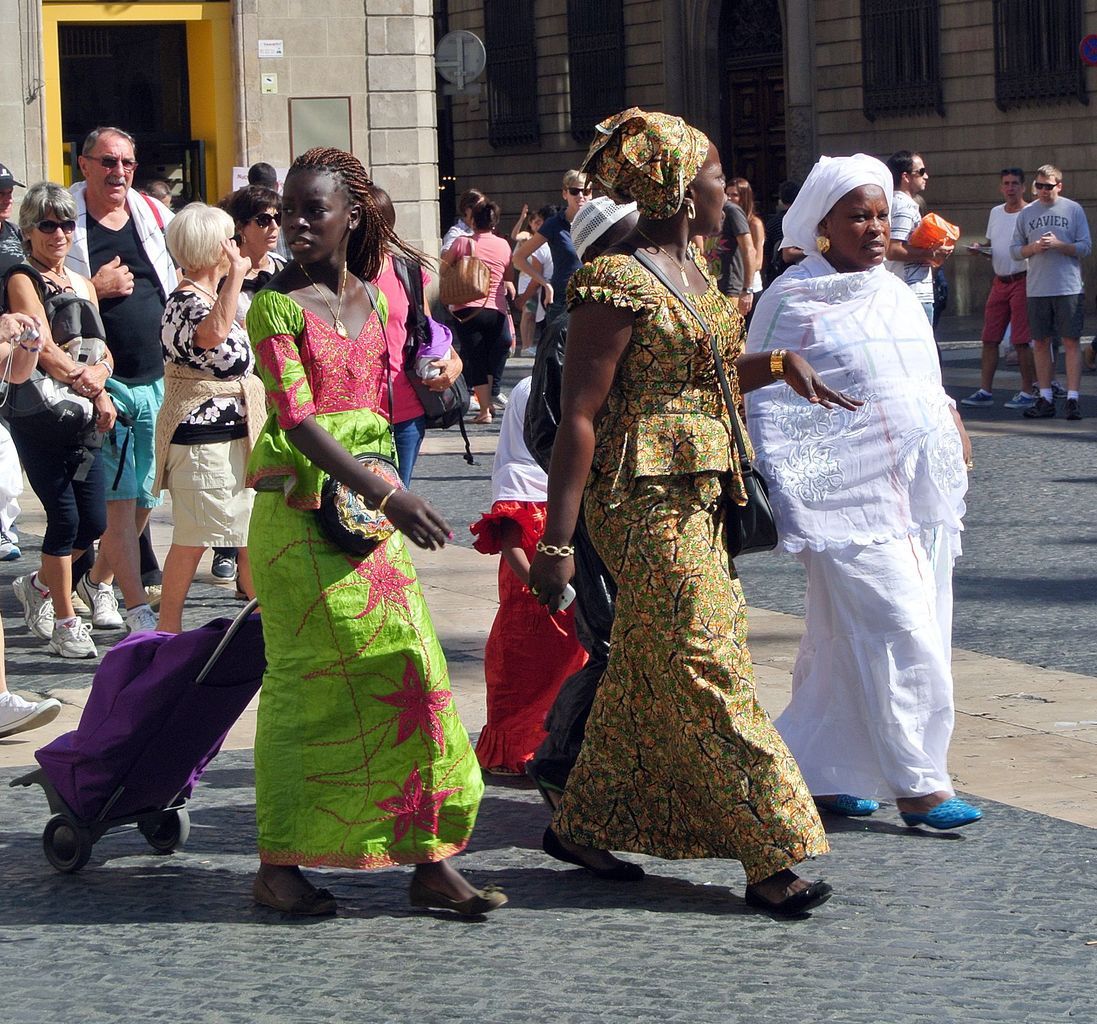
Thus, schools, nurseries, and public services already reflect this new reality. As anthropologist and CIDOB researcher Blanca Garcés says: "Children born here to migrant parents are the key asset between two generations and two worlds. We must ensure that it does not break."
In the municipal elections of May 2023, only about ten people of migrant origin became council members in the entire metropolitan regionBut the current reality regarding the connection between these two worlds shows us a very different picture. Despite their growing demographic weight, the presence of people of immigrant origin in spaces of representation is still anecdotal. Parliaments, city councils, media, business and trade union organizations, or civic entities remain, for the most part, spaces occupied by people born here and, often, with very homogeneous profiles.
In the last municipal elections in May 2023, for example, only about ten people of migrant origin became councilors in the entire metropolitan region, even though in some municipalities the population of foreign origin exceeds 30%. SOS Racisme has denounced in its reports how, in the Barcelona City Council, none of the 41 seats in the Plenary Hall is occupied by a person of African or South Asian origin, even though these communities have a very significant presence in the city.
Catalan identity is not yet understood as fully diverse, but rather linked to a predominantly white and middle-class image.This absence has serious and cumulative consequences, starting with the fact that public policies cannot adequately respond to the needs of groups that do not have their own voice in institutions."It's not just about being there, but about having real capacity for political influence," recalls activist and political scientist Tània Adam within the framework of her projectBlack Spain: Journey Towards Blackness in Space-Time, which was exhibited in the past biennial Manifesta 15.
One of the most invisible and painful consequences of this lack of representation is that many people born in Catalonia, but with surnames or physical features considered "foreign," continue to be seen as "others." This phenomenon, known as structural or institutional racism, translates into daily discrimination, constant questions about "where are you really from?", and difficulties in accessing jobs, housing, or spheres of power. Catalan identity ---or Barcelona identity--- is not yet understood as fully diverse, but rather linked to a predominantly white, middle-class image. Another proof of this is the custom of not addressing people with certain physical features in Catalan, even when they reply in that language.
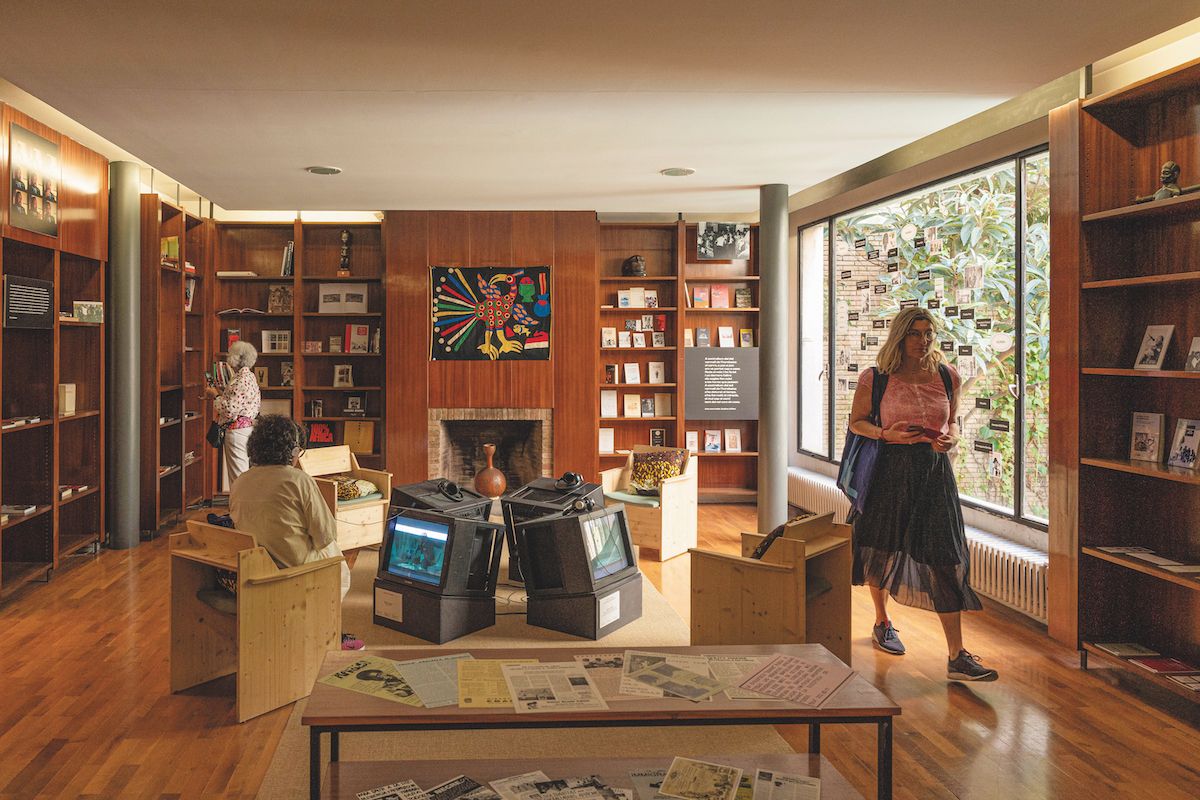
It is thus, therefore, that second and third generations live in a kind of limbo: they are not "immigrants," but often they are not allowed to be fully "from here" either. This symbolic exclusion has profound psychosocial effects and fuels feelings of non-belonging. The emergence of successful role models, especially in fields such as sports or entertainment, are important, but other role models at levels closer to the reality these generations live would be more so, starting with seeing their parents progress in administration, in business or in academia and science and enjoying opportunities themselves to achieve it, as we teenagers of the 80s and 90s had.
To reverse this situation and move towards a truly inclusive society, concrete and courageous actions are needed that should be undertaken progressively, but firmly, before they fall under their own (demographic) weight and all this is experienced as a social shock with unpredictable consequences. In the field of institutional and political action, there is the always controversial resource of establishing quotas, similar to what has been done with gender equity, but with even greater complexity given the diversity of situations that we gather under the umbrella of the term "migrant" (even people who are not, but "seem to be").
The metropolis of the future cannot only be diverse in statistics: it must also be so in spaces of power and in shared narrativesFrom institutions and political parties, however, one could work more coordinately with the associative world to make the voices of these collectives heard more strongly. The London borough of Camden, for example, has established as one of its four strategic missions for 2030 that those who hold positions of power in the boroughbe as diverse as the community and that the next generation be prepared to continue in this vein, din such a way that their presence in these spaces of power becomes more natural. And they have started with the administration itself to set an example for the rest of the institutions and local entities.
In the Barcelona Metropolitan Strategic Plan, we have also set as an essential objective to increase the diversity of people participating in our activities, whether their role is active (speakers, workshop leaders, etc.) or not (spectators), although with unequal capacity for influence, since it is not always possible to influence the selection of who will participate in them. As for the team of our coordination office, a staff has been organically configured in recent years where a third of the people are born abroad, a percentage that adjusts to the reality of what is our object of reflection: the metropolitan region of 2030. Not so much in terms of composition, since currently five Latin American countries and two European countries are represented.
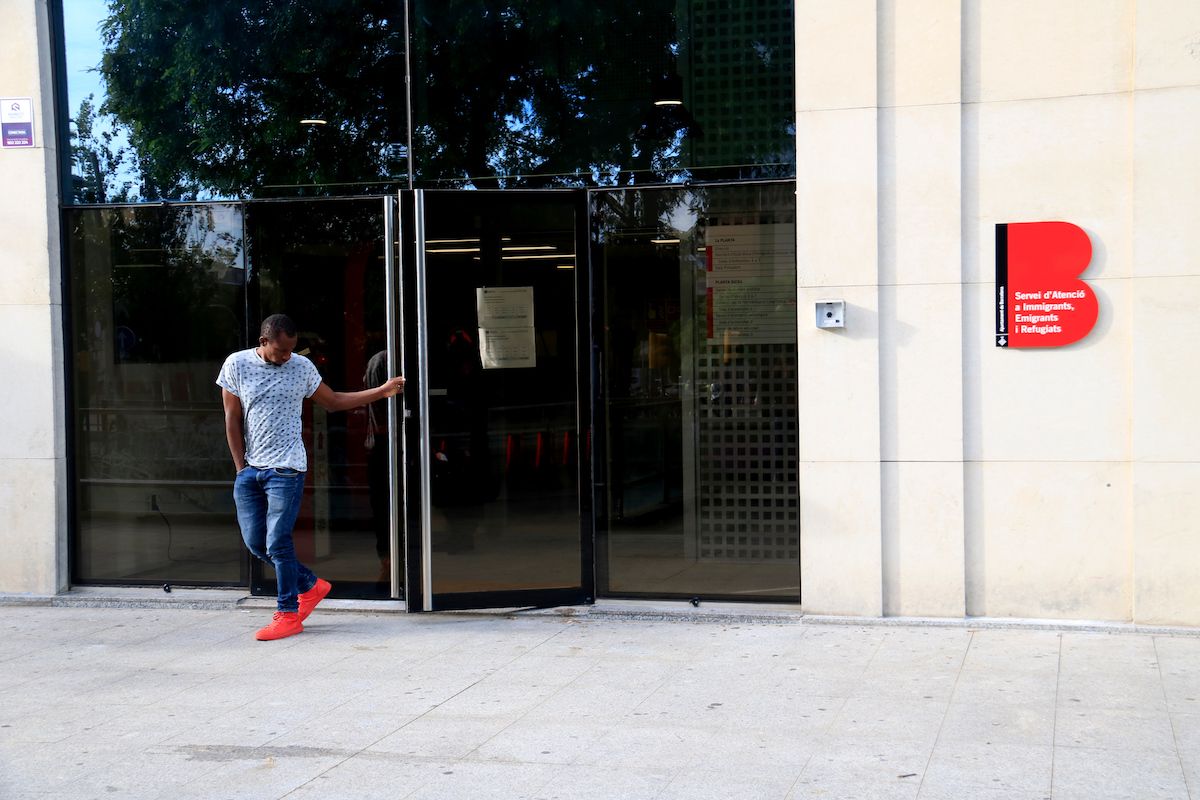
In any case, there is no doubt that beyond measures that can be imposed, once again the real solution lies in education and information, which are what allow us to become aware of reality and act with a critical and constructive spirit, as well as in facilitating more spaces and moments of interaction, to generate greater empathy. Because it is not just about adding presences, but about transforming perspectives.
The city of five million therefore has before it the opportunity to build a more just, cohesive and representative society. The metropolis of the future cannot only be diverse in statistics: it must also be so in spaces of power, in shared narratives and in the collective gaze on who we are.
Add The New Barcelona Post as your preferred Google source for free
Stay informed with the latest news.