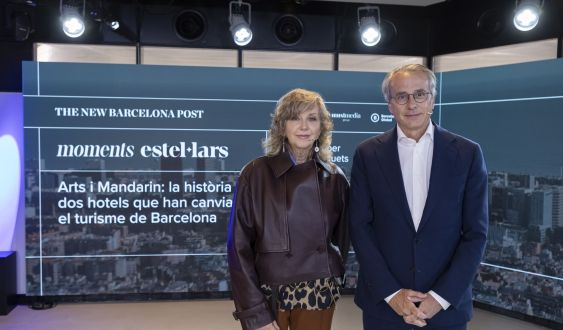
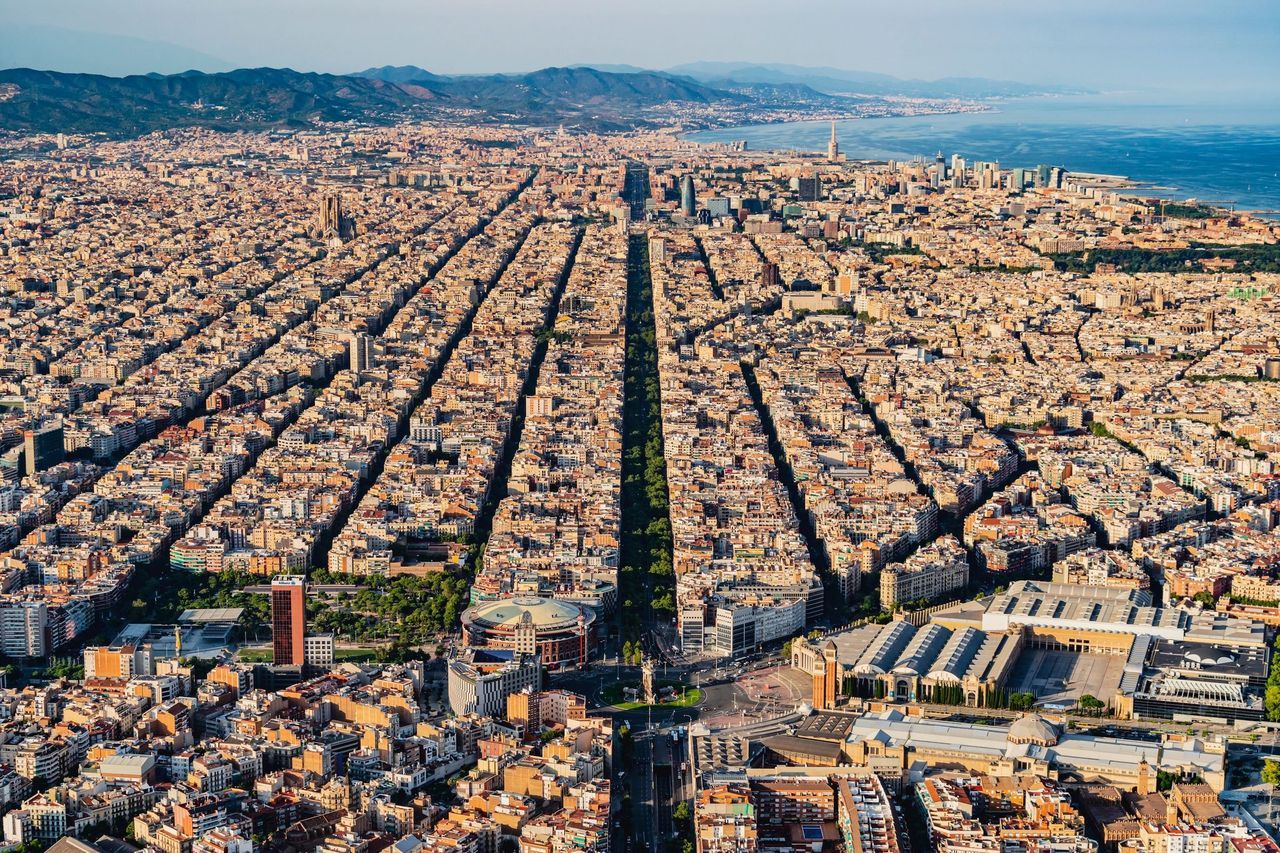
Cities, like fashions, come and go. "They have been in fashion, and they can go out of fashion," warns businesswoman Maria Reig. And Barcelona —which has been in fashion— continues, for the moment, to be so. With 26 million visitors in 2025 and a constant presence in the rankings of the best cities in the world, the Catalan capital maintains an undeniable power of attraction.
But success, sometimes, also has a less friendly side. It can become a problem. Or, rather, a management challenge.
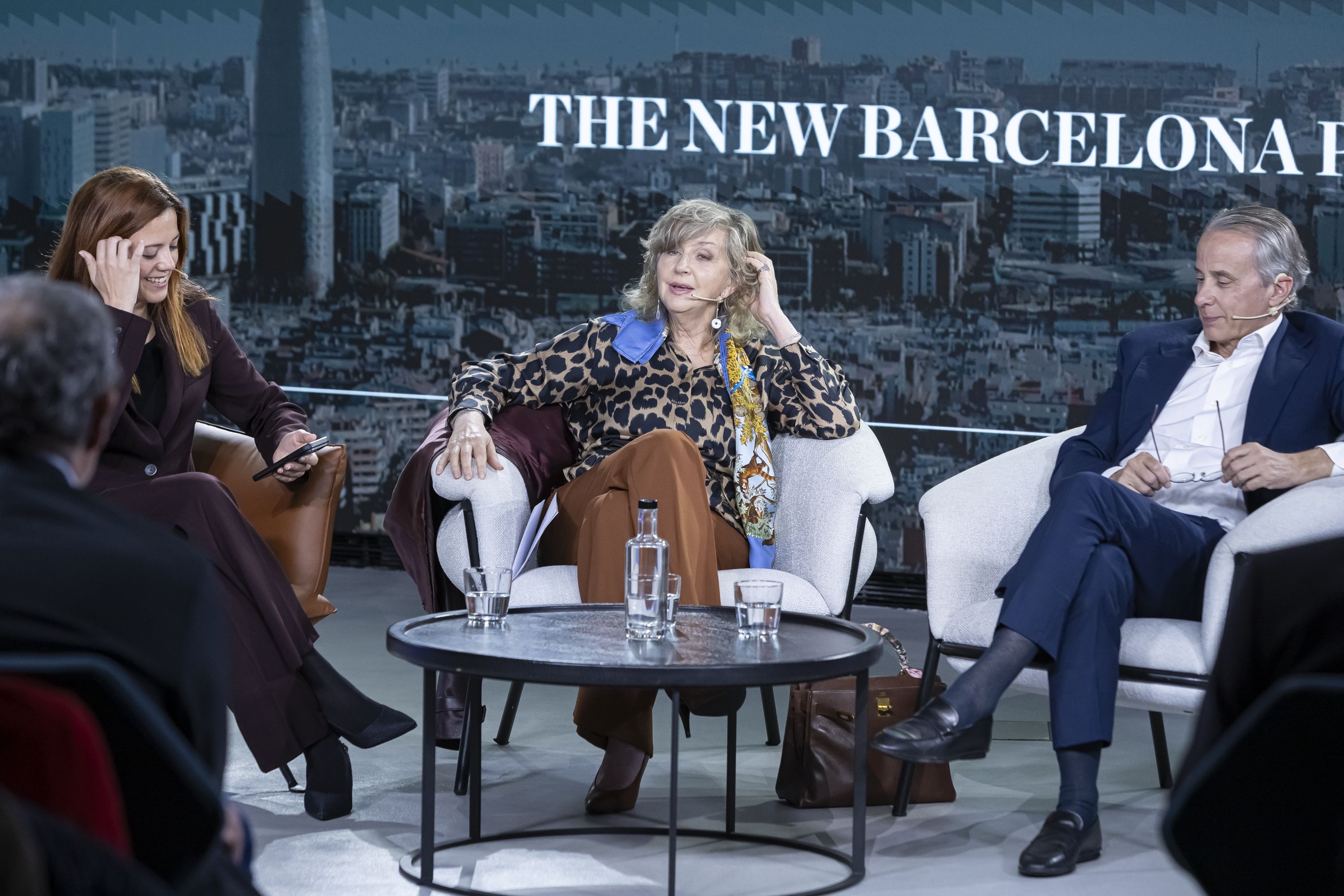
This was raised by businessmen Javier Faus and Maria Reig in a new session of the Moments Estel·lars cycle, organized by The New Barcelona Post and held at Casa CUPRA Raval, where they reflected on the role of large hotels in Barcelona's tourism model and in the city's international projection.
For Reig, the conflicts that today surround tourism are not so much an anomaly as a natural consequence of success: "they are problems of successful cities," she stated. An idea that connects with a shared perception: Barcelona continues to be an extraordinarily attractive city to live, invest and settle in, but it drags a management problem.
In this sense, Faus recalls the reflection of an international investor who synthesizes this paradox well: "I have lived in many cities around the world. All have problems and all seek solutions. It is the first city I find that has all the solutions and it alone seeks out problems." And the audience laughs when he says it, although the reflection hides a bittersweet undertone.
Despite everything —fortunately— his message is not entirely pessimistic. "There is no better city in the world to live and settle in," Faus defends. And he adds: "The future is spectacular, but only if we manage it well. For those who live here today, but also thinking about those who will live here in ten years."
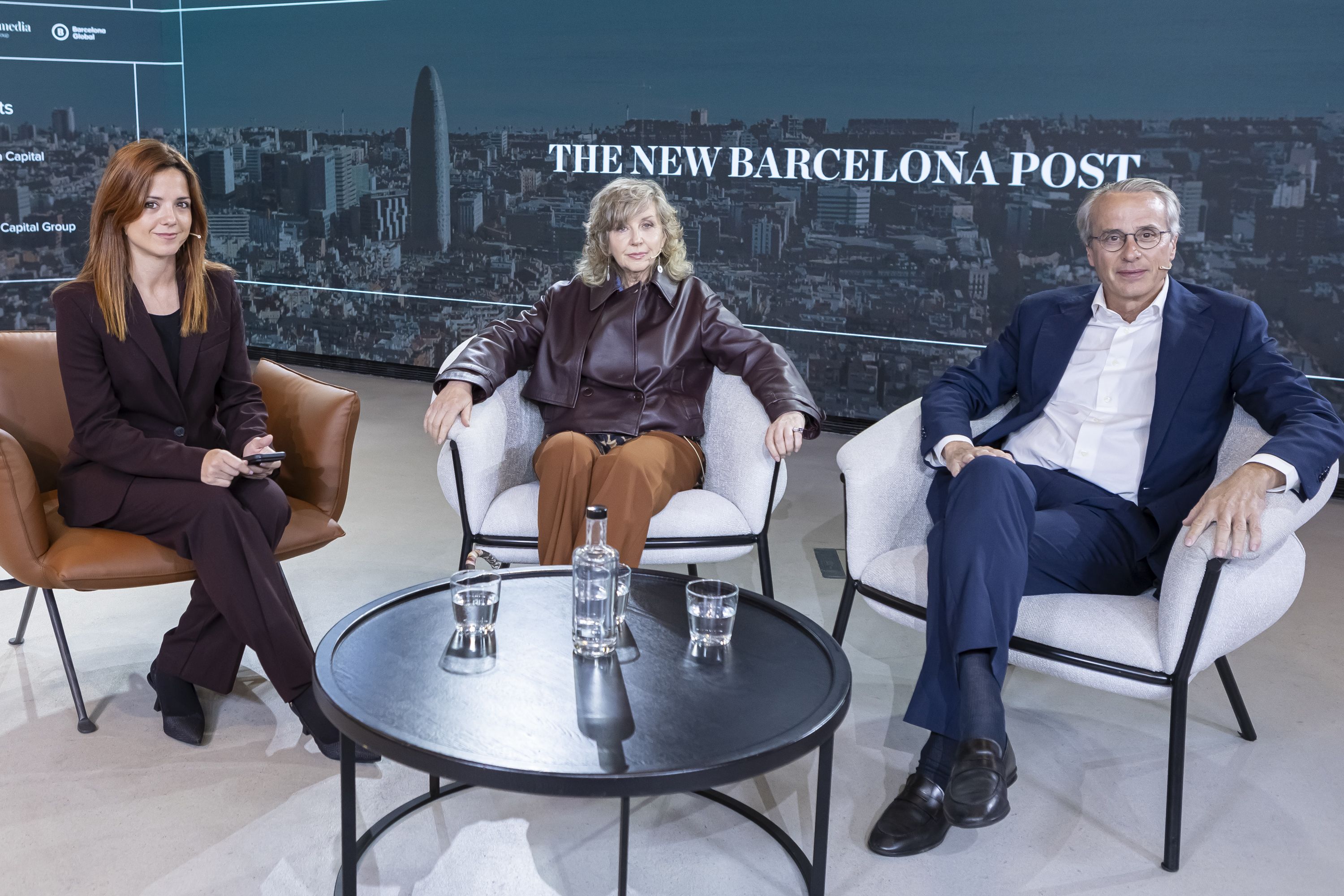
It is not a minor opinion. Both Faus and Reig have been protagonists, from investment and often from discretion, of the recent transformation of the city. He, from Meridia Capital, but also as vice-president of FC Barcelona or president of the Cercle d'Economia —a period in which he moved its annual meeting from Sitges to Barcelona—, and with a key role in the history of the Hotel Arts Barcelona. She, at the head of Reig Capital Group and as promoter of Barcelona Global, with a trajectory closely linked to the development of the Mandarin Oriental Barcelona.
It is no coincidence that, in his presentation, the editor of The New Barcelona Post, Guillem Carol, defined them as "two top-level personalities who can explain better than anyone what current Barcelona is, in the broadest sense." The hotels they have promoted are today icons that, as the director of Turisme de Barcelona, Mateu Hernàndez, highlighted, have contributed to "raising the level of the city, its connectivity and its positioning."
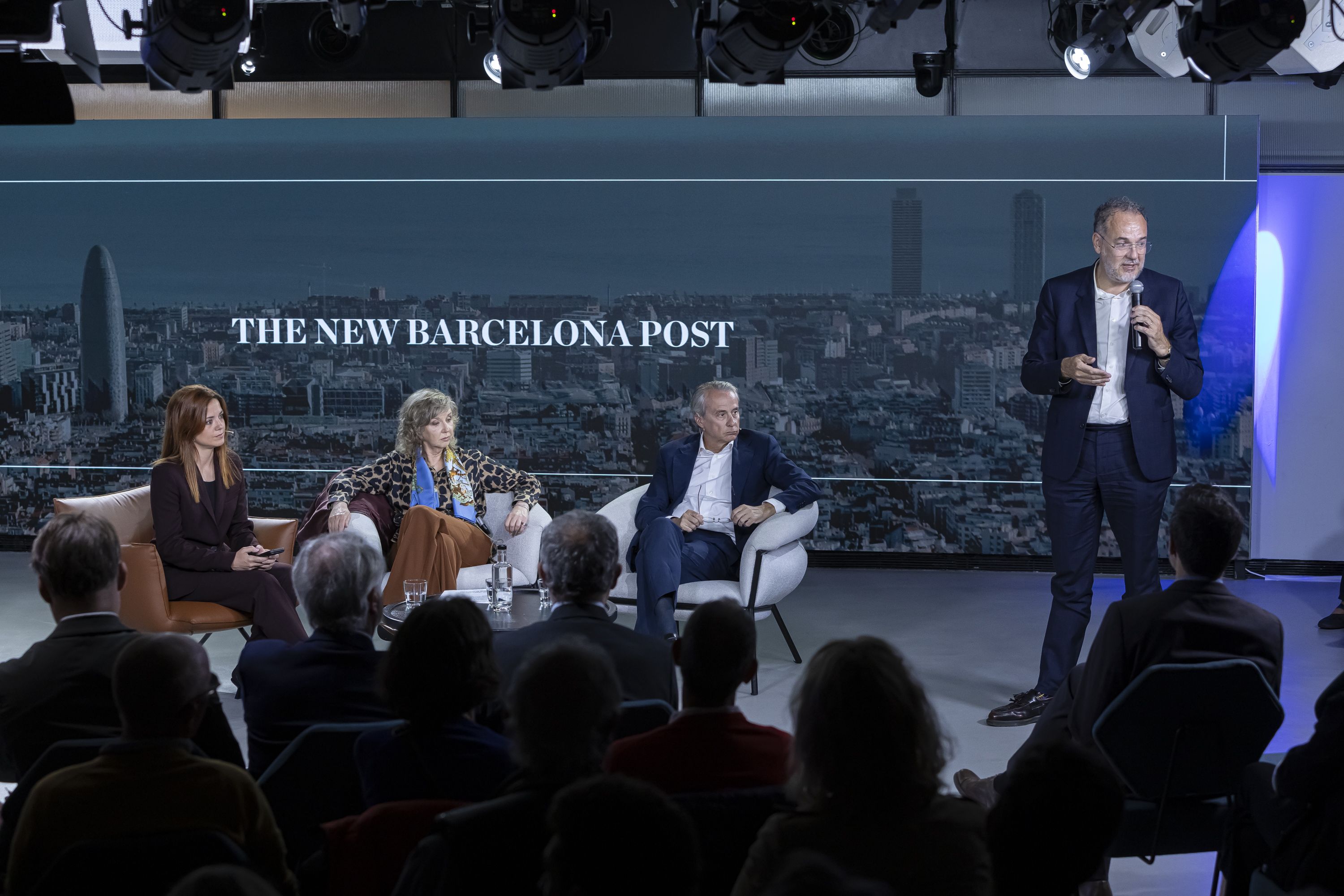
"Today the city faces a different challenge: not so much to grow, but to know how to manage its success"
And yet, the gaze of both speakers towards Barcelona is tinged with a certain nostalgia. Nostalgia for that "transformative city, that post-Olympic Barcelona that made the urban space a space for social coexistence and a space for economic stimulus," in Reig's words.
A city that, they point out, knew where it was going. And that today, in full tourist maturity, faces a different challenge: not so much to grow, but to know how to manage its success.
Thus, from their conversation we extract 7 key points for the management of tourism in Barcelona:
1. Manage externalities without closing the city
For Faus and Reig, the current volume of visitors is generating evident tensions on public space, mobility and coexistence. Overcrowding in certain areas, especially at peak times, has ceased to be a perception to become a reality shared by citizens and visitors. "Mass tourism degrades," warns Javier Faus.

Now, for both, the challenge is not to reduce tourism without further ado, but to manage it better. Faus warns against the temptation to "say no to everything" and defends a city that remains open to the world, but with tools to minimize negative impacts. Along these same lines, Maria Reig points out the central paradox: "it seems that the more it succeeds, the more negatively it impacts its population."
The key —and the most repeated word throughout the conversation— is clear: management. Managing tourism, and its impacts.
2. Overcoming regulatory barriers and stigmas
A significant part of current problems are not inevitable, but rather a consequence of political decisions. Faus is especially critical of the measures adopted in recent years, which he describes as "sectarian and ideological" and which, according to him, have ended up limiting the city's capacity to evolve. He gives as an example the Four Seasons that was to be built, a decade ago, right next to Casa CUPRA Raval, where the event is held, and where there is now a luxury apartment building. Maria Reig, who experienced firsthand the failure of the operation —she was one of the families who owned the building and wanted to convert the project into a luxury hotel with Four Seasons—, had to sell and desist from the operation, given the refusal of the city council.

One of the ways would be to make the PEUAT more flexible, not to make "more hotels", but to make them better. But there is a certain rigidity and "stigmatization of the sector": "we have turned tourism into an almost toxic word," says Faus, warning of the risk of stigmatizing visitors, investors or international professionals.
3. Recovering urban maintenance and demanding standards
The quality of public space has historically been one of Barcelona's great assets. However, according to Faus, there are examples that today are difficult to justify: he describes the state of maintenance of some iconic elements of the city, such as Frank Gehry's fish or certain buildings on the seafront, as "unpresentable and unforgivable."
To this degradation is added, according to Maria Reig, an excessive and poorly organized occupation of public space. "Spaces cannot be blurred," she defends, referring to the proliferation of terraces, kiosks and other elements that, according to her, affect urban quality and the perception of the city.
4. Defining a city brand with its own identity
Beyond immediate management, Barcelona faces a narrative challenge. For Reig, the city needs to clearly define what it wants to be and what values it wants to project. "Cities must have a brand with values," she states, citing Scandinavian countries and their ability to build identity as an example.
Her criticism is concretized in spaces like Passeig de Gràcia: "where is the artistic Barcelona?" she asks, in the face of an increasingly homogeneous offering. The risk, she points out, is that the city loses its uniqueness and becomes just another destination in the global circuit, without clear differentiating elements and with a personality that was central... and that today runs the risk of being diluted.

5. Betting on international operators
Internationalization is built not only with visitors, but also with the actors operating in the city. "If you want to be international, you must have international operators," says Reig, who defends this idea applied to multiple sectors: hotels, hospitals, universities or retail.
According to them, interest exists. "They call us every week," Faus assures, referring to large international hotel chains. However, he regrets that current regulations hinder the arrival of these projects. For both speakers, facilitating this implementation is key to strengthening Barcelona's global positioning.
6. Investing in sectors that generate value and legacy
Another key is to bet on those sectors that provide a real and sustained return. "Barcelona generates more than it receives as a return," warns Reig, who questions the efficiency in the reinvestment of resources linked to tourism, such as the tourist tax.
In this sense, she proposes promoting areas such as medical or educational tourism. "We must attract operators like Sloan Kettering or universities like Harvard," she points out, referring to models that generate added value, attract talent and do not saturate public space. It is, in short, about diversifying the visitor profile.
7. Moving from quantity to quality
The paradigm shift is, probably, the point on which they most agree. "Less is more," summarizes Faus, who argues that Barcelona cannot absorb more volume and must opt for a model based on quality. And he provides a clear comparison: "Tuscany generates four times more than Empordà with the same visitors." The objective, therefore, is not to grow in number, but in value. Or, as both speakers synthesize, to achieve the same economic impact with less pressure on the city.
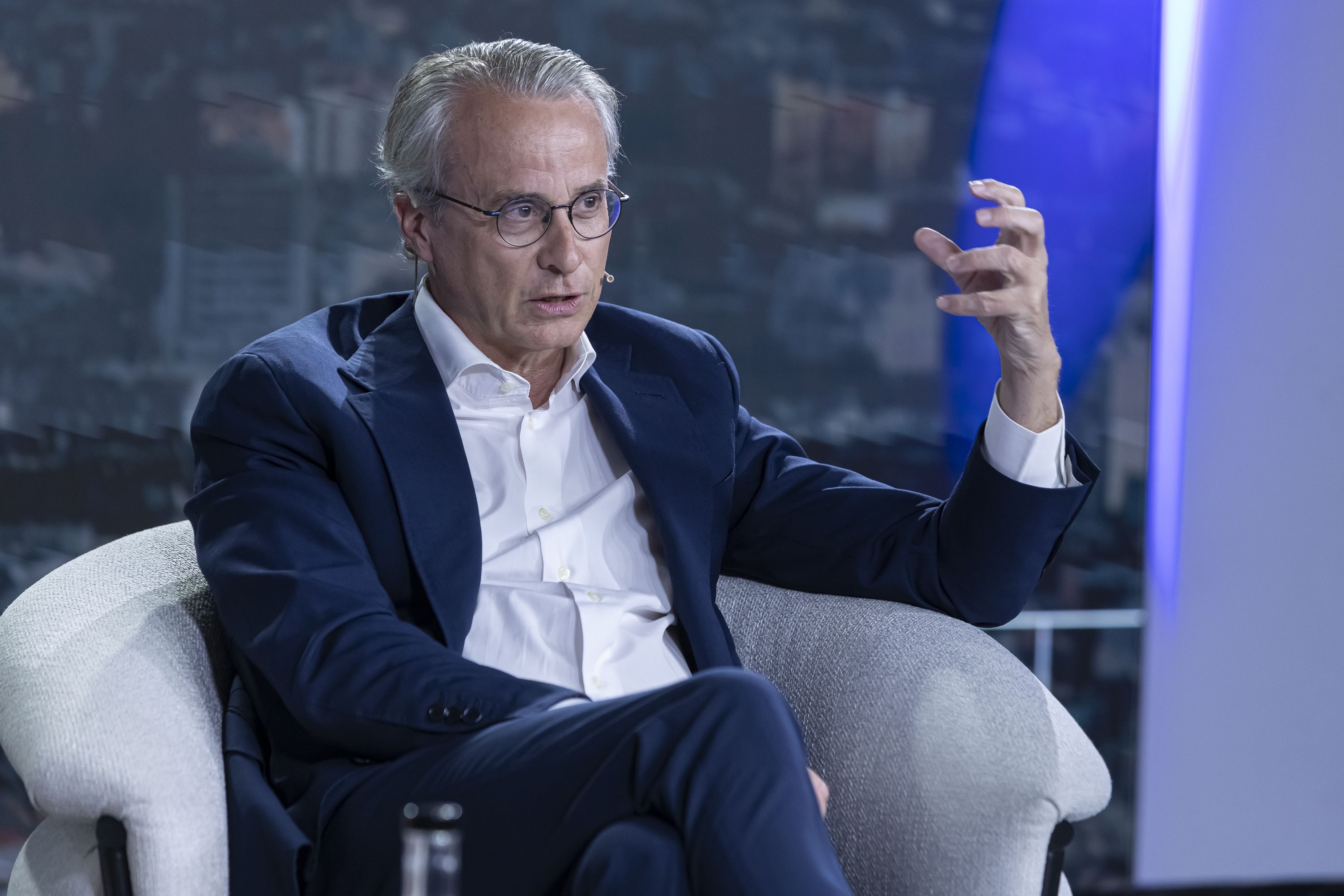
And, despite this demanding diagnosis, the session has also left room for a more constructive view. The director of Turisme de Barcelona, Mateu Hernández, claimed at the beginning of the session the positioning achieved by the city in recent decades. "Barcelona is a city that has decided to play in the league of the great global capitals, and it has done so successfully." A success that, he pointed out, also implies managing tensions similar to those of other large metropolises, but that places the city "above many others such as Marseille, Manchester or Birmingham."
Looking to the future, the director of Turisme de Barcelona reconnects with the central idea of the session: tourism as a tool. "Tourism is a tool for transformation," he states, arguing that the objective must be to continue using it to "generate prosperity and well-being for citizens," to transform Barcelona and continue accompanying it in its future challenges.
Add The New Barcelona Post as your preferred Google source for free
Stay informed with the latest news.