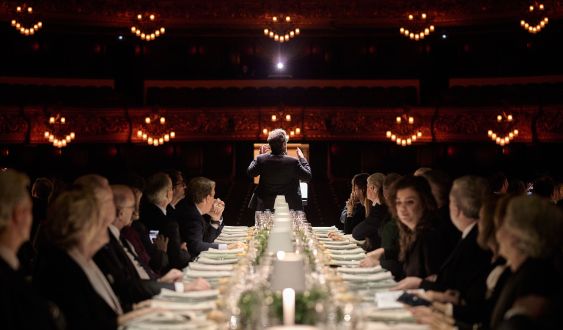
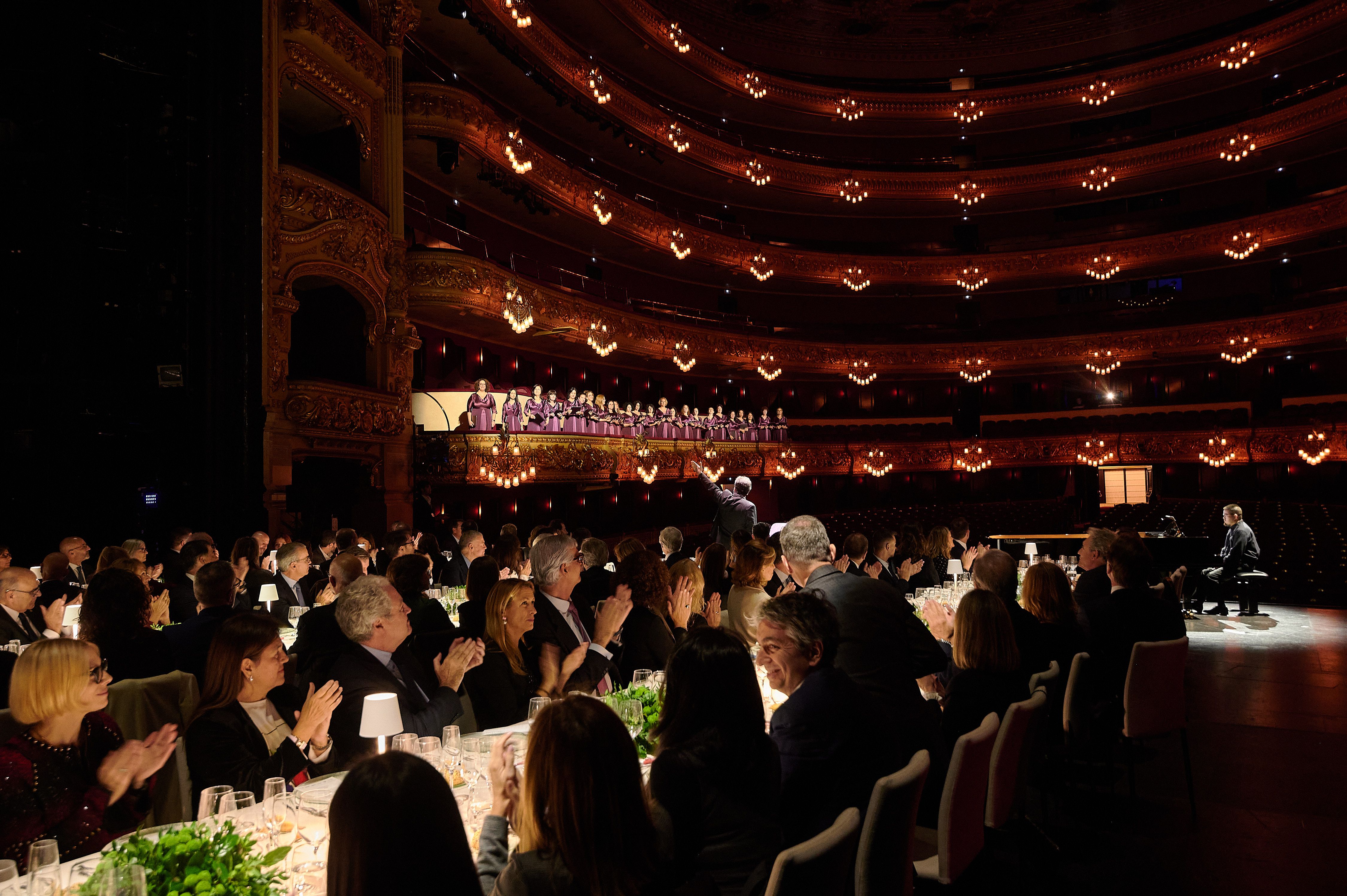
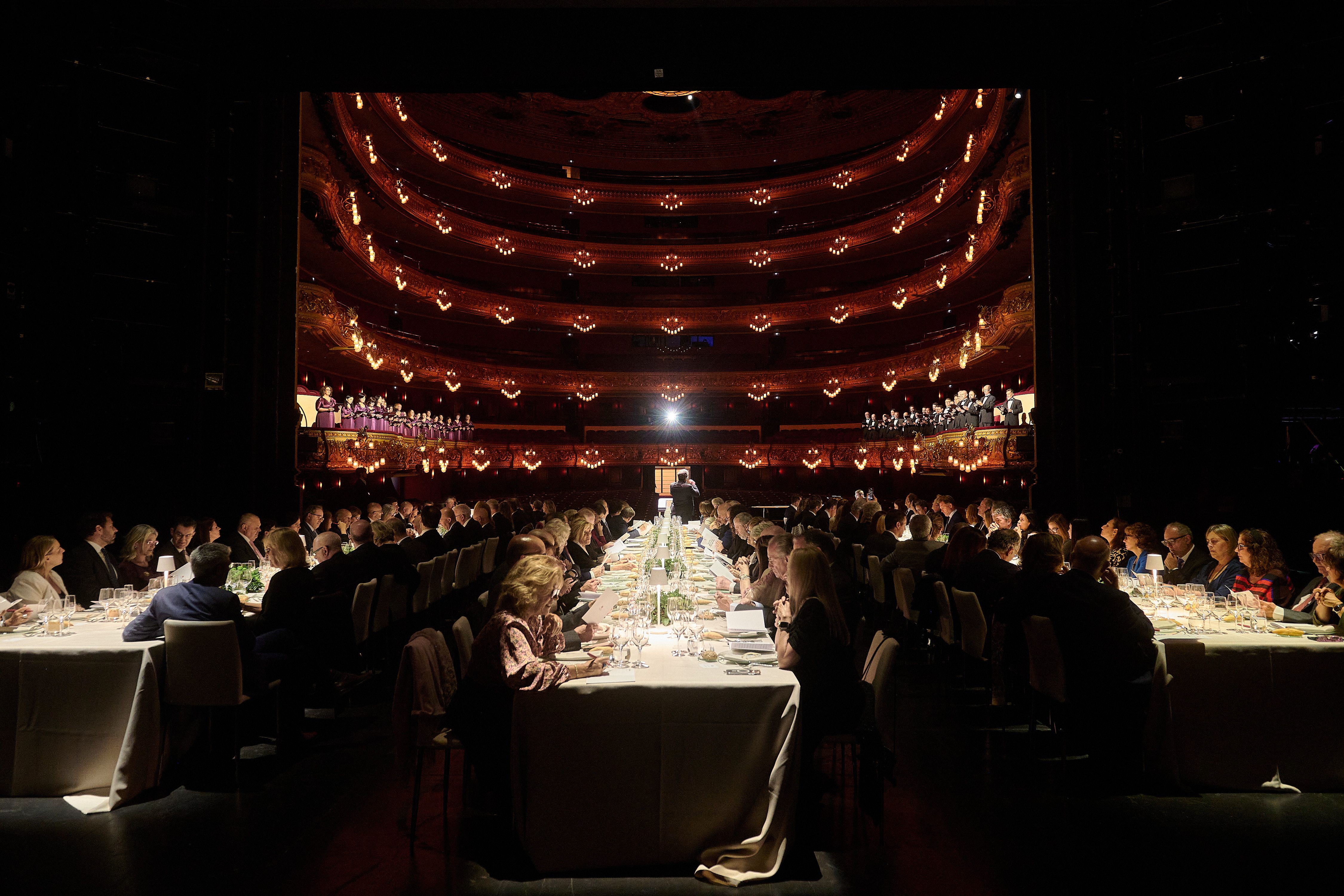
The Gran Teatre del Liceu experienced, last Friday, November 7, an evening of those that remain etched in collective memory. "La Nit del Liceu i l'Empresa" transformed the theater stage into an exceptional meeting space between culture and the business fabric, a shared celebration that transcended protocol to become a sincere tribute to collaboration, vision, and commitment.
The event brought together top-level institutional and business representatives, starting with Miquel Sàmper, Minister of Business and Labor; Josep Maria Carreté, General Secretary of Culture; and Ma. Eugènia Gay, Second Deputy Mayor of Barcelona. They were accompanied, among many others, by influential figures from the economic and cultural world such as Tomás Muniesa (CaixaBank), Josep Oliu (Fundació Banc Sabadell), José Manuel Casas (Telefónica), Sonia Colomar (Santander), Rafael Chueca (Fundació "la Caixa"), Jordi García Tabernero (Naturgy), Anna Orti (Indra), Javier de Antonio Oña (MMT), Ignasi de las Heras (Mapfre), M. Pilar Fernández Bozal (EY), Elena Fort (Futbol Club Barcelona), Immaculada Amat and Guifré Homedes (Amat Immobiliaris), Teresa Gracia-Milà (Cercle d'Economia), Salvador García-Ruiz (Telefónica), Jaume Gramona (Gramona), Llucià Homs (Fundació Salvat), Mr. Juanjo Llopis (Caixa d'Enginyers), Miquel i Sílvia Martí (Fundació Moventia), Sonia Mulero (Fundació Banc Sabadell), Eva Valenzuela (AENA), Raimon Ripoll (Deloitte) or Ricardo Rodrigo (RBA). An impressive mosaic of leadership and sectors that reflects the transversality of commitment to culture. All of them shaped a night that, due to the density of talent and commitment, had a unique character.
A stage transformed into a celebration hall
The invitation already anticipated it: it would be a "very special" evening, a moment of reunion and recognition for the companies that have supported the Liceu in recent years and those that have recently joined. In a year that commemorates the 25th anniversary of the Petit Liceu, the meeting also took on the symbolism of celebrating a fundamental educational project for the future of the Theater.
The dinner took place on the stage itself, a space that the general director of the Liceu, Valentí Oviedo, described as "sacred," recalling that it is there that the curtain rises to show the world talent, imagination, and creativity. In his speech —delivered from the center of the table, in the style of a wedding—, Oviedo built a bridge between past, present, and future, recalling that creators are those who "bring light and imagine new realities that help the rest of us discover which paths to follow."
And he did so with an evocative parallel: without Händel, Mozart would not exist; without Mozart, perhaps there would be no Beethoven; without Debussy, Falla, or Bizet, we would not have the contemporary creators who today drive culture. "Without all of them," he added with a smile, "very probably we wouldn't have Rosalía either."
His reflection on the role of human creativity in times of artificial intelligence resonated among the attendees: a reminder that technology can accompany, but not replace, sensitivity, curiosity, and the creative spirit.
The voice of patronage: a bridge between generations
The president of the Patronage Council, Helena Guardans, brought a human and inspiring tone to the night. Recalling the rebirth of the Liceu in 1999, she emphasized the strength of that "gesture of trust and commitment to the city" that united people, institutions, and companies. Her words vindicated patronage as a driving force for social cohesion, future, and excellence: "We are heirs of a gesture of trust and, at the same time, sowers of the future."
She recalled that the Liceu is "much more than a theater: it is a space where tradition and innovation dialogue," a meeting point where culture has the capacity to transform, open horizons, and move, performance after performance.
A night that sets the path
The evening, meticulously organized by the Liceu's patronage team led by Helena Roca, also served to reinforce the Liceu's vision for the future (the institution with the greatest patronage capacity in the country): a future declared as international, open to new audiences, more technologically advanced, and faithful to the humanist values that have marked its history.
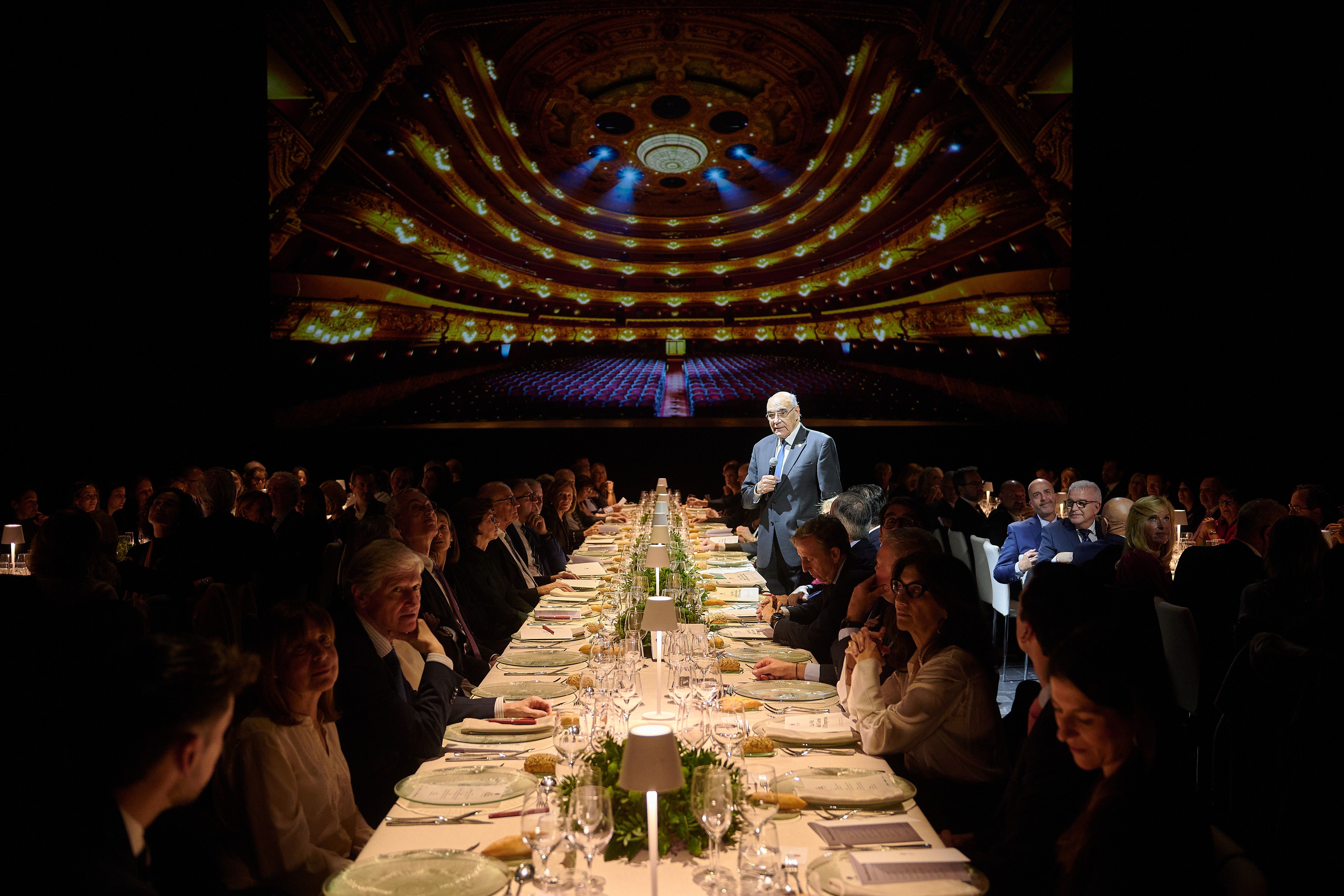
From the Presidency of the Fundació del Gran Teatre del Liceu, Salvador Alemany expressed his gratitude to all patrons and companies, highlighting that the support of attendees "transcends the doors of the Gran Teatre and becomes a commitment to culture and to the city." In this sense, the minister Miquel Sàmper wanted to vindicate the role of entrepreneurs in the construction and support of culture, and placed the Liceu as one of the great references of collaboration between the public world and the strength of the private sector.
A memorable night, a shared spirit
The dinner unfolded with elegance and complicity among the guests. And also with a touch of competition, as the organization challenged attendees to guess five pieces of classical operas.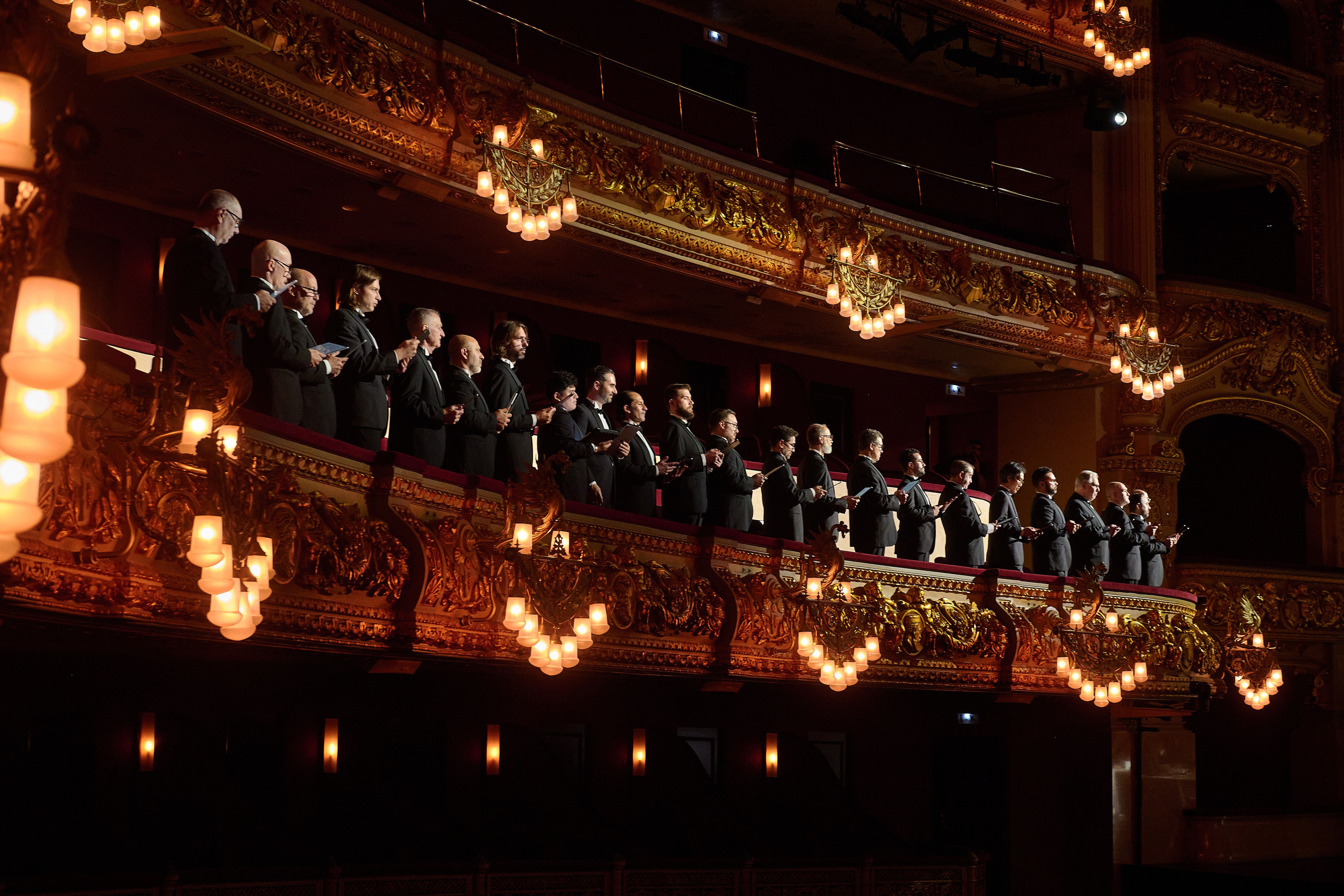
In this privileged atmosphere, surrounded by art and history, the message was clear: the Liceu remains a living institution, open and ambitiously connected with its time.
La Nit del Liceu i l'Empresa was not just a celebration, but a reminder of the transformative power of culture when companies, institutions and creators walk together. A memorable night that confirms, once again, that the Liceu not only makes history: the Liceu inspires it.
Add The New Barcelona Post as your preferred Google source for free
Stay informed with the latest news.