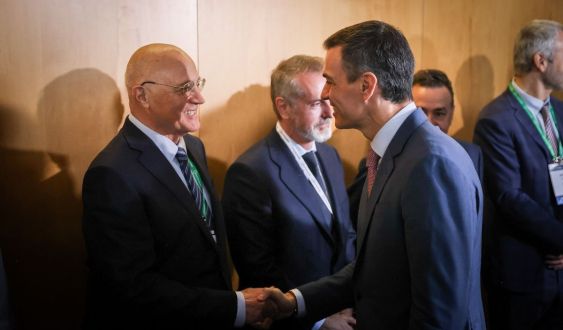
If there was a dinosaur in the room this Monday, it was clearly BBVA's hostile takeover bid against Banco Sabadell. Before the start of the annual meeting of the Cercle d'Economia, the question was where the president of the Catalan entity, Josep Oliu, was. His chair was reserved in the first row of the auditorium of the Palau de Congressos de Barcelona, as was that of the president of BBVA, Carlos Torres. When the President of the Government, Pedro Sánchez, was about to arrive, both chairs remained empty because both were waiting to greet him at the entrance. Accompanied by the notary Camino Quiroga and the businessman Marc Puig, Oliu and Torres exchanged impressions, or uncomfortable phrases, before Sánchez's arrival.
The Spanish president left little room for doubt about the Government's intention after the report from the National Commission of Markets and Competition (CNMC), which unanimously gave the green light to the absorption operation last week. In the inaugural talk, Sánchez pointed out that the CNMC has detected "some excesses" in the concentration in payment methods, deposits, and loans to individuals and SMEs, so the operation is subject to commitments that can be extended.
To decide whether the operation is elevated to the council of ministers, the executive has decided to open a prior public consultation on Tuesday to gather the opinions of organizations, associations, and citizens. "Our intention is to help our companies grow and gain competitiveness, as long as it benefits the common interest of the country," Sánchez stressed.
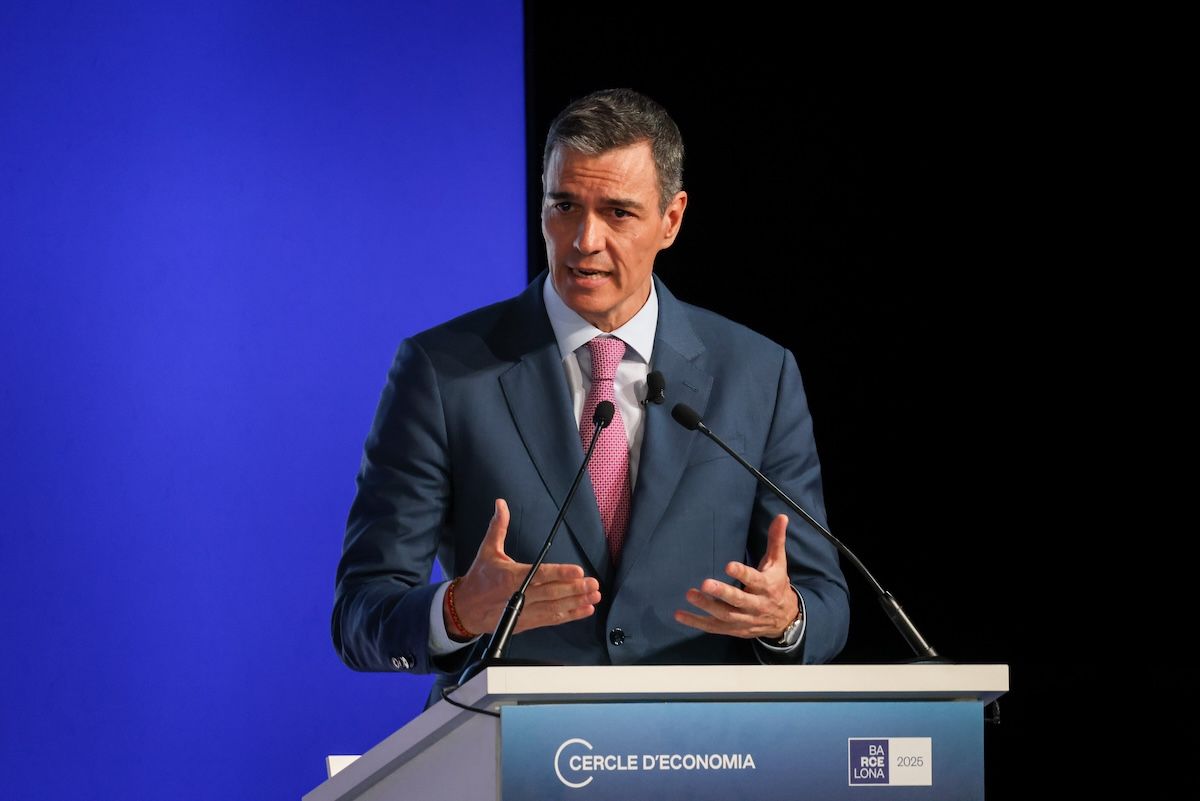
A proposal that no one in the room expected, with a front row occupied by the Minister of Industry, Jordi Hereu, the President of the Generalitat, Salvador Illa, the Mayor of Barcelona, Jaume Collboni, and businessmen such as Marc Murtra (Telefónica), José Creuheras (Planeta) and Marc Puig (Puig). Nor did the president of BBVA suspect it, who quickly left the meeting, saying goodbye with a brief "maximum respect" for the decisions. This breath of fresh air was felt differently at Banco Sabadell after the disappointment of the CNMC's positive report on the operation. Without wanting to elaborate too much either, Oliu valued the Government's plan as "positive."
In the same vein, employers' associations Foment del Treball and Pimec have reacted. "There's a game," said Pimec president Antoni Cañete, while Foment president Josep Sánchez Llibre called on the Government to halt an operation that could cause a credit loss of 70,000 million euros. For the Association of Minority Shareholders of Sabadell, it is "very good news," according to its president, Jordi Casas.
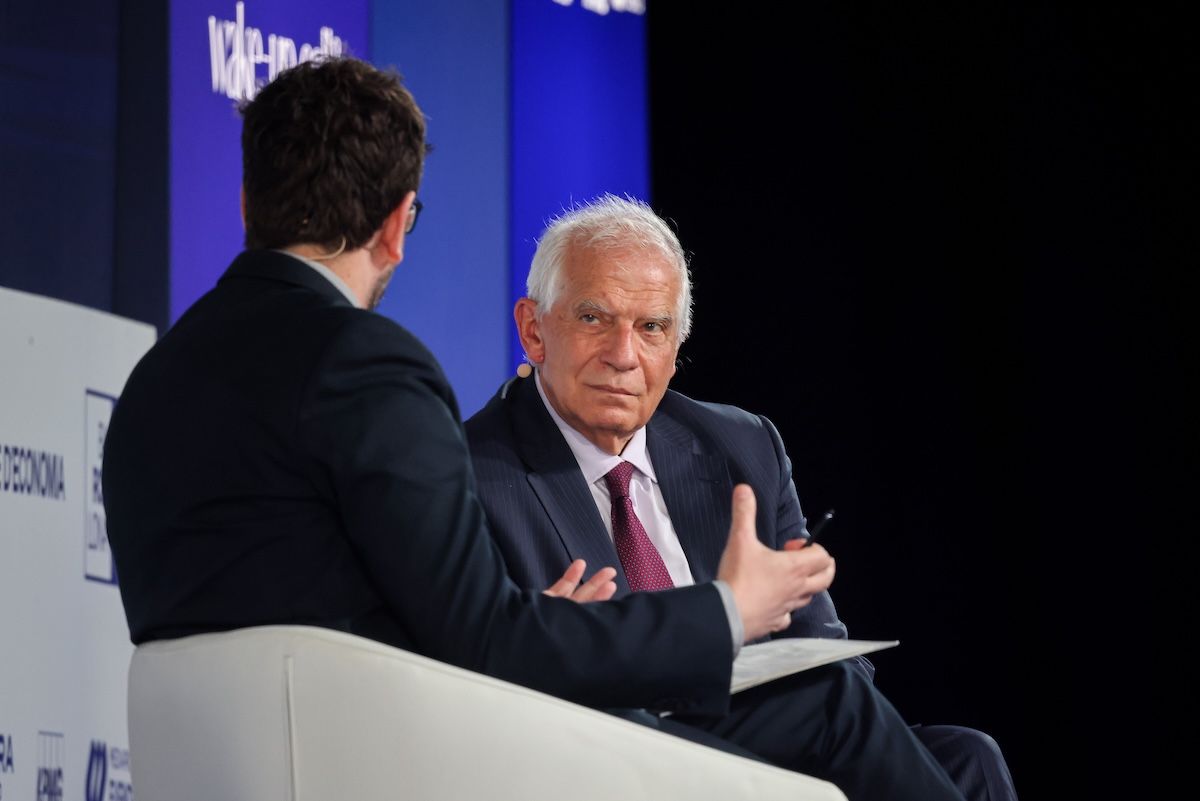
In a meeting of the Cercle that aims to make Europe react, the war in Ukraine has been present: "Geopolitical balances don't have to be in your home to threaten you"With the start of a new chapter in the financial soap opera of the last year, there has been room for more. In a meeting of the Cercle that wants to awaken Europe to global uncertainty, the war in Ukraine has been present with the vision of the president of the Barcelona Centre for International Affairs (CIDOB) and former High Representative of the Union for Foreign Affairs and Security Policy, Josep Borrell, who wanted to recall something that is not as present in Spain as the fact that this conflict, although far away, is not so far. "Geopolitical balances don't have to be in your home to threaten you," he summarized. For this reason, he called for strengthening the defensive capacity of the European Union, especially in the face of a United States president who generates "enormous distrust" and "is not trustworthy."
But, just seven days later, the great blackout has also crept into the talks. "Our will is firm. We want to go all the way," Sánchez stressed. Even without clear causes, the President of the Government applauded the citizen response and the rapid recovery of normality, in addition to defending clean energies as a lever for economic growth and a brake on the climate emergency.
Alliance of European cities for housing
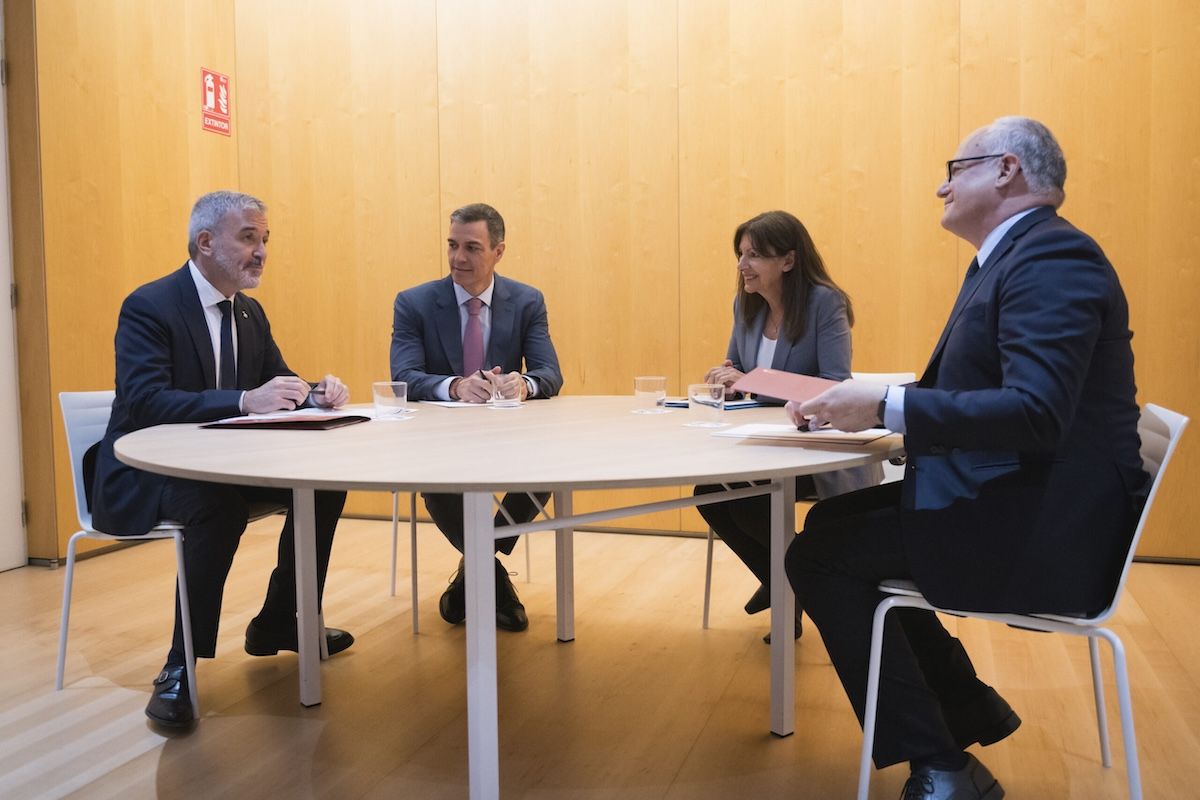
In a forum that usually brings together the main national political representatives, with the Minister of Economy, Carlos Cuerpo, scheduled for Tuesday, cities have raised their hand in this edition. Barcelona, Paris, and Rome have participated to focus on the main source of inequality for their residents: housing. "We share the same challenges," defended the mayor of Barcelona, Jaume Collboni. The three municipal governments demand specific European funds for the construction of public housing, also including the private sector, as added by the mayor of Paris, Anne Hidalgo. Before taking it to the Committee of the Regions in the coming days, Collboni and Hidalgo, along with the mayor of Rome, Roberto Gualtieri, presented it to Sánchez, who supported the demand.
Add The New Barcelona Post as your preferred Google source for free
Stay informed with the latest news.
