
More than 5,000 years of beliefs and interpretations of feminine power fluctuate, change, and contradict each other, but they also repeat. Produced by the British Museum and La Caixa Foundation, the exhibition Venerated and Feared. Feminine Power in Art and Beliefs reviews how different cultures have depicted women throughout the centuries, from goddesses and saints to witches and she-devils. Sometimes praised, sometimes marginalized, each presents different nuances depending on the region and era, reclaiming over the years figures once reviled or censoring those once admired.
More than 160 pieces make up a journey that begins in prehistory and extends to the 21st century, with the oldest works being small female figures carved in marble found in Greece, venerated by the inhabitants of the Cycladic islands of the Aegean Sea thousands of years ago. The exhibition moves away from a Western vision and integrates other ways of seeing the world, in equality, without prioritizing local values to discover other forms of understanding femininity, not always as weak and beautiful, but also as strong and energetic.
With such a broad period and points of view, the exhibition brings into dialogue a statue of the Egyptian goddess Sekhmet and a bust of the Roman goddess Minerva with a mask of the Balinese demon queen Rangda and an icon of the Indian goddess Kali. But there is also the Virgin Mary, "a complex and fascinating spiritual figure," in the words of its curator, Belinda Crerar, seen as the savior in a small French statue or a figure of national pride in the Mexican mosaic of the Virgin of Guadalupe. "From Western feminism, she is seen as very oppressed, contrary to Eve, but, when you study how she is interpreted around the world, it is not like that," emphasizes Crerar.
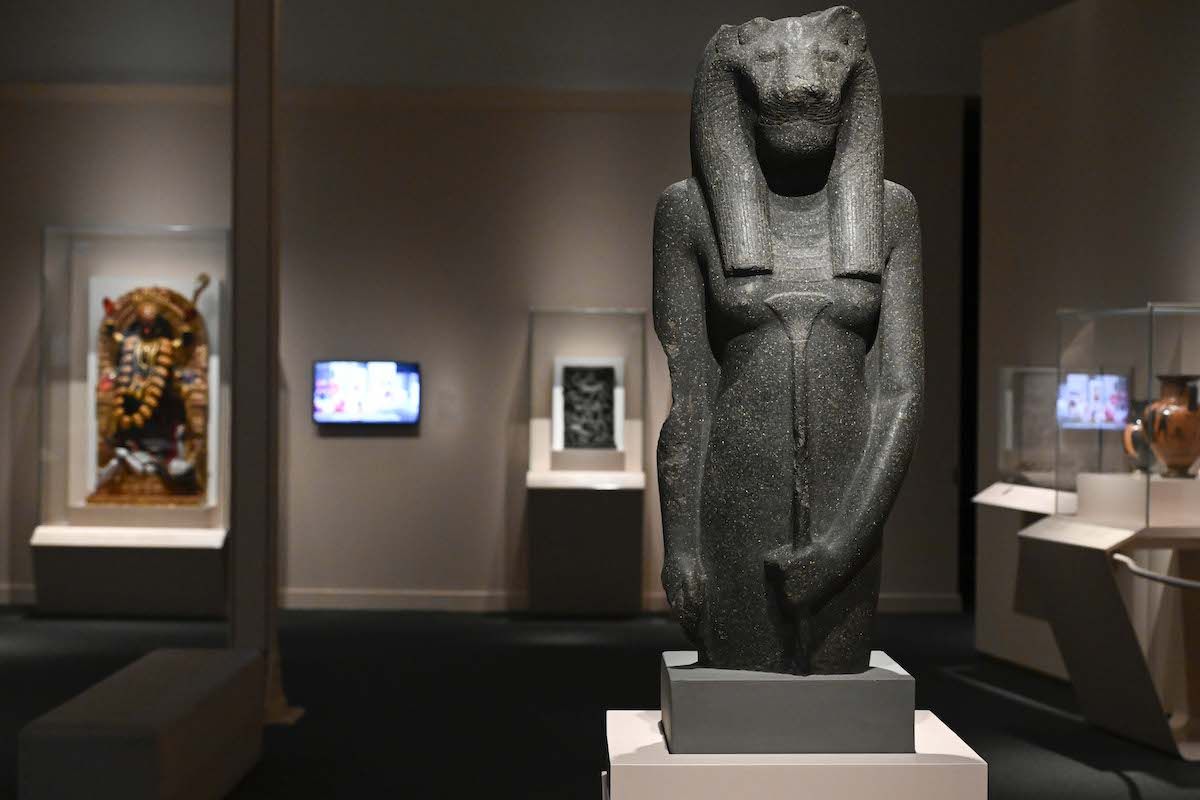
All of them show different approaches to concepts such as nature, desire, destruction, intelligence, and protection. "They are historical pieces, but they reflect contemporary ideas," summarizes Crerar, who had been working on this exhibition since 2013. The British Museum curator detected that the pieces in its immense collection representing women were not historical figures, but spiritual ones. This was the germ of an exhibition that brings together pieces more intended to be seen in temples than in museums and features jewels such as a 4,000-year-old relief of Ishtar, the Mesopotamian goddess of the sky, represented as a warrior and the embodiment of sexual desire and, moreover, often referred to as both a feminine and masculine figure at the same time.
The goddess Ishtar was what caught the attention of curatorial advisor Rosa Martínez, who has participated in the exhibition complementing it with works by less ancient artists such as Serbian Marina Abramović, Ecuadorian Saskia Calderón, South African Zanele Muholi, and Barcelona-born Tania Berta Judith. "Contemporary art shows why we still care about ideas from thousands of years ago," Crerar points out. "There is a synchronicity that has united historical pieces with contemporary pieces. The viewer is invited to establish the threads and project what each one sees," adds Martínez. The total shock comes with the Spanish artist Cristina Lucas, who destroys with hammer blows a replica of Michelangelo's Moses, representative of patriarchal religion.
After being seen at the British Museum, the National Museum of Australia, and CaixaForum Madrid, Venerated and Feared. The Power of Women in Art and Beliefs opened to the public this Wednesday at CaixaForum Barcelona and can be seen until June 16. The exhibition is accompanied by an extensive program of activities such as a series of short films chosen by filmmaker Carla Simón and talks by Lucía Lijtmaer, Eider Rodríguez, and Begoña Gómez Urzaiz, as well as a Ciberlocutorio session, the podcast by Andrea Gumes and Anna Pacheco.
Add The New Barcelona Post as your preferred Google source for free
Stay informed with the latest news.
