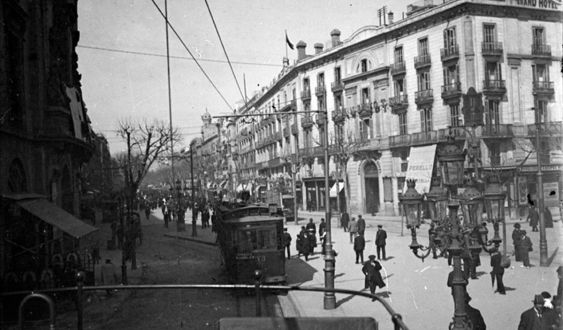
Every two Fridays, in The New Barcelona Post we will open the doors of a hotel with history. We will not only talk about large five-star establishments, which we will also do, but also about inns, guesthouses and hotels that, without fanfare, have witnessed the history of Barcelona: places that hosted geniuses, adventurers or almost anonymous characters who left their mark.
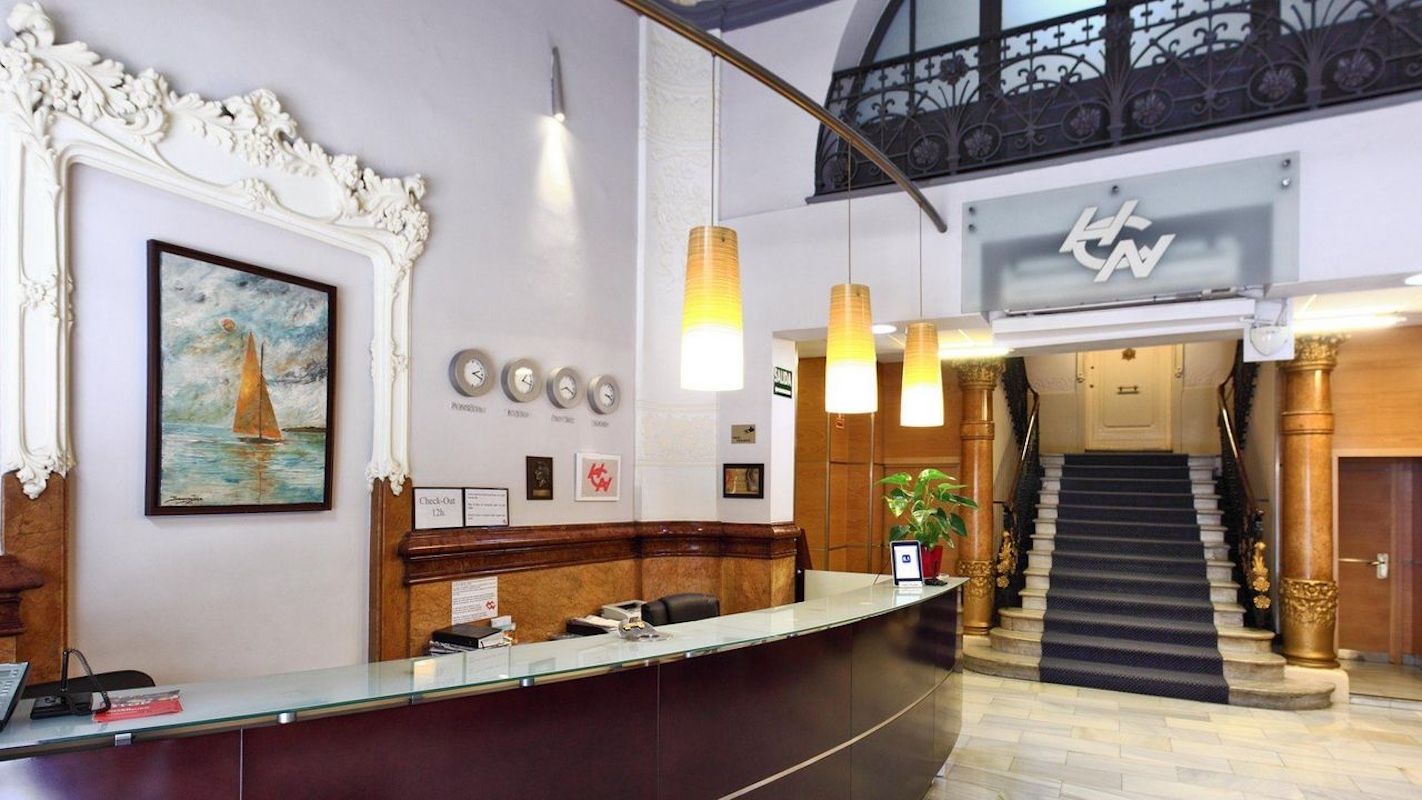
We start at number 40 of La Rambla, where a neoclassical building with a sober facade resists the passage of time. It is the Hotel Cuatro Naciones, an unpretentious two-star hotel, with balconies overlooking the human river of the promenade and a simple and old-fashioned hall that hides a glorious past. With this unexpected protagonist begins Hoteles con Historia, a fortnightly series to rediscover Barcelona through its beds, guests, invoices and secrets.
The Cuatro Naciones opened as a coaching inn, a key point for the stagecoaches that connected Barcelona with France, Italy, Portugal and other cities in Spain, hence its name. La Rambla, at that time, was a dusty promenade with more carriages than tourists, beginning to define itself as the axis of the city.
The hotel, with its crystal chandeliers, linen-dressed tables and a service that imitated French luxury, was the place where Barcelona welcomed the world. Its lounges saw leather suitcases pass by, contracts signed with a quill pen and travelers who left their names in now yellowed registers. For about 120 euros a night, today you can sleep under the same roof where Stendhal, Chopin or Buffalo Bill once did.
Stendhal in Barcelona
One of the first guests of whom there is official record is the French writer Henri-Marie Beyle,more commonly known as Stendhal, who arrived at the Four Nations after an exhausting trip through Spain. In hisMemoirs of a Tourist,he describes it as "a beautiful place in the center of Barcelona", perfect for a dinner after hours of rattling in a carriage.The Rambla he saw was a hive of activity: street vendors, the aroma of fresh bread, the port a few steps away, and the trot of horses on the cobblestones. For Stendhal, the hotel was an oasis of order in a city that dreamed of being modern. His notes, precise and somewhat ironic, paint a vibrant Barcelona, with the Cuatro Naciones as his Catalan refuge for a few days.
Chopin and the burned mattress
In November 1838, shortly after the writer-traveler's stay, other famous guests crossed its doors: Frédéric Chopin and George Sand. Their destination was Mallorca, seeking a mild winter for the composer's fragile health. They stayed briefly at the Cuatro Naciones before embarking on a packet boat similar to the Santa Eulàlia, which the Museu Marítim still preserves.At its peak, the hotel offered them a piano in the lounge and dinners with views of the hustle and bustle of La Rambla. Then, the Mallorcan dream turned into a nightmare: the island's humidity aggravated Chopin's tuberculosis.
Months later, the couple returned exhausted to Barcelona and the Cuatro Naciones. The musician, so weak he barely left the room, coughed under the sheets while Sand organized their return to France. The bill for that stay includes a chilling detail: an extra charge for "destruction of a mattress."
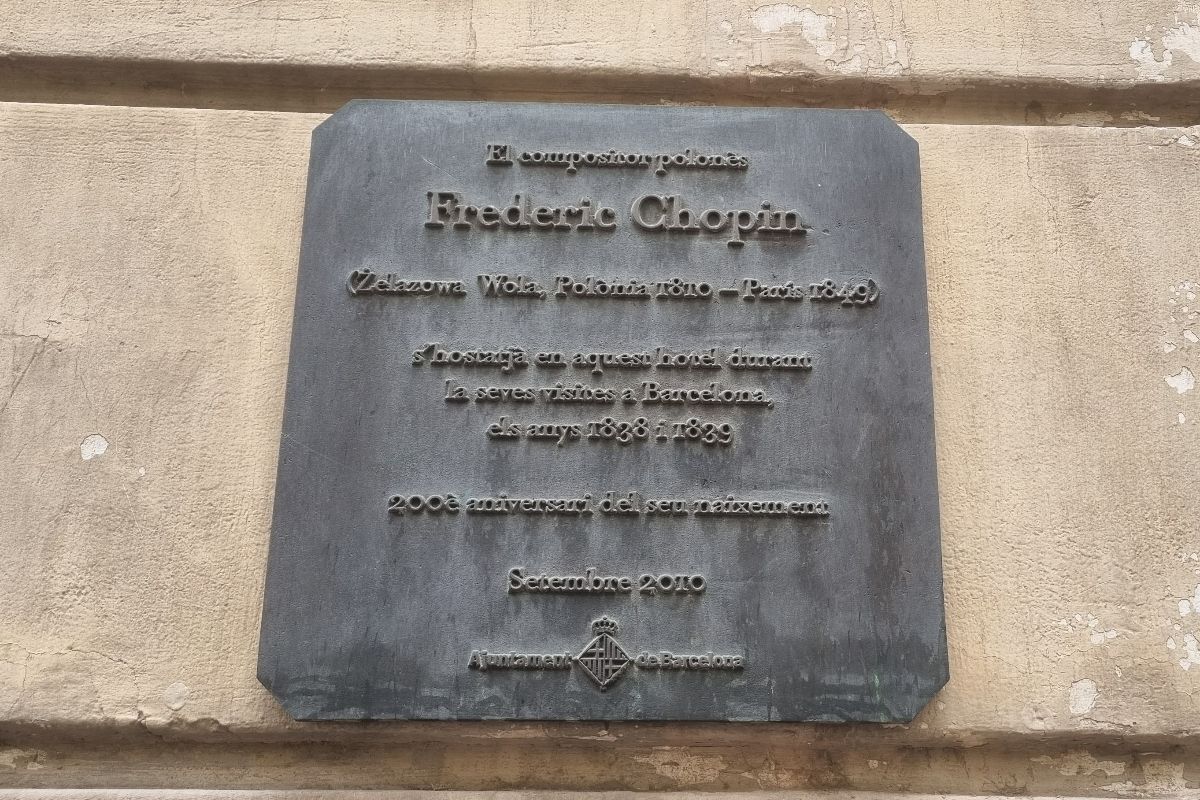
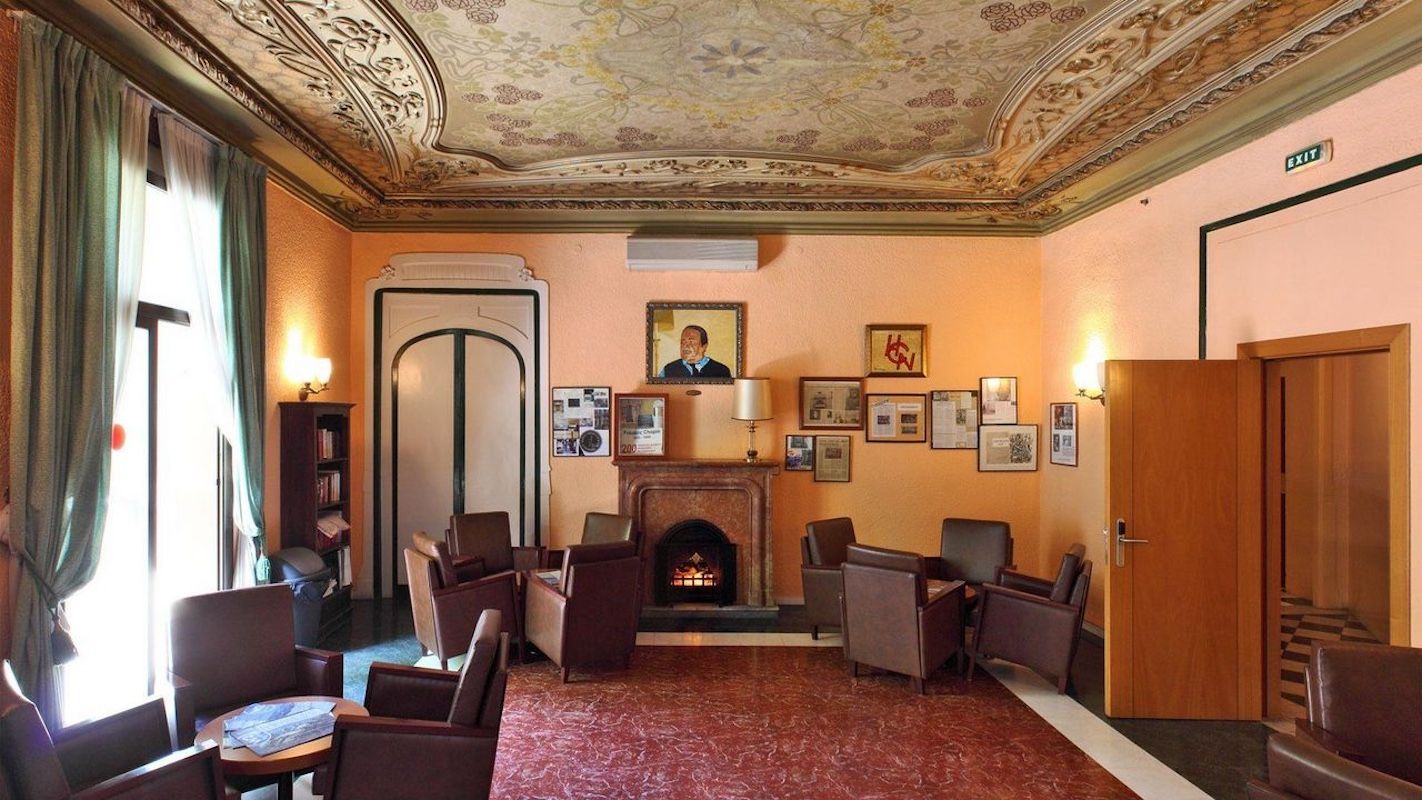
According to the sanitary precautions of the time, the manager, fearing the disease was contagious, ordered it burned. Sand paid without complaint, but the gesture remains: the bed of a genius, reduced to ashes. A plaque on the facade, placed by the City Council, commemorates their double visit, and a small Chopin Room, with armchairs and paintings, pays tribute to the composer.
Buffalo Bill and the Wild West show
Decades later, in 1889, the hotel's tone changed with the arrival of Buffalo Bill. The legendary showmanbrought hisWild West Showto a Barcelona in the midst of modernist fever: cowboys, Sioux Indians, and buffalo that made the city vibrate.William Cody, who had hunted bison and negotiated with generals, chose the Four Nations as his baseHe was seen in Paral·lel, toasting with cava and signing autographs, turning the hotel into more than just a refuge for elites.Today, the Cuatro Naciones is a humble survivor. Its 54 rooms, with balconies overlooking the hustle and bustle of La Rambla, welcome young tourists and couples on budget getaways. Breakfast, with coffees, juices, and croissants, doesn't rival that of large hotels, although el place is a small museum: the walls of the common areas are full of press clippings and photos, such as those signed by other well-known guests like Albert Einstein, who slept here in 1923 invited by the scientific community, or Ulysses S. Grant, who sought calm in Barcelona in 1878 after leaving the presidency of the United States.
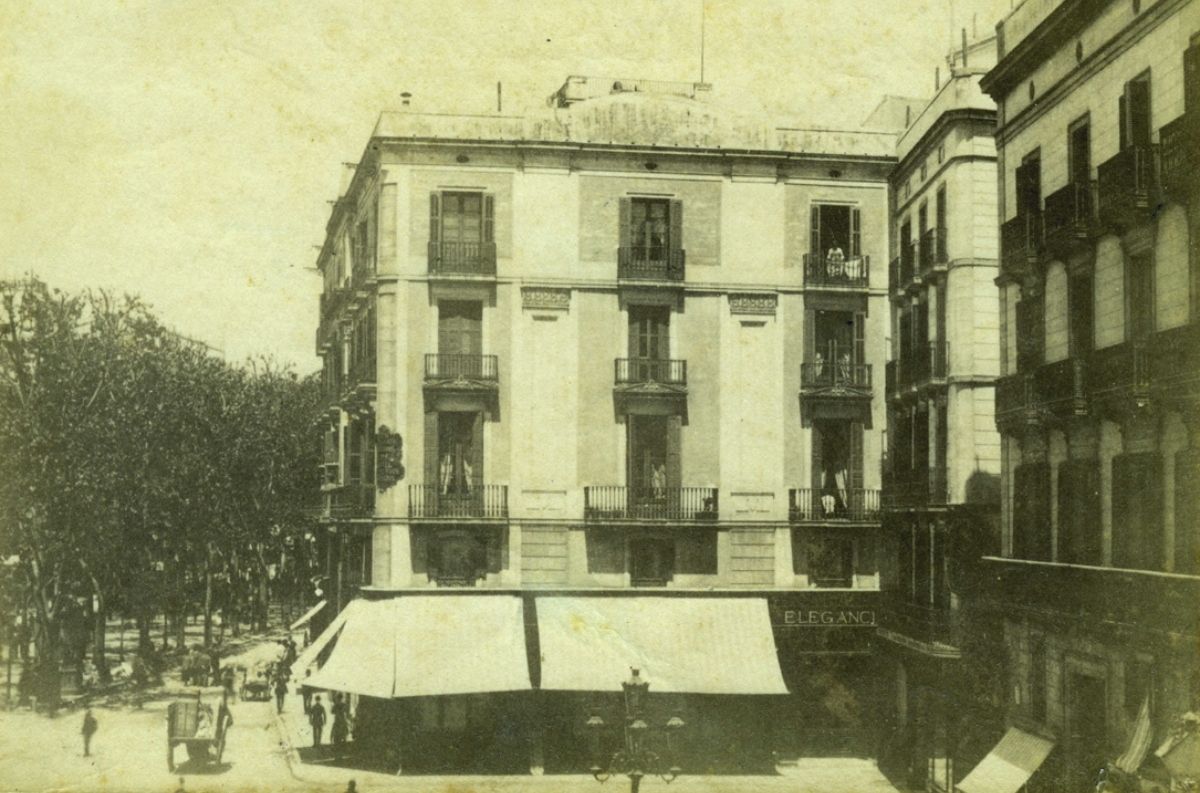
The facade, with cast iron details and dragons that held the gas lighting, evokes its stately past. The true luxury of the Cuatro Naciones lies in its history, in the beds where geniuses slept and in the corridors they walked.
Every two Fridays, Hoteles con Historia will open a new door: perhaps it will be with the guesthouse where George Orwell hid during the Civil War, the mansion that kept the verses of a cursed poet, the lounge where Roger Moore served cava to the rest of his table companions, the hotel where Picasso painted his first works, the establishment where the big names of Formula 1 landed directly in its backyard, or the bar where Hemingway raised his glass for lost causes. These are time capsules that still beat in Barcelona. We will talk about them.
Add The New Barcelona Post as your preferred Google source for free
Stay informed with the latest news.