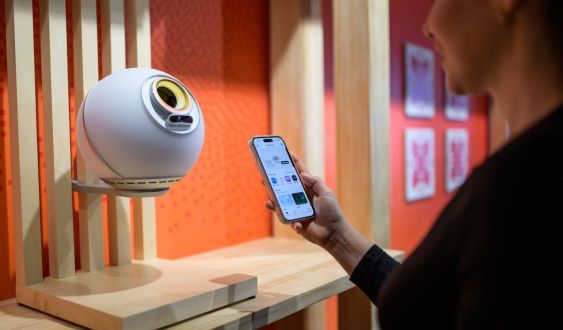
"When anything can be manufactured with AI and given the use of bots, how do we know who to trust on the Internet?". This is the reflection from which the World project was born, posed six years ago by OpenIA co-founder Sam Altman. Now it is formulated by Tiago Sada, behind the impulse of World and its proof of humanity system: an iris scan as an identifier of human reality. How? With cameras designed ad hoc —the Orbs—, which now land in Barcelona in what will be World's first flagship in Spain.
"The camera takes a photo of you to know that you are a real person, and these photos are not stored in the system, but directly on your mobile as a user. These photos only live on your device," guarantees Sada, head of product at Tools for Humanity, the company developing the World Network. That photo is the proof of humanity, and the one that allows obtaining the WorldID that accredits it. "We don't ask for any personal information and nothing is shared. The user, and only the user, has control over how they use it," he emphasizes.
And what is this humanity ID for? "To differentiate a human being from a bot," something that has applications in fields as varied as dating apps, financial services, and buying tickets for a concert (and not running out because a bot has acquired hundreds of them to then resell them): "The idea is that real people will have priority on certain Internet pages and services." Obtaining this humanity validation is free for the user; the business model involves websites or apps paying for the technology if they want to use it so that their users are verified as people.
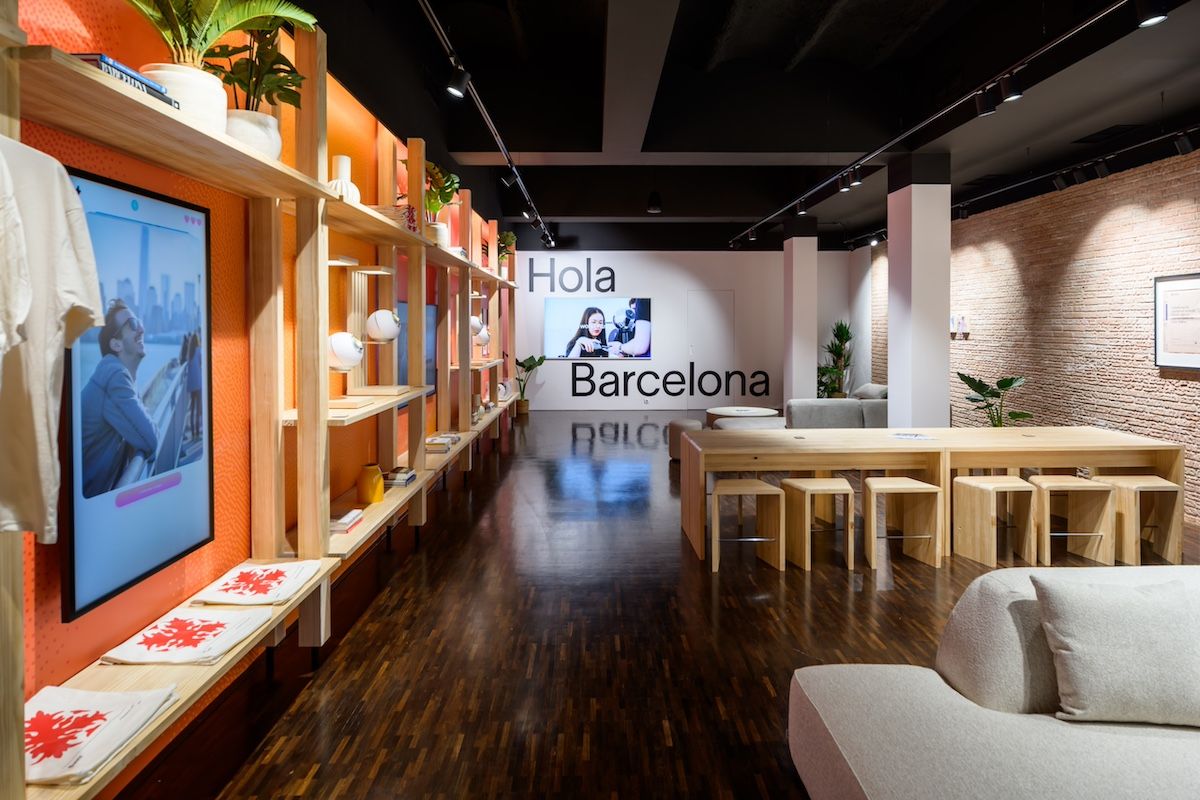
Now, the Orbs arrive in Barcelona in what will be the first World Space in Spain. Located at Diagonal with Aribau, the space will operate as a pilot test, within a network that has locations throughout the world —currently, nearly 20 million people globally have this WorldID verification—. "The intention is to start in this pilot location, in the country's technological capital, and see how people react and how they use it," Sada highlights. The center was scheduled to open on Thursday, but the wind episode has led to postponing its inauguration, now pending rescheduling.
Despite this premiere, it is not the first time that the Orbs have scanned irises in Barcelona; previously under the name of Worldcoin, the futuristic spheres operated in various shopping centers in the city, within some thirty locations nationwide, where the operation was different: with the iris scan, Worldcoins, the cryptocurrencies associated with the company, were delivered. The biometric project caught the attention of the Spanish Data Protection Agency, which in 2024 decreed the precautionary suspension of its activity, a decision upheld by the National Court.
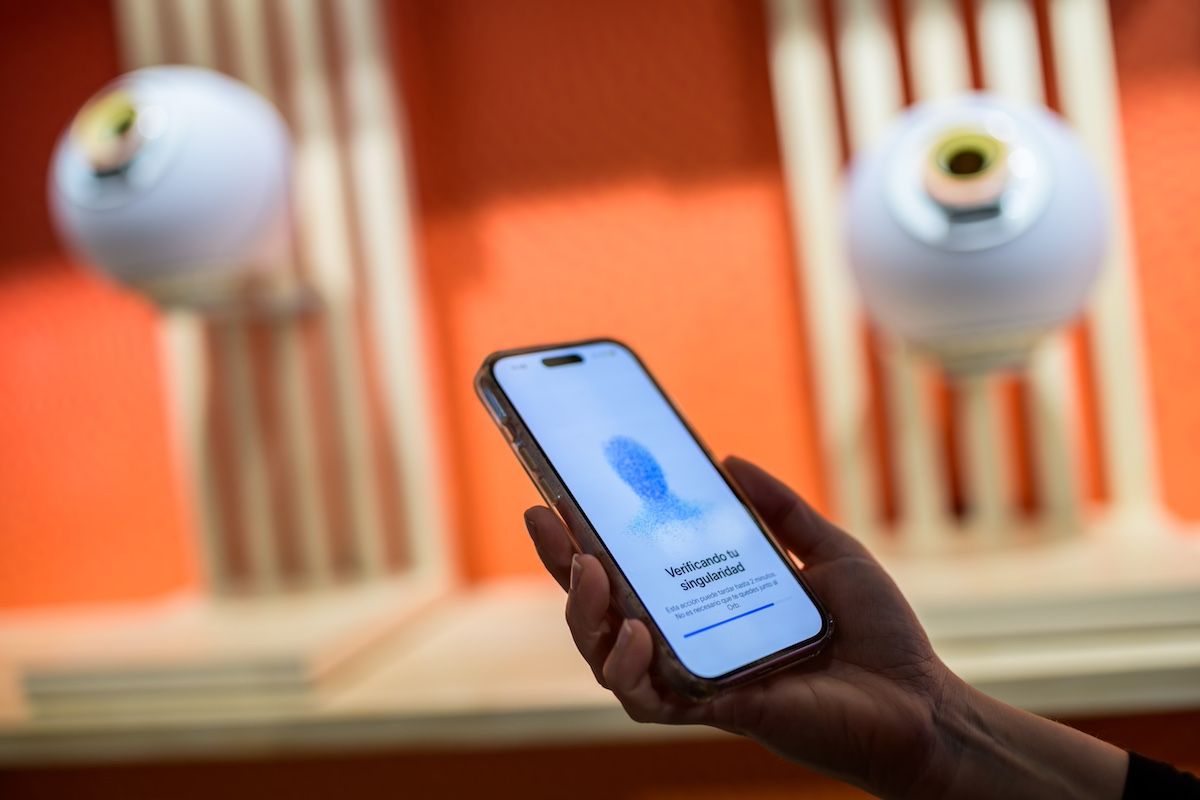
With its new name World, the company assures that it operates in Spain "fully complying with applicable European laws and regulations." It highlights that, in addition, World has implemented a series of technical and organizational improvements to reinforce its "commitment to privacy." In this sense, as Sada points out, the images taken are not stored in the system, but are sent directly to the user's mobile, and the user decides "what to do with them." And the company insists: they have privacy and security practices that have been audited and evaluated by independent third parties.
200 million investment
Getting here has not been quick, as Sada explains: "The challenge of verifying that a user is really a person has been very clear for six years; solving it has been the difficult part." They started doing tests with phone or email verifications, and then with official identity cards, "but it was very easy to circumvent it with AI," and privacy was also a handicap. This is how they finally arrived at the Orbs, manufactured in Germany with an investment of more than 200 million dollars behind them, and with open-source technology.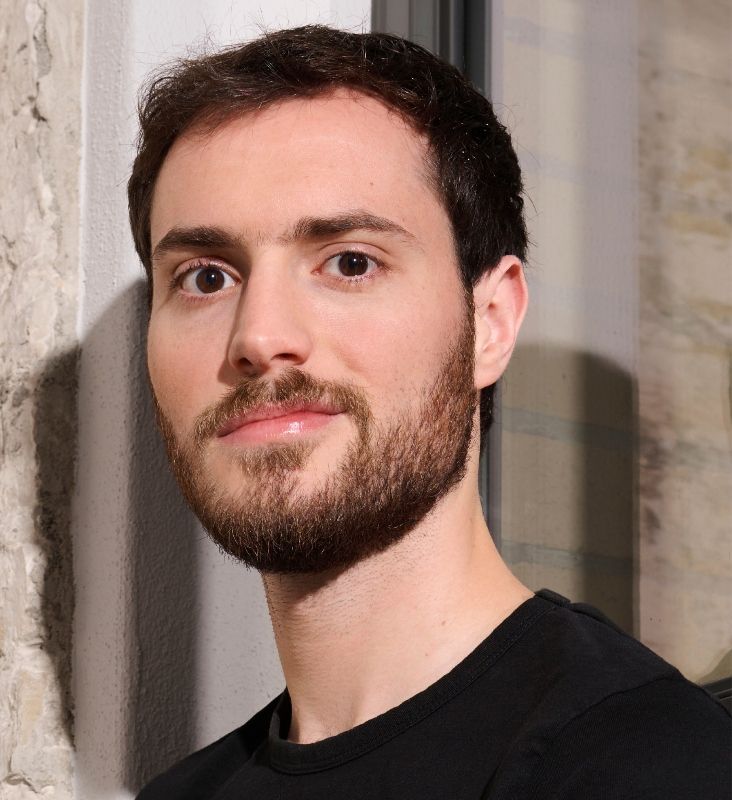
All of this to seek answers to a situation caused by AI itself, driven by Altman himself. In this, Sada does not see a contradiction or a paradox, but rather that "the companies that drive AI are the ones most interested in safe development." And he draws a historical parallel: "Volvo was the first company to make cars. It was a great advance, but driving a car involved challenges and risks. It was precisely Volvo that later invented the seatbelt, and not only manufactured it, but opened the patent so that any other manufacturer could use it." Risks of innovations that seek to be answered from the very engines of innovation.
Add The New Barcelona Post as your preferred Google source for free
Stay informed with the latest news.
