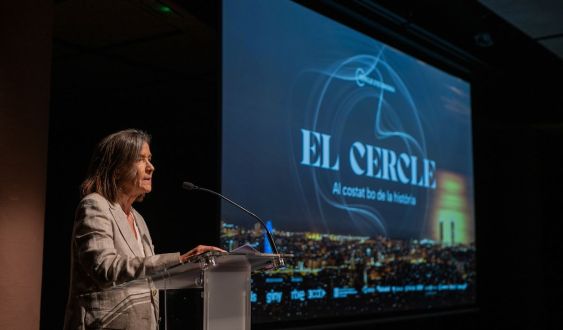
"The Cercle d'Economia was created during the dark days of the Franco dictatorship as a place to debate and imagine the future. And, since then, for more than six decades, it has remained on the good side of history." With this statement, the President of the European Commission, Ursula Von der Leyen, highlighted the work of the entity which, over the years, has consolidated itself as a reference and debate space in the Catalan ecosystem. The good side of history, as Von der Leyen emphasized, of which the Cercle wants to continue being a part in its new stage, led by Teresa Garcia-Milà, who with her appointment has become the first woman to lead the entity founded in 1958.
A history of almost seven decades that the entity now reviews and vindicates with the documentary El Cercle, al costat bo de la història (The Cercle, on the good side of history), produced by Incís TV with the collaboration of Giny, and now available on the 3Cat platform. The audiovisual production revisits the transcendence of the Cercle in key moments of the political, economic, and social history of recent years. Because the history of the Cercle d'Economia is, at the same time, the history of Catalonia as a whole.
A close link with society that has existed since its beginnings, which date back to Club Comodín, a club that, in the form of a chess club ---to escape the Francoist prohibition of associations--- from 1951 met around a table, but not precisely to practice this game but to think and debate. Thus, the entity was born from the critical spirit of young university students who wanted to found a space "to talk about the issues that concerned us," as one of its founders, Joan Mas i Cantí, recalls, who was also one of its first presidents, along with Carles Ferrer i Salat, Carles Güell de Sentmenat, and Artur Suqué i Puig.
Even so, the influence of the historian Jaume Vicens Vives ---a character that the documentary revives through recreations with artificial intelligence--- was decisive in the entity's history, and his conference El capital de industria española en los últimos cien años (The capital of Spanish industry in the last hundred years) in 1958 before a group of young entrepreneurs, economists, and thinkers who would become the first members of this entity. Little by little, it became a tolerated space of certain freedom, despite Franco's prevailing dictatorship.
The tolerated public debate soon manifested itself in the well-known Reunió a la Costa Brava ---which was held for the first time in 1961 and which, after having taken place in Sitges for years, now takes place in the Catalan capital---. An annual meeting, which this year has celebrated its 40th edition, which manages to bring together the most relevant actors from the national and international scene to address debates that still concern society, and even manage to set the political agenda.
Since this first meeting, the Reunió del Cercle has been a reflection of the opinion of Catalan businesspeople and has also become a meeting and debate space during the different critical moments of recent decades, from the Transition, to the 2008 financial crisis or the 2017 referendum. During October 2017, members of the Cercle even met, on the one hand, with former president Carles Puigdemont, to ask him not to make the Unilateral Declaration of Independence (DUI), and, on the other, with King Felipe VI, who asked them for their opinion on the events.
To review this almost seventy-year history, and the role of the entity in society, the film has featured the voices of Josep Oliu, Carlos CuatreCasas, Jordi Pujol, Marc Puig, Pere Aragonès, Pedro Sanchez or Alberto Núñez Feijóo, as well as other personalities from the political, economic and business spheres; but it has also used historical documents and unreleased archives that review the centrality of the Cercle in public debate.
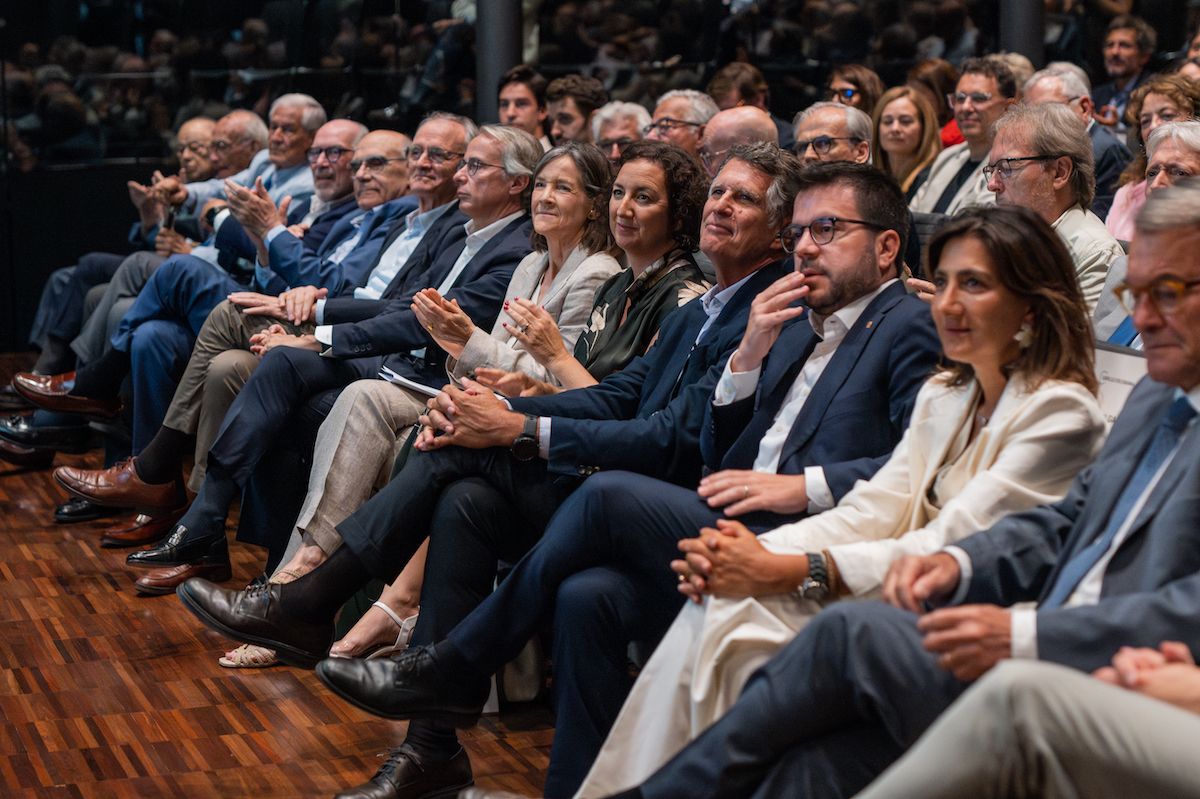
This centrality in public debate is confirmed not only by the different events reviewed by the audiovisual production, but also by the presence of relevant actors from the political, economic and social scene during the premiere of the documentary at an event in La Pedrera. Personalities such as former president Artur Mas, as well as the also participants in the audiovisual production Jordi Pujol and Pere Aragonès, and the current Minister of Economy and Finance, Alícia Romero, who has claimed that, "in times of global uncertainties like those we are experiencing, serious, calm and rigorous reflection helps us to leave the short term and look a little further."
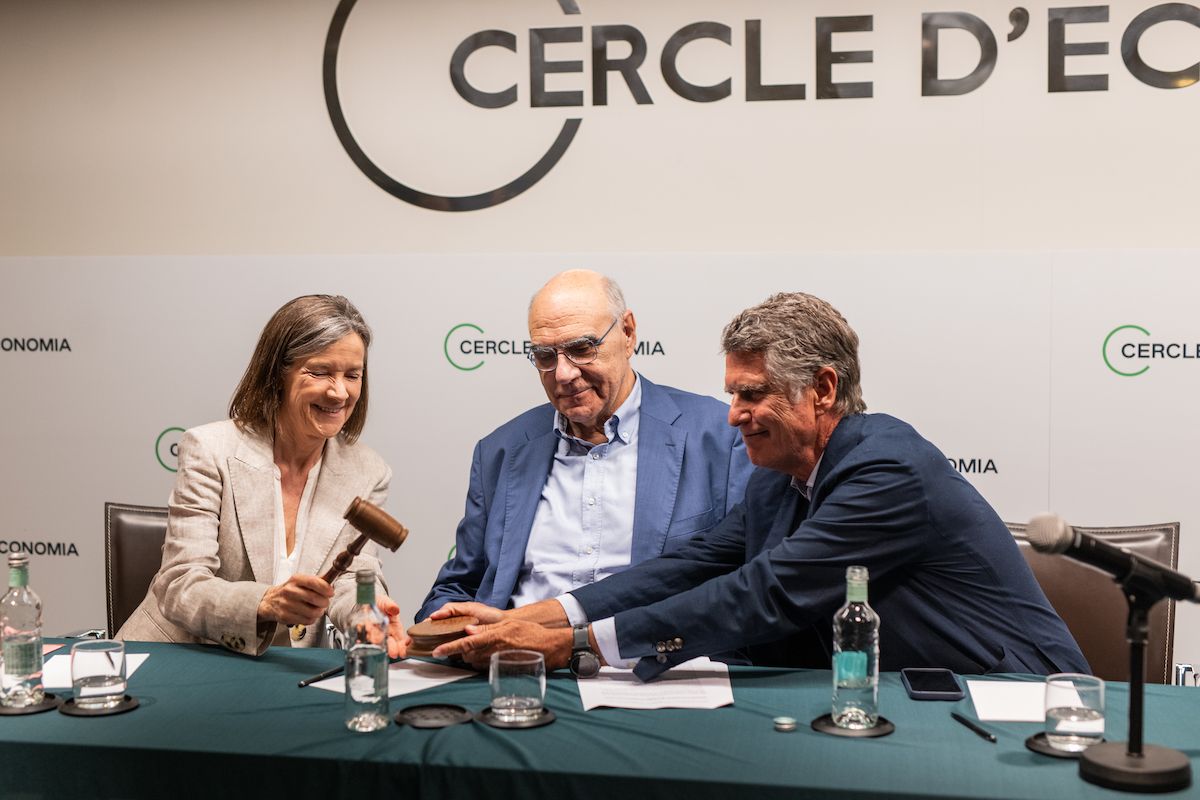
After all this trajectory, the entity now faces a new stage, the first led by a woman, with Teresa Garcia-Milà at the helm, who takes over from Jaume Guardiola. During the presidential handover ceremony, Guardiola reviewed his trajectory, recalling the hundred organized activities, the establishment of the Jaume Vicens Vives Conference —to remember the entity's starting point— or the creation of the Award for the Construction of Europe. The now former president also noted the central role of the Cercle in public debate, assuring that both the annual meetings and "the opinion notes age well," an annual meeting marked this year by BBVA's takeover bid for Banco Sabadell.
Teresa Garcia-Milà's will is to continue the historical legacy and update the founding values of the Cercle, even becoming an uncomfortable actor at pertinent moments. "We will be daring when necessary, as the Cercle is expected to say what others cannot say," affirmed the new president of the entity, recalling that she has been actively participating for more than three decades, an entity she joined through the economist and former minister Josep Piqué. To do so, the economist will count on Jordi Gual (former president of CaixaBank), Carmina Ganyet (Colonial), and Pau Guardans (Único Hoteles) as vice presidents.
Add The New Barcelona Post as your preferred Google source for free
Stay informed with the latest news.
