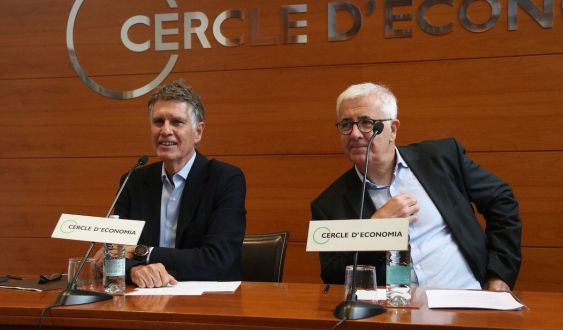
"The geopolitical situation is serious, and it is urgent that Europe reacts." This is the message that the Cercle de Economia wishes to convey in its fortieth annual conference, which, under the title Europe: wake-up call? How to respond in a moment of geopolitical disruption, aims to give a wake-up call to European institutions so that they can transform adversities into an opportunity to rethink "what Europe wants to be." A rethinking that will be debated with political and business representatives, such as the President of the Government, Pedro Sánchez, the CEO and President of Mango, Toni Ruiz, or the President of Telefónica, Marc Murtra, from May 5 to 7 at the Palau de Congressos de Barcelona.
In the opinion note traditionally published by the institution a few days before its annual meeting, and which frames the debate of the conference, they have emphasized the "urgency" of taking a stand in the face of the new world order so that Europe can "avoid falling into irrelevance." An alert message addressed to politicians and businessmen but extensible to the entire civil society. However, the president of the Cercle d'Economia, Jaume Guardiola, has insisted on not falling into pessimism and on the opportunity to turn these adversities into "a space for European reconstruction," reinforcing the functional values of the European Union, such as solidarity or democracy, and taking as an example other crises that have been overcome, such as the pandemic or Brexit.
In this regard, Guardiola has assured that the arrival of Donald Trump at the White House has "accelerated" the need to rethink the European future, recalling, however, that the conference should not serve to address the policies of the President of the United States, but rather the European response in different areas, such as defense, economic growth, or the guarantee of the welfare state. For the Cercle, only by undertaking active policies in all these areas will Europe successfully answer the question of whether it "wants to be a relevant and respected actor in global geopolitics, capable of defending its interests, or prefers to be a second-tier actor that does not sit at the table of the great world powers."
For the Cercle, the European project has traditionally been based on four fundamental dependencies, such as the commitment to Russian gas and oil, the massive import of technology from countries like the United States and China, the globalization of the economy, and the existence of the American protective umbrella in the field of defense. These dependencies, however, have now "become vulnerabilities" and force Europe to take action in all these areas.
Firstly, the entity advocates for "taking a step forward in the defense of Europe," given "the loss of reciprocal trust with Trump's United States," a country that has traditionally acted as a protective umbrella for European countries. Faced with the policies of the North American country, they urge the construction of a "common and autonomous defense system" within the framework of NATO. Furthermore, they believe that countries should cede sovereignty in this area to European institutions, so that it can be jointly financed through community budgets, understanding defense as a "community public good." At a Spanish level, the Cercle d'Economia has also insisted on the need for the country to increase investment in this area, to get closer to other European neighbors, who already spend more than 2% of GDP.
For the institution, the European Union, in addition to "rethinking its relationship with the United States," must also "assert itself" before countries like China, so that it recognizes Europe as a priority geopolitical actor, and Russia, seeking new alliances with countries like Canada, Australia, India, Brazil, Turkey, Saudi Arabia, or South Africa.
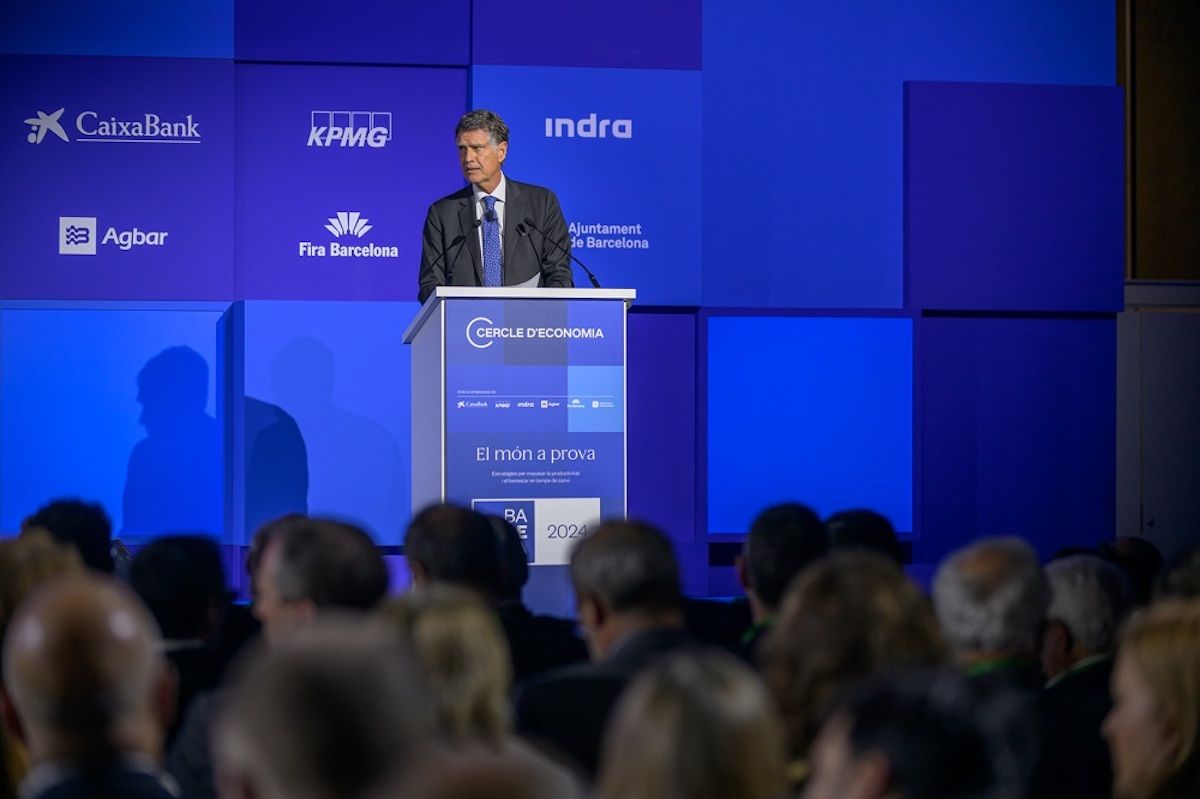
On the other hand, European countries must also increase their investment in technology to stop depending on countries like China or the United States for key components such as microprocessors, electric car batteries, or artificial intelligence. "Europe is late in the field of technology, but it's never too late," emphasized Miquel Nadal, general director of the Cercle d'Economia. Nadal highlighted that Europe has both the human capital and the technological knowledge necessary to advance in this field.
Regarding economic growth, for the Cercle d'Economia, the roadmap set by the Draghi and Letta reports, published in 2024, must be followed, betting on the decarbonization of the economy, the internal market, and cutting-edge technologies as great future assets. In this sense, the institution has highlighted the importance of having both public funds ---which should serve as "catalysts" to attract investments--- and private funds to finance this growth. However, the institution has also emphasized the need to guarantee the Welfare State, facing the progressive aging of the population and "controlling migratory flows with integration policies."
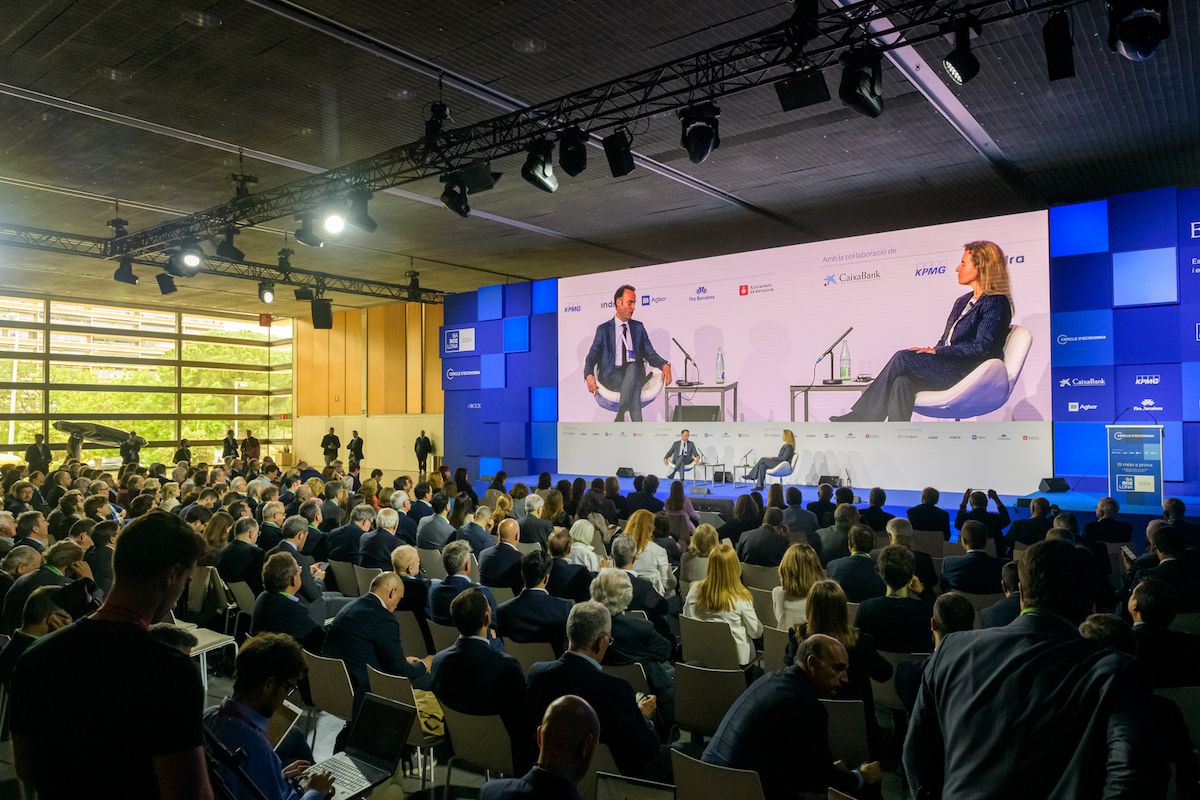
A response that the Cercle d'Economia has admitted will not be easy. "Not everything should be financed, nor is it good to do so, which will require making politically complicated renunciations," Nadal pointed out. To do so, the institution advocates basing itself on foundational European values, such as the defense of human dignity, democracy, the rule of law, and solidarity.
To address these challenges, the annual meeting of the Cercle, which celebrates its fortieth edition since the first meeting was organized in 1961 on the Costa Brava, will feature political representation, such as the President of the Government, Pedro Sánchez ---who will inaugurate the conference on Monday, May 5---, the President of the Generalitat, Salvador Illa, or the Minister of Economy, Alícia Romero. From the business sector, the CEO of the Renault group, Luca de Meo, the CEO of Mango, Toni Ruiz, and the executive chairman of Telefónica, Marc Murtra, will also participate.
Add The New Barcelona Post as your preferred Google source for free
Stay informed with the latest news.
