
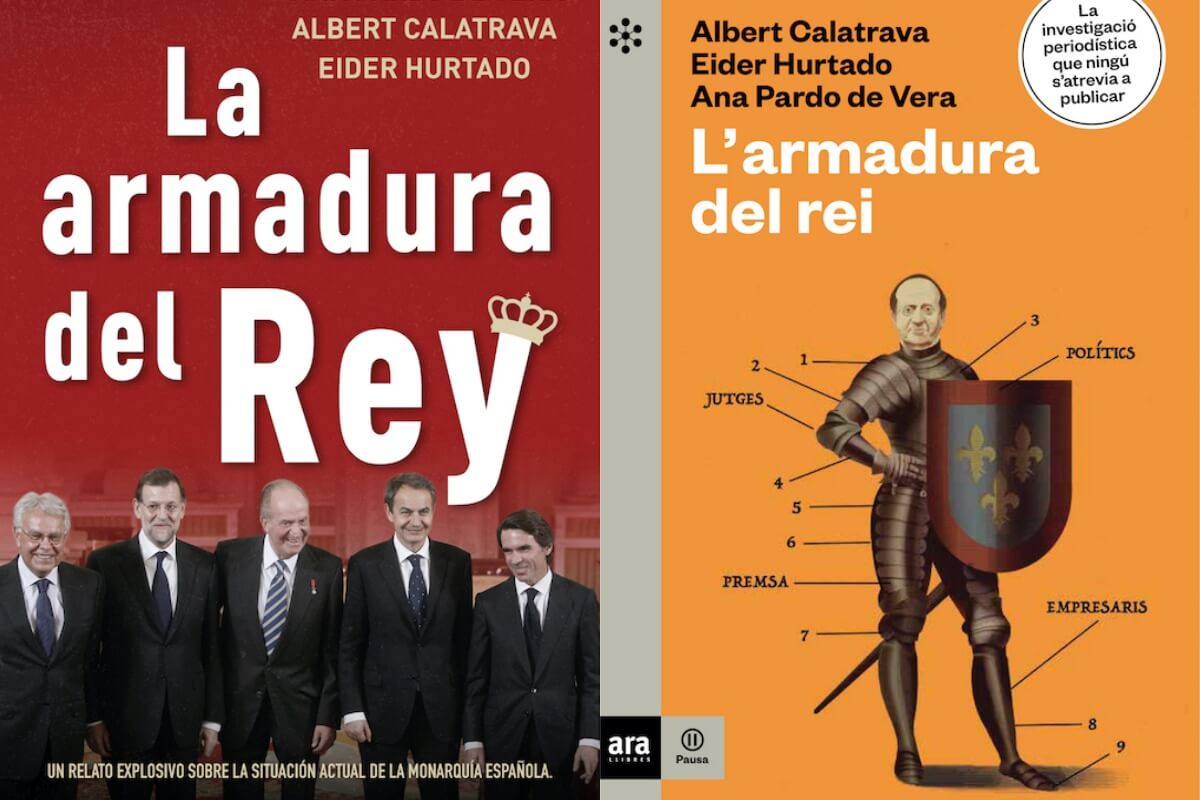
"This is not a book against the monarchy, and that must be made clear," begins La armadura del Rey (Roca Editorial), edited by Ara Llibres in Catalan, by journalists Ana Pardo de Vera (Público), Albert Calatrava (TV3) and Eider Hurtado (ETB). "Even today, putting the spotlight on the monarchical institution is interpreted as an attack that provokes the retreat of all State forces in its defense," they continue.
The three journalists recount "all the mechanisms, characters, and maneuvers" that have been articulated to protect the figure of the emeritus king since the coup d'état of February 23, 1981. "It is a protection of the figure of the emeritus king that remains in force today, as demonstrated by the total opacity in his flight from Spain and stay in the Persian Gulf or the impossibility of investigating any irregularity through parliamentary channels," they argue.
The book emphasizes that "all kinds" of interests have allowed this to happen: political, business, media, and judicial. But it also points to the "collective responsibility" that has facilitated it, recognized by all the personalities interviewed in this book, who range "from high-ranking officials in active service in the high institutions of the State to friends and confidants" of Juan Carlos I.
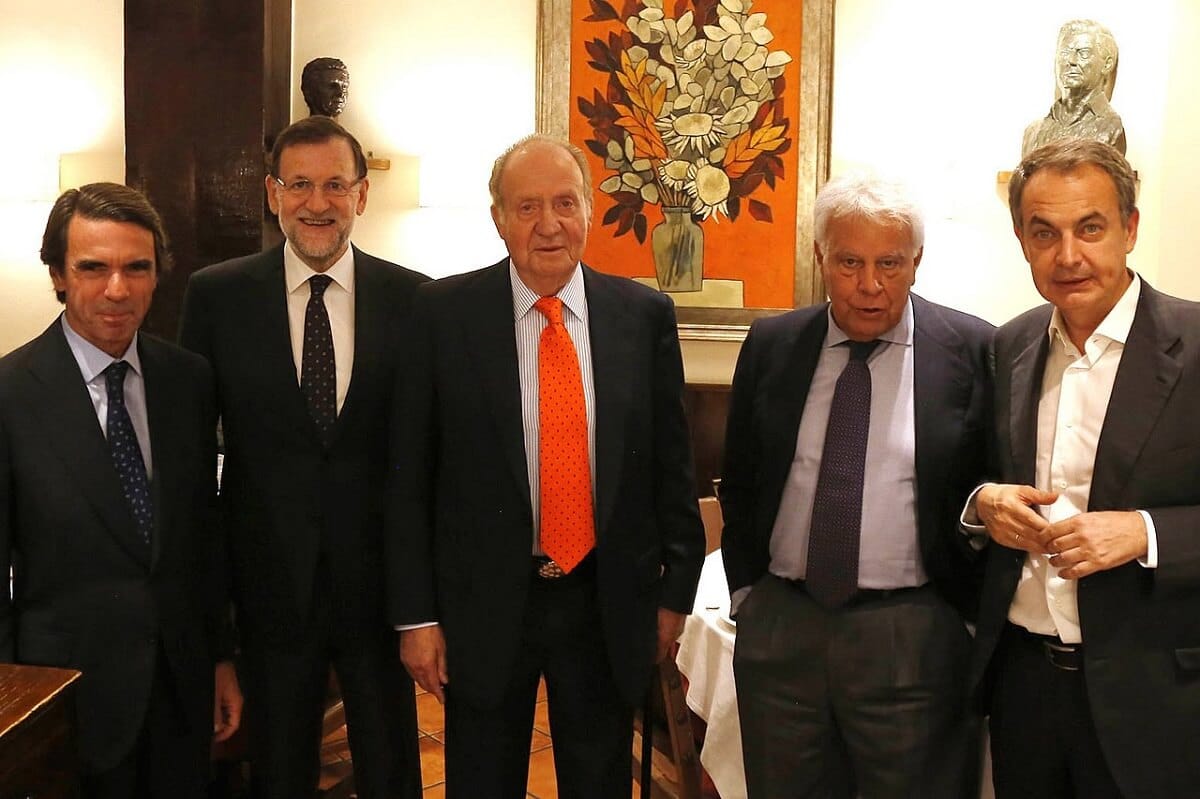
Many of the interviewed personalities have chosen to remain anonymous when telling their testimonies. "Ministers, secretaries and undersecretaries of State, cabinet directors, parliamentary spokespersons, deputies and senators, active or retired judges, regional presidents and councilors, mayors and other high institutional officials, as well as their predecessors, have spoken, but also military personnel and agents of the National Police and the Civil Guard, journalists, businessmen, former employees of the Royal Household and numerous personalities from culture and social life in Spain," explain the authors in the introduction.
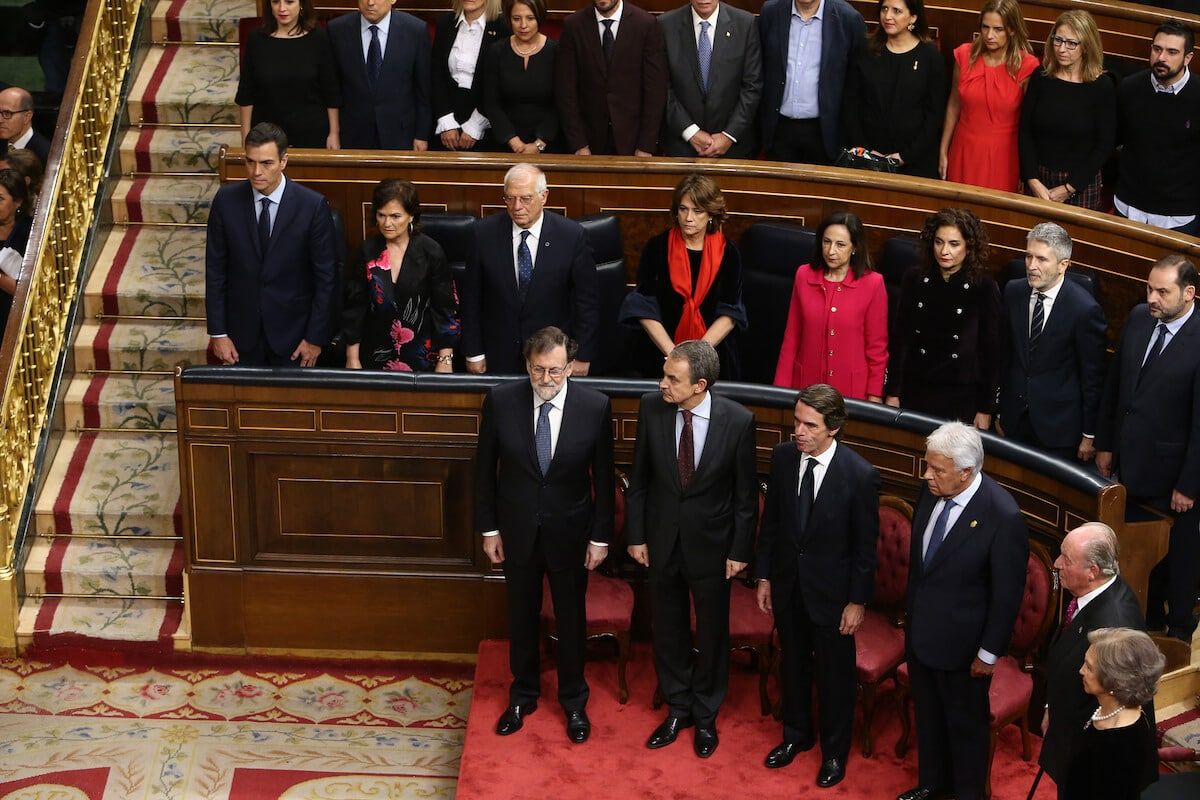
According to the three journalists, the shielding of the monarchy not only extends to the present with the protection of the actions of Juan Carlos I after his abdication, but also to the one being given to King Felipe VI, providing him with a new "armor" that seeks to improve the current image of this institution and prevent a referendum on its continuity.
About the authors
Ana Pardo de Vera (Lugo, 1974) has a degree in Hispanic Philology and later completed a master's degree in Media. She has worked in various media outlets such as Diario 16, La Voz de Galicia, Tiempo, and El Siglo de Europa. During the Government of José Luis Rodríguez Zapatero, she was a Communication advisor in the ministries of Defense, Industry, Tourism and Commerce, and the Vice-presidency of Territorial Policy. From 2016 to 2019, she directed the digital newspaper Público, where she is currently corporate and Institutional Relations director.
Albert Calatrava (Barcelona, 1976) has a degree in Journalism from the Universitat Autònoma de Barcelona (UAB). He is currently the delegate in Madrid for TV3 and Catalunya Ràdio. Since 2001, he has focused his journalistic activity in Madrid, covering political and court news. He collaborates with different spaces of the Corporació Catalana de Mitjans Audiovisuals.
Eider Hurtado (Santurtzi, 1982) has a degree in Audiovisual Communication from the University of the Basque Country. She works as a journalist at ETB. She has been director and presenter of the report program 360 grados. She began her career in radio, passing through the microphones of Radio Euskadi and Onda Vasca, closely following political news. In recent years, she has dedicated herself to investigative journalism.
Add The New Barcelona Post as your preferred Google source for free
Stay informed with the latest news.
