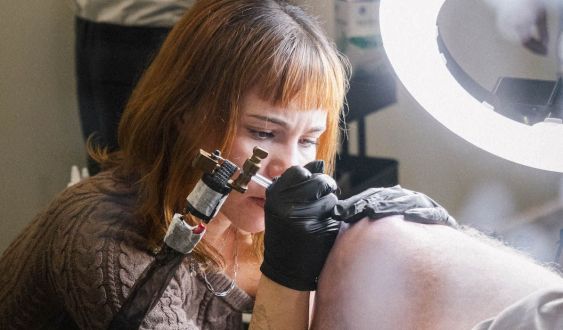
There are many ways to celebrate Sant Jordi, but few involve going out with something that doesn't wilt. This April 23, Tattoox Club proposes a different alternative from its space in the center of Barcelona: a day of tattoos in flash format where the most recognizable symbols of the tradition —the rose, the book, or the dragon— are reinterpreted in a contemporary key.
During the afternoon, the studio will make available a closed selection of designs specifically conceived for that day. These are quick, direct pieces, without a prior process, which are part of a common practice in the world of tattooing, but which here adapt to a very specific context: turning a tradition into something permanent. Each tattoo will be accompanied by a rose, maintaining that link with Sant Jordi, but from another place.
What is now Tattoox did not start as a studio or an academy. The first idea was much more digital: a kind of tattoo Tinder that connected people with the ideal tattoo artist according to the style or design they were looking for. It worked, but it had a difficult problem to avoid. "We were putting our identity out there, but without controlling the experience," explains Berta Madueño, co-founder of the project. And when that happens, everything becomes more fragile: the result, the relationship with the client, even the business model itself. That first attempt did not turn out as expected, but it left them a clear signal of what was really happening in the sector.
Berta did not come from the world of tattooing. She worked in an investment fund, analyzing projects and detecting opportunities. It was there that she met her current partner and where she began to look at the sector with different eyes. What she found was a constantly growing market, but also quite disorganized in some aspects. Many people wanted to get tattooed, yes, but many also wanted to learn how to do it and were not very clear on how to start. That's where they decided to pivot the project. "We saw that there was a real demand from people who wanted to learn to tattoo and didn't have a clear way to do it," she explains. "And from there we started to build."
For a long time, learning to tattoo has been an almost improvised process. Getting someone to let you practice, doing it with whatever you had on hand, and progressing through trial and error. Without a defined path. Tattoox proposes something different. Its model is structured as a digital bootcamp-style academy, where students receive all the necessary material at home—machine, inks, synthetic skin—and work for months with practical content and live sessions with tattoo artists.
In three years, more than 5,000 students have passed through it, many of them from outside Spain. But technique, they insist, is not the most difficult part. "Once you know how to tattoo, the hard part is making a name for yourself," explains Madueño. "Your Instagram is your portfolio, and people choose you for your style. In the end, every tattoo artist is a personal brand."
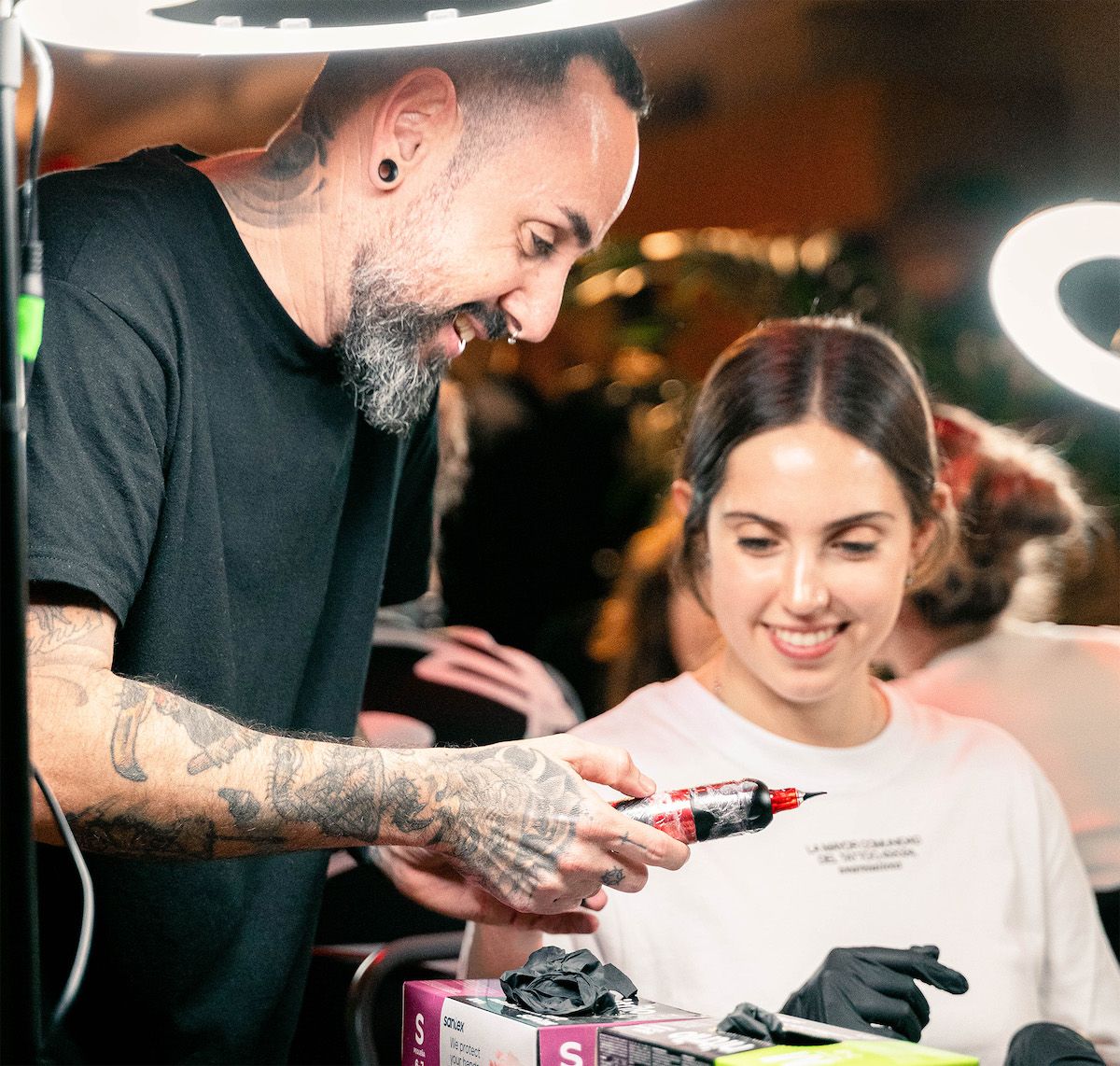
The physical part of the project—its studio in Barcelona—cannot be understood without everything else. It is not just a place to get tattooed, nor is it solely an academy. It functions more as a meeting point where everything coexists: tattoo artists, students, clients, and a growing community around it. Things are constantly happening here. Workshops with artists who come from outside, collaborations with brands, events linked to music, or smaller gatherings that occur in a more intimate space within the premises. Sant Jordi is one of those activations, but it is not an exception. The idea is that tattooing does not remain isolated, but rather becomes part of something more.
One of the things they repeat most often is that not everyone comes in with a clear idea. There are those who know exactly what they want and with whom, but also many people arrive with doubts or simply with the feeling that they want to get something done, without knowing very well what. They talk, ask questions, ponder the idea. They themselves describe it as a kind of "psychologist session," where the important thing is to organize what the person wants before making it permanent. Sometimes that conversation lasts longer than the tattoo itself.
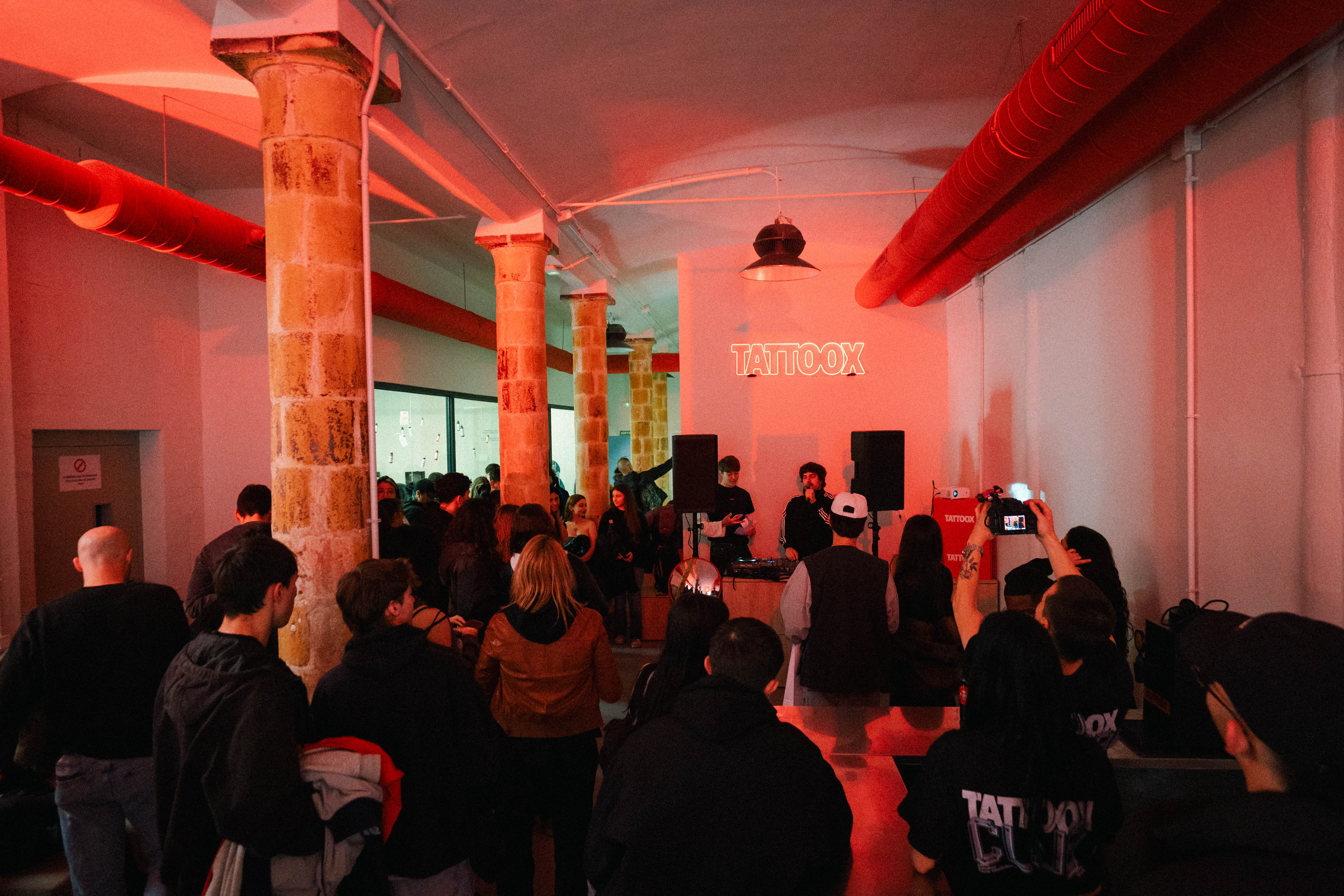
The goal is not to change the tattoo or turn it into something else. It is to make it more accessible. To remove that distance that for a long time made entering a studio not so natural for everyone. That involves the space, the type of treatment, and also how they explain what they do. There is a clear intention to open up the process, to make it understandable and approachable, without losing the artisanal character that remains the basis of everything.
The project was born in Barcelona and it makes a lot of sense that it is so. The city is part of that urban culture where tattooing fits naturally, both for those who live here and for those who pass through and want to take something more than a memory. From here, the next step is to grow outside. Not with the idea of multiplying locations, but of being present in cities where that same language makes sense.
On April 23, while the city fills with people, books, and roses, Tattoox opens another path within that same tradition without ceasing to be part of it.
Add The New Barcelona Post as your preferred Google source for free
Stay informed with the latest news.