[dropcap letter="E"]
n the state of pandemic uncertainty in which we currently move, one wonders if the longed-for vaccine or herd immunity will soon return us to some kind of normality, or if we will have to redesign our cities to a reality of permanent social distance, both if the pandemic is not eliminated in the short term and if cities have to be prepared for future threats.
The brutal disruption caused in mobility and the labor market must necessarily create a new impulse in the way cities are organized, to make them more sustainable and livable. And that involves reducing the space for private vehicles, promoting sustainable mobility, public or private, and reducing levels of environmental pollution.
[subscribe_newsletter_esp]
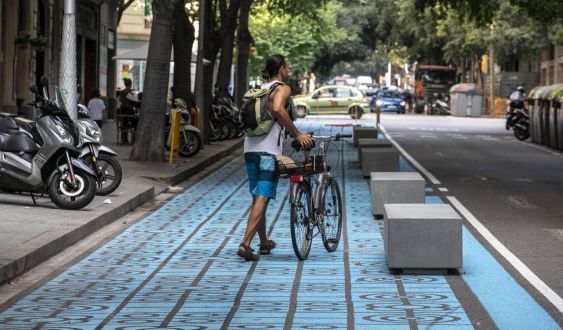
Although almost no one disputes the objectives, the methods to achieve them have sparked a rather bitter controversy in Barcelona, between supporters and detractors of the tactical urban planning measures adopted during confinement and the subsequent months. The networks are ablaze with rude disqualifications and uncritical apologies for municipal actions. Many have quickly discovered a new vocabulary that includes technical terms such as Berlin cushions (the plastic obstacles installed in many places to force vehicles to reduce speed, and especially criticized by motorcyclists), New Jersey barriers (concrete elements that, painted yellow, have been used to delimit new terraces on many chamfers of the Eixample, which give oxygen to restaurant businesses but eliminate parking spaces and are aesthetically very questionable), or the already famous concrete bollards installed in streets like Consell de Cent, without physical separation from the roadway, and which after criticism have been hastily filed down on one of their corners to supposedly reduce danger in case of impact. The use of rather confusing color codes used in the rapid transformation of many areas has also sparked an insidious controversy, generating in some cases bewilderment and in others enthusiasm, but which even voices from the City Council accept have much room for improvement.
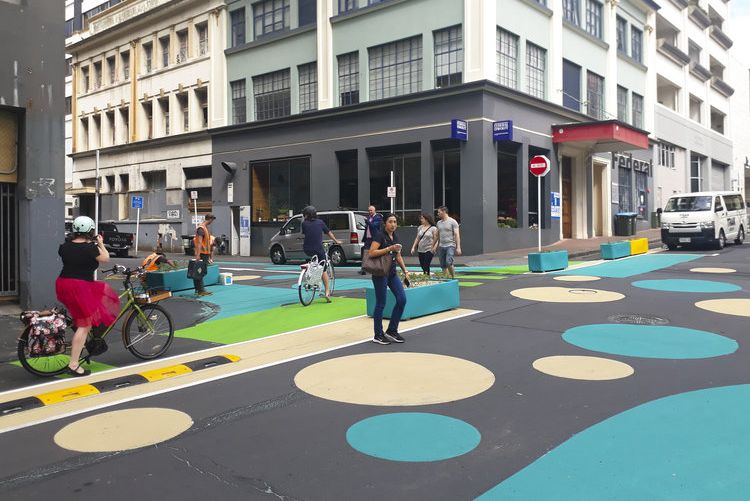
The nature of tactical urbanism, which has also been called guerrilla urbanism, comes from citizen initiatives before its discourse was appropriated by institutions. It includes a certain degree of experimentation and trial-and-error: interventions are quick and are intended to be reversible in case they ultimately do not yield the desired results. If they work, they will be corrected and consolidated with permanent executions and durable materials. Some of the interventions initiated in Barcelona at the end of the lockdown already proved to be erroneous: the closure of certain streets when the state of alarm ended (such as Via Laietana or sections of Aragó) failed to fill the streets with pedestrians, and did hinder vehicular traffic, fortunately scarce at that time, and raised some protests from affected merchants.
The fact is that the interventions carried out in Barcelona pursue objectives that are common to the urban planning strategies of many cities in our environment, which face similar challenges. Instead of getting into the weeds and discussing the details of the successes or blunders resulting from the window of opportunity that the Barcelona city council has seen to advance its agenda (in essence, to reduce the use of private vehicles in the city by 25% before 2024, increasing sustainable mobility from the current 72% to 81%), we propose to take a quick look at what other cities have done to adapt to a future that must be more sustainable, where private vehicles must lose prominence and which must also contribute to making 21st-century urban centers more pleasant and functional. Some may be surprised to see certain coincidences with what has been seen in Barcelona in recent months.
Berlin
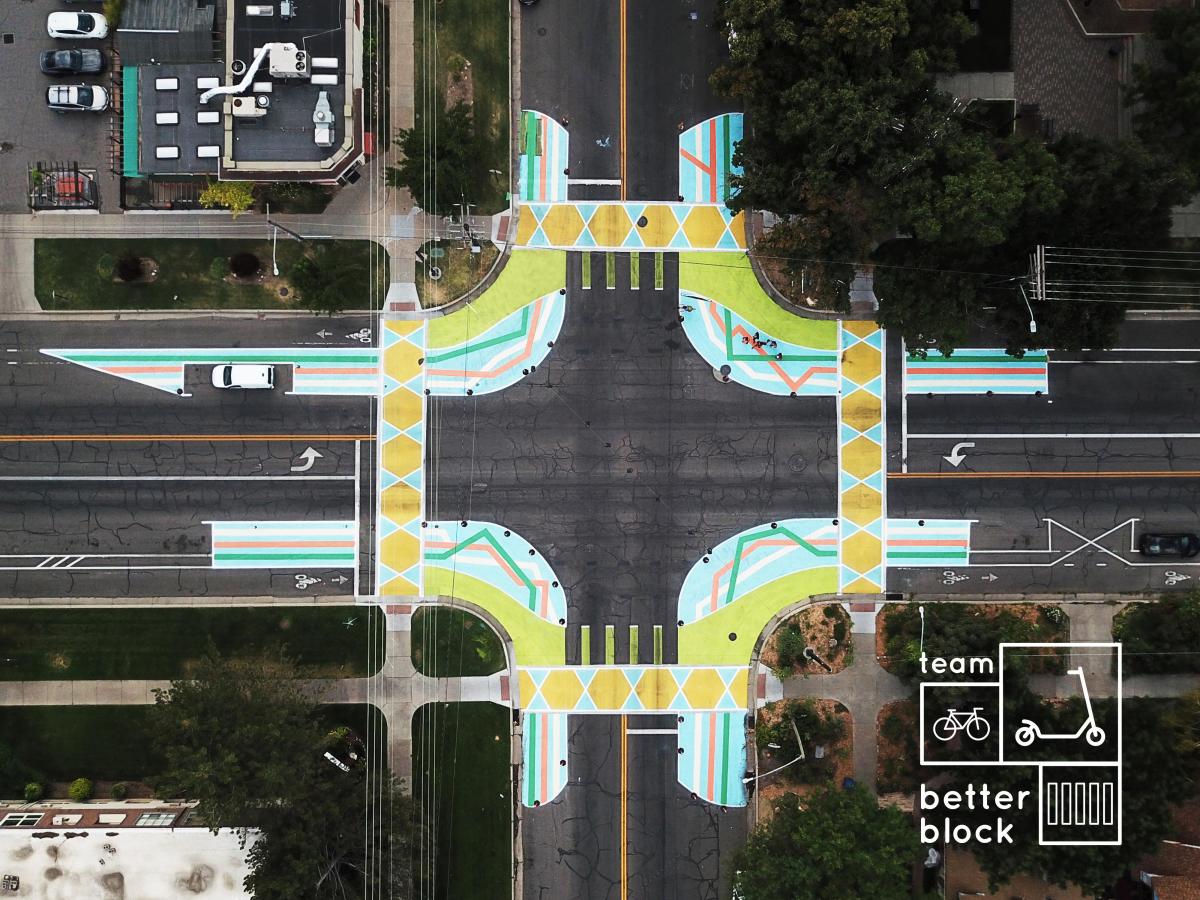
In Berlin, the authorities of the Kreuzberg district already widened bicycle lanes in March, with the aim that cyclists could maintain social distance while pedaling. At the same time, they have created newly laid lanes, transforming conventional lanes into bicycle lanes with the installation of horizontal markings and yellow bollards (does that sound familiar?) on the ground. On April 10, at the peak of the pandemic, the Berlin city council declared the pilot project a success, and published a framework document to extend the experience to other districts. But not everything is rosy: by the end of August, the number of cyclists killed in the city had already doubled compared to 2019 as a consequence of more inexperienced cyclists on the road and infractions by motor vehicles that are not yet familiar with the new infrastructures.
Vienna
At the beginning of April, Vienna created 14 "meeting zones" to encourage citizens to continue using public space while maintaining social distance. Motor vehicles could continue to circulate in these areas, with a speed limit of 20 km/h if they were one-way streets or needed to access a parking lot. The chosen areas had in common a high population density or particularly narrow sidewalks and a lack of green spaces. 20 streets where vehicular traffic was previously prohibited were also opened to pedestrians.
Milan
In Milan, the objective has been to gain 35 km of new infrastructure for active mobility (on foot, by bicycle, or in individual electric vehicles). The Mobility Councilor announced that some of these interventions would be permanent, such as the cycling axis that crosses the city from north to center. The plan, which has been called Open Streets, includes the widening of sidewalks and infrastructure for pedestrians, new zones with a speed limit of 30 km/h, and capacity limitations on public transport.
Paris
The Paris Region has taken advantage of the lockdown to gain, attention, 650 kilometers of cycling infrastructure. The city has allocated 300 million euros for tactical urban planning interventions, many of them intended to be permanent. Mayor Anne Hidalgo has also committed to converting streets into priority cycling routes, following the layout of several lines of the Parisian metro. These actions represent a step forward in a pre-existing plan, which promises to make all city streets accessible to bicycles by 2024, reducing the space dedicated to surface parking by 72%.
New York
In New York, one of the cities most affected by the coronavirus in the first wave of the pandemic, Mayor De Blasio has created 160km of Open Streets. They have started in the areas with the most need, with the narrowest sidewalks and roads. These are streets located around and within parks; streets identified with various social agents and even streets self-managed by neighborhood associations ("occupied" streets in the style of Broadway Avenue): Sidewalks have also been widened on about 4 km of streets and an additional 16 km of protected bike lanes have been added to the more than 1,240 miles (1,995 km) already existing.
Mexico City
In the Mexican capital, 131 new kilometers have been assigned to bike lanes during the pandemic, divided into 8 sections that include radial roads concentrated in the area of the city with the highest demand for mobility (Reforma and Insurgentes), roads along mass transit corridors and complementary roads to avoid leaving areas without bicycle communication. The plan has a second phase that would expand the new bike lanes to 186 km permanently.
Bogotá
Bogotá has increased the streets open to urban cycling by 117 km, to facilitate mobility with social distancing, which are added to the 550 km of permanent ones already existing. The city council of the Colombian capital recommends respecting the enabled hours (06:00 19:30 hours), wearing retroreflectors and respecting the signage.
Lima
In Lima, they have taken the opportunity to consolidate a network of 301 km of bike lanes (many of which had been laid out without a master plan and were dispersed, without clear origins and destinations). The situation created by the coronavirus has given an impetus to their interconnection and to the attempt to consolidate the network. The plan has gone ahead with the help of an international United Nations plan aimed at improving the response of developing countries to the mobility and safety challenges posed by the pandemic.
[separator type="thin"]
FROM LONDON TO BARCELONA
In London, the City of Westminster and the so-called Square Mile, which account for 1.5% of the city's surface area, concentrate 25% of the jobs in the British metropolis.
There are almost 8 times more jobs than residents in this area, which explains the congestion in transport systems when workers commute. In 2019, only 5% of British workers teleworked. During the toughest months of the pandemic, this percentage rose to 50%. The return of the workforce to the central offices of large companies will be a slow and complicated process, and may never be fully completed. One option, teleworking, which is now more attractive than ever for both employees and companies, and which can also have palpable consequences on how public space and mobility systems are organized, facilitating the transition to a greener and more sustainable city.
Although obviously past wars have caused great urban transformations at the time of reconstruction after the conflict, previous epidemics have also led to permanent changes in the urban structure of many cities. Without leaving London, one can cite the case of Victoria Embankment, a two-kilometer extension of lush gardens that run along the bank of the Thames, and which is a direct consequence of the city's response to the recurrent cholera outbreaks of the mid-19th century. In the 1850s, the tens of thousands of deaths caused by the disease forced authorities to rebuild the sewage system and pave wetlands, creating a network of pipes that separated wastewater from that intended for human consumption, thus allowing the epidemic to be overcome.
In Barcelona, the demolition of the walls and the expansion of the city through the Eixample was motivated by economic and demographic reasons, but also by the need to create a healthier urban fabric that would allow for the control of infectious diseases that periodically decimated the population. When Ildefons Cerdà analyzed Ciutat Vella before proposing the urban network of the Eixample, he identified three basic problems to solve: mobility, density, and mortality. And he discovered that narrow streets meant higher mortality in case of an epidemic. His proposal aimed to make a more hygienic city, with greater mobility and healthier, as well as more socially just. A century and a half later, his diagnosis and challenges are still relevant.
[separator type="thin"]
Add The New Barcelona Post as your preferred Google source for free
Stay informed with the latest news.