The Oval Room was packed to hear the explanations of Ona Balló, artist and curator of the exhibition The Inverse Journey: A Sonic Fresco in Romanesque Art, which can now be seen in the Romanesque wing of the MNAC. Once I visited its route, the first thing I must advise is to go alone: not because people make noise (people are very civilized and also want to enjoy the experience), but because this journey is not so much about sound as it is about atmosphere. The envelopment, the sensation, the direct and immersive teleportation to the churches of the early millennium in the Pyrenees. The result, I must say, creates an effect that leaves a mark on the mind and on the skin. Suddenly, a new memory appears in your memory drawer, corresponding to a 10th and 11th century that you have never lived... or, from now on, you have.
A key that opens a door, between the apse of Burgal and that of Santa Maria d'Àneu (the Pedret circle), in an atmosphere of thunder and rain that is the first thing that welcomes us (after some explanatory panels about the exhibition, with a geographical map of sounds included and a series of screens showing videos of the process). The sounds take us from one side to the other directly, now one apse now another, now a journey through a corridor with light projected on the floor that says "the path I must take, no one can take for me". Indeed: you move, the exhibition does not. As Ona explains, unlike cinema, in a museum the art is not what moves but the spectator. This gives the visitor a lot of freedom, but also the need for a guide that in this case cannot be an individual guide (headphones, earphones, monofocal speakers) but a global guide that fills the space. The challenge, enormous, has been met.
"Unlike cinema, in a museum the art is not what moves but the spectator"
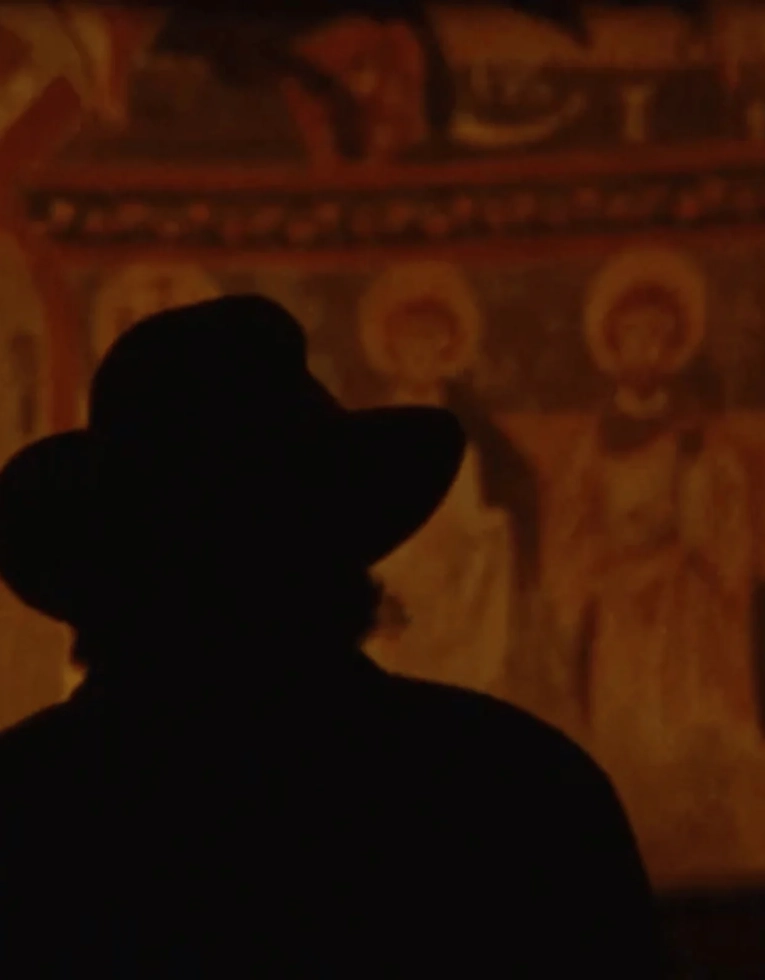
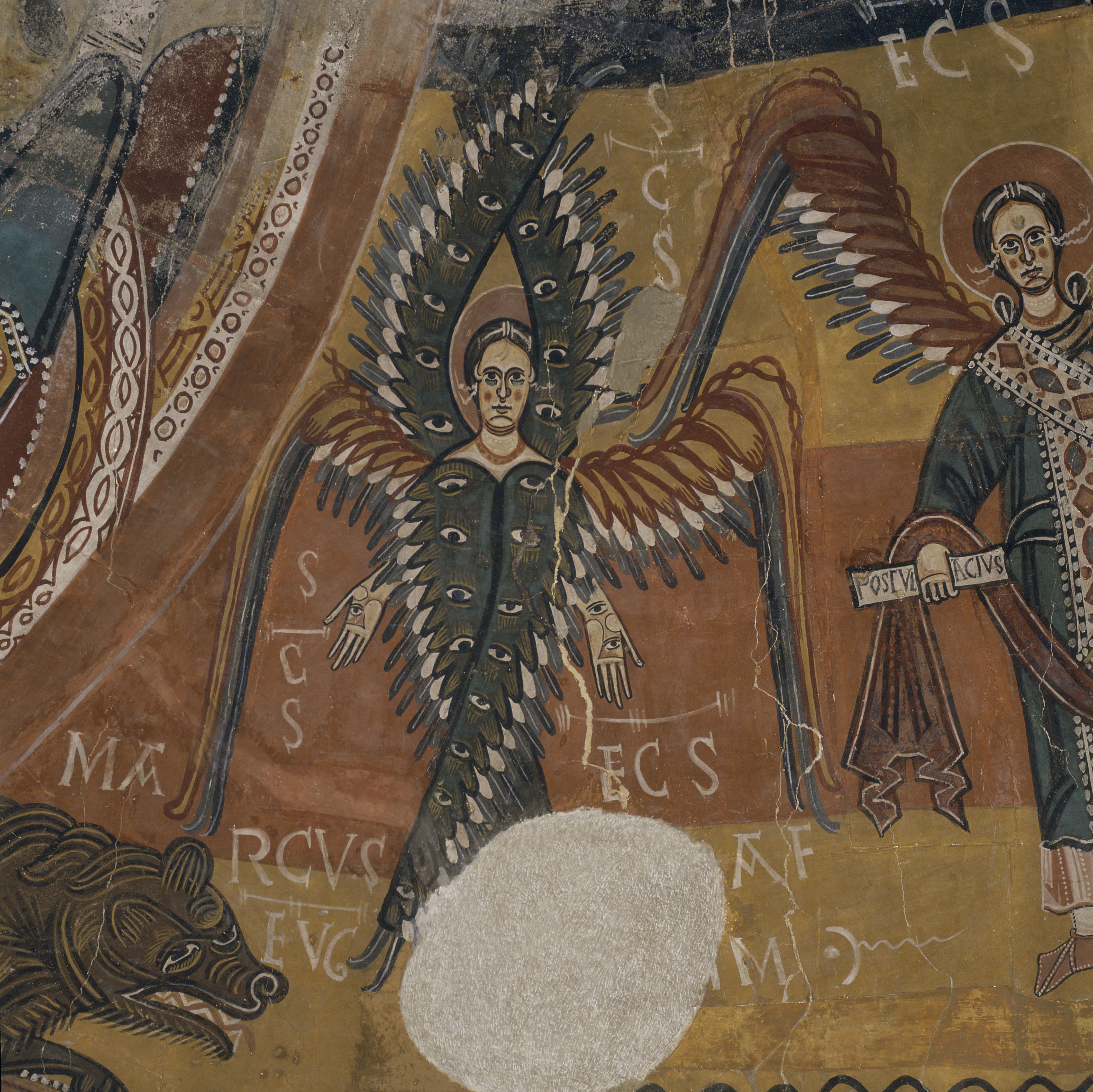
Light also acts as a guide: projections on the ground, a natural light appearing in the window of an apse, an infernal red light appearing in that of Santa Maria de Taüll. All this, with a surgical and minimalist intervention that does not remove an ounce of austerity from the severe character of Romanesque art. Rain, birds, a humming, a flock of sheep, a barking dog, the sound of a bell. Exposed, bulging, more a cowbell than a bell. Ona tells us that it is a bell from Pallars, 11th-12th centuries, on loan from the Museum of Medieval Art of Vic. For her, this would be the symbol of the exhibition: it is an element both interior and exterior, and she says it looks like a lady's dress (at the same time assimilating the iron keys of a church of the period to those painted in the frescoes in the hands of Saint Peter). And it is that the narrative must be in situ, you cannot transport a sound, but in any case it remains throughout the centuries. Like the Gregorian chants that also appear, or like the Goigs del Roser (in Catalan, which raises doubts for me in a medieval church): listening to the sound can lead to a new way of looking at the pieces.
The sound layers remain between the walls and the severe, cold, hieratic frescoes of the Romanesque while the rain falls and the thunder cracks. The pebbles on the floor resonate, the timbers clash. A museum is not made for listening (no matter how many speakers or headphones they put in), so the challenge is complicated: how to create an exhibition where sound is on the same level as the paintings? And to coexist with the limitations of the MNAC's own activities, and for the route to be followed without the need for any signage. Ona Balló has achieved this, and not only that: I believe she has shown the way to extend the contemplation of museum works to an enormous range of sensations. Without the need for virtual realities, or 360 projections, or immersive screens: it is the Romanesque that is immersive, it is the rain that is 360, it is our sonic past that makes the art of our churches something real and not virtual. I apologize for the pun, but I believe the ripple effect of this intervention will be great. At least, I have already had the privilege of understanding Romanesque art in a way that I had only intuited until now. I would even say that, for the first time, I am beginning to understand it completely.
Add The New Barcelona Post as your preferred Google source for free
Stay informed with the latest news.