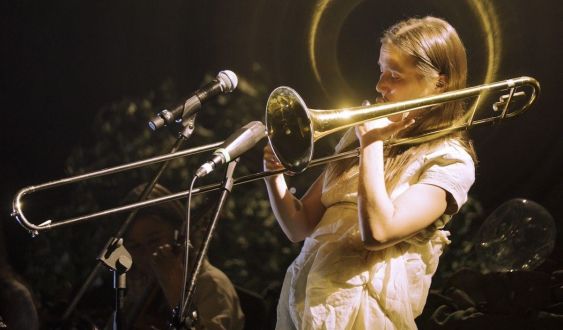
Trumpets, oboes, flutes, and pianos that, instead of playing classical music, surprise with melodies typical of jazz, flamenco, pop, and even electronic music. This is the disruptive proposal presented by the Orquestra Sònica, which defines itself as the first professionalized non-classical orchestra. Based on a formation inspired by a symphony orchestra, with instruments as classic as a flute or an oboe, the ensemble incorporates disruptive elements such as saxophones to offer an innovative proposal that mixes musical styles. A formation, moreover, with a clear transversal vision that is committed to parity and the inclusion of emerging artists.
"It is true that there are other ensembles in Catalonia that do productions that are not classical music, but there is no other specialized and professionalized ensemble that fuses classical instruments with modern melodies," defends Francesc Minguella, from the Contrapunt cooperative, one of the project's promoters.
Inspired by other European orchestras, such as the Metropole Orkest from the Netherlands or the Heritage Orchestra from the United Kingdom, the idea of creating this ensemble in the Catalan music scene had been latent for more than eight years, and even before the pandemic, the viability of the project began to be studied. But it was not until November 2023 when the Musicoop and Contrapunt cooperatives decided to start the project. A year and a half later, the ensemble will debut at the Paral·lel 62 venue on May 15 and 16, alongside Becca Stevens and Rita Payés, as guest artists, and under the direction of Miho Hazama.
Thus, the project has had the support of the Paral·lel 62 venue, and the 'Projectes Singulars' subsidy from the Department of Business and Labor and the Ministry of Labor and Social Economy, financial aid that promotes innovative social and solidarity economy initiatives that foster economic growth, competitiveness, and employment.
Due to the hybrid concept they propose, which fuses genres from pop to electronic, passing through flamenco or reggae, one of the project's purposes is to add multifaceted members. "Hybrid musicians, who are used to playing not only in one register, but who have a certain versatility and can adapt to different genres," explains Minguella. With this objective, they have worked, on the one hand, with artists they already knew from the cooperatives, but, on the other, they have also made an open call, especially focused on higher education schools and conservatories, to allow emerging artists to access the training.
The presence of emerging artists is another of the formation's commitments, which advocates for job placement and the projection of young local talent. "We wanted to ensure that it was a top-level orchestra, with excellent musicians, but also to get out of the musical circuit, of the same old names and give opportunity to people who are just starting out," says Minguella. Thus, the band also plans to become a meeting place for musicians of different generations and degrees of professionalization.
The call has received more than fifty applications, which will be incorporated into the formation's pool, as the idea is to have a fixed staff, especially for the coming years when they will have a broader and more stable program, and a pool of musicians to call upon for each performance, and according to the predominant genre of each concert.
This variety of orchestra members is also expected to transcend the stage and reach the audience, with the idea of seducing a very varied audience, from music students or music lovers, to the public eager to hear a different and emerging proposal. "We want to convey the idea that this orchestra is for everyone, that we offer an intergenerational and transversal proposal," emphasizes Nil Villà, a member of Musicoop.

Another of the orchestra's values is to promote parity in training, not only by ensuring that half of the musicians are women, but also by granting positions of power, such as direction, to female professionals, with the aim of counteracting the prevailing dynamics in the musical landscape. "It is true, however, that there are certain inertias in the music industry, in issues such as age, parity, musical genres, that we cannot change overnight, but this should not be an excuse not to try," Minguella defends.
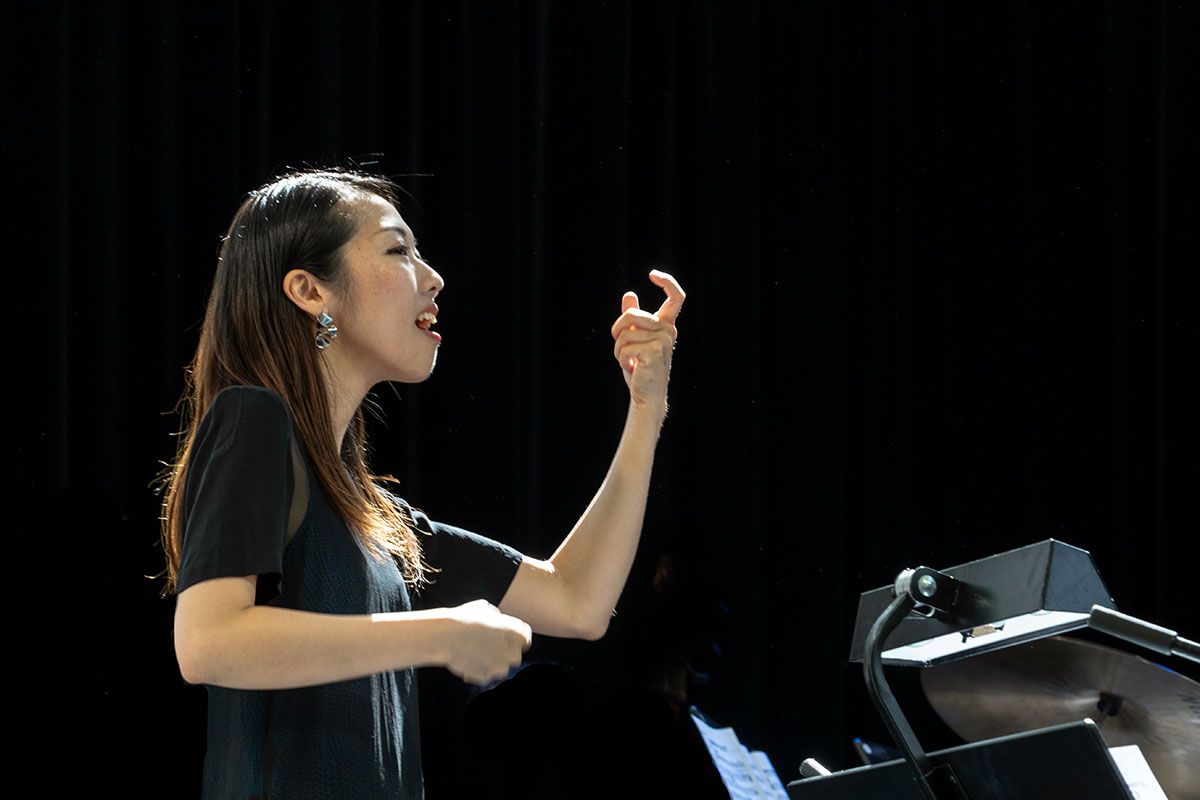
In this vein, the orchestra's debut in May will be led by women, inviting leading artists from the local and international scene. Under the direction of Japanese composer Miho Hazama ---one of the most prominent contemporary composers and conductors on the current scene--- it will fuse the voices and repertoires of American Becca Stevens and Catalan Rita Payés, with the idea of promoting local talent while attracting internationally established artists.
After its debut, the orchestra aims to maintain, at a minimum, one annual production, with the purpose of expanding the number of concerts already by 2026. In the long term, the formation's plans include offering a stable program, exceeding twenty annual concerts, and even having a tour not only in Spain but also in Europe. This program would include concerts of different styles and registers since, if jazz and pop will predominate in its debut, for future performances they plan to incorporate genres such as flamenco, inviting different local and international artists for each occasion.
"Beyond the innovative musical concept, as it is an initiative that emerged from two cooperatives, the objective is also to ensure good working conditions, transparency, diversity, and parity," Minguella summarizes. Thus, in addition to the concerts of the Sònica Orchestra, they also work to develop a social and educational project based on this formation, since the two cooperatives promoted are focused on educational work through music. "We defend that music and art are very powerful agents and can have a very great social impact, since through music you form yourself as a person and incorporate a different sensitivity and outlook towards society," Minguella expresses.
Add The New Barcelona Post as your preferred Google source for free
Stay informed with the latest news.
