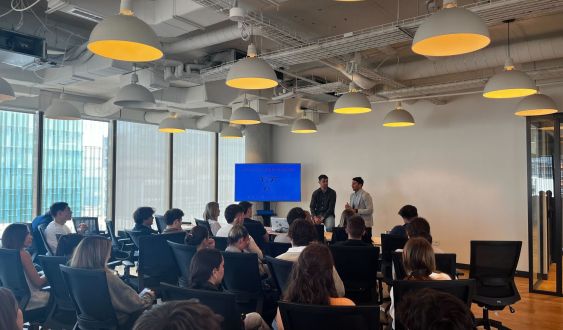
Barcelona continues to consolidate itself as one of the great technological hubs in Southern Europe. To its entrepreneurial ecosystem, its capacity to attract international talent, and its global projection, is now added the impulse of companies like Skello, which have found in the city the place from which to scale their growth in the global market.
The French tech company, specialized in shift team management, has located its operations base in Spain in the Catalan capital, from where it articulates an expansion that in recent years has been particularly accelerated. In just three years, the company has gone from having five employees to exceeding one hundred, and expects to reach 140 professionals by 2026. "Another key factor is that Barcelona is a city that attracts international talent. There is a very powerful technological community and a large presence of international profiles, which facilitates the launch of new markets from here," highlights Marc Pagès, general director of Skello in Spain.
This growth is part of a strong consolidation trajectory at a European level. Founded in 2016, Skello already exceeds 25,000 clients and 600,000 active users, with an annual growth rate of over 45%. Its proposal responds to an increasingly evident need in sectors such as hospitality, retail, or services: efficiently organizing teams that work in shifts, an operational challenge that directly impacts customer experience and business profitability.
Spain has become one of the key markets for the company, in a context where thousands of small and medium-sized enterprises are looking for tools that allow them to simplify the management of their teams on a daily basis. In many cases, schedule planning, absence management, or time control still falls directly on business managers, which adds complexity to their daily operations.
In this scenario, Barcelona not only acts as a headquarters, but as a catalyst. The city offers a combination of talent, business dynamism, and international connection that positions it as a strategic enclave for technology companies seeking to grow in Southern Europe. From here, Skello drives its development in Spain and reinforces its ambition to consolidate itself as a benchmark in the field of human resources at a European level.
In the words of Marc Pagès: "Barcelona is a strategic point both geographically and in terms of talent. Our goal from the beginning has been to build here a European talent hub." This commitment, he adds, has evolved over time: "over time, this vision has evolved towards the creation of a European hub from which to launch new markets, such as Italy, taking advantage of the diversity of talent we have in Barcelona."
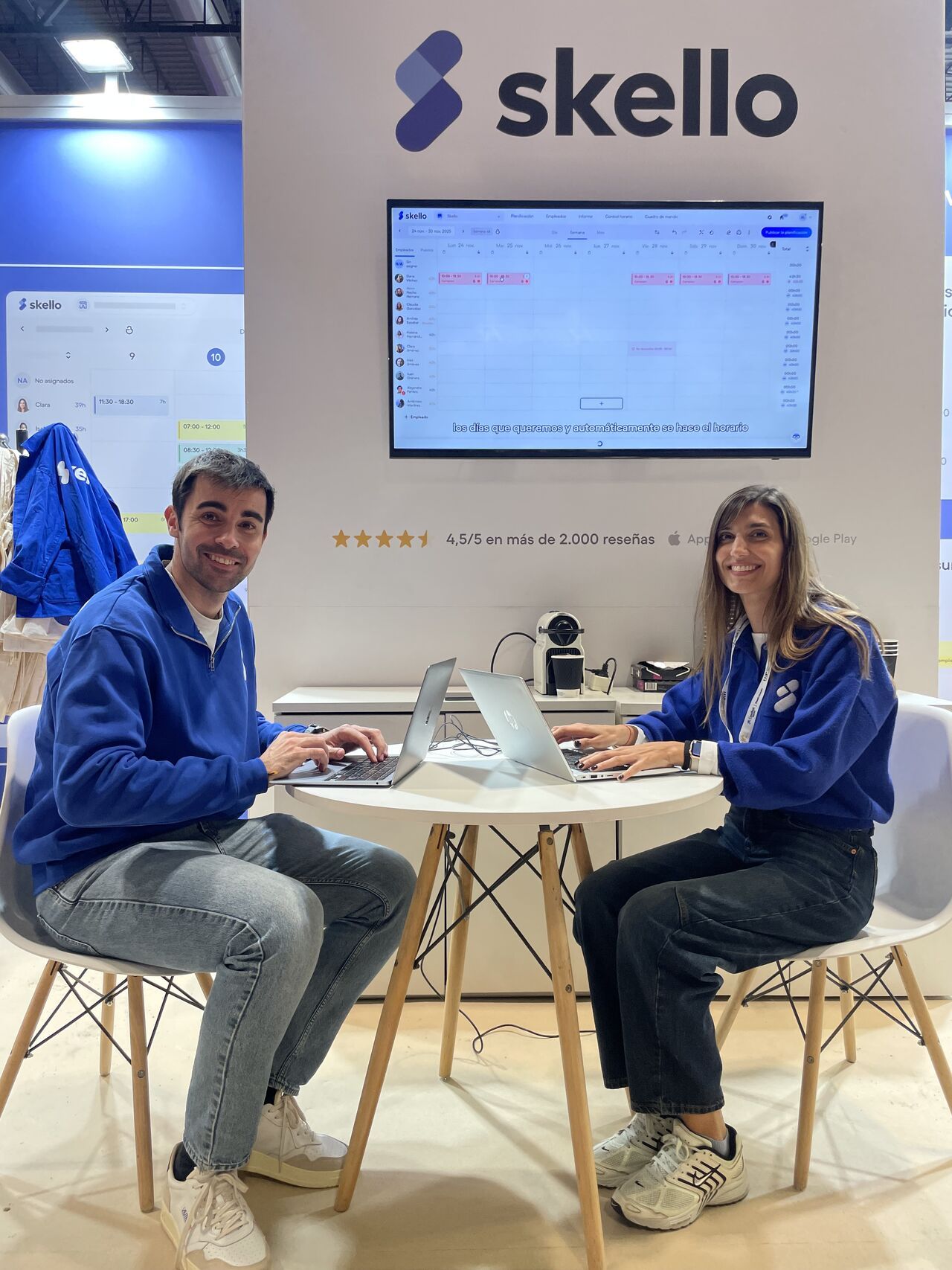
Its platform allows centralizing in a single environment the management of shifts, contracts, absences, and internal communication, facilitating the organization of teams in sectors with high operational demands. The impact is tangible: companies that use the tool can reduce up to 25% of the time dedicated to administrative tasks, freeing up resources to focus on business and people management.
The company already has reference clients in Spain, from gastronomic groups like Cocina Hermanos Torres to franchises of major brands like Mango, La Tagliatella, JD Sports, or Tous, which reflects the transversality of a solution designed for key sectors of the urban economy.

In parallel, Skello has recently incorporated an artificial intelligence-based assistant that acts as support in the daily management of teams. This tool allows anticipating needs, proposing adjustments in planning, or automating processes, introducing AI in operational environments where its presence had previously been limited. "The main impact is time savings and process simplification. Now users can get information instantly and make decisions without the need to generate manual reports," explains Pagès.
With Barcelona as a base, the company is now looking towards a new phase of growth. Its objective is to continue expanding its presence in Europe and consolidate a proposal that focuses on one of the great challenges of the current labor landscape: giving back time and decision-making capacity to those who manage front-line teams. "On average, we help companies save about 30 hours per week on administrative tasks. That time allows them to focus on what is truly important: their teams," he concludes.
Add The New Barcelona Post as your preferred Google source for free
Stay informed with the latest news.