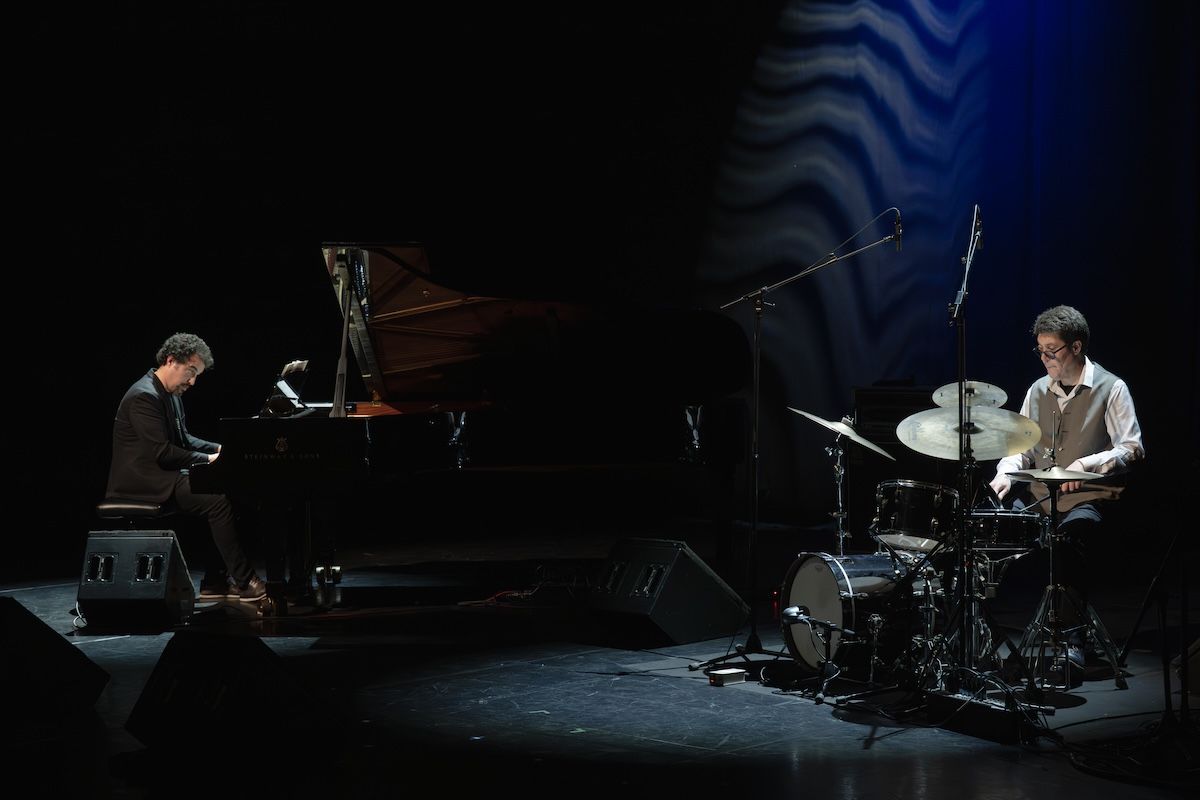
Those who expect a cave atmosphere, music that simply tickles the soul or that simply amuses or entertains, will be disappointed. The concert is sober, transcendent, without jokes. The staging is direct and simple, piano on the left and drums on the right, two spotlight projections behind to break the darkness and ensure we focus where appropriate.
We start with Música Callada III, that is Placide by Mompou, that is the search for an almost mystical inner silence (although in this piece, precisely, it has always seemed to me to approach Catalan folklore). Sergi Sirvent offers us a clear and faithful introduction, to then add the darkness, the late and nocturnal tonality of jazz, and Viñolas incorporates the cymbals (and some snare drum rolls). We begin to notice the gratuitousness of the concert in the fact that someone has decided to bring a two-year-old child who is laughing and shouting in that abstract language of the little ones, so impressionistic and particular too, but so opposed to what a silent music would be. Or to the act of being silent at a music concert.
This sweet repertoire will ascend towards more abstract structures, more aimed at launching splashes of sensations that might seem improvised but are not: the album, Recreacions Tímbriques. De Satie a Mompou, is considered to belong to the best tradition of contemporary chamber jazz. As we said, jazz already is, impressionistic (subjective or even dreamlike versions of reality, including music), but Mompou maintains a strict Novecentista rigor and Satie also leaves nothing too disarmed.
Sirvent and Viñolas do not cover, but compose on an existing base and distill a new meaning from itWe are not facing the umpteenth version of Satie's melodies merely putting dark glasses and a whiskey on them, but a true musical deconstruction. In Satiesmiles, for example, this composition by David Viñolas, rather than making us smile, makes us precisely introspective. A lot. And the room facilitates it: there is no mobile coverage, and it's Sunday afternoon, sothe extraordinary quality of the proposal enters with all the pause and all the Sunday silence it deserves.If it weren't for the child, who now raises his voice in the middle of a room with an intolerable force. Hey, this is free and admits no discrimination: but no, madam, nothing is free and this marathon, although we have all paid for it, deserves, like any self-respecting park, that the no-stepping-on-the-grass signs also be respected.
The piano is always serene, the drums lean much more towards virtuosity. In fact, he will use every corner of the drum kit, drumsticks and brushes, even to comb the cymbal in a circular motion for a long time. Sergi Sirvent has a score, David Viñolas is blind, but he hasn't come to improvise either. They have come to present an album, an idea with a beginning and an end, a contemporary kiss to the masters of musical impressionism. Grossiene VI is a marvel and this duo is capable, yes, of taking Erik Satie to the time machine and bringing him back to us dressed as a contemporary.
Sirvent and Viñolas do not cover, but rather compose on an existing base and distill a new meaning from it (or they elaborate their own themes, such as Sirvent's Lirismo delirante or Viñolas's own Satiesmiles). They admire, but also tear and displace things like children drawing an abstract scribble (or uttering, with that sweet little voice, the last indecipherable phrase).
It is very, very good that L'Auditori holds jazz marathons. The jazz scene in our country is very, very good. Keep this idea in mind, forget the bad manners of the audience with free admission and above all remember these names: Sergi Sirvent and David Viñolas.
Add The New Barcelona Post as your preferred Google source for free
Stay informed with the latest news.