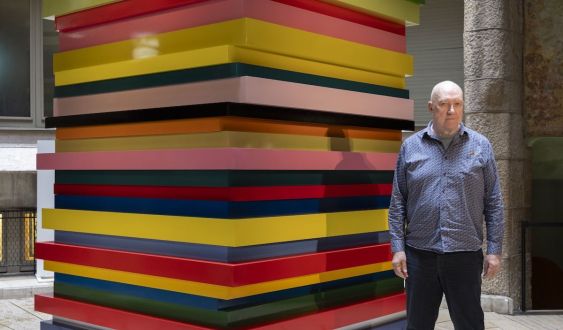
We will overlook the human confusion at the entrance, where a worker asked the artist himself if he was on the guest list: she quickly realized, but it was still a comical situation. What we see next, in the entrance courtyard, is a cyclopean and iconic sculpture by Scully in the form of a stack of horizontal colors, as if they were book spines or toy chips, one of his famous landlines but in XXL format that immediately places us in an eighties chromatic and a spirit of festive welcome. As we said, the foundation thinks big and the building, magnificent on its own, allows for magnificent works to be placed that mutually magnify each other. The key, it is already warned, will be color. And rhythm. The aura, the soul of colors, of bodies.
Scully's work is mostly abstract and, despite that, moving. I would add that, in addition, it is understandable and popular although this may not please some experts. Jaume Plensa himself comments to me at the entrance that, when he has seen the works exhibited on the walls and having exhibited himself not many months ago, he felt as if his house had been renovated: in his case the approach was more sculptural, more 3D, and in Scully's case we go much more to hung paintings (also photography) even though we also find his square blocks of stone or marble cut with Rubik's precision, with clear limits and a precipice.
Scully's paintings are wet, varnished, dense and normally warm, with blocks of color that act as chromatic and emotional buttresses. Harmony of contrast, existences that can only make sense with each other, combinations that seem the only possible ones. Lines, stripes, blocks, Tetris before Tetris, Rothko complementary to Rothko and much more semantic concreteness than many will want to admit. Okay, it's abstract: but feelings are too. Like colors, which more than a name have a mood.
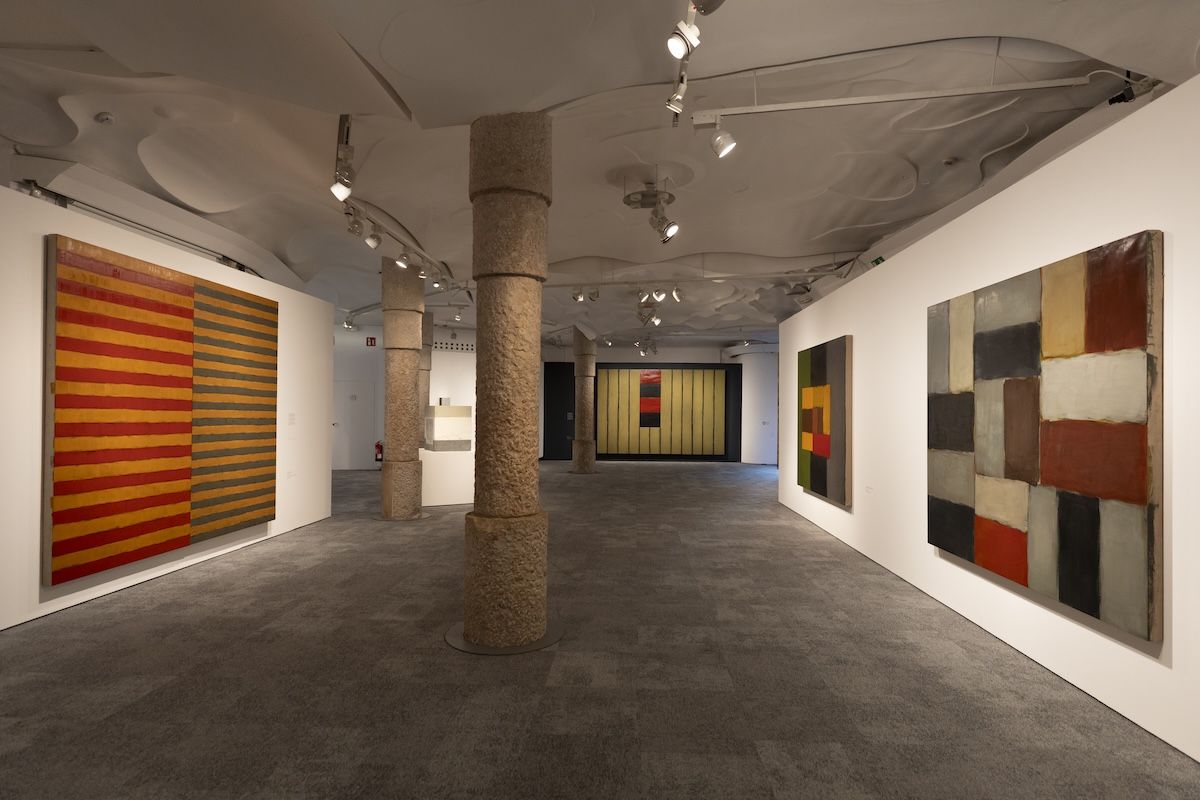
Curated by Javier Molins, who accompanied the Minister of Culture, Sonia Hernández Almodóvar, hand in hand with the foundation's director, Marta Lacambra, the exhibition, which can be visited until July 6, chronologically reviews the Irishman's six decades of production and quickly abandons the figurative (with a Gauguinian aftertaste, but with heightened colors) to quickly delve into the minimalism of the 70s (which helped him get rid of the superfluous), until reaching current times, more emotional, more honest and bare, which evoke the pandemic and his own depressive state. Scully aims to express in a circumscribed block the depth of the human spirit. And, as we said, to bring abstraction out of its emotional hermeticism and excessive introversion. Scully is, we could say, a healthy and functional reconciliation. Barcelona, we have been saying for years, needs to reconcile with contemporary art and once again be its main international promoter.
Cities, landscapes, seen through his kaleidoscopic glasses. Boston, Massachusetts (which led him to work specifically with diagonals), road junctions, Tin Mal, stripes, windows, grids, several pieces dedicated to Barcelona (black and white rectangles and lines, slightly Tàpies, or gray and brown, more slightly realistic). Pictorial architecture, emotional urbanism, geometric music. Contrasted with the modernist inclined columns and undulating walls of the exhibition hall's facade, Scully seems like a return to order but within the admission of one's own vulnerability: far from being rational or noucentista, Scully's reply is radically emotional and I would almost say romantic.
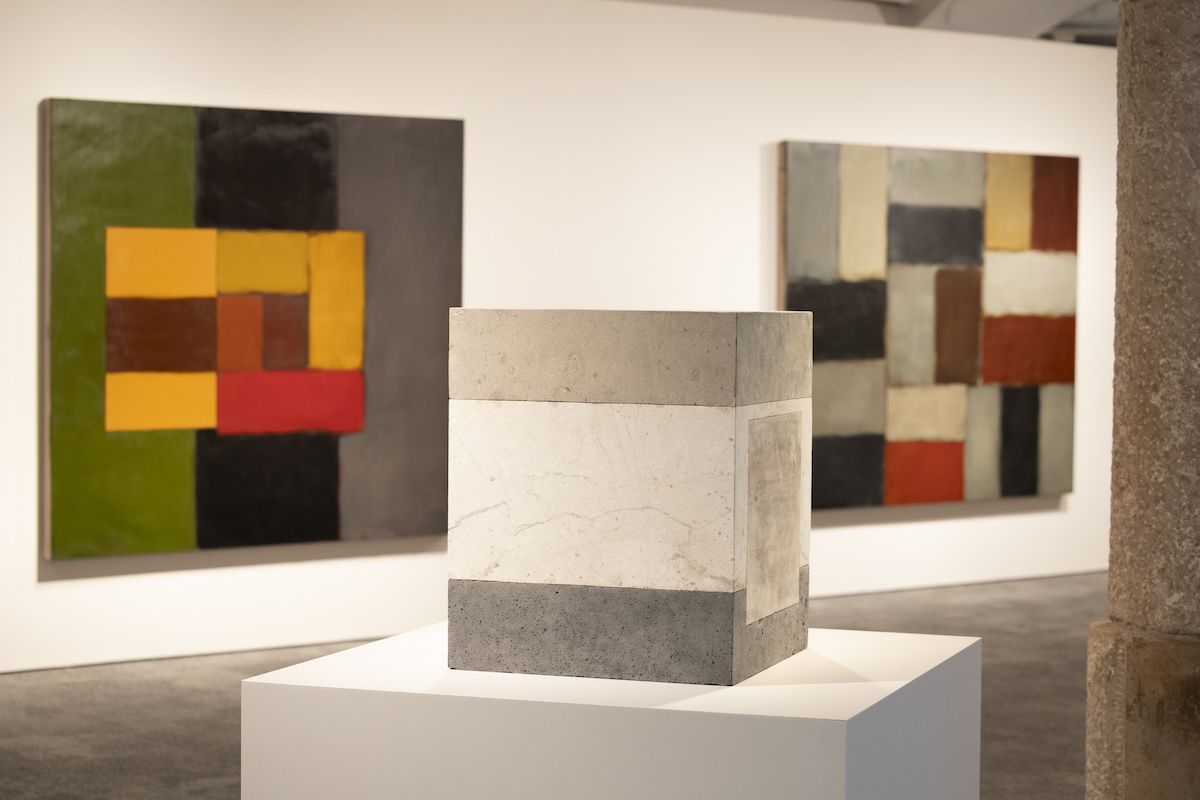
That is why Gaudí does not slap him, but welcomes him with total complicity. As for photography, Scully portrays facade surfaces and immortalizes building materials, pieces of the landscape, although evidently every portrait he makes is ultimately a self-portrait. The return to the figurative tiptoes through two Madonnas that by no means, no matter how hard they try, allow us to forget the journey into the kaleidoscope of the soul that we have just witnessed.
The exhibition ends with a large screen where the documentary about the artist made by David Trueba is projected, showing Scully's studio in London and his way of developing his latest works, but also his way of understanding them. If it is necessary to understand. If everything is not clear, sufficiently confusing, sufficiently independent of any word.
Add The New Barcelona Post as your preferred Google source for free
Stay informed with the latest news.
