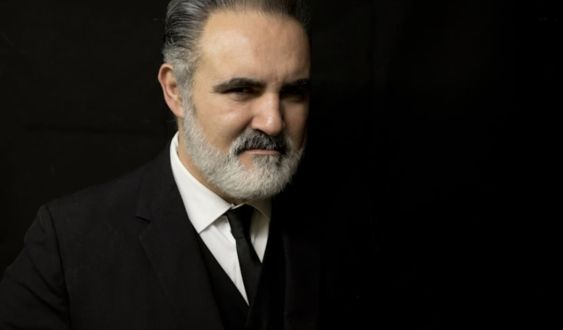
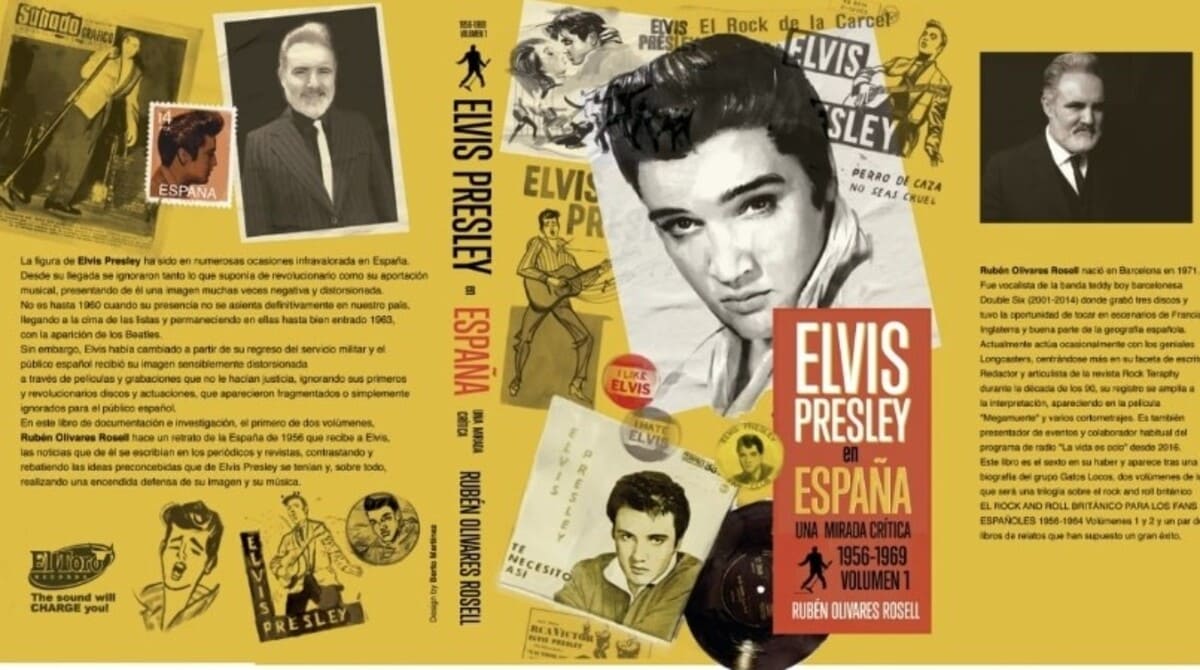
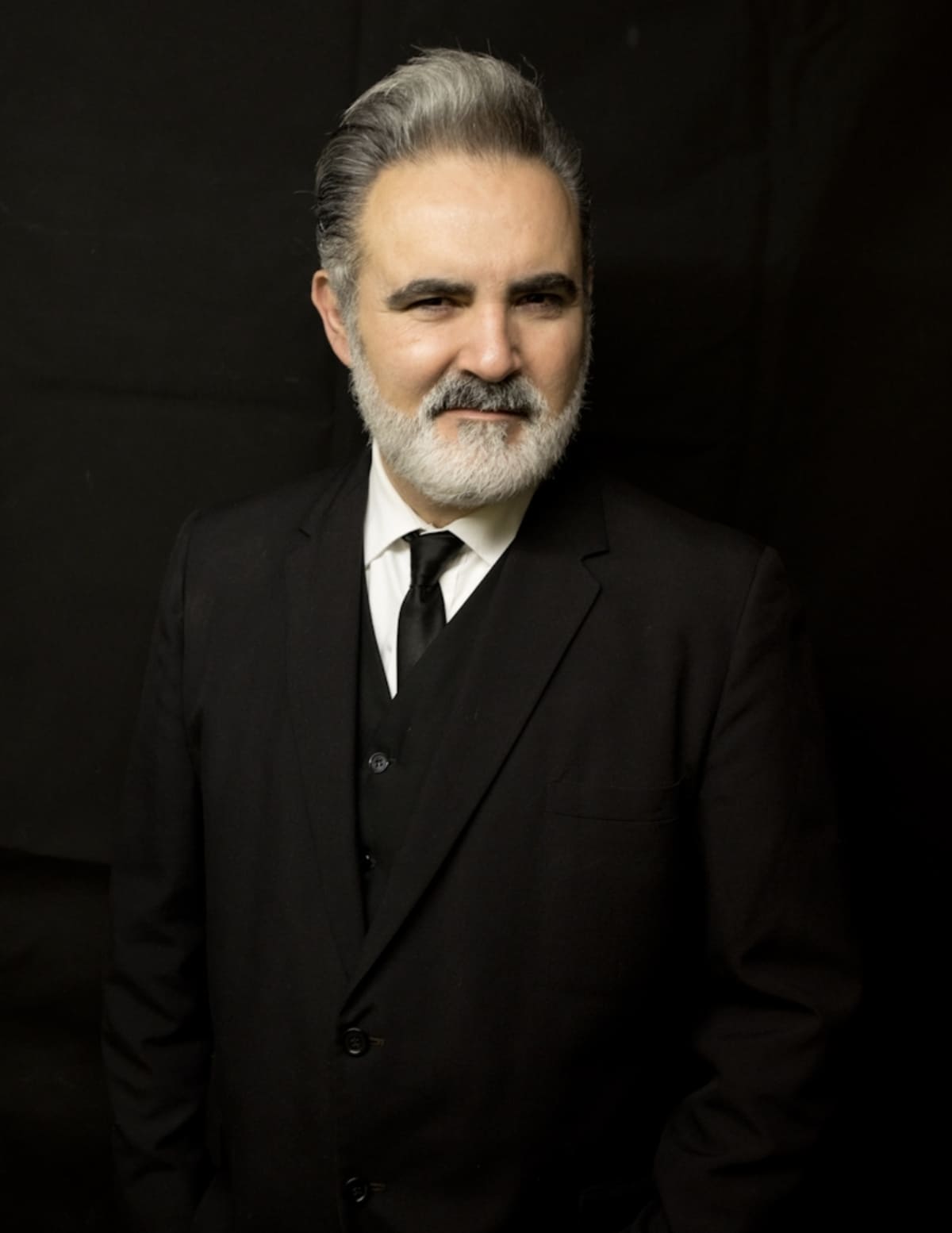
Rubén Olivares Rosell advances towards the bar with a determined step, clad in an elegant Edwardian-cut frock coat, pacing his steps to the riff of Johnny Kidd and the Pirates' Restless, playing on the radio. He orders an American coffee, "I'm very much a coffee person," and leans on the bar before extracting, from a bag, the dummy of the first volume of his new book, Elvis Presley en España, una mirada crítica (Elvis Presley in Spain, a Critical Look), which the musical label El Toro Records will publish in April.
"I think it's a very good opportunity to learn how the King's music arrived and established itself in our country," he adds regarding the one who, for him, as for so many other people, is the true King: Elvis Presley. A myth that took time to cement and shore up among the public here.
In his life, Rubén Olivares Rosell has done a bit of everything. Singer at the head of several groups like The Double Six, with whom he toured all over Europe and recorded several albums, writer for music magazines like Rock Therapy or the Elvis Club magazine, master of ceremonies for musical events, like the Big Bang Festival in Las Palmas held in October, and, in recent years, writer with titles like Alas de plata (Silver Wings) or the volumes El Rock & Roll británico para los fans españoles (British Rock & Roll for Spanish Fans).
"Writing is what has brought me the most satisfaction ---he explains---, although I don't regret at all how much fun I had years ago. Each era has its fun part, although the tranquility I've been experiencing in recent years I wouldn't trade for anything," he explains, sipping his first mouthful of coffee.
The full holster
Even without his new book having seen the light yet, the regular demonstrates having plenty of ammunition with several ongoing projects that he hopes to bring to fruition soon: "The second part about Elvis Presley in Spain, which will cover from 1970 to 1990, I hope to have ready soon, as well as the third part of El rock and roll británico para los fans españoles, which goes from 1965 to 1990."
--- With these, you'll already have a good number of titles.
--- Yes, they will be, respectively, my seventh and eighth books.
Especially proud of the literary corpus he has managed to accumulate, Rubén Olivares Rosell studied teaching in his day, although he did not finish it. "Now I'm starting a History degree, which was, ultimately, the one I always wanted to study," he explains with a sparkle of excitement shining on his face.
A decision that catches him at a good existential moment, "after removing toxic people from my life. It's gratifying to reach 50 with my homework done. I don't go to places where they don't want me, not even to make up the numbers. It's mentally hygienic."
A longed-for Barcelona, cosmopolitan and neighborhood-oriented
"I see that the city has regressed and, from being modern and open to the outside, it has become provincial and localist. Much of the latter we owe to our dear mayor," laments the writer regarding a Barcelona he claims to barely recognize.
And to make clear what model of city he was in love with, he immediately resumes speaking after finishing his coffee: "I loved the Barcelona of the 80s, before the Olympics. That mix between the cosmopolitan and the neighborhood that existed then. The tolerance and the desire to do things for the city that permeated the air. Now the general trend is misunderstood 'goodism,' of people with very thin skin and a great desire to please others. Spontaneity and freedom have been lost."
--- What hasn't been lost is the appetite. Do you want to eat something? There's a menu, tapas, portions… everything, and very good!
Suddenly putting on a face that says 'now I'm listening,' Rubén Olivares Rosell thinks for a moment and, finally, utters:
--- All three things, if the raw material is good!
Add The New Barcelona Post as your preferred Google source for free
Stay informed with the latest news.
