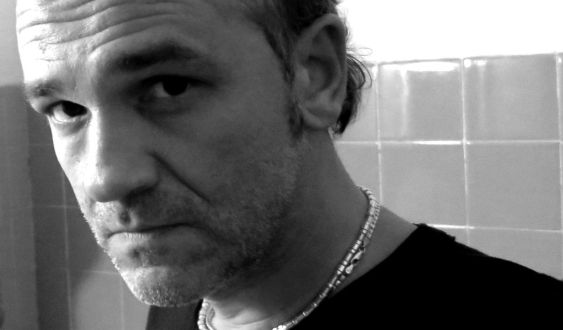
He arrived in Barcelona "at the end of the last century" because he wanted to write in the magazines he read and loved, Lateral and Ajoblanco. "I used the excuse of studying a doctorate in Literary Theory for Pompeu Fabra and here I came". Leaning on the bar, Robert Juan-Cantavella sips the first mouthful of the freshly served beer and rolls a cigarette that he will smoke later on the terrace. He gives a faint smile. "In the end I didn't get my doctorate," he adds.
He came from Almassora, a town near Castellón, where he played in the punk band The Vidre, "which I left behind to come here to try my luck writing." He raises the glass and observes the amber liquid against the light for a few seconds. "That was one of the mistakes of my life, because having a band is much more fun than writing novels," he continues, and puts the glass back on the bar. "But well, what's done is done," he determines.
Anyway, the gamble paid off. In cultural journalism he spent "several years practically living in the newsroom of Lateral magazine, under the tutelage of the Hungarian writer and journalist Mihály Dés, who died a few years ago, but before that he had time to be a true master to me," in addition to being co-editor of the digital literary magazine The Barcelona Review. On the other hand, his knowledge of French, treasured after a year living in Toulouse and numerous visits to Paris, "where some colleagues always had a sofa for me," have allowed him to dedicate himself to the translation of books and comics by names such as Virginie Despentes, Daniel Pennac, Benoît Peeters, Moebius or Mathias Enard.
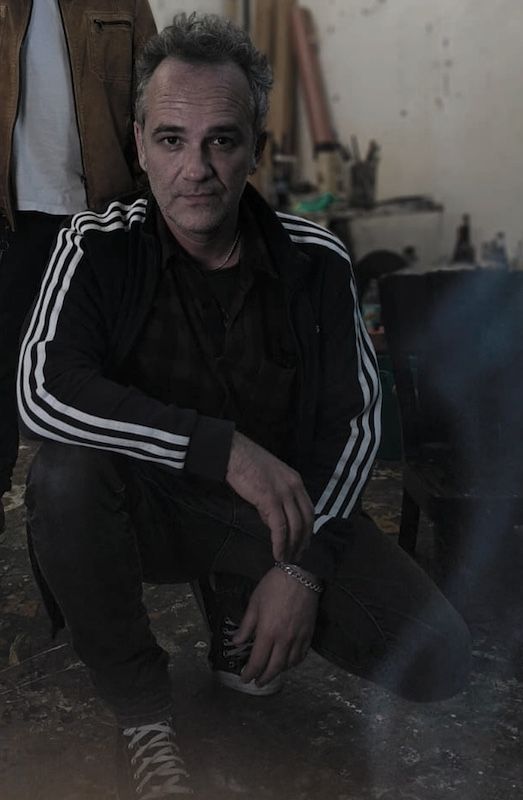
He teaches literature at the Ateneu Barcelonès and at that Pompeu Fabra where he did not get his doctorate, "and when I have a moment I scribble pages that later, with luck, years later, become novels." This is how works such as Y el cielo era una bestia, Asesino cósmico, Nadia or the recently published Detente bala (Candaya) have emerged, an epistolary artifact that makes great use of satire and absurd humor to interrogate the reader about the limits of sanity through the character Franco Piatkun and the experiences he narrates ---through hallucinated and hallucinating missives--- in which he reveals an inner world that often clashes with the one out there. Pure literary punk.
When the doors close, it's better to jump into the deep end
As a good writer, Robert Juan-Cantavella carried within him the ability to create written worlds. In 2001, he had debuted with the experimental novel Otro, but the impulse came at a moment of absolute crisis, when, one after another, all doors closed on him.
"The magazine Lateral went bankrupt and I was left without a job, because shortly before I had also lost some audioguide translations I was doing for the Louvre." Misfortunes never come alone. "On top of that, it so happened that I was also kicked out of the apartment I was living in, because the leaseholder left the country." He only had his partner, "who went through the tough time with me."
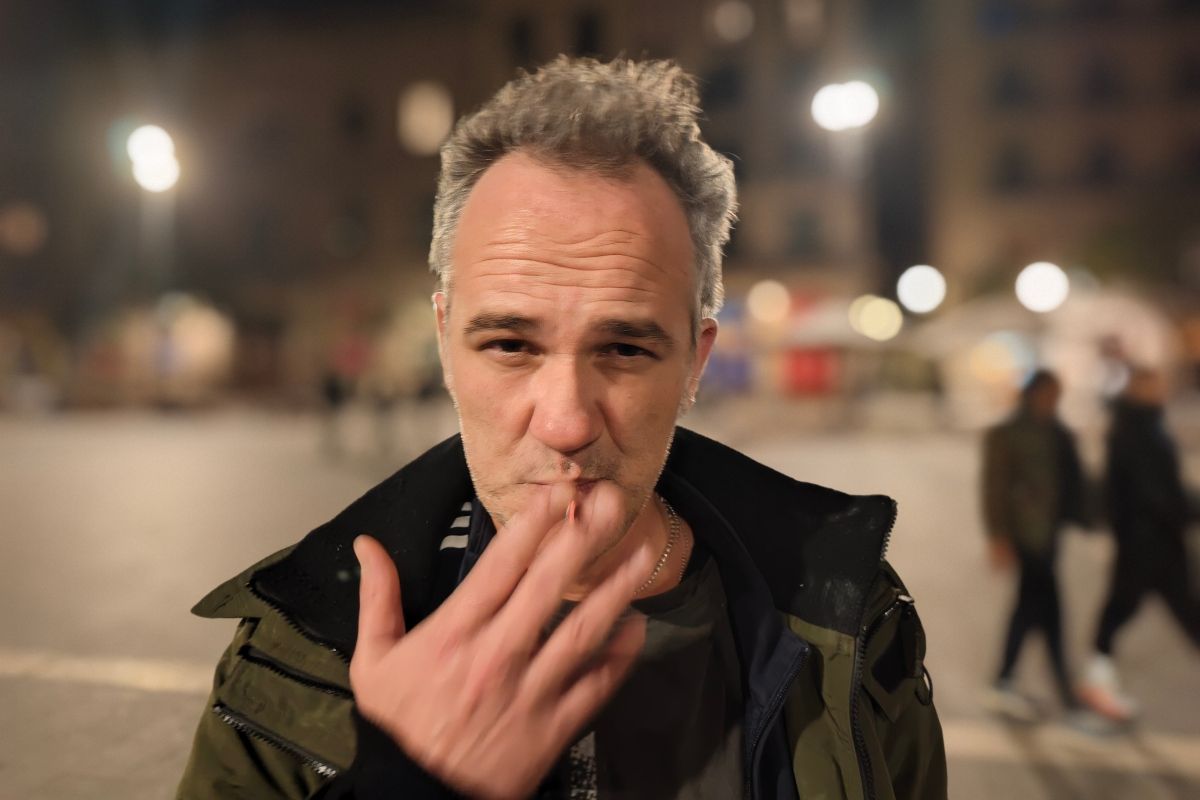
Robert would constantly check job search portals, but nothing ever came up. "Then, my sister took pity on me, gave me 300 euros, told me to stop crying and to go write 'that novel you say you want to write about Marina d'Or'. So I went and wrote it, it was titled El Dorado." He took the plunge and, luckily, the pool seemed to be full. That work, inspired by the gonzo journalism of a Hunter S. Thompson or a PJ O'Rourke, highlighted the wound of real estate speculation in the Levante region and was very well received, even being translated into French. Punk, sometimes, receives the applause it deserves.
"In any case, what I am most proud of," adds the writer, "is having managed to keep that person who went through the tough time with me, when I had nothing, still by my side." Together, they raise their daughters and, when he can, he carves out hours "from the virgin territory that is the night," to write and enjoy hours that seem to pass slower, without calls or other disturbances.
The necessary remembrance of La Canadiense
The local has spent more than half his life in Barcelona and, he admits, "more or less I have what I wanted to have when I came here. I don't get along badly with the city, there are things I like and others I don't, like with any other." He sips a mouthful of beer. "Anyway, right now I don't see myself anywhere else," he adds, despite the obvious annoyance "that tourists have decided to come in hordes, instead of in groups; by millions instead of by thousands; that they get everywhere, not like before when, for example, they hardly entered the Raval. And that they don't get a minimum preventive education test!"
He lives in Poble-sec, very close to those chimneys that in 1919 witnessed his favorite historical episode in Barcelona's history: the La Canadiense strike, organized by the CNT, which paralyzed the city for 44 days. "It's a place of memory with which I feel very comfortable, something beautiful that this city gave to the world."
--- Another very beautiful thing that this city has given the world is our gastronomic offer. It's already noon and we could tempt you with a menu or some tapas…
Robert Juan-Cantavella meditates for a few seconds. "I'll choose the menu ---he decides---. And it should include dessert, because my thing with sweets reaches an absurd point." He finishes his beer and adds: "And if you can turn on the TV, even better."
--- The TV? Why?
--- When I eat alone, I usually watch TV, because I don't have one at home, and that way I see how such a prodigy advances ---he replies, with the incendiary smile of the best punk.
Add The New Barcelona Post as your preferred Google source for free
Stay informed with the latest news.
