What if there was a renewable and sustainable energy source produced locally? What if that energy source came from waste and helped eliminate it? What if, in addition, it contributed to creating jobs in rural areas and revitalizing them? What if it turned out that this energy source not only exists but is already being produced and is reaching homes and businesses in Spain?
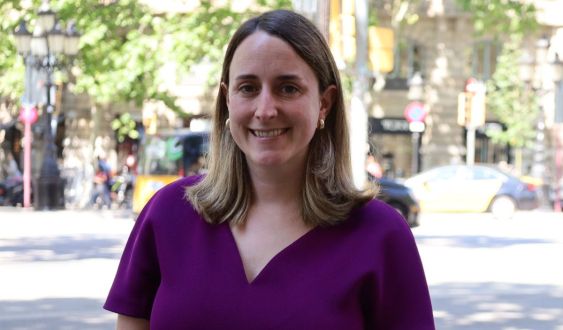
Biomethane is a renewable gas, or green gas, obtained from organic waste, which can come from areas such as livestock farming and wastewater treatment. Spain is the third country with the greatest potential in the EU in this field, with Catalonia as one of the most prominent territories, and Naturgy, through Nedgia —its gas distributor—, has set out to lead the commitment to biomethane. This is explained by Marta de Pablos, Director of Sourcing at Nedgia. A Telecommunications Engineer from the Polytechnic University of Madrid and with master's degrees from institutions such as Stanford and King's College London, De Pablos focuses on the development of renewable gases and accelerating this process.
— Why bet on biomethane?
— Biomethane helps solve the energy trilemma, which must address three areas: sustainability, accessibility with affordable prices, and security of supply, which consists of the certainty that the supply will not fail. Biomethane meets these three points: it is sustainable because it uses waste to generate energy; it guarantees supply because it is not a seasonal energy and can be stored, and it is economically accessible.
— How is that achieved?
— A key point is that biomethane is compatible with all the gas infrastructure in the country. Now it is still more expensive than other alternatives because it is under development and is incipient, but when biomethane production increases, prices will fall because supply and demand will adjust.
— How does the process to obtain it work?
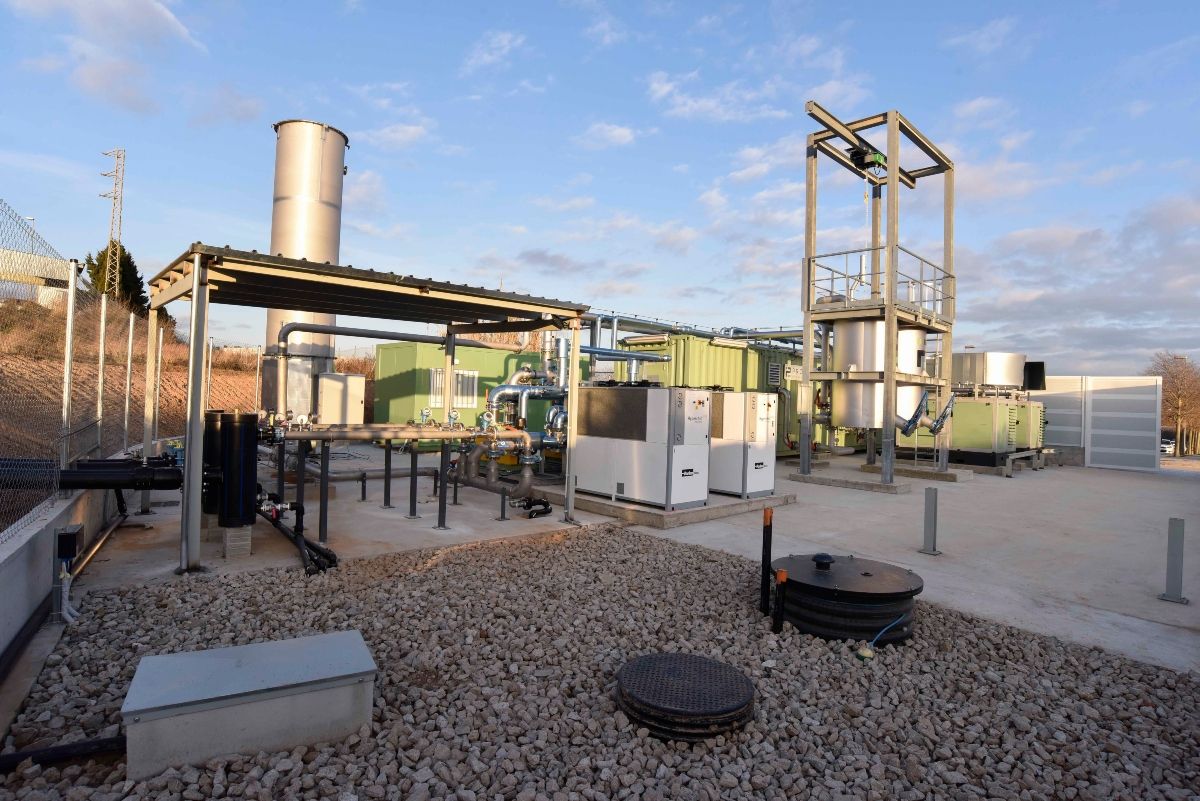
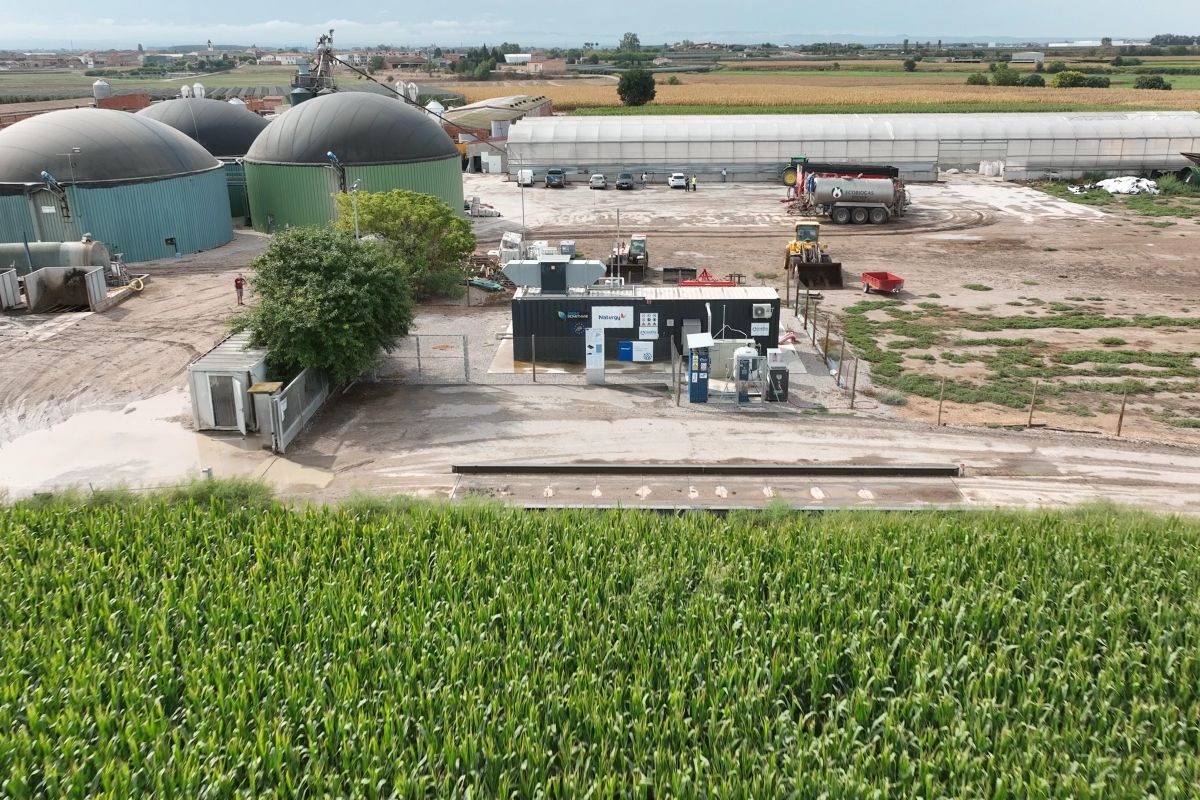
— Waste from facilities such as farms and water treatment plants is brought into contact with bacteria, which produce a gas that has the same properties as natural gas. The process not only obtains the gas but also eliminates the CO2 that those residues would have produced, and something else: from the residues, the bacteria produce a natural fertilizer.
— They close the cycle.
— It is one of the levers to boost renewable gas: it not only solves an energy problem, but also a waste management problem.
— However, it is a little-known energy source.
— A study we commissioned with 2,000 users confirmed that it is: practically, no one knows about it. However, once explained, 70% say they would be willing to contract it. A factor they particularly value is the fact that it is produced in Spain, because it contributes to energy independence and reduces the impact of external conflicts such as wars and tariff variations.
— What do users value most?
— First, the price. Then comes sustainability and, after that, comfort. A few years ago it was the other way around: they prioritized comfort over sustainability. Thus, the consumer's mentality is changing and they give more importance to sustainability, but it always has to be at an affordable price.
— And how will the price of biomethane evolve?
— In the study, 50% of users indicate that they would be willing to contract it even if it were more expensive, as long as the increase was not above 15 or 20%. This is something achievable: we believe that biomethane can get there. We have large companies as clients, such as Inditex and AENA. The issue is to have more production to bring down that curve.
— How can this production be increased?
— Currently, there are 15 biomethane plants in Spain in total. At Naturgy, we have a plan to build our own plants and also to create alliances to scale up this entire process. To achieve this, we are going to invest one billion euros in renewable gases between this year and 2027.
Catalonia will be an important vector in Naturgy's plan to boost biomethane— And this investment, how is it materialized?
— Currently, Naturgy has three biomethane plants: two are in Catalonia and the other in Galicia, and we are building two more in Seville and Valencia. Naturgy is 100% committed to leading the field of renewable gas, both in production and distribution. To this end, we are promoting alliances to advance in the massive production of green gas. In fact, we are working on 300 projects so that in the coming years they will start injecting biomethane into the network. With what is going to be launched, we will be able to distribute enough gas to decarbonize half a million homes.
— So, not only production is key, but also distribution.
— Yes, and we have made a lot of progress. So much so that we have increased the capacity to inject renewable gas into the network by 30%. The fact that all gas infrastructure is compatible with biomethane is crucial here. Of the almost 100,000 kilometers of gas network in Spain, 60,000 belong to Nedgia; of the eight million gas users, more than five million belong to Nedgia. For this reason, as a company, we have to give it this boost.
 — And in this impulse, what role will Catalonia play?
— Precisely Catalonia, Castilla-La Mancha, and Castilla y León concentrate 60% of our planned plan, because they have great potential and elements that help boost it. Catalonia is a pioneer in technology in all areas, and it will undoubtedly be an important vector in this plan.
— What else is needed to boost it?
— There are two points that are failing us: that society knows it better, and that institutions support it more. We need a great impulse from institutions to make it a reality, with measures such as streamlining permits and promoting key technologies, such as reverse flow, which allows renewable gas to be injected into the network. We have a great opportunity within Europe to be leaders, but for that, we need more impulse from the institutional layer.
"With only 30% of biomethane's potential, we could decarbonize the entire household sector"— At a European level, how has biomethane production evolved?
— In Europe there are about 1,300 plants; in Spain, there are only those 15. In France, for example, they have bet on biomethane and have built 700 plants in recent years. We have a long way to go, especially considering that Spain is the third country with the greatest potential in the EU for biomethane production. This potential is 163 TWh/a: with only 30% of that potential, we could decarbonize the entire household sector.
— These are promising figures.
— However, we are very far behind in development. And the National Energy Plan —the PNIEC— could be more ambitious in renewable gases, since we have already seen that high electrification, aspiring to 100%, is not possible. For example, there are industries, such as ceramics, that do not have enough with electric energy; they need gas, because it has a higher calorific value. There should not be a single energy solution, but rather we need to have several energy solutions that fit with each other.
— Is this the model that has been successfully developed in other European countries that are ahead?
— We have studied successful cases, especially in Denmark, where they have developed biomethane so well that no problems are generated in the communities where the plants are located. And they have them of all sizes: small, medium, and also large, which shows that it can be done and that it is a matter of doing it well.
— With employment as an added advantage.
— Yes, and the development of biomethane can also help us with the demographic challenge. It contributes to addressing a problem that Spain has today, and that is that it allows generating employment in rural areas. With the potential of biomethane, it is estimated that up to 20,000 direct jobs and 40,000 indirect jobs can be generated in Spain. And the important thing is where: finally, in rural areas.
Add The New Barcelona Post as your preferred Google source for free
Stay informed with the latest news.
