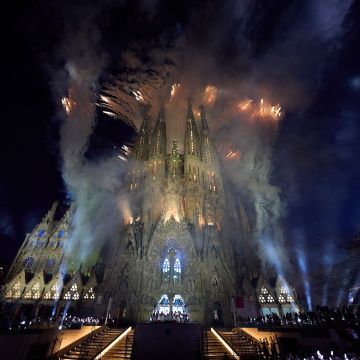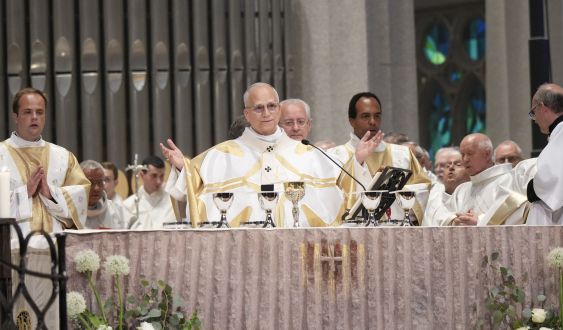
In Barcelona, 2026 will be remembered as a year in which the city once again "raised its gaze." The Catalan capital has lived through an exceptional calendar, with the Year of Architecture, the passage of the Tour de France and, above all, the completion of the Tower of Jesus at the Sagrada Família, one of Barcelona's great symbols, along with the visit of Pope Leo XIV. For a few months, some of the city's great stages drew an unusually high level of international attention, projecting Barcelona around the world and making it the protagonist of a singular year. And as with any major event, this projection has brought a return for the city, but also a cost for its administrations.
Ahead of the visit, Barcelona City Council estimated that the pontiff's arrival could generate an economic impact of around €30 million for the city. This was an initial, provisional internal estimate that, as Mayor Jaume Collboni explained, was not the goal of the event but one of its possible consequences. The visit also came during peak tourist season, in a particularly intense week for Barcelona, sandwiched between Primavera Sound and the Formula 1 Grand Prix. Hotels, tourist apartments, restaurants, retail and transport were among the sectors expected to benefit from the influx of visitors, while the international interest generated around the Pope and the completion of the Sagrada Família's Tower of Jesus Christ could have a longer-lasting effect over time. In fact, the tourism and hospitality sectors had already suggested, before the visit, that some of the return could materialize afterward, through Barcelona's international profile and interest in visiting the sites that had been at the center of those events.
Even during the visit itself, there were indicators of the activity it was generating. Hotel occupancy stood between 85% and 90% on the busiest days, according to the Catalan Association of Specialized Travel Agencies, while tourist apartments were projected to reach 97% occupancy between June 9 and 11. Interest in staying in the city also rose: Booking searches were up 52% compared to the previous year. But the effect wasn't limited to the days of the visit itself. By late June, the Barcelona Tourism Observatory recorded an increase in online interest in the city, with searches related to Leo XIV's arrival among the fastest-growing. The body also noted that hotel bookings for the following months remained above usual levels, an early sign that some of the visit's international projection could extend beyond the Pope's stay in Barcelona.
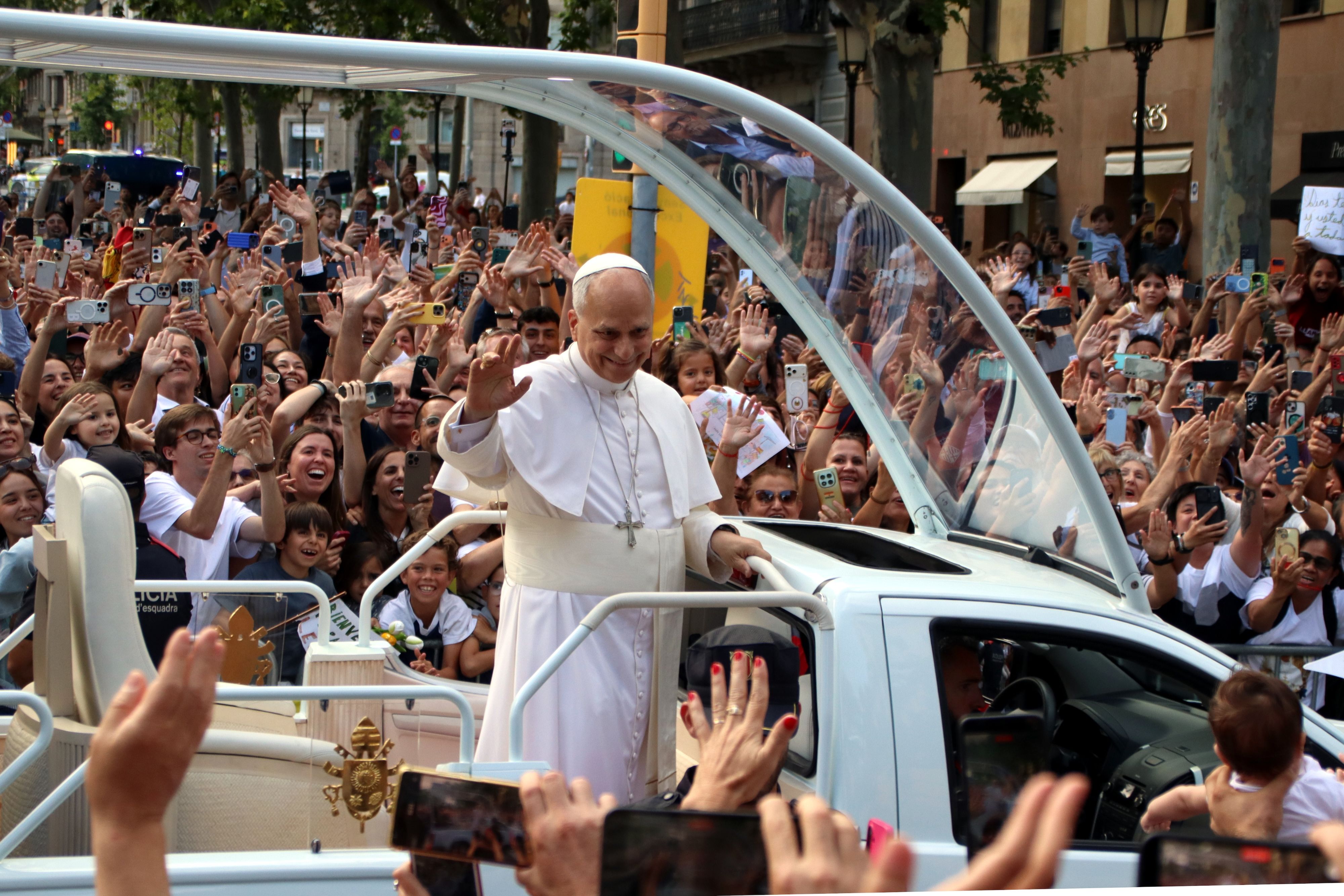
That said, while it's still too early to know the real economic return of the visit, or whether that initial estimate of €30 million was ultimately met, the other side of the ledger, public spending, can already start to be measured. A detailed report drawn up by the Generalitat, obtained by El País, puts the cost borne by the Catalan Government for the papal visit at €3.3 million. ACN has been able to confirm the figures, which raise by half a million euros the €2.8 million that the Minister for Justice and Democratic Quality, Ramon Espadaler, had cited before Parliament back in June.
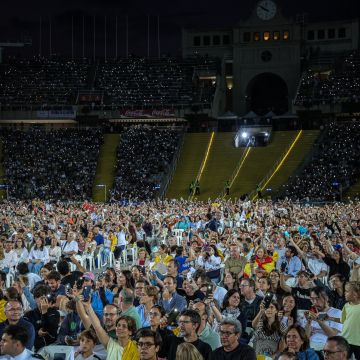
The main item corresponds to the €2.8 million granted to the Archdiocese of Barcelona, funded through the tourist tax. Of that amount, €1.8 million went toward partially financing the production contract for the vigil held at the Lluís Companys Olympic Stadium, while the remaining million covered the full cost of the international press center set up for the visit. This last item ended up higher than the Government had initially projected: it had expected around a thousand accredited journalists but ultimately received nearly double that number.
The grant to the Archdiocese, as Espadaler argued in Parliament, was not directed toward strictly ecclesiastical activities but toward logistical matters tied to organizing the visit. The minister had stressed that no public funds would go toward events falling under the Church's own purview, meaning that neither the visit to Montserrat, nor the activities of the Augustinians, nor the events at the Sagrada Família received Generalitat funding through this line item. The Government thus argued that public money went toward aspects tied to the event's extraordinary scale, such as logistics and support for the thousands of media professionals who traveled to Barcelona.
Outside this grant, the rest of the bill is spread across various Generalitat departments and bodies. The Presidency Department covered €351,855 for the "Catalunya, terra de trobada" advertising campaign linked to the pontiff's visit. Added to that are €1,234 for producing a video recap of the visit and €2,750 for President Salvador Illa's reception for the international press. The Catalan Tourism Agency, for its part, contributed €11,620 in branded Catalunya merchandise.
There are also costs tied to the security operation and public service mobility. The Interior Department recorded €43,868, mainly for bus transport of Mossos d'Esquadra officers to various points of the operation, plus a further €5,667 for transport and supplies for Civil Protection personnel. In Montserrat, the papal visit required €20,078 to reinforce staff, surveillance and security at the Ferrocarrils de la Generalitat stations, plus an additional €6,923 for the same measures on the rack railway.
The bill also includes some smaller, but particularly telling, expenses tied to the institutional pageantry surrounding the visit. Among them are the €1,300 spent on a replica of the Homilies d'Organyà that Salvador Illa gave to the pontiff, and €363 for a reproduction of the Ivory Girl from the National Archaeological Museum of Tarragona. The visit to the Brians 1 prison also generated costs: €4,880 in overtime for prison staff, €131 in gifts, and €1,333 for flowers, bouquets and identification ribbons for personnel.
There is still one item not included in this €3.3 million total: overtime pay for the security forces deployed for the visit. The Generalitat has not yet disclosed this figure, meaning the known bill so far is not yet the definitive public cost of the operation.
The full picture, then, remains incomplete, pending official publication of the visit's economic impact and whether the €30 million the City Council initially projected was actually generated. Comparing that return against the cost will be needed to complete the picture of a visit that, for a few days, put Barcelona back in the international spotlight.
Add The New Barcelona Post as your preferred Google source for free
Stay informed with the latest news.