
Let's set aside apartments and pensions for a moment and start with the Ponzi scheme, another example that human ambition (and nerve!) knows no bounds. Don't be scared by this academic-sounding name: the Ponzi scheme or system is that sadly common thing we all know as a pyramid scheme. Let's remember how this trick works: a "manager" promises very attractive returns on investments, so attractive that they end up being irresistible and many people get into the game. The problem is that these fantastic returns are not paid with the investments made by the manager, but with the contributions of new investors. So, as long as new investors keep coming in, there's no problem: the promised returns will be paid easily. However, the system collapses the day the flow of new investors stops and the spectacular returns run out.
Although there were previous examples, back in the 1920s, the shrewd Carlo Ponzi caused such a stir that in the end it was he who "institutionalized" and gave his name to this fraudulent practice. I suppose it helped that all the clichés converged: USA, glorious 20s, character of Italian origin... Of the previous examples I mentioned, there are real ones and fictional ones. Among the real cases, Baldomera Larra (daughter of Mariano José de Larra, of the famous "Come back tomorrow!") is surprising, as she promised returns of 30%... monthly!! As for fictional cases, a mind as brilliant as Charles Dickens had already exposed the plot of a pyramid scheme in a couple of novels.
Well, at this point we are in a position to affirm that the Spanish pension system is a Ponzi scheme: the returns (pensions) that retirees collect do not come from their investments (membership fees, self-employed contributions...) but from the contributions made by new investors (workers). And the problem is aggravated by the fact that remuneration is sometimes higher than new investments (that is, many pensions are higher than contributions to the system via fees). Today, the unsustainability of the system is so evident that "Daddy State" must cover its shame year after year.
Let's talk now about the Catalonia of 10 million. As long as you follow the press, general or economic, you will have seen that they are attacking us by land, sea and Twitter with the Catalonia of 10 million. What sarcasm that we talk about the infrastructures of the Catalonia of 10 million, when we still have not resolved not only that of the current 8 million, but that of 6 million... Anyway, let's leave it here, in theory, today's post is to talk about flats and pensions and the relationship between them. What surprises me about the Catalonia of 10 million is that almost everyone talks about the issue in terms of planning, taking for granted that this figure will be reached (around 2050 according to current demographic projections).
Whether this horizon is necessary or not does not seem to be part of the debate. I suppose that is what is interesting, that we discuss the "how" and the "when" but not the "why". Meanwhile, the passage of time is relentless and this summer we learned that Catalonia has already reached 8.16 million inhabitants... If you have come this far, I understand that you will have connected the dots: the pension system is failing everywhere and one way to disguise the mess is to grow in population to be able to incorporate new working investors into the system. Be careful, uncontrolled growth not only affects us in Catalonia. Look, otherwise, at what has happened in Spain in recent years: already about to reach 50 million inhabitants, according to the National Institute of Statistics, while in 2000 the population was barely 41 million.
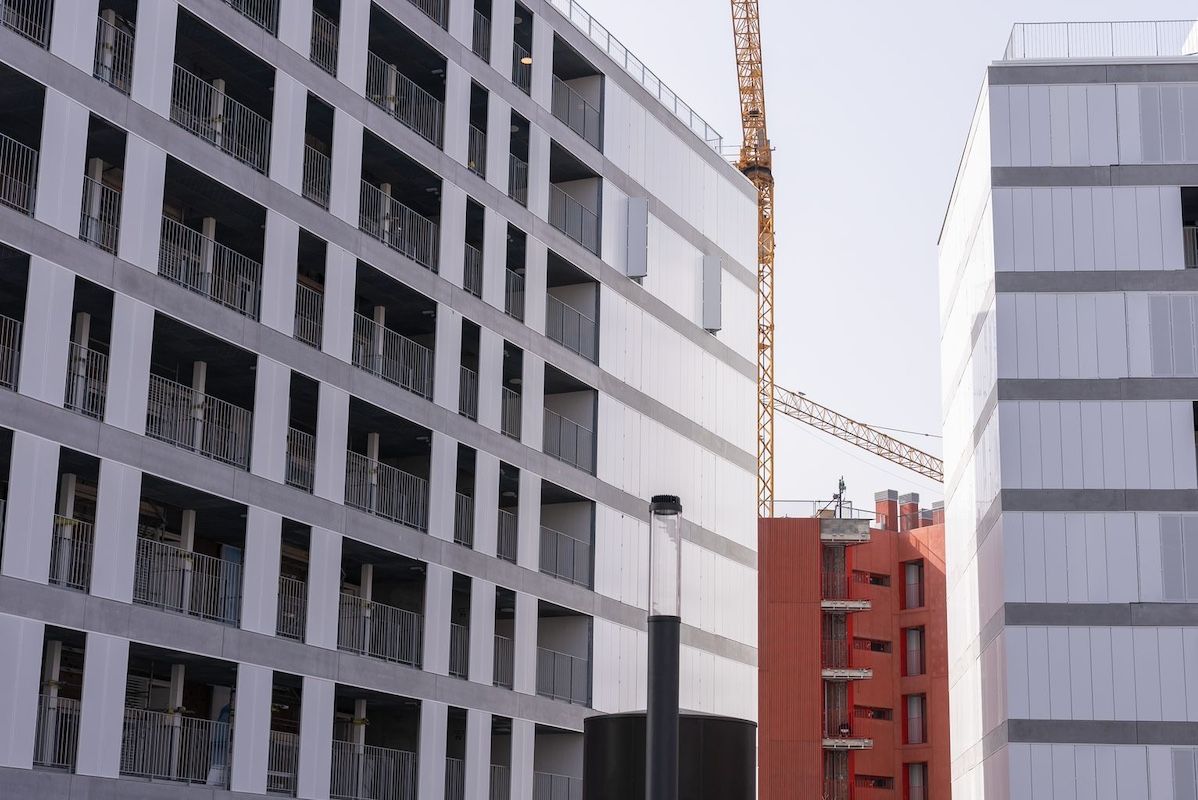
The runaway growth of the population (with an increase of 33% in 25 years) has led us to a scenario in which the housing supply is totally insufficientFinally, last but not least, the flats. I had not forgotten about it. Let's remember that in Catalonia we suffer from a serious housing problem. The uncontrolled population growth (with an increase of 33% in 25 years) has led us to a scenario in which the housing supply is totally insufficient. Let's now do some quick numbers for the future: let's imagine an average of 4 people per flat (although statistics say it's less). This means that to house the 2 million new Catalans that reaching 10 million would entail, a minimum of 500,000 new flats would be needed.
Given this imposing figure, the Govern's proposal to build 50,000 new flats (which we'll see...) is a totally insufficient contribution. And even more so, knowing the administrative difficulties (and bad press) that the private sector suffers to develop new homes. In short, the balance between flats and pensions is quite unstable. So much so that I had considered titling this article "flats or pensions". Even so, once I reread the post, I see that it could have been a "Neither flats. Nor pensions".
Epilogue
In recent days, we have seenmovements in different European countries that take for granted that the pension system is totally unsustainable: Denmark warns that retirement in 2040 will already be at 70 years old; for its part, Germany surprises with a proposal as unorthodox as encouraging young people to allocate €10 monthly to equities; in France, Bayrou has not passed the vote of confidence he was forced to present after announcing a significant austerity program that, among others, affected the current pension model. We will see if, now that others have already paved the way, someone here dares to make similar moves. However, I am pessimistic about the possibility that any tweak to the pension system will have any kind of short or medium-term impact on access to housing.Add The New Barcelona Post as your preferred Google source for free
Stay informed with the latest news.