One of the musical genres par excellence of Catalonia is, without a doubt, Catalan rumba. It is a musical style that was created in the neighborhoods of Gracia, Sants and El Raval and has become one of the best known and has its own recognizable seal. Get your guitar out, prepare your claps and... let's rumba!
Origin of Catalan rumba
This brief history of Catalan rumba will begin from its origins. The genre was developed in the mid-50s among the gypsy community residing in Barcelona, specifically, in the Gracia neighborhood. It was a genre that was inspired by flamenco rumba but went a step further by mixing other styles such as rock&roll and Cuban music.
In addition to the Gracia neighborhood, the origin of Catalan rumba also took place in other parts of Barcelona where gypsy communities lived: in the Hostafrancs neighborhood and on Calle de la Cera del Raval. These two places, together with Gracia, became the birthplace of a new genre that would succeed among a very large audience. The most striking characteristic of the communities in these neighborhoods is that they were Catalan speakers and, in the songs, we can see the influence of Catalan as well as Caló or Castilian.
As we can see, the genre, since its birth, was characterized by being a genre that fused different styles. This fusion and miscegenation has been a constant in the evolution of the musical style and, for this reason, from the 90s to the present day, Catalan rumba groups with influences from many other styles such as hip hop, reggae and even electronic music have abounded.
Musicians like Manu Chao and his group Mano Negra greatly influenced the evolution of the genre and managed to create fusion rumba. As a result of this, many Catalan bands emerged on the music scene proposing a new way of making and understanding Catalan rumba. We are talking about groups like Ojos de Brujo, Estopa or Txarango.
Catalan rumba: essential groups
This style has evolved a lot since its beginnings and, above all, has a very important base: the fusion of styles. From Peret to today there have been many groups that have experimented with the possibilities of Catalan rumba and, below, we will review those that seem most interesting to us.
Peret, the father of Catalan rumba
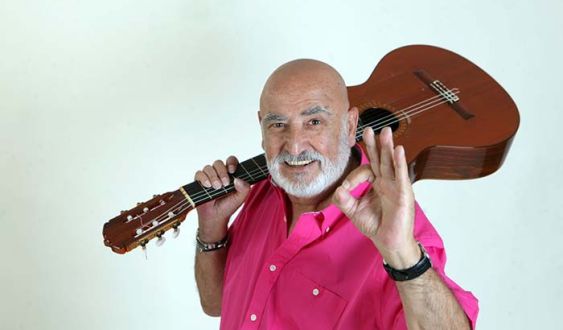
Peret is the king of Catalan rumba, its creator, its inspirer, its greatest exponent worldwide. Of Gypsy origin and a resident of the Gràcia neighborhood, Peret managed to internationalize the genre with a song that gave him worldwide success: Borriquito in 1971. This song was number 1 for 7 weeks in Holland and 2 weeks at number 1 in Germany. With him, Catalan rumba kicked off and many groups and artists began to follow in his footsteps.
El Pescaílla, the other father of the genre
In addition to Peret, there is another proper name in the history of Catalan rumba: El Pescaílla. This singer, guitarist, and composer is considered another of the fathers of Catalan rumba, along with Peret. He was married to Lola Flores and his musical footprint was very influential for other musicians of the time. Today we only have two of his albums: "El patriarca de la rumba" and "El Pescaílla". His style was characterized by adapting songs to the rumba essence, as was the case, for example, with "A garota de Ipanema" or "Sarandonga".
Gipsy Kings
The Gipsy Kings are a French Gypsy musical band that sing songs in Spanish and are based on Catalan rumba. But they add something different to their songs as they include sounds of pop and the purest flamenco. They are one of the essential groups of the genre that achieved great worldwide success, selling more than 60 million copies around the world. Quite something!
Gato Pérez
Xavier Patricio Pérez is the name hidden behind the pseudonym Gato Pérez. This Argentine musician lived in Catalonia and soaked up the essence of Catalan rumba. From 1977 he began to create his own musical style that experimented with the possibilities of rumba. His first two albums were very well received by critics and the public, but it was not until "Atalaya" that he achieved greater success. He managed to mix rumba with jazz and salsa, creating a unique and very influential style.
Los Manolos
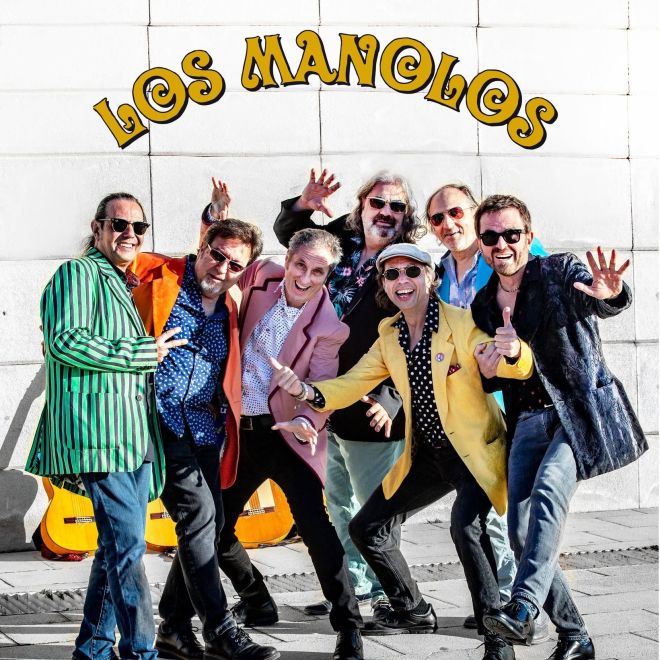
Another essential Catalan rumba group is Los Manolos. This band started performing in the late 80s. They were 10 friends from Barcelona who began to include the most rock-like essence into Catalan rumba. They combined instruments and offered rumba versions of songs like "All my loving" or the habanera "El meu avi". Their surprising and unforgettable look (fake sideburns, sunglasses, elephant-leg pants, etc.) attracted a lot of attention from foreign agencies, and this made Los Manolos' fame cross borders. In 1991, with "Pasión Condal," they managed to be the third best-selling album in Spanish of the year.
Ai Ai Ai
After the death of Gato Pérez, Ai Ai Ai was created, a Catalan rumba group that was formed by Pep Lladó, a friend of the artist. He, along with other gypsy musicians like Sicus Carbonell or Ricard Tarragona, created this new band that experimented with the genre and gave it a unique and personal touch.
Sabor de Gràcia
As its name indicates, Sabor de Gràcia is a group originally from the Gracia neighborhood of Barcelona. Their songs are essentially in Catalan, although there are also songs in Spanish. Sicus Carbonell was the artist who created this group in 1994 and, since then, they have become a benchmark for rumba. "Tots els colors" was their first album published in 1997, where they covered a Serrat song and paid homage to Gato Pérez.
Estopa
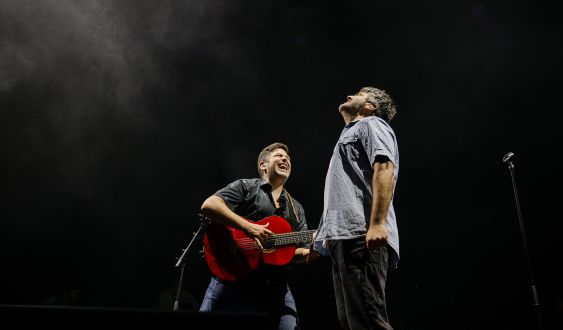
In 1999, a new group appeared on the Catalan music scene that achieved impressive success. We are talking about the Muñoz brothers' duo: Estopa. These two musicians from Cornellá have managed to become one of the essential bands of Catalan rumba, but also of Spanish music. With their first work, they managed to sell over a million copies. The fusion of flamenco and urban rumba is the secret of their success, a band that has songs that have become anthems like "Como Camarón" or "La raja de tu falda".
La Troba Kung-Fú
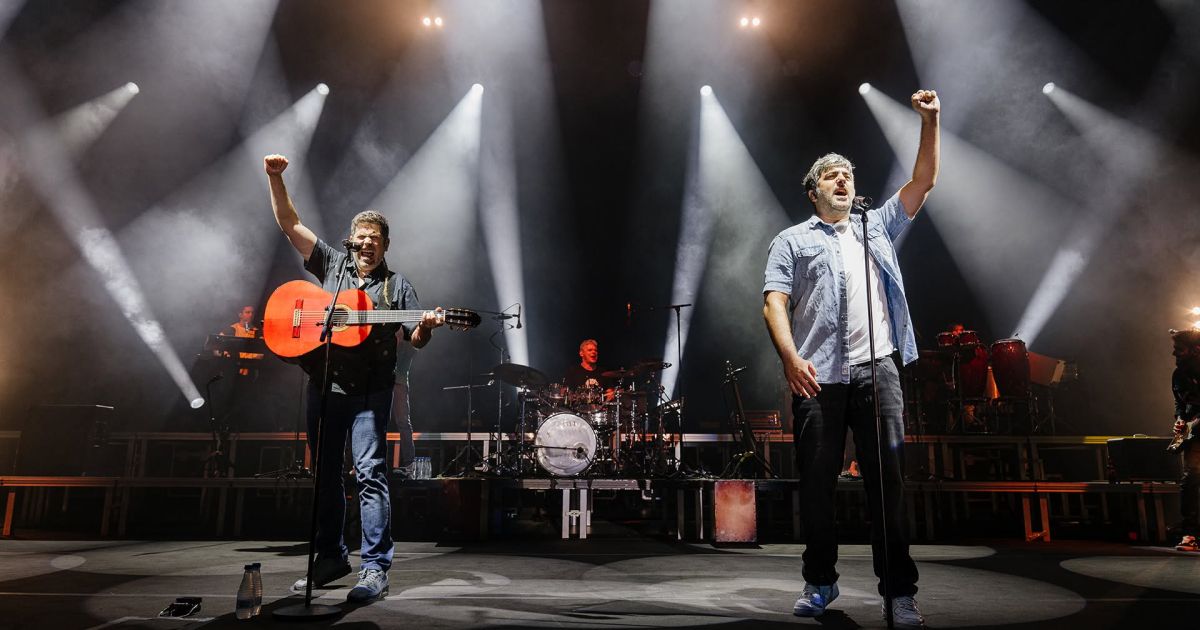
We now begin to talk about Catalan music groups that innovated a lot with the genre and introduced surprising elements and instruments. This is the case of La Troba Kung-Fú, the band that introduced the accordion and Latin rhythms like cumbia. The fusion proposed by this band was very influential in the genre and, today, they continue to be one of the leading groups in the sector. Joan Garriga is the founder of this group, who also led Dusminguet. "Clavell morenet" was their first album, which won the City of Barcelona Award in 2007.
Ojos de Brujo
In 1996, a groundbreaking and different band was formed in Barcelona: Ojos de Brujo. Their musical proposal is based on fusion, with flamenco and Catalan rumba as their experimental base. In the songs of this group, we find influences from very diverse styles such as hip hop, reggae, Latin music, and electronic music. "Vengue" was the band's first album, which managed to sell 40,000 copies thanks to word-of-mouth.
La Pegatina
Since 2003, we have been able to enjoy a fun, surprising, and innovative band that has achieved enormous success both in Spain and Latin America. La Pegatina is a group originally from Moncada i Reixach that bases its success on the fusion of Catalan rumba with ska. "Al carrer!" was the band's first album, self-released in 2007, in which they sang in Catalan, Spanish, and even Galician.
Muchachito Bombo Infierno
Another innovator of Catalan rumba is Muchachito Bombo Infierno, a group led by Jairo Perera that managed to mix swing and rumba with a unique and well-crafted style. In addition, Muchachito's concerts include a large number of artistic elements, such as a painter who is in charge of creating a painting during the concert. A real blast.
Txarango
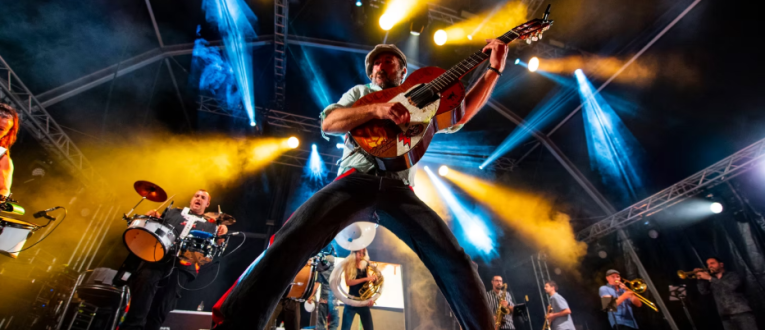
And we finish this list by talking about one of the essential current groups in the music scene. Txarango is a group that started its journey in 2010 and focuses on experimentation and musical fusion. Rumba, reggae, dub, or Latin are the styles that intertwine in their songs and have managed to gain followers all over the world. The band's aesthetic is closely linked to the imaginary world of the circus and, in fact, Txarango are the promoters of the Clownia festival.
Peret, Essence of Catalan Rumba
Between 1962 and 1964, "Esencia de la rumba catalana" was recorded, a work by Peret that, for many, signifies the official beginning of Catalan rumba. The genesis of the genre occurred with the publication of this work where Peret gifted us with a work that would mark a before and after in Spanish and, also, world music. The surprising thing about this album is that the artist only had his guitar, his voice, and two palmeros. With that, he managed to create an unforgettable album that has become part of the history of world music.
Between 1962 and 1964, "Esencia de la rumba catalana" was recorded, a work by Peret that, for many, signifies the official beginning of Catalan rumba.
"Esencia de la rumba catalana" features different albums that inaugurate a new stage in history. The first of them is officially the first Catalan rumba album in history. Here appears a different type of guitar strumming that, years later, would be baptized with the name of "el ventilador." A new music that reaches a new audience and draws from the influence of genres that were triumphing at the time, such as Elvis's rock and roll.
In the second album that appeared in 1964, we find adaptations of Latin songs due to Peret's travels to America. Here he rehearses a flamenco palo that was very popular at the time, the garrotín, but he mixes it with Latin music, such as the adaptation of "El charlatán" which, years later, would become "El gitano Antón."
Listening to "Esencia de la rumba catalana" is essential due to its great historical and musical interest. In each song, we see how the artist managed to bring very notable innovations to the genre and officially create a new way of understanding rumba.
Add The New Barcelona Post as your preferred Google source for free
Stay informed with the latest news.