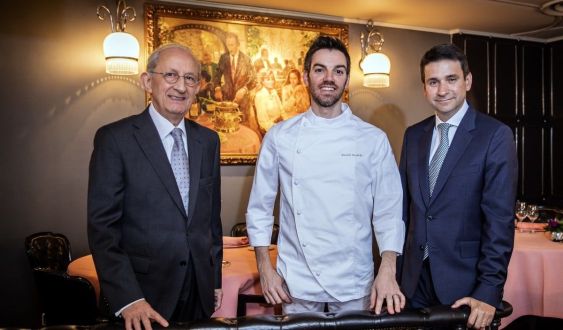
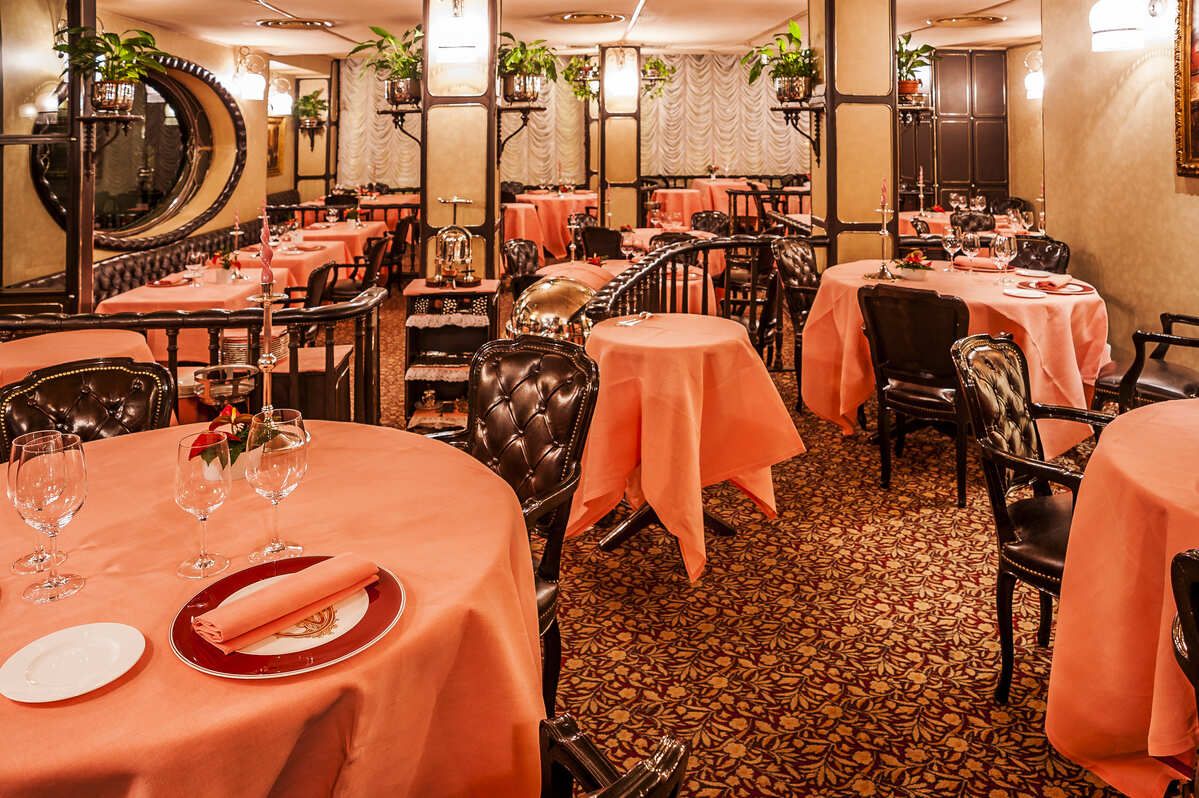
It's a cold Thursday morning in Barcelona when, for the first time in my life, I ring the doorbell of the Via Veneto restaurant. It's early, so the place is closed to the public, although already in motion for the lunch shift. My first contact with what may be the most iconic restaurant in Barcelona deepens my surprise factor. I find a much larger restaurant than I thought (the capacity in the main dining room is 50 people, but you have to add another 50 in the private rooms) and also more warm and welcoming.
It may be the wood paneling on the walls, the sinuous mirrors, or the natural kindness with which I am received by Pere Monje, second generation of the restaurant, who took over from his father, Josep Monje, alma mater of Via Veneto. After a brief tour through a winding corridor, walking on a carpet so plush that my heels sink into it, we arrive at the last of a row of rooms where this interview takes place.
Created in the image and likeness of the great European restaurants of the 60s, Via Veneto was born out of a necessity, that which the gauche divine Catalan had to find a corner to meet. Indisputable at this time was also the figure of Oriol Regàs, the famous Catalan cultural promoter, who endowed Via Veneto with the necessary splendor to live up to all that restlessness and intellectuality, and also to the famous French cuisine of the time. It was 1967 and no one knew it yet, but a restaurant was born that was destined to become much more than a restaurant. "In the beginning, my father joined as a waiter and over time he rose until in the mid-70s he became the director, although it was not until 1982 when Via Veneto became a family restaurant," says Pere Monje. From then until today much has changed, but the essence remains, "the client is above all else."
The unrepeatable figure of a humble man
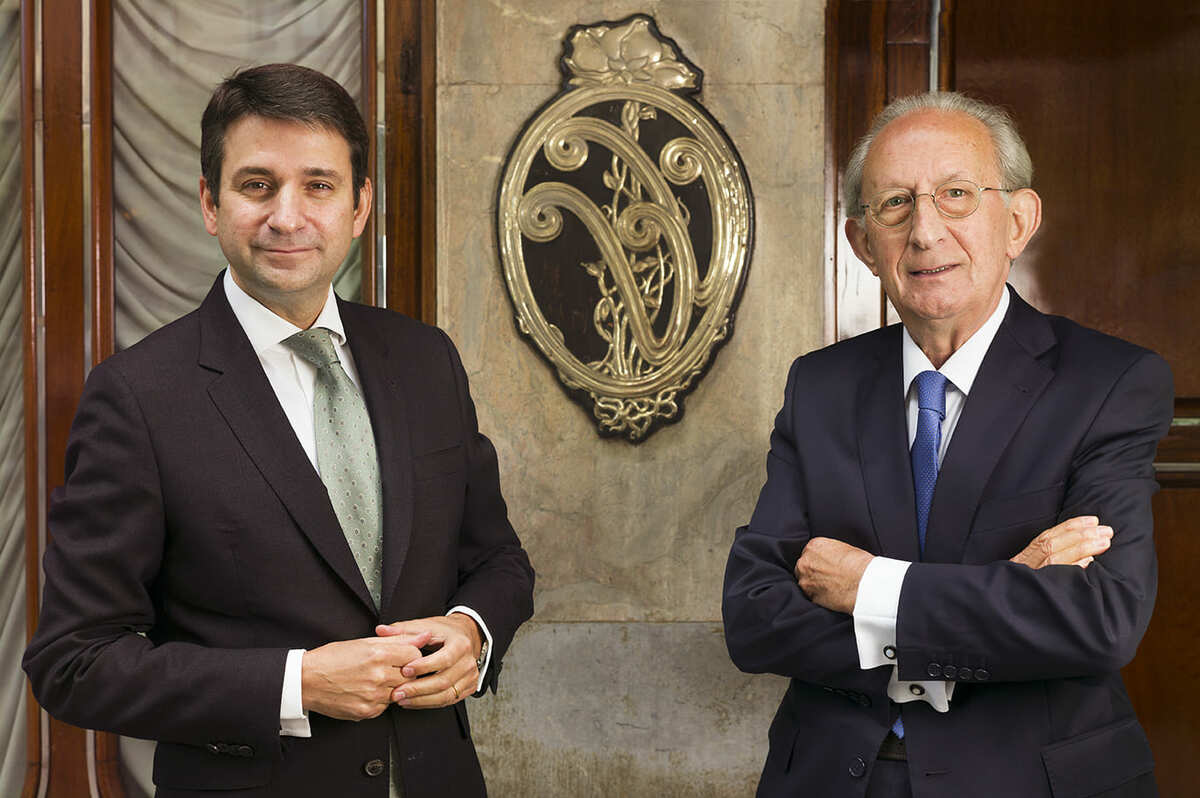
Via Veneto cannot be explained without the figure of Josep Monje, a man of humble origin, from a small village in the Pyrenees, Pobellà, in the heart of Vall Fosca. Josep Monje was not the hereu (heir) of his family and had to go to Barcelona to try to build his future. For many months he had to sleep in the warehouse of a store owned by acquaintances of his parents. After a while, he found work as a waiter at Via Veneto, the restaurant he would manage as owner many years later. Josep Monje embodies, even today, like very few others, three qualities in frank decline in our society: constant work, a spirit of service, and absolute discretion. Three qualities that he has happily passed on to his son Pere.
A stage where life happens
The soft movement of the modernist airs of the place, the colors of the noble fabrics and the impeccable forms of Pere Monje provide the necessary warmth to an interview where there is no physical contact whatsoever and the conversation is maintained with masks on. It is the new normal for everyone, although some adapt better than others. "Via Veneto is more evolutionary and adaptive than it seems. It is a warm luxury, of will, where the client feels at home." To maintain this eagerness, the Monjes have always opted for subtlety. "Every year we change many things to make sure everything is as always." In the last ten years, everything has changed in Via Veneto and Monje assures that there is no space without reform, "but our reforms are done trying to preserve the soul of the house, which differentiates us from the rest." A subtlety that is reflected even in its iconic Venetian blind, a piece that they have also been adapting and is now narrower than in its origins.
Every year we change many things to make sure everything is as always
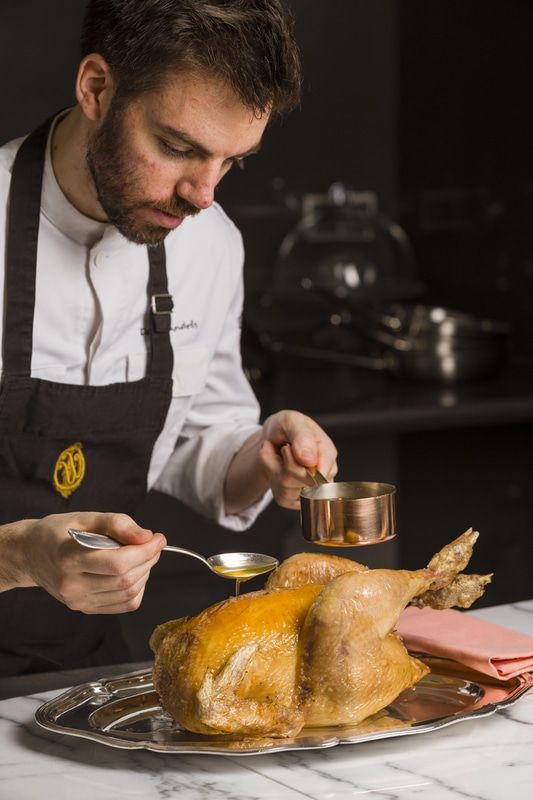
This respect for the restaurant's space, a stage where life passes in the heart of Barcelona, has also been carried out in its gastronomic proposal, which for a couple of years has been led by the young David Andrés, the chef from Igualada who until recently was head chef at Abac. Great chefs have always passed through its kitchens, but the most important thing has been the house itself and its way of treating the client.
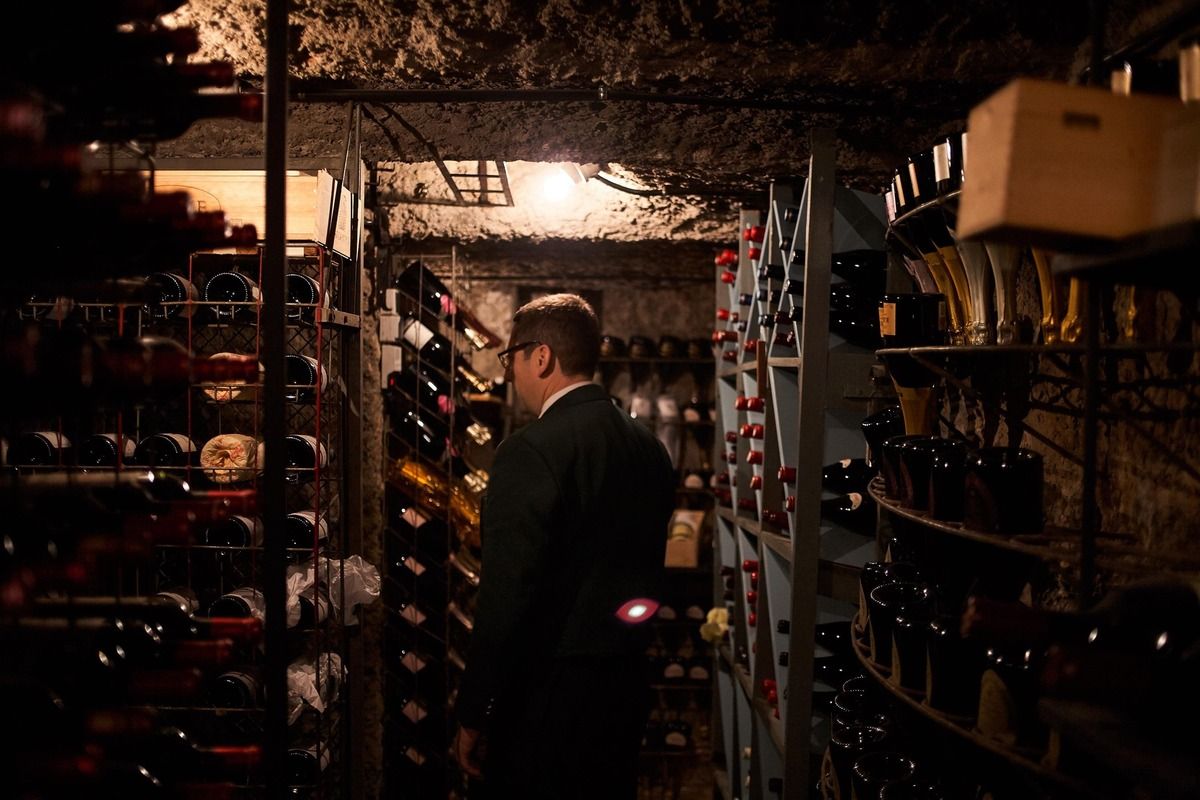
As a result of a constant need for adaptation that has accelerated its evolution in recent years, and which not even a global pandemic has managed to stop, today the cuisine of Via Veneto moves between three axes that reflect the present of its menu, but with a necessary nod to the past, with dishes such as duck à la presse, steak tartar or grilled lamb ribs. The chef's personality and his extraordinary execution are added to the current market, with products such as El Prat artichokes or Alba white truffle. Nor in the conversation do we overlook the bodega of Via Veneto, positioned among the five best in the country, "with very special references, but of all prices."
Haute cuisine at home, also at Christmas
Not few are the challenges that Via Veneto has had to face throughout its more than 50 years of history. It has come out of all of them successfully, including the covid-19 crisis. "In all our years of history, we had never done anything similar to a delivery. However, we have been able to create a new channel quickly, efficiently, and precisely." The Monje family's obsession with total customer satisfaction means that Pere Monje is only "reasonably satisfied" with the launch of his take away and delivery project, thanks to which we can enjoy haute cuisine at home as if every day were a party, also now and despite being open.
In all our years of history, we had never done anything similar to a delivery
"For this Christmas, we will continue with the proposal and have already prepared the menus for the most special days." Of course, dishes such as escudella, carn d'olla, capon, or Sant Esteve cannelloni will not be missing. And if someone wants to enjoy Via Veneto's dishes during these dates, it will have to be this way, as the restaurant has hung the "full" sign in its dining rooms for the most important Christmas days. "Restaurants have shown that we can bring dishes to homes at a level of execution like those we make in the restaurant every day, beyond del fast food."
The restaurant deserves credit, as it had it doubly difficult, since one of Via Veneto's great attractions is the in-person experience, the ceremonial aspect of sitting at one of its tables. Therefore, although adapting to normality in a place where after-dinner conversation is so important has been difficult, it seems that things are working. "We scrupulously respect all hygiene protocols, there are complete daily ventilations and at night, ionization of the spaces, so the client feels safe and wants to come."
A future classic, but modern
After a face-to-face conversation, I ask Mr. Monje (that's how the whole team addresses him) to accompany me on a walking tour of the restaurant. As the spaces unfold before us, Monje firmly adds that "all cities in the world need these historical corners that are absolutely relevant because they have been part of the lives of locals and their generations". Pere Monje is clear that in the future of Via Veneto there will be no substantial changes, "nor in society, after this strange year that is coming to an end".
Restrained, cautious, and tremendously polite, he does dare to predict that what will surely remain is an advance in schedules and even the hygiene habits we maintain. "Our will is to move forward as we always have." That Via Veneto is a classic but modern restaurant is a description that the Monjes love to use. Hence, one of their daily efforts is to try to eliminate "that generational psychological barrier" so that more and more young people come to the restaurant. Since it became the gastronomic brand of the Cap Roig Festival, the restaurant has opened up more than ever to a new, younger clientele, who surely had never visited its dining room and lounges.
"A client could come daily and we would be able not to bore them," states Pere Monje emphatically about Via Veneto, the restaurant that has been conserving a Michelin star for the most years, and thousands of stories that will never be told.
Add The New Barcelona Post as your preferred Google source for free
Stay informed with the latest news.