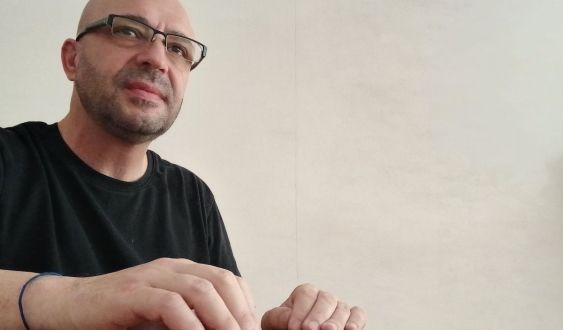
"I have several double lives: I earn my living as a journalist, but my passions arise with creative writing. At the same time, my soul is divided between two cities, Santiago de Chile and Barcelona." Pablo Bravo sips a morning coffee leaning on the bar, while the notes of Quién mató a Marilyn, by Los Prisioneros, accompany the atmosphere and nourish the patron's pronounced taste ---bordering on obsession--- for classic rock.
He came to Barcelona at twenty-four, in 1998, driven "by a desire to turn my life around" and already part of a different generation from the previous one, of Chileans who had fled their country to escape the onslaughts of the Pinochet dictatorship. Although his might also have been, in some way, an escape. Crossing the pond escaping from certainties and comforts, from known and hackneyed landscapes, to seek new places, new perspectives with which to feed his journalistic, literary and vital voice. Reinventing himself so as not to stop being himself. But, sometimes, what is left behind also starts to run.
"When I arrived here, it coincided with the very days Pinochet had been arrested in London, by virtue of an arrest warrant from Baltasar Garzón. The first day I went to university, after my first trip on the Ferrocarrils de la Generalitat, I got off at the station and the first thing I saw in the Plaça de la Vila was a gigantic photo about three or four meters high, in black and white, that said 'Pinochet a la presó'". He sips some coffee, with a smile that still denotes the persistent residue of disbelief. "I couldn't believe it! ---he continues---. I had traveled to the other side of the world to seek a new life and, literally, the first thing I encountered was an image related to my country and my childhood."
--- An intense and contradictory sensation---, he adds.
What cannot be left behind
The idea of a transoceanic escape that does not serve, however, to prevent what is left behind from reaching its protagonists, in one way or another, is present in Pablo Bravo's literary production. The two novels he has published to date, May they be the death cry and Exile in back streets, address this link between Santiago and Barcelona, vanishing points that are, at the same time, points of encounter and reunion with a tenacious and inescapable destiny with which to make peace or settle scores.They function, in this sense, as autofictions of their author who, since those last measures of the last century, has been living seasonally in one city or another. "I think I've had the capacity to reinvent myself in different stages, going through the media, going into corporate communication, returning to the media, and so on. And in each of these stages, I've taken the opportunity to find something worthwhile that can, in the long run, contribute to what interests me most, which is creative writing."
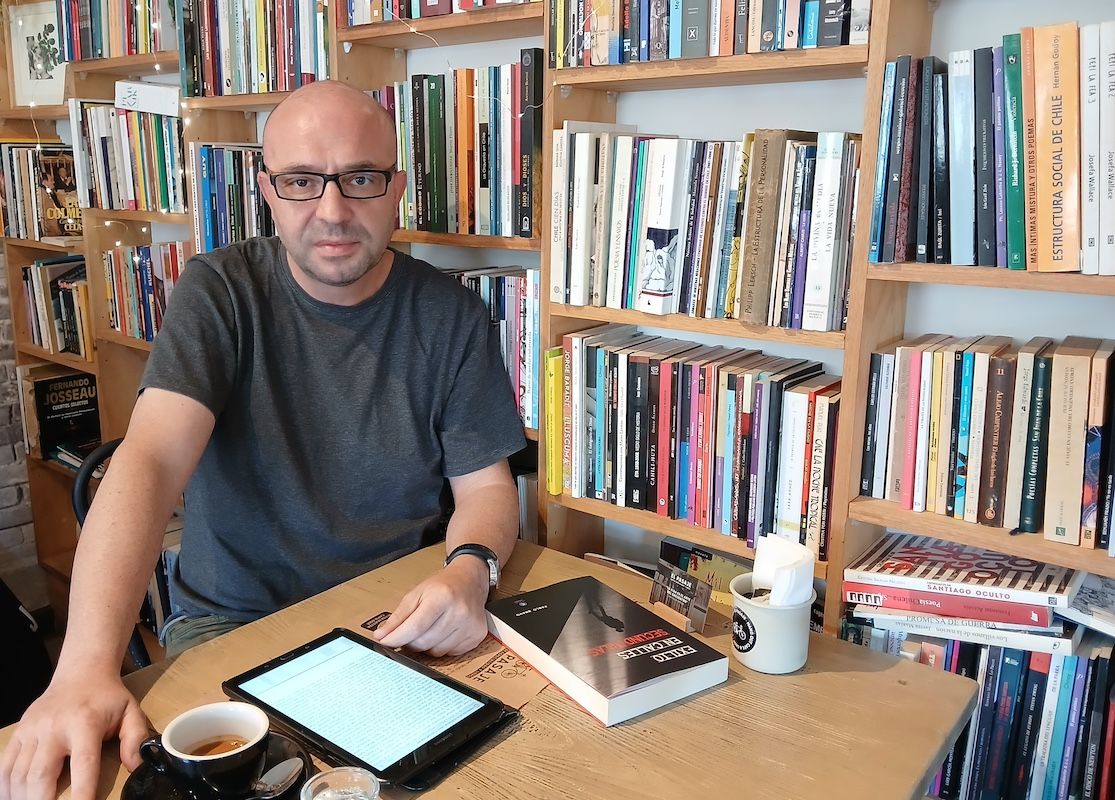
In this sense, he is clear: the ultimate meaning of the sum of these steps and stages is literature. "Everything, absolutely everything has been useful and has contributed to strengthening the muscle to feel more comfortable and secure writing," he adds, before anticipating that he is already working on a third novel that, again, unites those existential landscapes and people that feed each other in a game of chance, guilt, and longing.
City of physical sensations
"My eighteen-year-old son sometimes tells me: 'Your current life cannot be understood without Barcelona.' And I always return to it, to see my daughters." That trip to study at the Autónoma was extended. "I met my ex-wife, we divorced years later." But the affections that push him to spend seasons in the city, whose physical sensations continue to enchant him, remained here.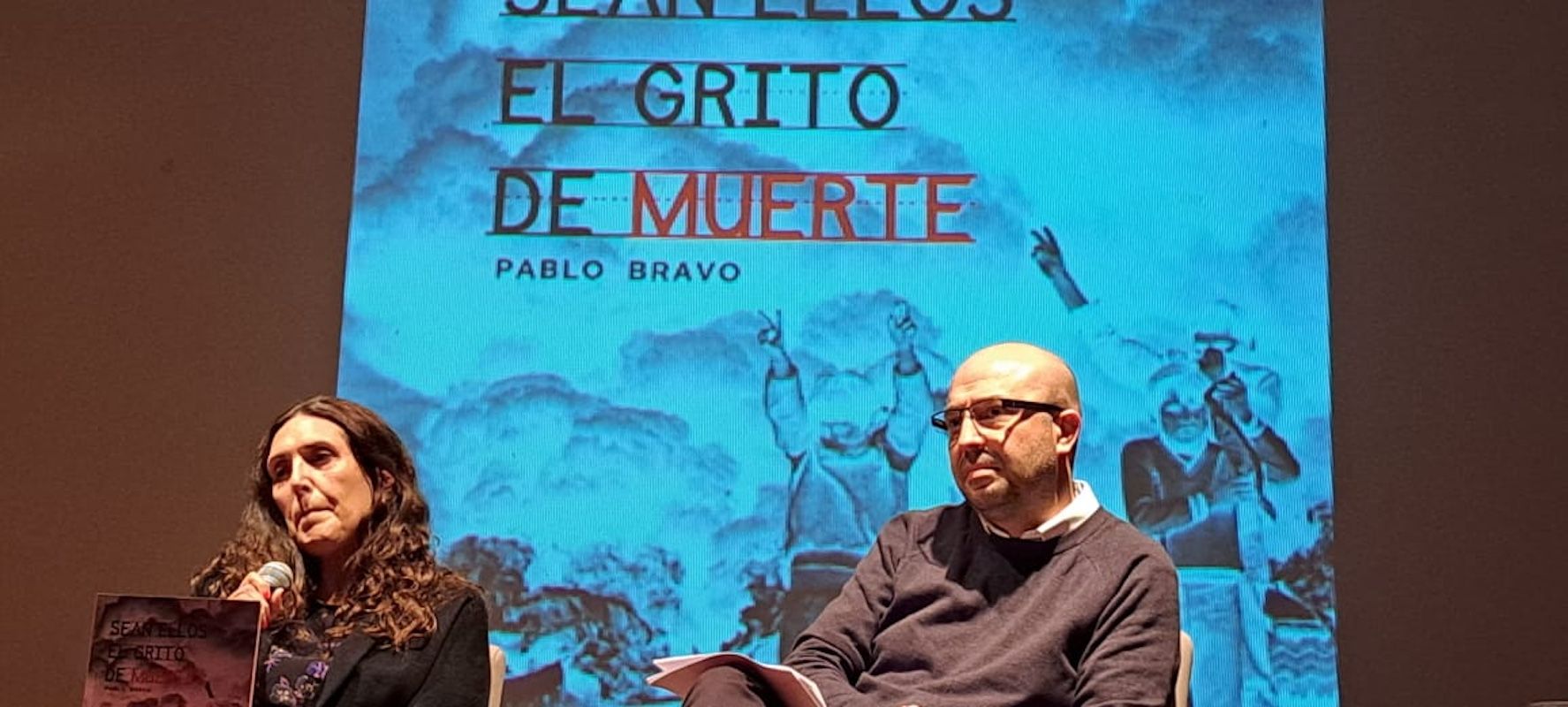
"The smell of coffee on the corners, the smell of food in the streets, the smell of ink from bookstores. I love libraries, like the Jaume Fuster in Lesseps, and walking through corners that I find endearing like Plaça Sant Joaquim, Septimània, Saragossa." And he finishes his coffee before frowning slightly and adding: "I cannot fail to mention the old record stores in Tallers. Some, sadly, in the process of extinction. I greatly regretted the closure of Revolver."
--- What, fortunately, is not at risk of extinction is this Bar and its gastronomic offer. In case you want to take advantage of being here to have a menu, it would be about time...
Pablo Bravo gives a wry smile. The notes of the Rolling Stones' Rip this joint crackle in the air. "I prefer to eat a single dish that satisfies my temptation of the day," he replies, while thinking about what he might fancy most at this moment.
Add The New Barcelona Post as your preferred Google source for free
Stay informed with the latest news.
