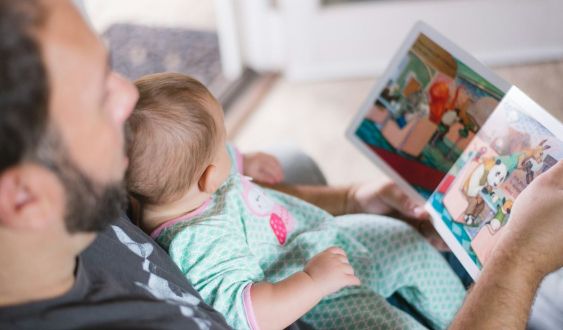
"One day at school we learned that a classmate of our son was in foster care. We thought it was very beautiful. Years later, a friend told us about the process and we decided to take the step." This is how Mayra's story begins; she and Pepe, her partner, have had three children. In addition, they decided to become a foster family and so far they have taken care of seven babies. They are one of the families that foster close to a thousand children in Catalonia, performing the functions that their family of origin temporarily cannot.
In Catalonia, close to 280 children under six years old live in residential centers of the Direcció General de Prevenció i Protecció a la Infància i l'Adolescència (DGPPIA). Behind this figure are the stories of children who cannot live with their family and need a home that gives them affection and security. Therefore, the commitment of the Government is clear: all children, especially the youngest, must be able to grow up in a family, and this will only be possible with more people willing to foster them.
Growing up in a family favors the emotional, physical and social development of childrenWith this objective, the Generalitat has launched a strategy to double the number of foster families.The plan foresees increasing the economic allocation by 2.3 million euros to strengthen technical teams, streamline procedures, provide more support to foster families, and apply tax improvements.
Fostering can be for emergency and diagnosis, as in the case of Mayra and Pepe (for babies and young children). But there are also other modalities: simple (one to two years in duration), permanent (when return to the family of origin is not foreseen), specialized, or holiday and weekend fostering. In Catalonia, there are 798 foster families who host 908 children. In addition, 134 collaborating families host 134 children on weekends and during holiday periods.
When Laura was eight years old, she arrived at a foster family. Today she is twenty, continues to live with them, and studies Social Education. "I am very lucky. I had a second chance. I feel truly loved." Laura remembers that when she turned 18, she was very scared. "Everyone was thinking about their driver's license or going out to party, but I only thought about whether I would have to leave home. Luckily, I was able to stay. And, thanks to this, I am at university."
The process to become a foster family includes training, interviews, and subsequent follow-up. L'Institut Català de l'Acollida i l'Adopció (ICAA) accompanies families and offers economic, psychological, and material support. "These children carry a significant backpack. They need a safe and loving environment more than ever," says the director of the ICAA, Elena Lledós Monsó.
There is a lack of foster families to offer a safe environment for childrenAnd they have found this environment in families like Mariona and Joe's. In 2015, when their two children were six and nine years old, they fostered a four-year-old girl. "First, we started leaving the center and doing activities together, we took her home for a few hours. Then she stayed," they recall. Today she is 13 years old and is one more in the family."She really wanted to integrate and made every effort in the world," Mariona recalls with pride.
Growing up in a family: a right, a necessity
It is proven that living in a family promotes the emotional, physical, and social development of children. For this reason, the Generalitat works to minimize the stay of minors in residential centers, and encourages families of all types to take the step.
Testimonies like Laura's, fostered in a family, are the best example: "I would be very excited if more and more people could have the luck I've had." With her partner, they are clear that they want to foster. "Not adopt, foster. Give a second chance, like the one I had."
More information: acolliment.gencat.cat
Add The New Barcelona Post as your preferred Google source for free
Stay informed with the latest news.
