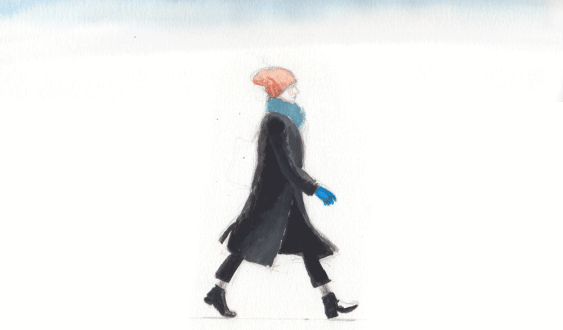
It has snowed. A lot. February ended and March began with cold, rain, and snow. Spring welcomes us with more cold. In the bar in the square, someone says aloud that finally, it was time for a winter like the old ones. He revels in the comment and minimizes the problem of global warming. There are still winters like the old ones, the greenhouse effect is not that big of a deal. "Winter is not eaten by the wolf"
And yes. We have some good snowfalls, like haven't been seen in years. At most one or two in the last decade. But these in 2018 are a bit late. Nothing serious. We have known late snowfalls before. Even in May. Or in June, on the day of so-and-so's wedding.
But the explanation for the cold at our latitudes lies in the Arctic heat. A "madness," in the words of Mark Serreze, Director of the National Snow and Ice Data Center in Boulder, Colorado. He has been studying the Arctic since 1982 and in statements to The Guardian he says, about the Arctic temperature "These heat waves, I've never seen anything like this."
We like to go back a few decades, to remember that anecdotal hailstorm in the middle of summer. But we forget that the previous year, 2017, was news for the heat. A summer that broke records for heat waves. During the autumn we coined the term "veroño" (autummer). Drought and new records for the highest temperatures measured at this time of year. The cold and rain arrived at the end of February, when the almond trees were beginning to bloom.
Experts warn that the cold we are experiencing, this spring that began with lower than normal temperatures, snow, and hailstorms, is a consequence of the displacement of air masses that winter heat has shifted. What should be cooling the Arctic to maintain the large ice reserves that allow the climate we have known is over Europe. Meanwhile, at the North Pole, abnormally high temperatures are being experienced and more and more ice mass is being lost. In the Antarctic ice, we discover new processes that alert us to the acceleration of melting.
The blame for what we have experienced in the first quarter of 2018 seems to be the consequence of the heat we experienced at the end of 2017. Prudence advises against being dramatic, but there is a certain probability that we will have to get used to a new pattern. An increasingly long and dry summer. An unpredictable winter with extreme cold. With autumn and spring blurred, practically non-existent. One day we need a coat and the next day we don't.
Or maybe it is. Maybe it's a winter like the old ones. Hopefully we will return to winters like the old ones, followed by their springs, their summers, autumns and real winters. Let's hope for an April of a thousand waters beyond the punctual and media-hyped rise of the Ebro river. We will see if windy March and rainy April leave us a flowery and beautiful May. Or if we have to start inventing new proverbs with which to teach future generations what they can expect from the climate in the environment in which they live.
Add The New Barcelona Post as your preferred Google source for free
Stay informed with the latest news.