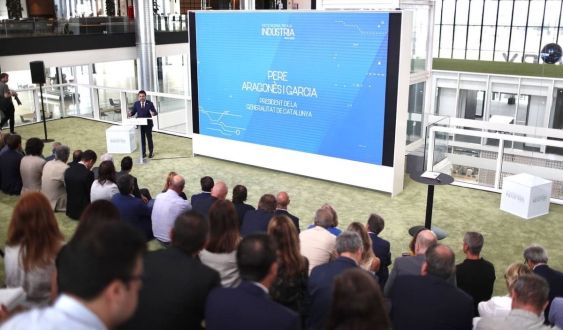
The president of the Generalitat, Pere Aragonès i Garcia, who led the signing of the pact on September 9, highlights that the agreement "involves all social agents, and everyone, all of Catalonia, is represented in it." He also asserts that it is a "great consensus that strengthens the potential of Catalan industry, one of the most important engines of the country's economy."
The new National Pact for Industry will allow progress towards a more digitized, innovative, sustainable, and quality job-generating industry. In this regard, the Minister of Business and Labor, Roger Torrent i Ramió, has assured that "the future involves having a more competitive industry, one that invests in innovation, and that incorporates technological advances linked to digitalization." The head of Business and Labor explained that "Catalan industry must be oriented towards the collective challenges of society, with environmentally friendly production methods, transitioning towards a green and circular economy, and with greater gender balance."Five Thematic AreasThe National Pact for Industry is structured around 5 thematic areas. In the first place,Sustainability, energy and circular economywith 27 actions and a budget of 589,528,000 euros. In second place,Digitalization, Industry 4.0, innovation and internationalization, which has the highest budget, 901,247,374 euros.Quality employment, working conditions, and training of workers in the industryis the third area and is endowed with 677,519,584 euros, followedof Infrastructures and Industrial Land, with 548,670,835 euros. The fifth and last thematic area isFinancing and business dimension, and a contribution of 100,600,000 euros is foreseen.The content of the Pact is the result of the work of five working groups formed, in equal parts, by representatives of the Government, of the employer organizations Foment and PIMEC, and of the trade union organizations CCOO and UGT. The PNI has also received assessments and contributions from the Pact Table, formed, in addition to the aforementioned, by representatives of professional associations, parliamentary groups, municipal associations, universities, chambers of commerce, cooperatives, and technology centers. Each working group has met three times, while the Table has done so on six occasions, two of them in plenary session.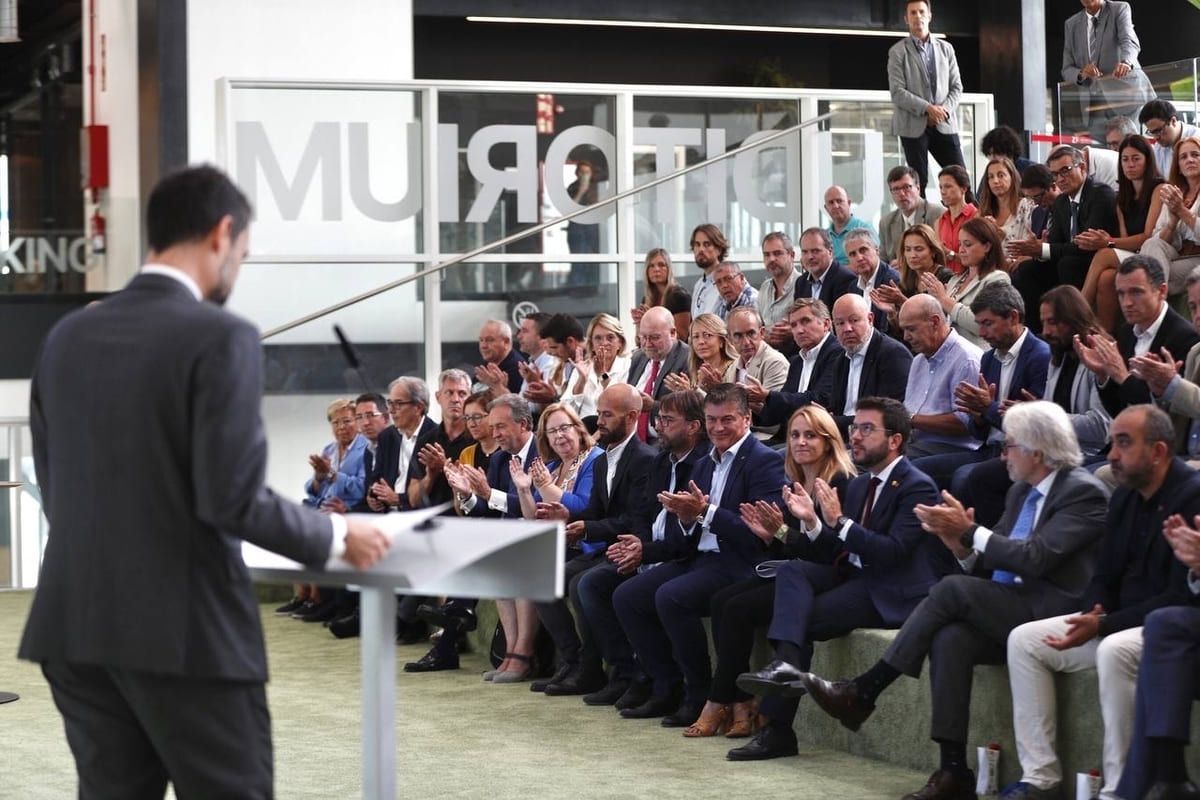
Add The New Barcelona Post as your preferred Google source for free
Stay informed with the latest news.
