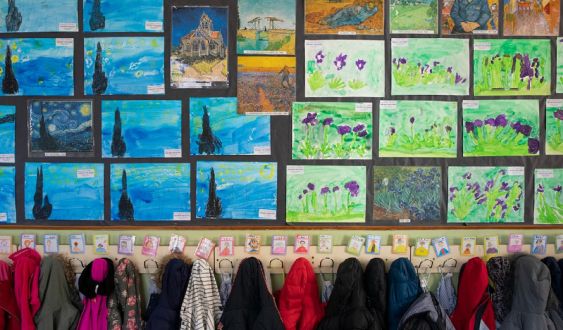
The countdown to the return to classrooms has already begun. More than 1.6 million students have started the 2026-2027 academic year in educational centers in Catalonia, which they begin with more professionals and new resources to respond to the needs of an increasingly diverse educational system.
In total, the structural staff will reach 94,422 professionals, including teaching staff, educational support staff, and administration and services staff. This is 1,830 more professionals than at the beginning of last academic year, a reinforcement that allows expanding the capacity of centers in especially sensitive areas such as the reception of newly arrived students, inclusive education, or attention to specific educational support needs.
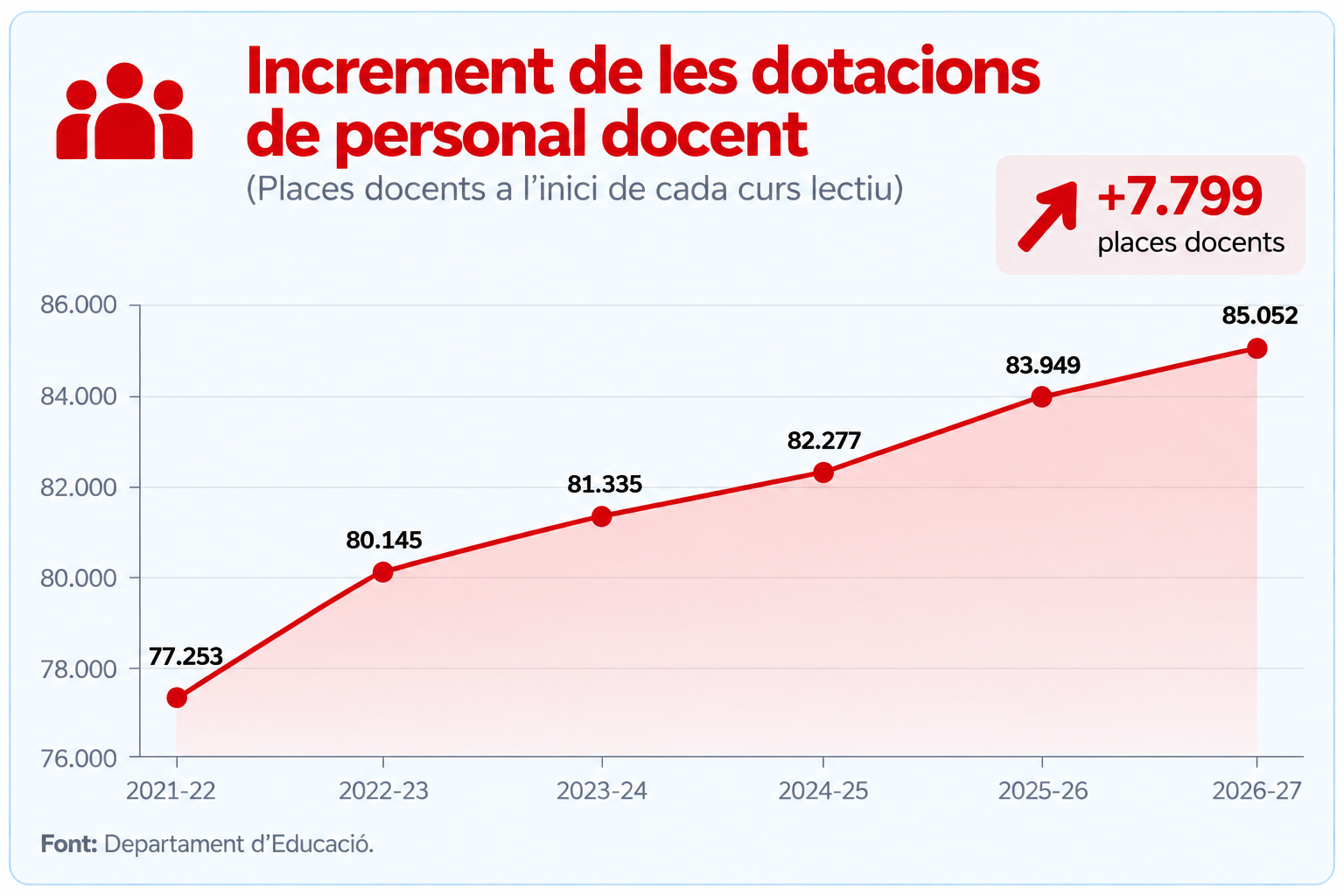
In the case of teaching positions, these amount to a total of 85,052 at the beginning of the academic year, which represents 1,103 more than last academic year. In the last five years, teaching positions have increased by 7,799 throughout Catalonia.
More reception classrooms for an increasingly diverse student body
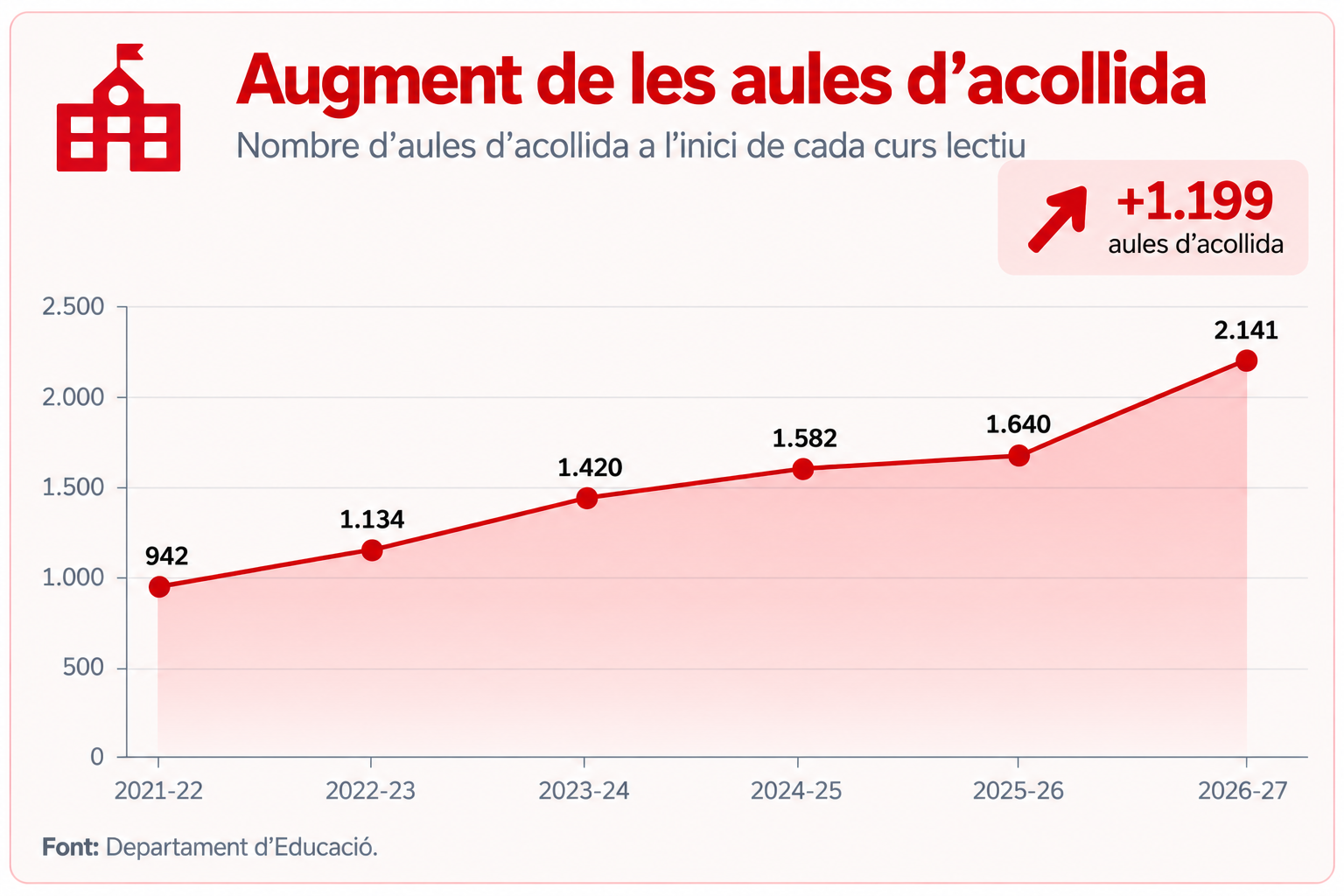
One of the main reinforcements this academic year is concentrated in reception classrooms, a key resource to facilitate the incorporation of newly arrived students into the educational system. This September, 500 allocations are incorporated for reception classrooms, so Catalonia will have 2,141 of these support spaces, 1,400 more than twenty years ago. The maximum ratio in these classrooms is limited to 18 students, with the aim of facilitating more personalized attention during the first months of incorporation into the system.
The accompaniment does not end when the student leaves these support spaces. The new academic year also incorporates 50 allocations to reinforce reception in basic vocational training and 50 more to offer linguistic support in the ordinary classroom to students who have already completed this first stage, but who still need to reinforce their linguistic competencies.
In this way, the reinforcement of reception is approached as a gradual process: facilitating arrival, reinforcing language learning, and ensuring that students can continue progressing within the ordinary classroom.
More resources to advance towards inclusive education
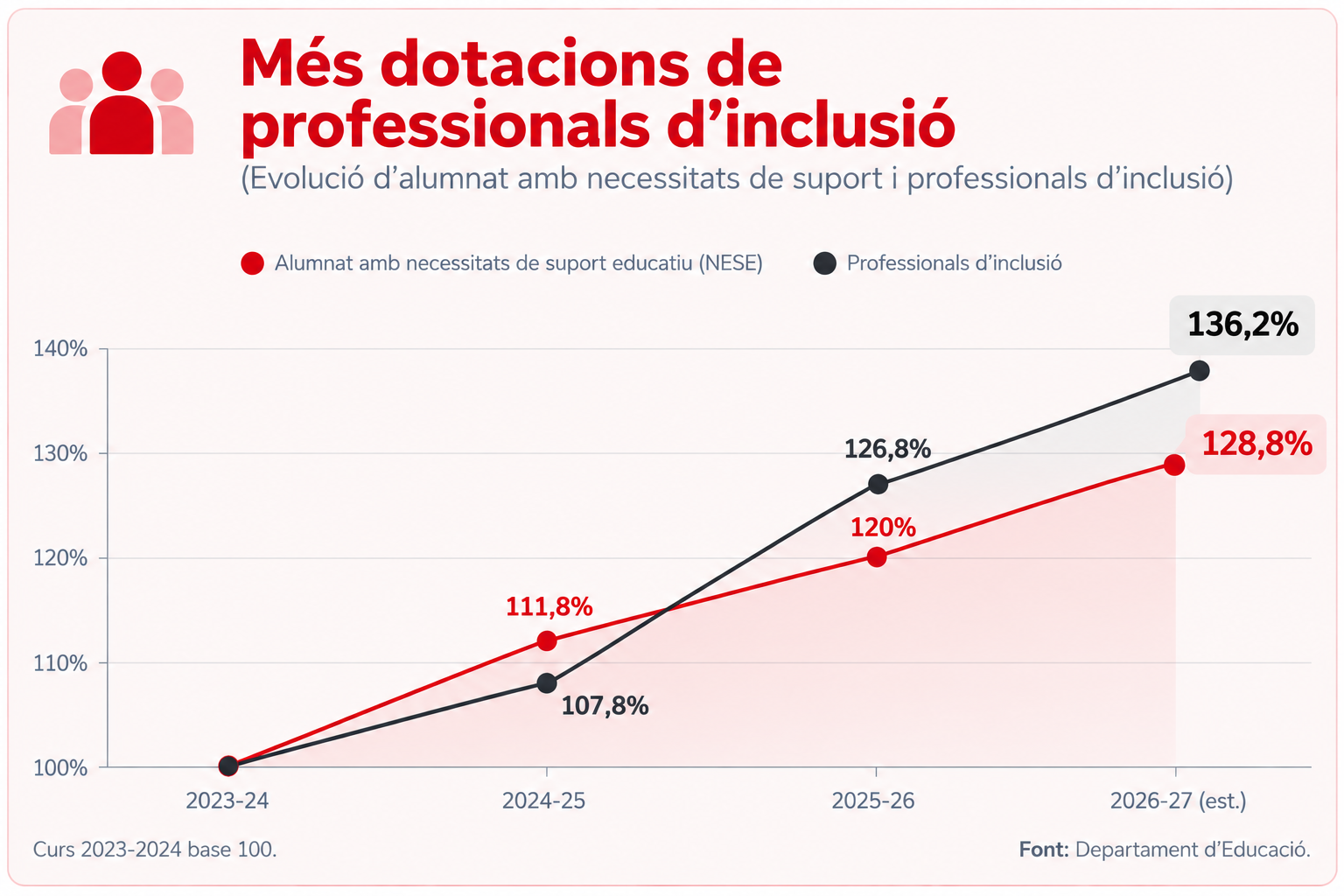
The response to diversity also involves strengthening resources for students with specific educational needs. Special education centers will incorporate 204 new places, equivalent to 80 groups, with an investment of 6.3 million euros. Also, three bilingual Catalan sign language centers will be launched, designed for deaf students to develop their skills in a specialized educational environment.
At the same time, the Department will expand the APPA program, aimed at detecting learning needs. After being applied to 1st and 3rd grade of primary school last year, this year it will also reach 5th grade, so the tests will reach 36,000 students. Detecting these difficulties early allows centers to act sooner and adjust educational resources to the needs of each student.
In the early educational stages, the reinforcement also translates into 582 new public places for 0 to 3 year olds, created in collaboration with the local community.
Centers that are renewed to face new challenges
The improvement of educational resources also involves the spaces where daily teaching activity takes place. For the 2026-2027 academic year, seven educational centers will start activity in new buildings, while during the coming months six major projects will be under construction.
The renovation of educational facilities allows for the expansion and updating of the network of centers and responds to the needs of an educational community that also evolves. New spaces for learning, but also facilities designed to facilitate more adequate attention to student diversity and new ways of teaching and learning.
Preparing centers for the school of the future
The educational system also incorporates measures for this academic year in view of one of the great changes that is transforming education: the arrival of artificial intelligence. During this month of September, the Department will publish Guidelines for the use of artificial intelligence in educational centers, addressed to students, teachers, centers, and families.
The objective is to offer a common framework so that this technology can be incorporated responsibly and safely. The guidelines will establish, among other aspects, that children under 14 should not autonomously use general-purpose AI tools that are not specifically designed for educational environments, while between 14 and 18 years old, authorization will be required.
The focus will also be on data protection and the prohibitions established by European regulations. Regarding research work, the use of AI will be possible as long as it is documented and its contributions are verified.
More support for professionals and school management
Improving the educational system also requires strengthening the people who are part of it. In this regard, the course will incorporate a professional well-being line aimed at teachers, with a team of psychologists and other professionals who will offer tools for classroom management and the prevention of emotional burnout.
Healthcare professionals will also be deployed to ensure care for students with chronic illnesses and care needs during school hours. After the success of last year's pilot, this 2026-2027 academic year the service will extend to 50% of educational centers in Catalonia and next year it will reach 100% of centers.
And so that management can concentrate more efforts on pedagogical leadership, a pilot plan will be launched in three territories to incorporate the figure of the center manager-administrator, who will assume part of the economic, budgetary, and contracting tasks.
The return to the classrooms thus begins with more professionals to address diversity, more resources to facilitate reception, and new equipment to adapt centers to the needs of an educational community that is also changing.
Add The New Barcelona Post as your preferred Google source for free
Stay informed with the latest news.