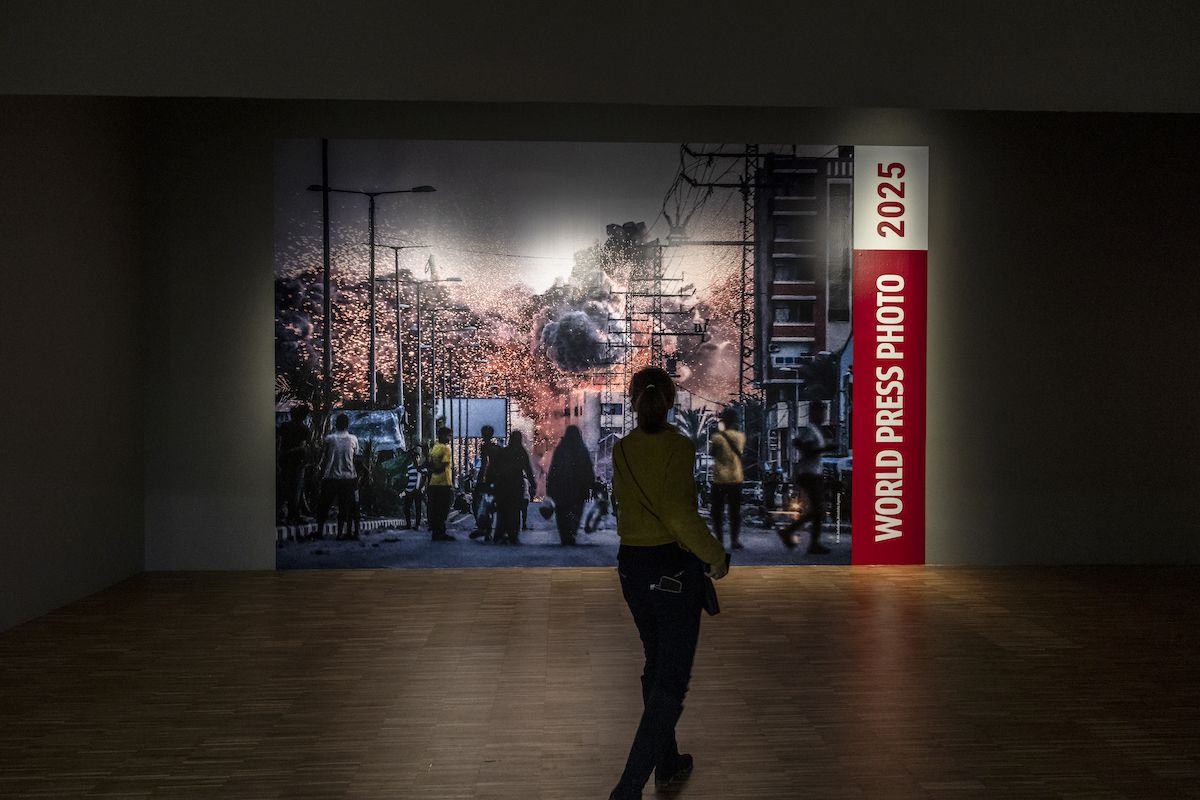
Seventy years after its first edition, the World Press Photo award continues to be a mirror of the world. A mirror sometimes broken, other times full of light, but always necessary. This year, the international photojournalism contest celebrates its 70th anniversary at a time that is too active, with images that portray war, displacement, climate emergency, and human resilience.
The Photographic Social Vision Foundation inaugurates, for the twenty-first consecutive year, the exhibition World Press Photo 2025 at the Centre de Cultura Contemporània de Barcelona (CCCB), which can be visited from November 7 to December 14. The exhibition, co-produced by the CCCB and with the main collaboration of the Banc Sabadell Foundation, brings together the 144 winning photographs of the international competition, selected from more than 59 thousand images submitted by 3,778 photographers from 141 countries, a figure that is easy to say but speaks to us of the magnitude of the tragedy.
We sit at the table of current events, from the gaze of privilege. And we traverse the year (or past years) from the experience, testimony, or pain of the other. "These images awaken empathy, reflection around global challenges that deserve attention, that need the attention of citizens," comments Carlos G. Vela, head of communication for the Photographic Social Vision Foundation, "the value of photojournalism, its importance is indispensable." That is why exhibitions like this exist.
Marta Echevarría, curator of the exhibition, explains to us not only the difficulty of choosing the finalist projects but also the need to trace a path that helps the viewer to navigate. The winning triad functions like Gothic triptychs: because each panel, let's call it a photograph now, tells a story that can be linked –or be a consequence– to the next.
Thus, this year's awarded projects draw a map of a wounded planet where violence and displacement continue to mark the lives of millions of people. Others denounce environmental emergencies, and there is also space for political polarization, reflected in episodes such as the assassination attempt on Donald Trump, the repression in Venezuela, or the rise of the far-right in Europe.
Each photograph functions as a piece of a large global mosaic. Together, they reveal the essential role of photojournalism as a tool for understanding, denouncing, and connecting human realities that would otherwise remain invisible. They are, in short, a map of human pain and resistance.
But I need to pause here, reader, and break the protocol that obliges me to be equidistant and provide you with information. Because she is here, before us, and what she is telling us deserves all our attention, recognition, and utmost respect. Because human dignity, above all, and even more so, the dignity of a child, deserves all our attention.
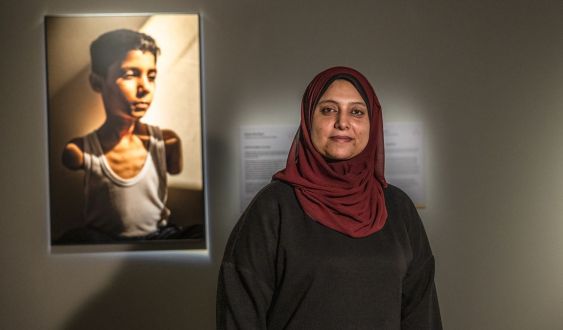
She is the Palestinian photographer Samar Abu Elouf. She is a woman and mother who, at one point, was forced to mutate her documentary photography to become a war photographer. Witness, as well as victim, of an absolutely intolerable genocide, her portrait Mahmoud Ajjour, nine years old, published in The New York Times has been the winning image of this year's award. And we listen to what she tells us, firsthand.
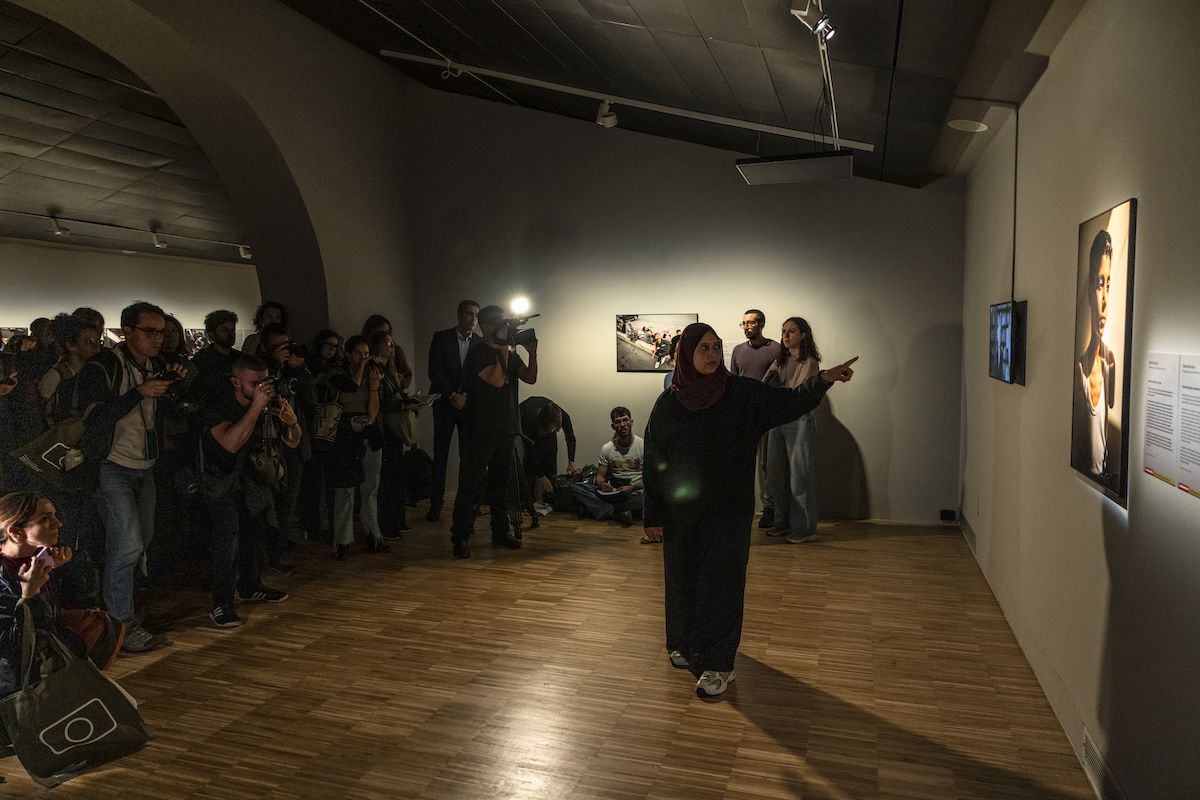
"For three months I photographed the war wounded in Qatar," she explains during the presentation at the CCCB. "After each session I needed a week to regain strength. I wanted the images to be simple, full of tenderness. I wasn't looking for pain, but for the dignity of those who survive." The photographer —a documentarian in Gaza for over a decade— acknowledges that this has been the toughest series of her career.
Abu Elouf, mother of three children, confesses that her work constantly confronts her with the limit between professional duty and personal vulnerability. "I thought war was the normal state. In Gaza you cannot live a quiet life. Being a photographer there is also a form of resistance. I left because I had to stay alive, but every time I look at my photos, I feel like I've left my home and my memories behind."
And he tells us about Mahmoud. He left his house fleeing a bombing, and went back in search of his mother, when an Israeli rocket fell on him. He lost one hand and the other was badly injured. What came next was worse. Amputation without anesthesia. Wound infection. And a question upon waking: "Mom, how can I hug you?"
The image of the year is the impossible hug
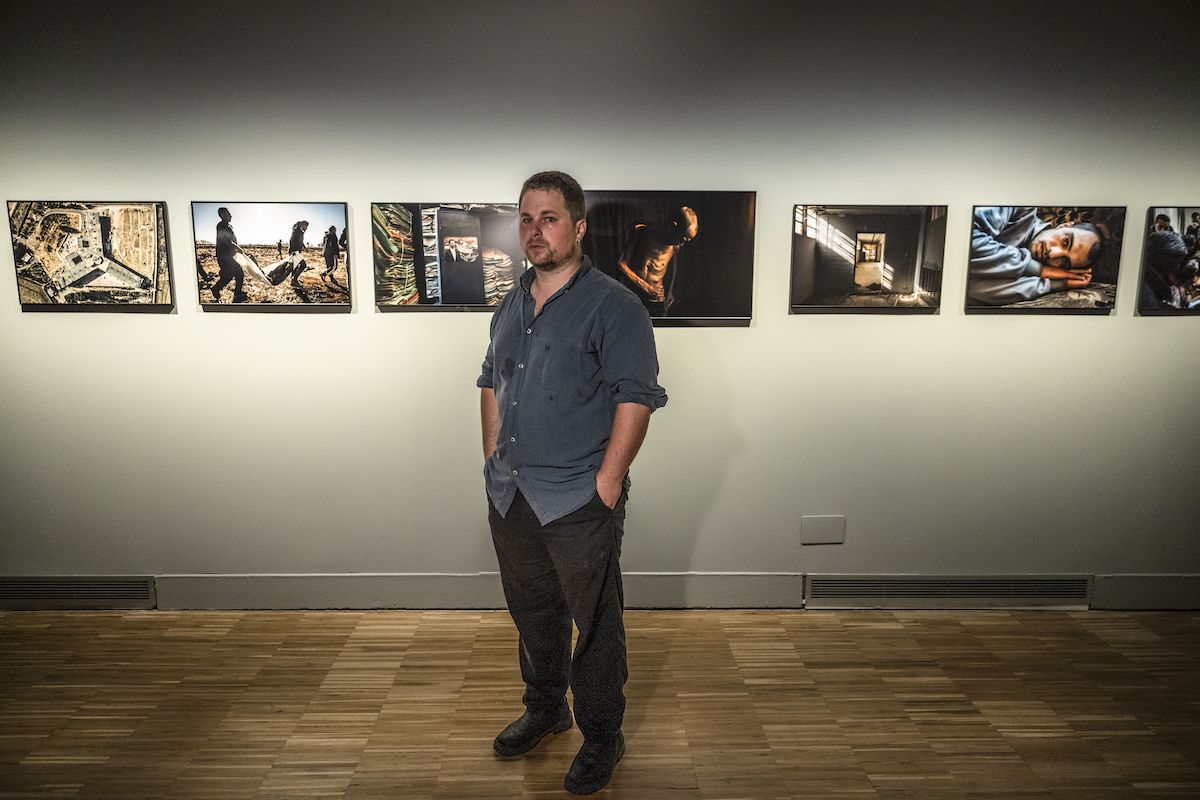
In it, a Gazan child, nine-year-old Mahmoud, appears calm, with a lost gaze, after having lost both arms in an Israeli attack. His mother, out of frame, holds him. The morning sun caresses his skin, which suffers from a disease that causes itching and discomfort. His mother has become his arms, his hands, while he learns to hug with his legs. And as I cry intensely at such a hearing, a single word repeats in my head: dignity."Journalism has become one of the most dangerous professions in the world"The 2025 edition also recognizes the talent of two Spanish photographers. Luis Tato, from La Mancha, has been awarded in the Photojournalism category, for Youth revolt in Kenya, a series about protests against corruption and inequality, and Samuel Nacar, who has won the regional award for West, Central and South Asia for The shadows already have a name, a chilling portrait of the survivors of the Syrian prisons of Bashar al-Assad's regime. "Documenting horror is not looking back," says Nacar during the inauguration. "It is warning about what can still be repeated."
For this edition, the Photographic Social Vision Foundation has prepared a series of parallel activities that invite to delve into the themes that run through the photographs, with an educational component and citizen dialogue, such as the talk on colonialism and migrant women in Europe, with Maria Abranches and Tania Safura Adam, on November 7 at Casa SEAT, or the presentation of the report Visual Education and Adolescence in Catalonia, fruit of the Visual Trust project of the University of Barcelona, on December 3 at the CCCB. In addition, the public will be able to participate in guided tours aimed at fostering critical reading of images, following the parameters of See the Story, the decalogue followed to set up the exhibition.
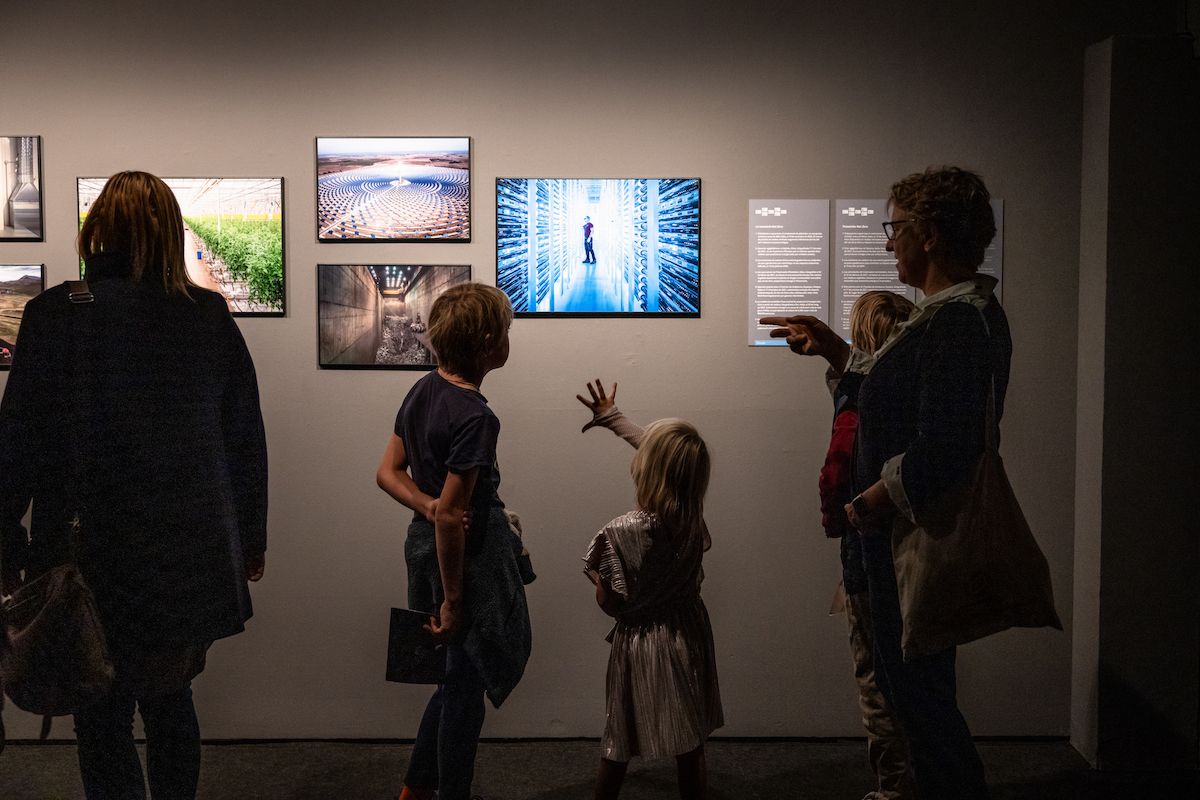
Last year more than 66,500 people visited the exhibition, and more than 7,000 students participated in educational workshops, changing the paradigm of their vision of the reality of photojournalism, in contrast to the volatility of social networks.
Since its creation in 1955, the World Press Photo has been a witness and visual memory of the great events of the last century. In this edition, the international jury has awarded 42 photographers from 30 countries and has highlighted the finalist projects Crossing at Night, by American John Moore (Getty Images), about Chinese migrants crossing the border between Mexico and the United States in freezing rain, and Drought in the Amazon, by Peruvian-Mexican Musuk Nolte, which documents the devastating impact of water scarcity in the planet's green lung.
These 144 images seem to look at the visitor and ask for something more than contemplation. They ask for commitment. They ask for compassion. They ask for dignity.But there's more, because this year, as a tribute to the 70th anniversary of the World Press Photo award, between November 17 and 26, 70 historical photographs from the competition's archive will be put up for sale, with proceeds going to programs supporting photojournalism in conflict zones. This year, the CCCB has expanded the reception space for the exhibition dedicated to the World Press Photo, moving it to the top floor, and providing a final space for reflection so that visitors can intervene and say what they believe deserves to be explained.
But no one will be able to leave without visiting the memorial dedicated to journalists killed in the last 20 years. "Journalism has become one of the most dangerous professions in the world," recalled Carlos G. Vela, head of communication for the Foundation. "Without their work, many of these stories would never have existed."
In its 24th year of activity, the Photographic Social Vision Foundation reaffirms its commitment to documentary photography as a tool for social transformation. Its work includes the Joana Biarnés Grant for Young Photojournalists, the Star Photobook Dummy Award, and the "Material sensible" project, which gives a voice to survivors of childhood sexual abuse.
At the CCCB, these 144 images seem to look at the visitor and ask for something more than contemplation. They ask for commitment. They ask for compassion. They ask for dignity. Because, as the face of little Mahmoud Ajjour reminds us, photojournalism not only shows what is happening in the world. It also forces us to ask ourselves what we are doing about it. And I cry, as Mahmoud's mother cries before her son's wounds.
One more year, the World Press Photo invites us to be moved, to reflect, to see. Samar took off Mahmoud's shirt, with the tenderness of a mother undressing her children. And she brought him closer to the window, so that the sunlight would hit him. And in that space and that light, Samar with her lens, made Mahmoud shine again.
Add The New Barcelona Post as your preferred Google source for free
Stay informed with the latest news.
