[dropcap letter="A"]
It has just closed a financing round of 21.3 million euros, the largest in the Spanish biotechnology sector so far this year. This is a significant success for a young company, but the CEO and founding partner of Minoryx Therapeutics, Marc Martinell, knows that the ultimate success will come when the firm manages to complete the difficult path to develop an efficient drug to combat AMN, a rare neurodegenerative disease that affects motor function from the age of 20. This is the impulse that led Martinell and two other partners to create Minoryx Therapeutics in 2011: to offer care for minority diseases, those with low incidence and that collectively affect less than 3% of the world's population. These are ailments that often remain orphaned from conventional research, that carried out by large pharmaceutical companies, and this is the gap that Martinell's team wants to cover: "As a result of a personal experience, I felt the need to do something in a field where others do not enter, to work to give an opportunity to improve the lives of these patients," he explains.
"When researching minority diseases, the clinical study phase is much more solitary, there is much more ignorance, and therefore also many more risks." On the contrary, the advantage, explains the CEO of Minoryx Therapeutics, is that the cost of developing new drugs is usually lower.
Minoryx Therapeutics' search is focused on the development of its drug MIN-102. This molecule is now in phase II and III for the treatment of adrenoleukodystrophy (AMN). If the study is positive, the company expects to be able to process the authorization for commercial license between late 2020 and early 2021, both in the United States and Europe, which would be the last and definitive step to offer a treatment option, currently non-existent, for patients suffering from this degenerative disease. With the entry of new capital, the biotechnology company also obtains the necessary financial cushion to study the possible application of this molecule in two other diseases associated with the central nervous system. A great challenge, just as it is to have raised more than 40 million euros in funding since its foundation for a field as exciting as it is high-risk for investors: "Evidently, investors seek a return for their money and here we are talking about drugs that will be destined for a small market, and therefore this aspect is more complicated," Martinell acknowledges. Added to this is that, unlike what happens with more common diseases - for which many companies are doing research at the same time - when researching rare diseases, the clinical study phase is much more solitary, there is much more unknown, and therefore also many more risks." On the contrary, the advantage, explains the CEO of Minoryx Therapeutics, is that the cost of developing new drugs is usually lower.
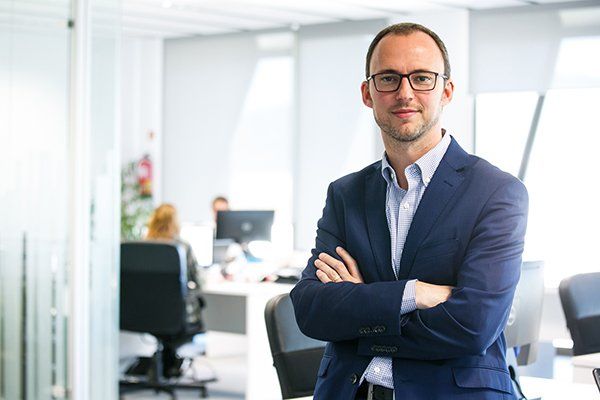
In this latest round of financing, the biotechnology company based at Tecnocampus de Mataró has brought in new partners, all international and in this case all Belgian. The investment was led by Fund+, a fund specializing in the biomedical sector, and also included the participation of the Walloon government's innovation investment fund (SRIW), Société Fédérale de Participations et d'Investissement (a fund dependent on the Belgian government), and the private fund Sambrinvest. This is not the first time the company has attracted foreign capital. Martinell explains that having its headquarters in Catalonia used to be a less attractive calling card for venture capital funds, and while "there is still little critical mass of projects" here, he assures that "in recent years this has been changing, because the boom in the sector has made local initiatives more known and foreign capital trusts them more." The co-founder of Minoryx Therapeutics also points out that the fact that the cost of living here is relatively lower than in other European countries with prominent hubs in biotechnology, adds an extra appeal for investors "because it lowers the cost of the entire research process."
The new injection of money opens new doors for the search for possible therapeutic applications and outlines a new path for the future. In ten years, Martinell imagines the company with firm results already on the table and "having improved the lives of patients suffering from this disease." On the way to achieving this, he acknowledges that one of the most difficult challenges is to maintain optimism without generating false expectations for patients: "When you are the only one or one of the only ones researching a disease, it is inevitable that the focus is always on you, and you have to measure very well what you say so as not to frustrate or generate false hopes." It is, Martinell admits, a very high responsibility. But, at the same time, the reward is also high, and every time this entrepreneur talks about the possible applications of his research, he cannot help but have his tone of voice change. For now, he has already managed to cover half the journey.
Add The New Barcelona Post as your preferred Google source for free
Stay informed with the latest news.