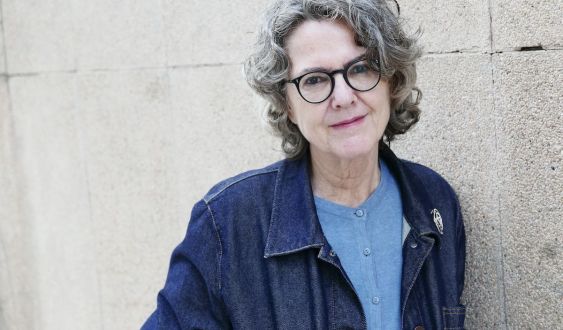
"Since I was little, I already knew that what I wanted was to write. Mind you, not necessarily to be a writer or novelist, that would come much later, but to explain things, life, through writing." Leaning on the bar, Mercè Ibarz has asked for two things: "a local vermouth and background silence" and now she smiles, enjoying the midday at the Bar, observing the surroundings to absorb its essences and, perhaps, turn them into untransferable words.
All the things that have happened to her in life do not seem to have swept away her nature as a solitary child, immersed in exciting worlds of books, comics, art, and celluloid. She left her native Zaidín when she was young and, after a few years in Lleida, in 1971 she came to Barcelona to study journalism. "It was a turning point: discovering and unraveling the city to study something that, at that moment, answered my desire to write."
Her new work, the autobiographical Una noia a la ciutat (Anagrama) covers those days through a powerful poetic prose that speaks of the beauty of scars, the vividness of streets in turmoil, and the beautiful love that arose, at that time, between her and the man who, for the next fifty years, would be her husband, Lluís, to whose memory the book is dedicated, which has also been published in Spanish with the title Una chica en la ciudad.
After her time in the newsrooms of Avui and Diari de Barcelona, in 1989 journalism – as a job and as a writing style – became too small for Mercè. "I decided to be freelance and broaden my focus. I had already written a first book about the situation in Euskadi and, after a decade, I wrote another, the first one I would do about Mercè Rodoreda." A new life began, that of a writer and, shortly after, in the mid-90s, that of a researcher specializing in the figures of Rodoreda and Buñuel, with a spectacular trajectory in the study of visual arts and the relationship between reading and writing.
The voice as a sum of voices
"With The withdrawn land I found my literary voice," assures Mercè Ibarz, who in 1993 burst onto the literary scene with a prose that amalgamated genres and styles with solidity and exactitude. A voice that is, in turn, a sum of voices and that reflects the soul "of a person who writes wearing different hats: that of a journalist, that of a narrator, that of a researcher, that of a professor, that of an art expert, and that of a cultural critic."The parishioner sips a mouthful of vermouth, before clarifying: "and this last understood not as someone who exercises criticism on cultural products, such as books or exhibitions, but as a way of looking at and interpreting the world from a cultural perspective." An almost anthropological spirit wrapped in a hybrid style that combines sentimental chronicle, journalistic chronicle, poetic prose, and novelistic narration with pleasant nods to visual poetry, so understandable in a devotee of cinema and photography like her, who has curated and participated in the development of various exhibitions.
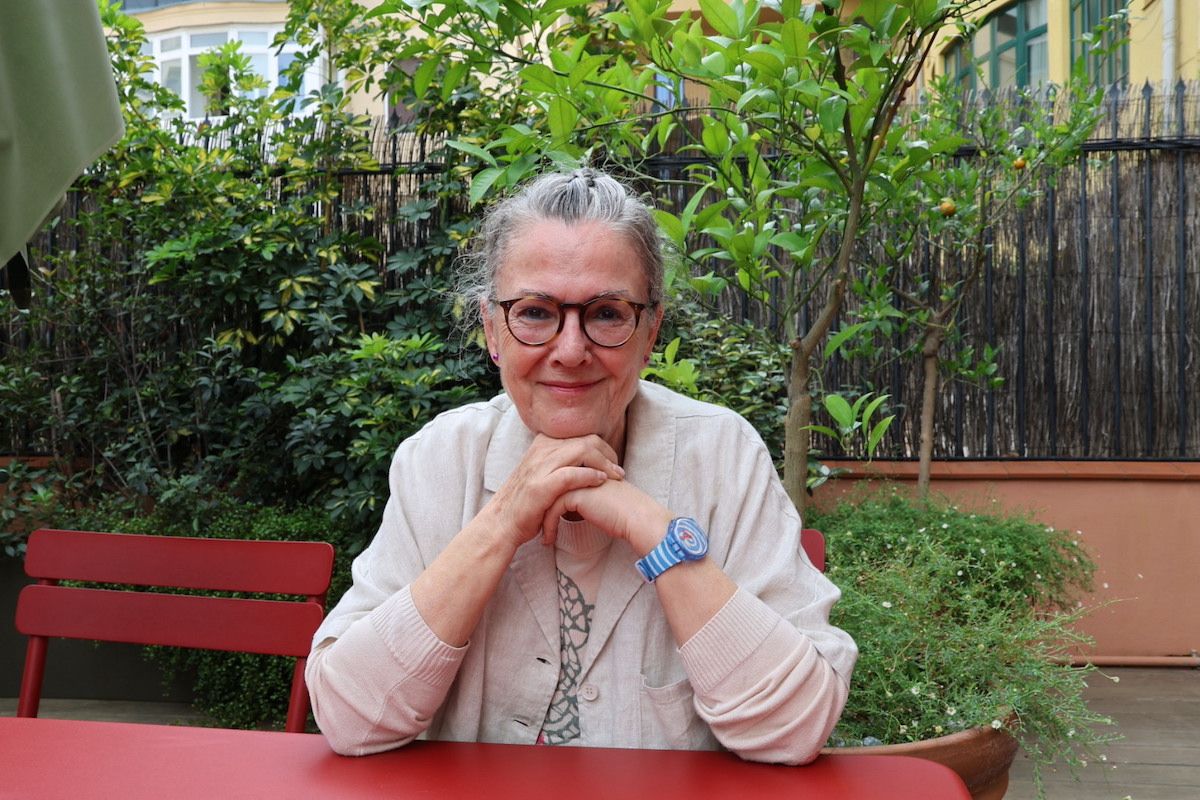
La terra retirada was followed, two years later, by La palmera de blat. From then on, a quarter of a century passed in which literary works such as Contes urbans or Vine com estàs followed; essay books such as Un experiment seriós; Gent, terra, paraules or Rodoreda, exili i desig. Until, in 2020, the need arose to complete her first two literary works to turn them into a trilogy. "Thus was born the Tríptic de la terra, which adds, to La terra retirada and La palmera de blat, a third book, called Labor inacabada". The three together (which have also been translated into Spanish) compose a volume that acts as the heart of the literary corpus of someone who defines herself as "pagesa of letters": owner of an intellectual and emotional terrain in which various voices cultivate, grow, and flourish. Each sowing, with its corresponding hat.
Driving force
"My relationship with Barcelona is one of love at first sight that began when I arrived here, that is still alive and that will last my whole life." The writer has lived in many neighborhoods and from each of them she retains elements that add to her emotional cartography of the city. It is not difficult to imagine that this will reappear, as more than a setting, in the novel she is preparing, "stylistically hybrid, of course, and based on two women I met," she announces.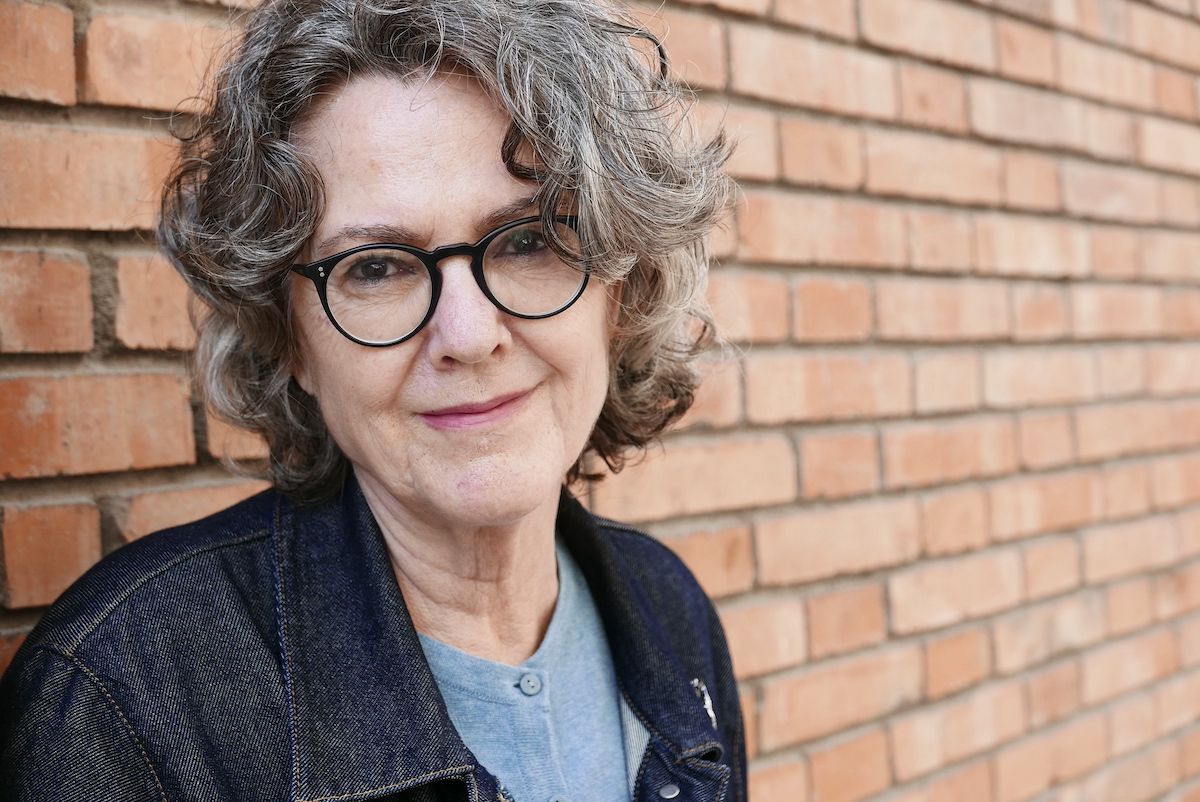
Love is stronger and prevails over the adversity of circumstances. "Despite the increasingly widespread poverty, despite the fact that it seems to be forgetting its own history, of the migrations and neighborhood fabrics that built it, and despite, also, the fact that it seems to have stopped believing in the future, for me Barcelona continues to be a driving force that ends up defining the way I look at the world," she determines, taking the last sip of her vermouth.
– What will change your way of savoring the world is the gastronomic offer of our Bar. Lunchtime is approaching and perhaps we can tempt you with a dish, menu or portion…
Mercè Ibarz does not hesitate. "At this point, I no longer have the stomach for a whole menu, but I do for a couple of portions, so I'll take your word for it." And she smiles again, enveloped by the sounds, aromas and vibrations of a bar in the beloved, lived and written Barcelona.
Add The New Barcelona Post as your preferred Google source for free
Stay informed with the latest news.
