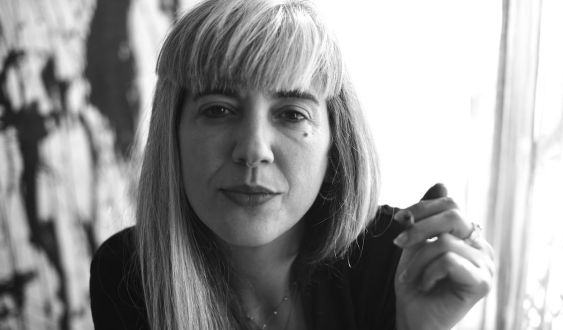
"Perhaps I listened too much to Albert Pla or Extremoduro, my teenage prophets, but everything society considers a failure, I feel as a privilege." Marta Polo has ordered a large cup of coffee with milk. She smiles, because you have to turn the other cheek to life like that, with joy, even if you have the eternal feeling of not quite fitting in, of being a piece of the Eiffel Tower in a Colosseum puzzle.
"In my adolescence and youth, no one gave a dime for me. I didn't finish high school, I didn't go to university, for many years I chained precarious jobs. But I always think it was thanks to that, to not fitting in, that I was able to explore who I am, what I like, without the pressure of the system." The mid-morning light illuminates, through the windows, the section of the bar where she is leaning. Marta Polo bobs her head to the rhythm of La Femme's Antitaxi. "I have managed to maintain the enthusiasm children have for life and I have learned to be happy with what it has given me."
Her first vocation was painting, later, theater, until she found cinema. "The language of life and cinematic language are the same for me". She debuted about ten years ago with the short film Charnega, "which I managed to finish with very few resources and pure determination and which had little reach, although it won the Lleida Visual Art award and went to some festivals."
For her part, writing was always by her side, since she was a teenager, "but I didn't set out to write my first novel, Donde nunca ocurre nada (Where Nothing Ever Happens), until life got so wild that I had no other choice. Writing forced me to order the chaos to give it another form and find meaning in it." And, although she detests defining herself by her work, today she feels comfortable saying that she is "a writer and filmmaker, bookseller and astrologer". And with the lessons, "those masterclasses that God imparts to you," well learned. The one when her son, Marco, was born ---"maternity as a creative act changed me and gave me the strength to be myself, to study cinema, which is what I had always wanted to do"--- and, shortly after, the death of her parents, "who left without even having retired and, if after such an event you don't grasp that life is n-o-w, you'll never grasp it."
Between the solitude of paper and the celluloid crew
Marta Polo has just published her second novel, Cómo construir una mentira (Colectivo Bruxista), "a kind of production diary of a film shot in Barcelona, in the Raval," a neighborhood that the author portrays with a mix of caustic humor and raw realism. Prostitutes, manguis, workers, junkies, vagrants coexist in the pages of this vivid diary, pregnant with an unconditional love for the city and for cinema.
A love that marks the process of her next project, "my first feature film about events that happened in Barcelona in 1990," which she is "writing, imagining," while earning a living as a bookseller in the new Finestres bookstore in Palamós. "I am finding the way for it to come to light. This means that producers are welcome in my life!" she laughs.
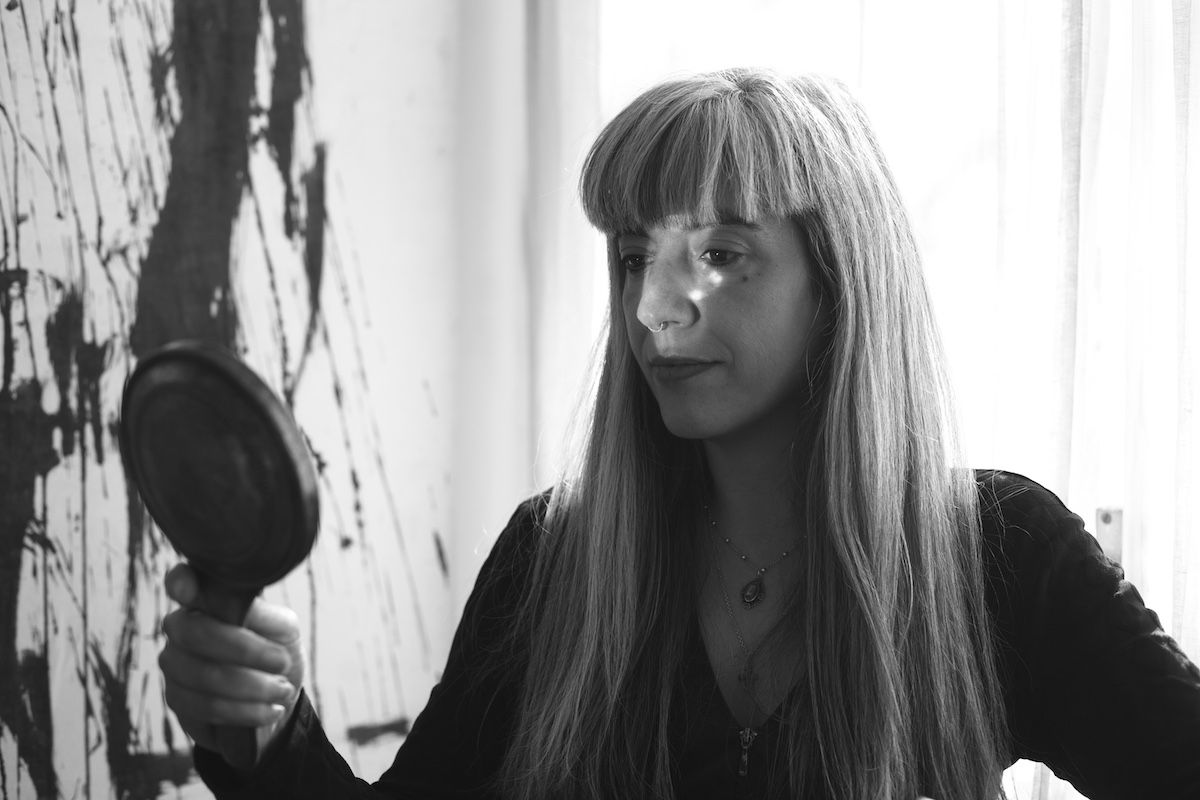
--- And aren't you going to keep writing?
The regular sips some coffee. "That's it," she replies, "I also have the third novel bubbling in my head, and now my dilemma is time management to be able to make a film and a book, because writing helps you manage solitude, while making cinema helps you work as a team."
"I really want to experience the creative process with more people. Although these are long processes, that are done little by little, especially because you have to keep working." Yes, giving it all and reaching everything without losing the enthusiasm for that life that vibrates at every moment.
Unique imaginary
Now that she works in Palamós, the writer and filmmaker misses a Barcelona that she loves unconditionally, even what she didn't like before. "Have you noticed the grayish and yellowish amalgam, that mix between pollution and pollen that adorns the facades of buildings? Don't you think it's beautiful?" she laughs. "What bothers me is how we treat pigeons, it disgusts me that people say they are rats. First, they are birds, they have wings, birds are the best. Second, rats have the right to live, they are not second-class beings!"
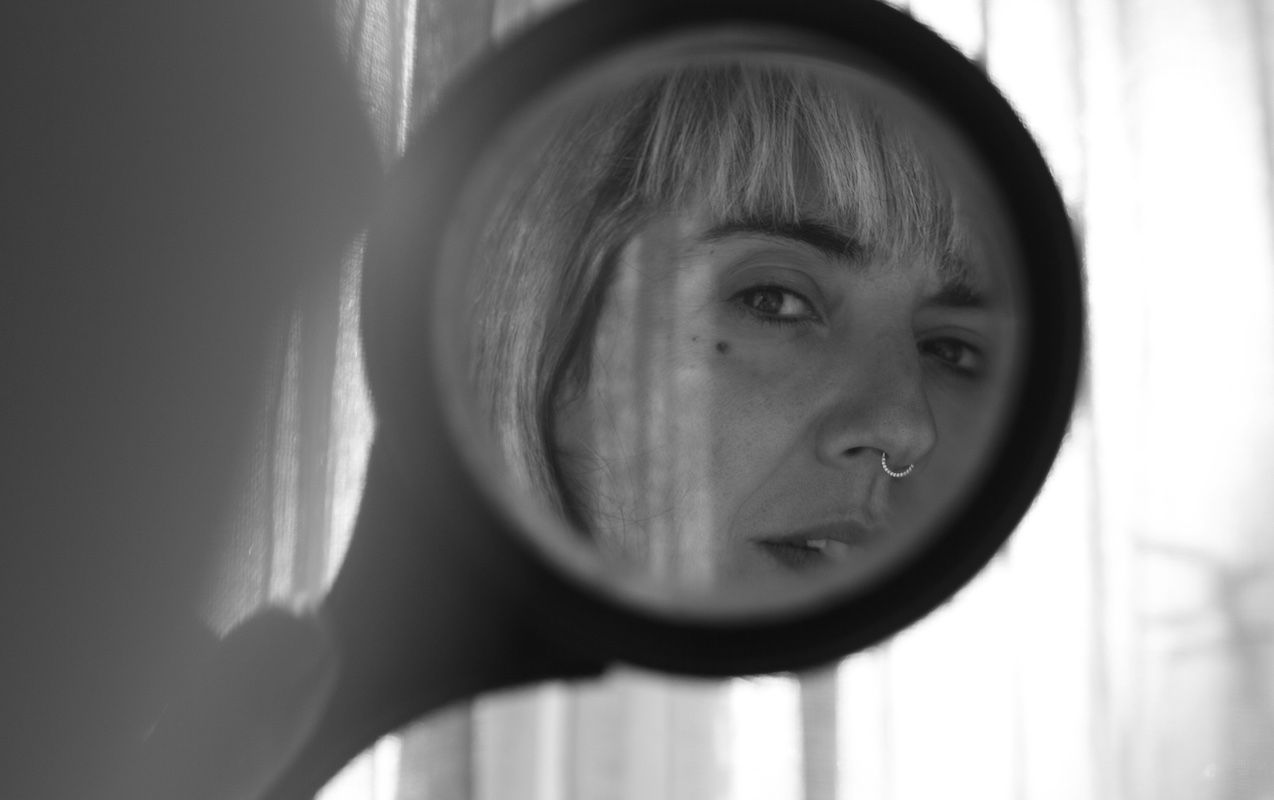
Passionate about the "unique imaginary of Barcelona," she likes to dabble in the city's numerous urban legends, "like one I really like, from 1978, when some residents of the Eixample began to rumor that, at night, shadows were seen in some apartments of a building under construction. Word spread that it was a ghost that I think they even named Manolo. One night, more than three thousand people gathered in front of that building to see it. They collapsed traffic, and the municipal police had to come." She takes a dramatic pause, which she uses to finish her latte, before revealing the conclusion. "They finally discovered it wasn't a ghost, I'm sorry for the spoiler: it was a homeless person sleeping there. As you can see, the housing problem has been dragging on for a long time, though never as pronounced as now."
--- What is worthy of urban legend is our gastronomic offer, in case you want to have something for lunch. We have everything, sweet and savory, very good.
Marta Polo sighs. "Don't make me choose between sweet and savory, because the game is between cheese and chocolate!" And she laughs, before opting for some portions "in plural, so we share, I like to eat a little bit of everything." To try things, because life is what is happening to us right now, also on the palate.
Add The New Barcelona Post as your preferred Google source for free
Stay informed with the latest news.
