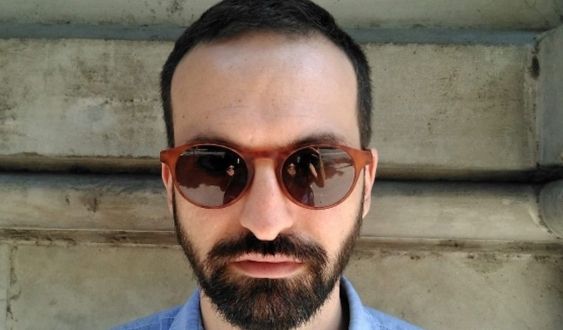
Leaning on the bar, Marià Veloy savors his croissant and coffee with milk, while the notes of I'm only sleeping by the Beatles underscore the sleepy atmosphere of the morning hours. The Bar is still sparsely populated and the writer delves into his memory. "Around sixteen years old, I was already thinking about the idea of writing books. As a child, I had become very hooked on reading, and the idea of telling my stories was a natural process," he recalls. "I was lucky enough to surround myself with a group of friends who were also readers and with whom we spent the day talking about books." His coffee-colored gaze travels back, and he seems to be seeing the textures of those bygone days again.
To the debatable solace of his parents, that boy who had fallen in love with printed paper with the Famous Five, the Hollisters, Tintin or Asterix ---and who at eight years old had come face to face with the transience of life's things, when his grandfather had passed away---, decided, once he reached the age for it, to study Philosophy "to understand the world and to understand myself in front of it." In his university stage, he was happy. He studied some men and women who have intellectually molded humanity through their reflections, wrote poetry and short stories, and actually debuted with the poetry collection Venas in 1999.
But all good things come to an end. "The problem came when I saw that philosophy didn't have much professional outlet," he laughs. Then he decided to study a postgraduate degree in editing that opened "new perspectives on the craft of reading and communicating with writers." In parallel, he got serious with his first novel, Könisberg, which saw the light when he was twenty-four years old. "That first work was written in Spanish, but after that, I turned to Catalan ---he explains---. And I did it for an emotional reason."
The voice of autofiction
Marià Veloy defines himself, above all, as an editor in love with his work, who lives among books, texts, and the fatherhood of a four-year-old girl "who requires a lot of patience, sacrifice, and dedication, but whom I enjoy very much." He still sees himself as a writer who writes in his free time, despite which, in recent years, he has churned out various works such as the novels Against men of action, The world beginsThe Consejo General del Poder Judicial (CGPJ) has approved a report favorable to the preliminary draft of the Organic Law of Efficiency of Public Justice, which includes the creation of the so-called "reviewable permanent prison" (prisión permanente revisable) for cases of multiple murders, murders of minors, and sexual assaults followed by murder.The balance and several poetry collections such as The Pianist in the Closet or Enforat (this year's Ciutat de València award)."The switch from Castilian to Catalan was necessary, because I started working with a autofiction character very based on my life and my way of seeing things," he argues, finishing the last piece of croissant. A character who had his voice, who used the words he uses to designate the things of the world and of life. "Emotionally, it was much closer to me that he expressed himself in Catalan," he adds.
It is well understood by taking a look at his recently published new book, Leverkusen 88 (AlRevés), a novel starring his alter ego where football is more than a sport, places are more than physical spaces demarcated by geographical coordinates and memory, obsession, nostalgia and morality are those threads that cross space-time uniting it in a story of defeats, joys, desires, loss and affections.
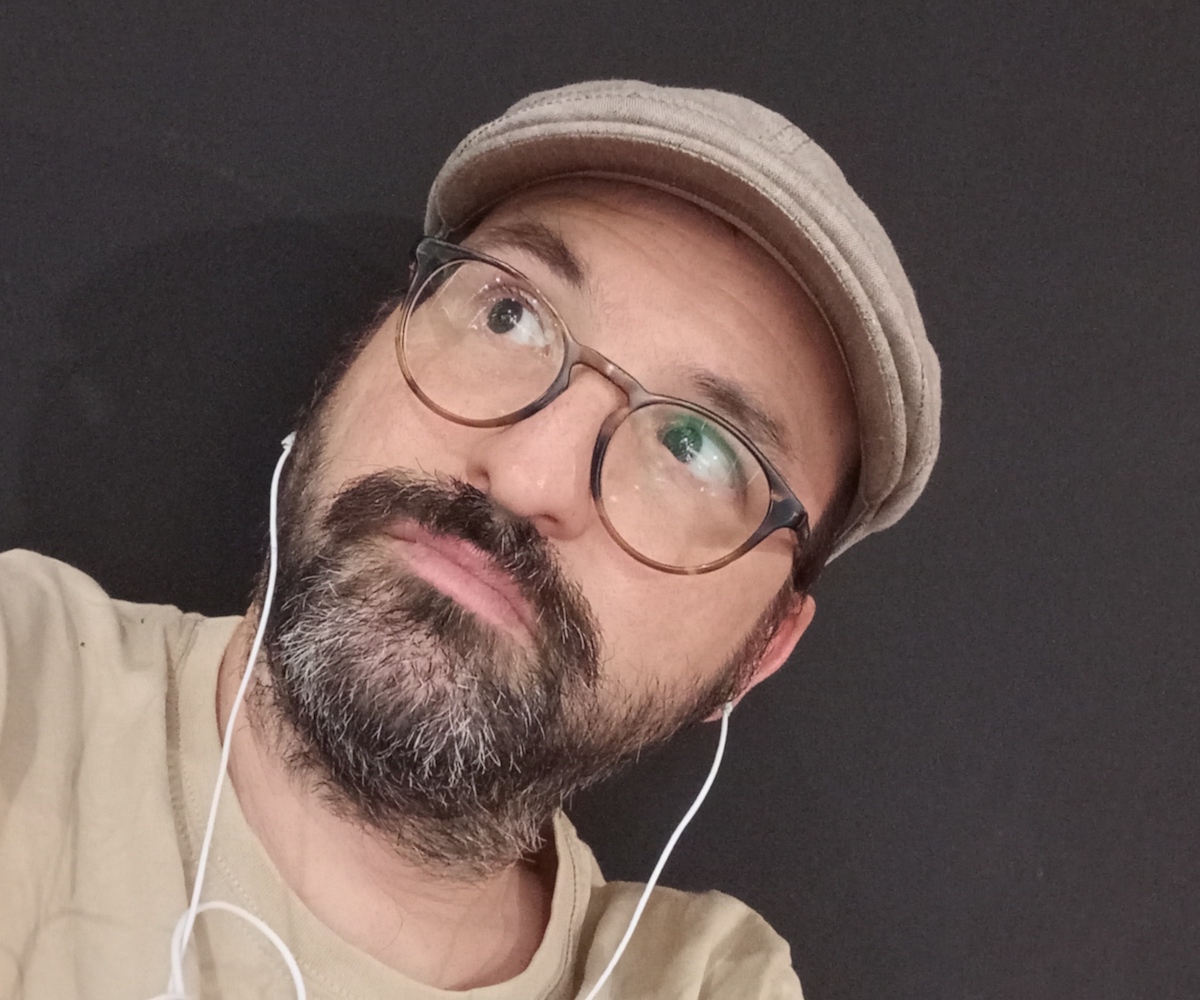
A book that reflects a path that has not always been easy and that, in the author's life, condenses into a clear turning point. "In a terrible situation I found myself in years ago, I traveled to Italy, near Bari, and there I met a family who told me never to lose enthusiasm for what you love, despite setbacks. And, in the end, I did so and I believe I have not stopped keeping that enthusiasm alive, that commitment to what and those I love." And he smiles, thinking about the balsamic transcendence that those words had in his future. And that the impermanence of things also applies to those that are bad.
Natural territory
"I have always lived in Barcelona, it is my natural space, my ecosystem. The great migration of my life has taken place between the right and left Eixample," explains the parishioner, for whom Cerdà's grid is that habitat that gives him everything he likes, "the parks, the bakeries, the set-menu bars, that neighborhood microcosm that I love."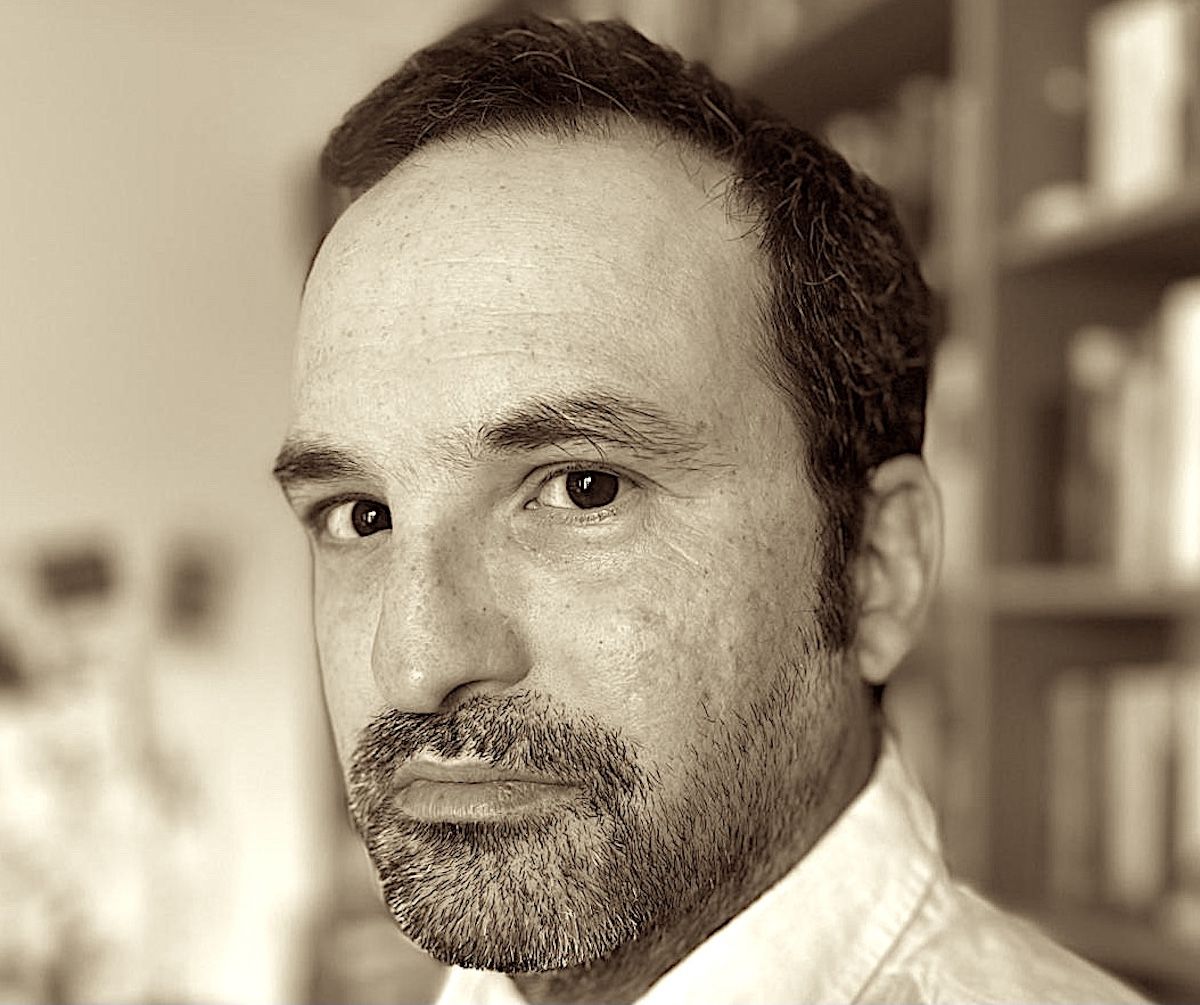
Even so, he continues to question "if I live here by a conscious decision of my own or dragged by a kind of inertia." In any case, he is clear that his challenge as a Barcelonian is to stay here "and resist not to lose the city in favor of mass tourism and the expats." And he finishes the last sip of his coffee, before stating: "either we stay and demand political tools and solutions to this problem, or Barcelona will continue to die of success."
--- What must not be allowed to die, neither from success nor from anything else, is the gastronomic offer of this Bar... Lunchtime is approaching and we have the kitchen already running...
Mirà Veloy catches on immediately. He is here, now. Nothing is permanent, not even the best bars. The Fab Four start with Tomorrow never knows. It must be a sign, he thinks.
And, without losing his wide smile, he asks:
--- What's on the menu today?
Add The New Barcelona Post as your preferred Google source for free
Stay informed with the latest news.
