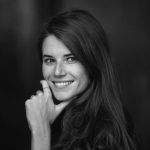
--- You are 35 years old and have been working in television for 12 years.
--- Yes, I started at Betevé and there I learned how a TV station works. I always champion local and regional TV stations because that's where you see how everything works. From there I went to work with Cuní, at 8TV. And there I also started as a reporter and, little by little, he trusted me, until I edited and presented the weekend news.
--- From there you went to Telecinco.
--- Yes, I started here, in Barcelona, at the Telecinco delegation. Then, when Sonsoles Ónega was given the program Ya es Mediodía, I made the leap to Madrid. There I was a reporter and, when Sonsoles was not there, I was the substitute. It was the first time I felt the exposure that our work on TV entails. When you substitute a presenter with those audience levels, you notice that TV, beyond providing the service it should, also carries a burden for you.
--- How do you handle this exposure?
--- It depends on the moment. There are times when it's very rewarding, because when people greet you on the street you see that your work is liked, but then there are other times when it's a bit more uncomfortable. Especially in the most intimate moments, when, sometimes, you see that your privacy clashes with your public persona. The other day I was in an interview with some students and I talked about the need for therapy. One of the points we discuss with the therapist is precisely this, public exposure. It's a dimension that not all jobs have and, sometimes, you have to know how to handle it. Both for the good and for the bad. On the one hand, it can go to your head and you can believe something that isn't true. And, on the other hand, because we receive a lot of criticism, some very cruel and very fierce.
--- Are these cruel criticisms always on social media, or do you also receive them face to face?
--- I have never received, to my face, a criticism with that level of cruelty. On social media, many. And it's usually people who don't have names or surnames, nor a clear photo, nor do you see exactly who is behind that account. They are very destructive comments, which sometimes affect you a lot.
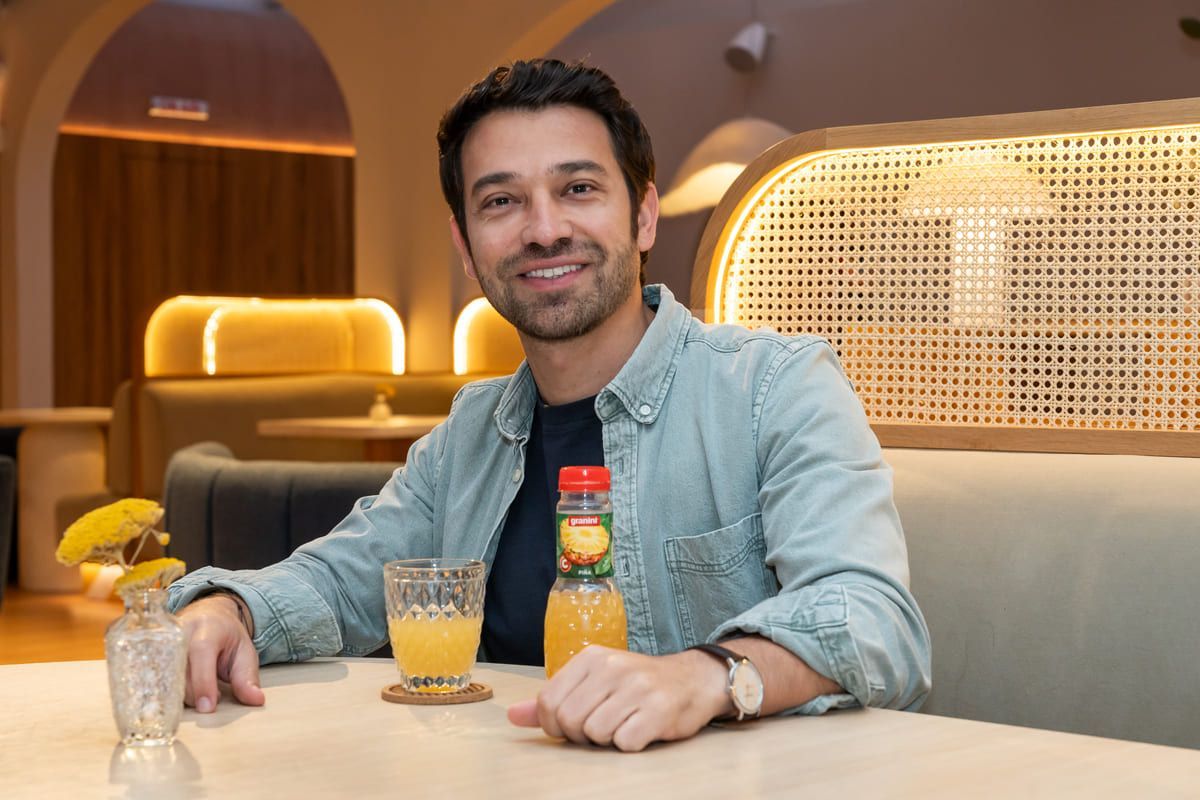
--- What relationship do you think you have with social media?
--- I have a bit of a love-hate relationship. I get a lot of information from social media. It's also a source of work and income. But you can end up having a somewhat toxic relationship. On the one hand, there's a point of needing feedback from followers, which sometimes isn't necessary. Social media has created a need that we didn't have. It can contaminate you and make you lose a bit of perspective.
--- This year you were the presenter of Benidorm Fest. The final registered almost two million viewers. How was your experience?
--- Benidorm Fest is the most brutal experience I've had in my career. It's a colossal project. There are two semifinals and the grand final. You have 1,200 people in the audience, plus all the viewership, which is an enormous amount. You have the feeling that you are presenting something very important. Beyond deciding Spain's representative in Eurovision ---which is, of course, very important--- you see that those artists, many of them young and emerging, thanks to Benidorm Fest, will be able to have a career. Or they will be able to experience part of what it means to be an artist.
--- Were you surprised by the controversy generated by the winning song, Zorra, by Nebulossa?
--- Very much so. I suppose because since I know them and have spoken with them, they have explained the meaning of the song to me... I understand that you may like it more or less. But I do believe they have made it very clear that it is a song of female empowerment, that it is a song of re-signification of a concept like "zorra." I remember that in Spanish, "zorro" is a clever guy, a sharp guy, and that, on the other hand, "zorra" is what we all know it is, right? I believe that re-signification, whether of "zorra" or any other concept, is very positive.
--- Do you think it's a proposal that can leave Spain in a good position in Eurovision?
--- Yes. First, because of the message of female empowerment, which I hope reaches Europe. And then, for breaking the barrier of ageism. We remember that Mery is 57 years old. A 57-year-old woman, empowered, in leather, gets on stage. We are used to seeing singers, men or women ---but especially women--- being young. And, suddenly, a 57-year-old woman represents us in Eurovision. These two messages, female empowerment and against ageism, can be a very good combination in Eurovision.
--- As you said, the Benidorm Fest audience was excellent. In general, how do you experience the pressure of audiences?
--- On Telecinco I lived it terribly. Something happens to me, which I'm also working on in therapy, which is that when the audience is very good, I never think it's because of me. But when the audience drops, I always think it's my fault. Now I've relativized it a lot, but at first I lived it terribly. It's like every day was an exam. Every morning they give you the grades.
--- You comment that when there are bad audiences you think it's your fault and when they are good, you don't think it was your merit. How do you experience impostor syndrome?
--- I have it very present. Despite having an x curriculum ---everyone has their own---, it always appears. There are moments when you feel vulnerable. It's a job with a lot of exposure and you think: do I have to be here? You ask yourself that. But you think: both the networks and the production companies, if they give you these positions of responsibility, it's because you deserve it, because you have a curriculum that supports you.
--- Another bad thing about TV is the uncertainty. Is it also difficult to manage?
--- Yes. Uncertainty is very difficult to manage. When they ask me what I would change about my job, I always say uncertainty. When you enter a project, long-term in inverted commas, you are comfortable, you are well... There are other projects that perhaps last three or four months and end. Then, you say: and now what?
--- Now you live in Madrid, but before you lived in Barcelona. What is it like for a journalist to work in the Catalan capital?
--- Barcelona gave me the journalistic foundation. I started my first press conferences here, in the Parliament, in the Barcelona City Council, in all political parties. A large part of the governmental power is concentrated in Barcelona. I started doing political journalism and Barcelona gave me many opportunities. It is true that I would like it to regain the importance it had before, where part of the audiovisual industry was made from here. In the end, many of us Catalan journalists are in Madrid for work, basically. If you analyze the national grid of live programs, from Barcelona, there is only one, which is Aruseros. Note that I recorded El debate of El conquistador, in Sant Cugat, and it was the big novelty, even within the house. A few years ago, I am sure it did not attract as much attention as it does now. It is true that now there is an effort on the part of Televisión Española to try to diversify or decentralize, a little, all audiovisual production. I think it's positive.
--- You have gone through all kinds of formats and registers. What would you like to do now?
--- A contest in the style of, Cifras y letras. A cultural contest that would reach the masses.
Add The New Barcelona Post as your preferred Google source for free
Stay informed with the latest news.