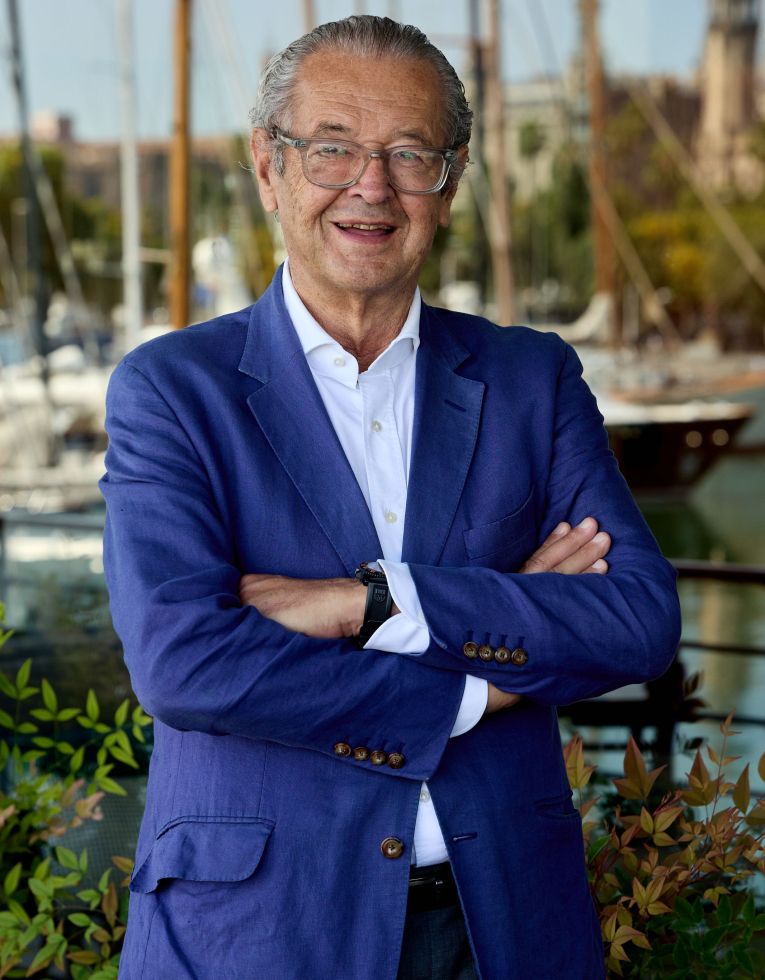
Luis Conde (Barcelona, 1950) has presided over the Saló Nàutic Internacional de Barcelona since 2009. A graduate in Economics from the University of Barcelona, he began his career in the financial sector, as director of the international and corporate banking division of Banc Mas-Sardà, and in 1990 he founded Seeliger y Conde, an executive search consultancy. Today he is also a board member of Fira de Barcelona and sits on several boards of directors. Under his presidency, the Show launched a new format last year that has evolved to reach the entire nautical community in this 63rd edition. He meets The New Barcelona Post at the Reial Club Nàutic de Barcelona and reflects on the brands that are returning, what distinguishes Barcelona from Düsseldorf, Genoa or Cannes, and where the nautical sector is headed.
—This year the Saló Nàutic returns with relevant brands from the sector. What has changed for Oyster, Amel or YYachts to return after several years of absence? Has it been a matter of market, negotiation or how the show has evolved?
 —Last year we expanded the offer of large yachts to reach a new audience. And when the public starts to see a higher quality offer, demand is generated. This is seen by distributors and exhibitors who bring more boats to show. In this sense, it is great news that these big brands are coming. Our commitment is to attract more and more relevant brands and new models to increase the level of the offer and attract new buying public.
—This is the 63rd edition and you define yourselves as one of the most important shows in Europe. With 170 direct exhibitors and more than 200 boats, how do you measure up against other events like Cannes, Düsseldorf or Genoa? What does Barcelona have that the others don't?
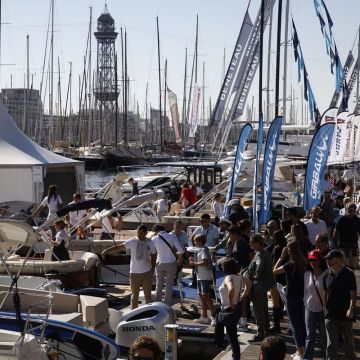
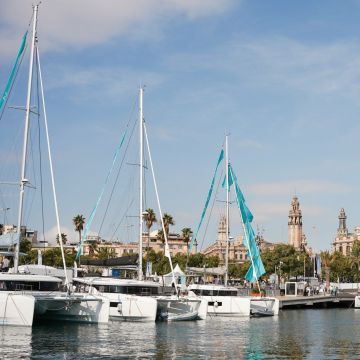
—The first is Düsseldorf. And what differentiates it is that there is a great purchasing power. The second is Genoa, and it is design. The third is Cannes, which is sailing. Barcelona has a great offer and nautical tradition and also has the city factor, which is wonderful and can be lived in all year round.
—You have decided to bet on new areas such as Experience Water, the Indoor Pavilion or Diving, Shopping & Water Sports. What visitor profile do you want to attract with these spaces? Are you looking to expand the audience beyond boat buyers?
—That's right. We want to attract people who want to buy a boat for the first time, people who want to change it, or people who already own one and want to see the latest innovations, find complements, accessories, or nautical consumer offers. For me, it's a logical sequence for someone who loves the sea. First, you learn to swim, you like boating, and then you want to sail, even if it's in a small boat. The next step is a motorboat, and finally, a yacht. And we have gathered an offer that aims to cover the entire sector: from young people aged 16 or 17 who think about the sea in one way, to men my age, who are already looking for other things.
Barcelona has a great nautical offer and tradition, and also has the city factor, which is wonderful and where you can live all year round
—So, this commitment to various sectors, which to inexperienced eyes might seem unconnected, is actually a temporal line of growth for the boat consumer?
—Exactly. It's like everything in life. You start with small things, and as you get older, your tastes and needs change. For example, if you get married and have children, you need a bigger car and an apartment with more rooms. In boating, the same thing happens: the consumer evolves and wants other things from the sector.
—The Innovation Dock will bring together 100% electric boats and gadgets. What real weight does electric boating have in the market today? Is it a bet on the future or is there already demand among buyers?
—There isn't a great demand yet, but there wasn't for electric cars either, and look now. The technology exists. There are boats that already work. In 5 years, we will see more electric boats. Now this whole industry is still very nascent, but it is already evolving.
—Finally, what is the objective of nautical shows?
—In addition to generating business opportunities, one of the objectives of the show is to make boating an easy practice. Because sailing a boat is not easy. If it's a motorboat, it has a certain difficulty. And if it's a sailboat, even more so. If you don't know how to sail, for example, don't go directly to Mallorca. But new boats, especially motorboats, incorporate technology that makes them increasingly easy to handle, both joysticks that have replaced rudders, and navigation systems, GPS, route warnings to avoid storms, and AI applied to the sector. Therefore, what we see year after year are boats with mechanisms that make navigation more friendly and easier. And thus, boating can reach many more people.
Add The New Barcelona Post as your preferred Google source for free
Stay informed with the latest news.