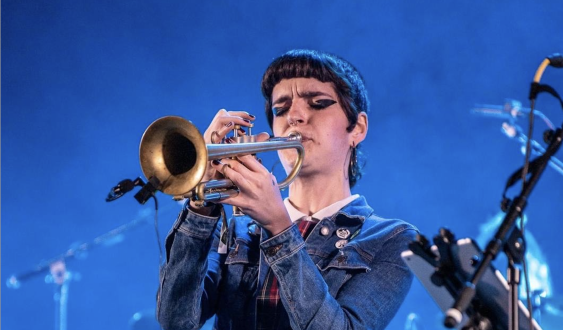
"I have been incredibly lucky that my family has always supported me. I didn't have to fight when, at home, I said I wanted to dedicate myself professionally to music, and for that, I feel enormous gratitude." The notes of Cantar t'és aliment, by Trau, accompany vermouth hour. Dressed in an elegant 60s cardigan, singer, trumpeter, and composer Laura del Pino sips a beer. "Without my family and without my friends, without my people, I wouldn't be who I am," she adds. And she smiles, knowing herself fortunate.
At her home, a lot of music was listened to and played. "My parents taught me the first guitar chords." At five years old, they enrolled her in violin. She fondly remembers Itziar, that first classical teacher, after whose death she never reconnected with the string instrument. "After her, I started studying singing and modern music." Her love for Chet Baker led her a step further, to play the trumpet.
In between, a suburban adolescence in a Sant Boi with a subcultural substratum that was still boiling. Punk, skinhead culture, reggae rhythms and other black music, flashy clothes, unknown dances, and political effervescence. A world out of this world with countless threads to pull: sonic, aesthetic, graphic, and, also very important, literary. That is another of Laura's great passions, an avid reader with a predilection "for the Catalan narrative of Irene Solà, Eva Baltasar or Gemma Calduch".
"La Rauxa was born from my love for 60s pop sung in Catalan"With her first band, Les Txatys, a trio of girls dedicated to rumba and ska, she spent three years honing her skills on all kinds of stages. Color and warmth to the syncopated rhythm of Afro-Cuban and Caribbean roots. Shortly after, her path crossed with Núria Pino —"with whom we share no kinship, but an immense friendship," she clarifies before being asked— and together they started Hermanas Dolor, a duo with whom they explored the lexicons of soul. Another project with which to continue growing artistically and which anticipated all the good that was to come.
Explaining the world through his own songs
After dissolving Hermanas Dolor, and after the pandemic hiatus, Laura del Pino joined Los Retrovisores, the veteran Barcelona pop-soul group. "Joining the band as a trumpeter opened the doors to a vast sonic world for me. It was undoubtedly one of those great turning points," acknowledges the singer, who shortly after founded Les Testarudes with Núria Pino, an all-female ska and reggae band with which she has played on a multitude of stages. "Also, I started playing with other bands like Ros or Steve and the Songlines." And so it continued, until the inevitable stop arrived.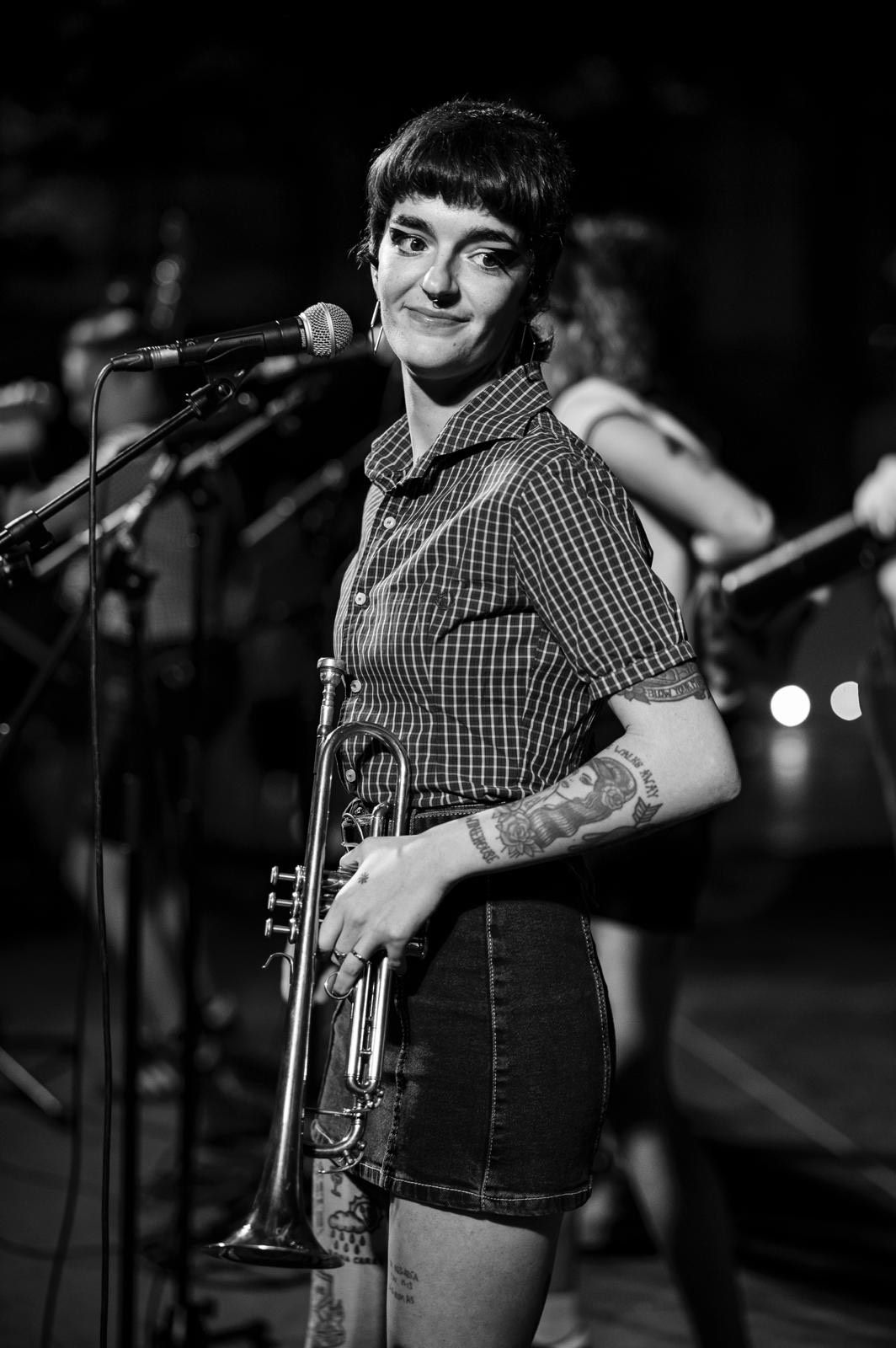
"La Rauxa was born out of my love for 60s pop sung in Catalan, which people like Carles Belda and Òscar Dalmau have done so much to rediscover." At that time, the artist was already beginning to write her own repertoire in this vein and, little by little, encouraged by the musicians of this project, the need to express her world through her songs grew. "Added to this, driven by my love for literature, I began to study Humanities."
And, between her various commitments with bands, the need to promote La Rauxa as her first own project, her studies, and the inevitable day job in a context where dedicating oneself to culture means enduring hardships, Laura had to leave Les Testarudes. "We had recorded a mini LP and the farewell was very sad, because besides being a band with a lot of potential, they are and always will be my friends."
Proud of her tenacity, her ability "to juggle the calendar to get everything done" and of feeling consistent with her ideological and ethical precepts, the artist is now focused –above all– on preparing what will be La Rauxa's debut album, which will be released in the coming months.
Suburban Militancy
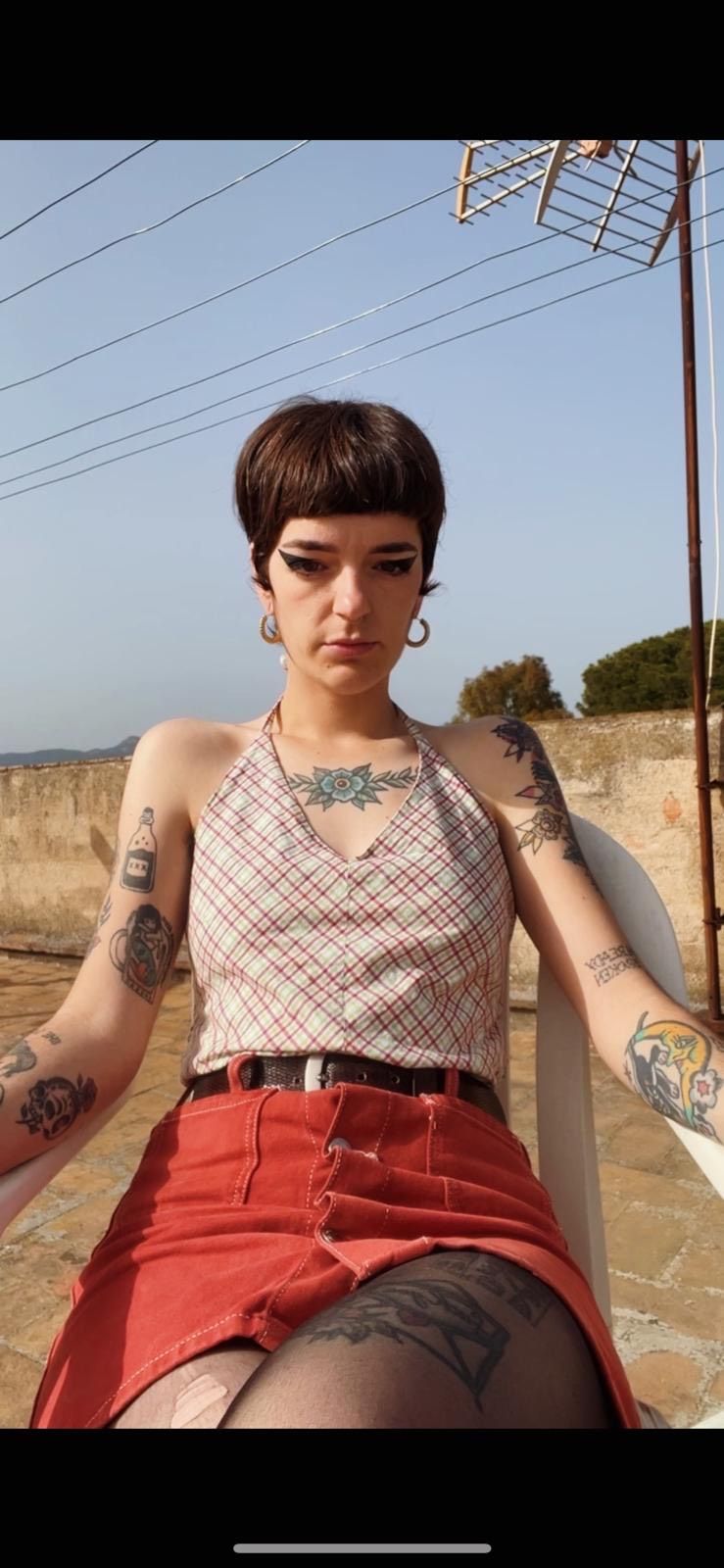
As a young woman, the parishioner had always wanted to leave Sant Boi to move to Barcelona, until her dream came true. "I came to live, first in Raval and then in Gràcia, and I stayed for three years in total, after which I had more than enough".Despite its cultural and associative fabric, of being a city where so many good things happen –"concerts, clubs, book presentations, exhibitions…"–, its too accelerated rhythm and the increasingly widespread model for tourists and expats "who don't care who their neighbors are", wore out her patience. "Now I've returned to Sant Boi where many things also happen that belie its reputation as a dormitory town". She finishes her beer and adds, without losing her smile: "now I practice suburban militancy!".
— What will make you militate in this Bar is our gastronomic offer. Lunchtime is approaching and we have everything: menu, combo dishes, à la carte, sandwiches… Everything exquisite!
Laura del Pino doesn't say no. "I'm a menu person and rather traditional. Catalan cuisine!". And, after thinking about it for a few seconds, she asks: "You wouldn't happen to have fricandó, would you?".
— One of the best in Barcelona.
— Well, fricandó, another beer, and that's that!
Add The New Barcelona Post as your preferred Google source for free
Stay informed with the latest news.