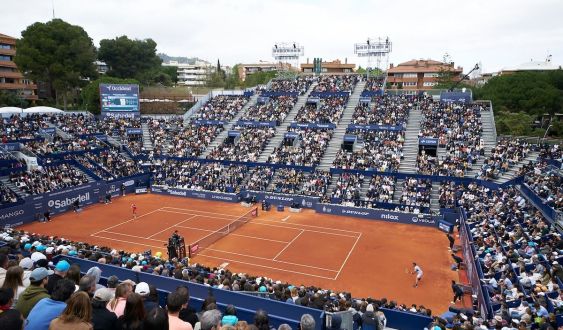
There are people who believe that going to the Godó tennis tournament is like going to the Masters golf tournament or Royal Ascot horse racing, with large spaces and luxurious tents to establish contact with the highest society, but that, in any case, is what it's like to go one day to the Real Club de Tenis Barcelona. Which, as a club, is one of the most organized and thriving in the city. On the other hand, going to the Barcelona Open Banc Sabadell is going to a popular, mass event; indeed, not absolutely accessible to everyone, but once you are there, and you encounter the food trucks and the crowd before a match, the football-like and crowded arrangement of the public restrooms, the beer in a cardboard cup, the narrow corridors and metal scaffold stairs and the long routes necessary to obtain passes in the reserved areas, the day takes on more the form of what the America's Cup could have been and was not in any way: a place that captures international interest and at the same time the interest of the people of Barcelona.
Indeed: the Godó is, in addition to being one of the most emblematic events in European tennis, a sporting institution of the Catalan capital. Yes, it was founded by the Count of Godó in 1953 and this gives it an aristocratic tint, but the will was to project Barcelona as an international sports reference and that has been achieved. The merit is that it also manages to connect with the city, with people without blue blood, with lovers of this sport whether or not they are members of the club.
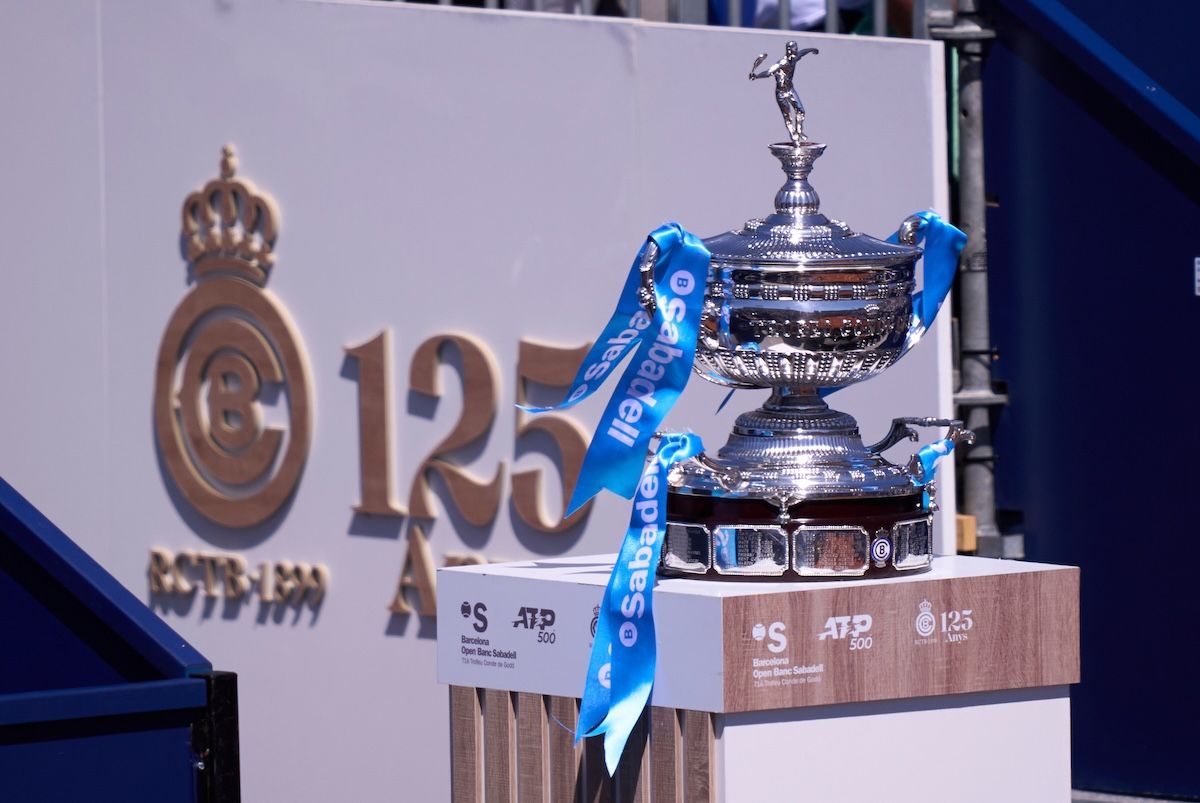
Since its beginnings, the Godó has been played at the Pedralbles facilities, which have existed since 1899 and where figures such as Manuel Orantes, Ilie Năstase, Mats Wilander, and Rafa Nadal (who gives his name to one of the courts) have shone. Evidently, there is also the crème de la crème, and in the village, the most sophisticated gastronomy mixes with luxury brands, but even that manages to convey an unostentatious language. As we said, neither tennis nor sailing are elitist or expensive sports, but all it takes is a little sensitivity and proximity, not forcing things with artificial shoehorns, and even less with millions of unjustified public money, to earn popular recognition. Nor was the jeweler Joaquim Cabot elitist when he founded the Palau de la Música Catalana, luxurious but accessible, and decades later it was his grandson Jorge (also president of the Real Club) who, as successor to the jewelry business, designed the iconic trophy cup: the only one in the world that features a tennis player in motion.
The match witnessed was between Carlos Alcaraz and Ethan Quinn, precisely on the Rafael Nadal central court, in the first round. You have to get a seat before the accesses close, otherwise, you'll be waiting on the scaffold stairs until someone decides to leave their seat. The verticality of the construction makes you realize the tournament's cramped nature; every last millimeter has been utilized, and the clay court magically appears nestled between the stands, the ball boys, judges, cameras, speed detectors (I don't know what good it is to know the speed of the serve), the box with the count and people currying favor, a Lexus car placed among the public, the journalists' booths up there, and the Capuchin church visible very close by.
On the loudspeakers, the point count is done in a delicious Catalan-American accent that inspires multiple imitations whenever it says "avantatge." The world number 2 debuted with a hard-fought victory against the young American, with a score of 6-2, 7-6(6). At first, it seemed that America would be great again, given Quinn's powerful serve, but the Murcian raised the tariff with physical resistance and a cunning difficult to guess. By the end of the first set, one could already foresee how things would end.
You can't always win, but you can have a glass of cava to wash away the taste of cardboard beer and comment on the greatest hits of the match with my American company. The opportunity arises again to greet friends, acquaintances, and those not greeted, quite a few politicians, not so many businessmen, and to avoid queuing again in the restrooms if it can be avoided. Even Pedralbes can feel small at such a big event, and even the city's largest facilities seem adjusted to the human Mediterranean measure.
We are not Wimbledon, but we have a worthy trophy and we have a much more bourgeois than noble way of being snobbish. Whether you like it or not, here no one is saved from the duty of being earthly and offering a genuine, close formula where people can connect and identify. It can be done on clay and it could evidently be done at sea. The trick is the same as always, be yourself and don't sell too many hard currency for four pesetas. The Godó trophy has managed to be a likeable trophy and that, without tact and without authenticity, could have been very different. Break point for the count, set for the Club and match ball for the city.
Add The New Barcelona Post as your preferred Google source for free
Stay informed with the latest news.
