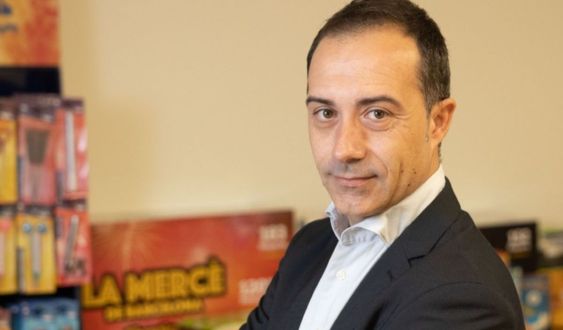
After years dedicated to pyrotechnics, Jordi Brau was impacted by the fear his two-year-old daughter felt at the bang of a firecracker. That reaction was the trigger for a reflection Jordi began ten years ago in the company founded by his father decades earlier: to what extent is it really necessary for firecrackers to make noise?
As a result of that reaction, the La Traca group began a process to categorize its firecrackers based on their noise level, and set out to revise its products to reduce their sound, and opt for softer auditory effects; everything depends on the chemical composition. Since then, the group has been expanding its offer of low noise products: more than half of its catalog has low sound —5% has high, while 45% has medium—.
Now, these low-sound products represent 55% of the Cialfir group's global turnover, which last year amounted to 17 million euros. This year, it aims to reach 20 million, as highlighted by Brau, also president of the Association of Fireworks Retailers of Spain and secretary of the Spanish Pyrotechnics Association, as well as treasurer of Comertia, who has decades in a company that his father promoted in the 80s.
In fact, what is now the Cialfir group has its origin in a casual event and the ability to detect opportunities. In 1982, Rosa Estrada managed a grocery store in Palau-solità i Plegamans, and her husband, Rafael Brau, decided one day to buy some firecrackers with the money he had left over after buying fruit for the store. The firecrackers sold quickly, and they saw a business opportunity. A year later, they opened a firecracker store in the same municipality, which was well received.
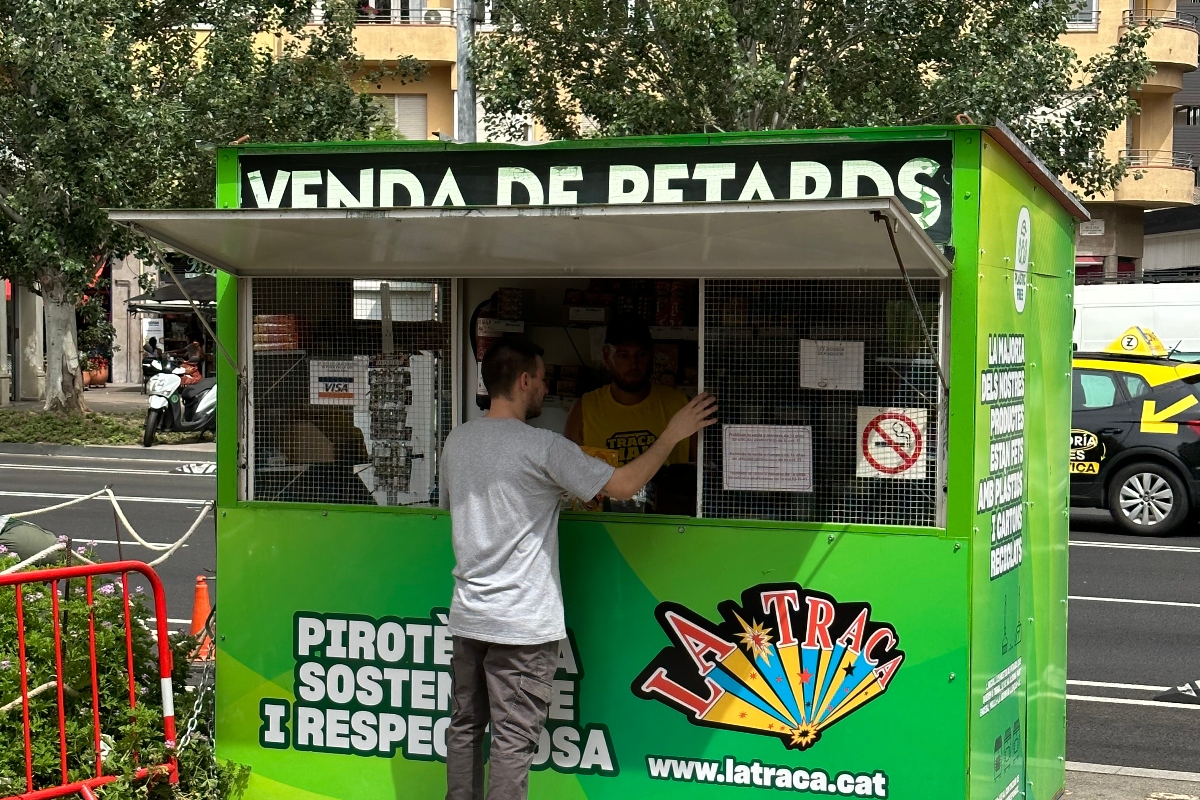
As his son, now at the head of the group with his brother Jaume, explains, shortly after Rafael Brau had a new idea. At a time when Sant Joan firecrackers were sold on the street on camping tables —like a Sant Jordi rose—, Brau "invented the metal booths" to sell them, and went to convince the administration that it was necessary to regulate sales for safety reasons, through "a series of measures that still endure."
Since then, the Brau family began setting up stalls, not only in Catalonia, but also in other cities, taking advantage of the various festivals throughout the calendar where firecrackers play a role. Following this expansion, physical stores began to arrive, and then they ventured into product design through external manufacturers, and also selling them wholesale. Now, they work with manufacturers mainly in China, but also in Spain, Switzerland, and Albania.
"What we are doing is transforming the product range so as not to have to change traditions"The La Traca group brings its firecrackers to the more than 50 stores it has open all year round and seven warehouses nationwide, as well as to the hundreds of temporary stalls they set up—including the 200 for Sant Joan, several of which will sell only low noise products—. But their products do not stay within the group, as it also acts as a wholesaler. In fact, 60% of its turnover comes from retail, while 40% corresponds to wholesale sales. Of the total, 10% comes from exports, which are now accelerating with the success of a product for which the group holds the worldwide patent, and which goes beyond usual pyrotechnicsa flare designed for birthdays, in which the sparks themselves light a candle with the corresponding number: "We launched it three years ago, and it is contributing to de-seasonalization and to finding a differential line."
This differential line of the La Traca group goes further: it has also modified the chemical compositions of its products to reduce the pollution they generate, and has been planting trees for three years to counteract what cannot be avoided. "What we are doing is transforming the range of products so as not to have to change traditions," highlights Brau, also in reference to the commitment to low sound and, especially to Sant Joan.
"It is a magical night that we want to maintain, and we have to transform the products precisely to maintain it," in an "increasingly mature and civic" society that must take into consideration how one's own behavior affects others —as, in the case of firecrackers, children, people with hearing sensitivity or dogs and other animals—.
The desire to maintain tradition is evident in the data: of the 40 million that the pyrotechnics sector in Catalonia invoices annually, 15 are sold for Sant Joan, especially in stands like those of La Traca. The group notices it not only in sales, but also in personnel: Cialfir has a stable staff of 80 people, which multiplies to 500 for these firework dates.
Add The New Barcelona Post as your preferred Google source for free
Stay informed with the latest news.
