The Teatre Lliure blows out fifty candles. Half a century after that December 2, 1976, when a young and independent collective inaugurated the Gràcia venue, the project has grown to become a fundamental and essential space for the performing arts in our country.
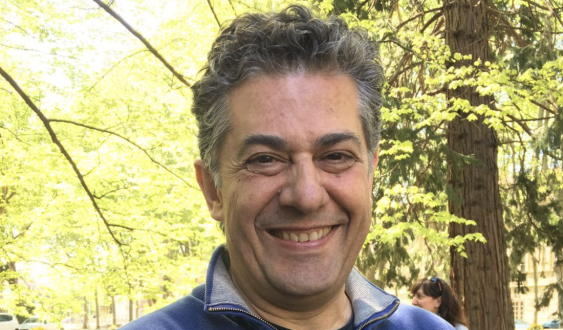
At the forefront of this celebration, and integrated into the team led by Julio Manrique, is Francesc Casadesús, assistant to the director and head of programming for the theater. He explains how this anniversary has been planned: from the reinterpretation of house classics like Júlia to the major exhibition at the Palau Robert, passing through collaborations with the Liceu or the Palau de la Música.
— We are celebrating fifty years of the Lliure. In what do you think the Foundation has changed the most and in what does it remain faithful to the original idea?
— It's fifty years, and a lot has happened in that time. The most important changes have to do with growth: the Lliure de Gràcia became too small and what was a project driven by a group of young people from independent theater became a public institution, with public support and mission. In addition, there is the move to Montjuïc, to a wonderful space.
In any case, we can talk about growth and consolidation of a project, but not about renouncing artistic ambitions. The Lliure continues to be, just like at its origin, a space for supporting artists, art, and freedom. In this sense, it remains faithful to certain values, even though time evolves.
The Lliure continues to be, just like at its origin, a space for supporting artists, art, and freedom.
— It has grown and consolidated. Is this year's theater program linked to the anniversary celebration?
— Absolutely. There was a group of people who had been working on this celebration for some time, and when we joined Julio Manrique's team, we took their proposals very much into account to build the program. The show programming clearly responds to this celebration, especially during the first quarter, starting with the Grec Festival —with whom we celebrated 50 years in a co-production— and until December. In addition, around the shows, we have built a whole series of important parallel activities, conceived more with an eye to the future than to the past.
— For example, Júlia, a play that was already performed about 15 years ago, is being revived.
— Júlia was an emblematic work in the history of the Lliure, directed by Lluís Homar and starring Anna Lizaran, but this is another Júlia. It responds to different conflicts: not only to the social class difference of Strindberg's original, but also to the relationship between a young Maghrebi immigrant and a young high-class woman from Barcelona. The theme is revisited taking into account how Barcelona has changed.
— It is updated and contemporized, maintaining a nod to that historical production.
— We do Júlia, but rewritten by director Christiane Jatahy based on the classic. It is part of the spirit of the Teatre Lliure: to be inspired by the classics, rewrite them, and bring them up to date.
— Apart from the theater program, what are the most outstanding parallel activities?
— The most important is the exhibition Un Teatre Lliure at Palau Robert, open until January 17. We don't usually do exhibitions, but we have approached this one from the perspective of how a theater makes theater: it is not a nostalgic retrospective, but a living experience, where you enter as if you were going to see a play. Five set designers have created installations to transmit emotions, combining historical homage with the present in a central point like Passeig de Gràcia with Diagonal.
— Also at Palau Robert, in November you will do El teatre amagat. What does it consist of?
— As it is a theater, we could not limit ourselves to installing the exhibition without dynamizing it. We already participated in Barcelona Dibuixa with a children's light drawing workshop, and we will also hold the closing of the symposium there with Albert Serra talking about the future of dramaturgy and cinema. As for the children's and family audience, our program moves there with El teatre amagat, a proposal created by the artist Marga Socias designed for schools and family weekends. It consists of touring the exhibition looking for where the theater is hidden in each installation and choosing words that define what theater means to each person. It is free and made with great sensitivity.
— We experienced the cancellation of the anniversary party due to rain. Do you plan to reschedule it?
— The only thing we could keep were the fireworks in the rain, with four people in the square with umbrellas; it was sad and beautiful at the same time. The party as planned, outdoors in Montjuïc, with a stage, live music, covers and tens of kilos of coca that we had to freeze, cannot be repeated with that magnitude because we do not have the budget to reassemble all the infrastructure. We are thinking of an alternative, but on another scale.

— Will the dramatized visits that took place inside the theater be repeated?
— Of the two planned days, only Saturday could be done, apart from the technical press pass on Friday. It was a beautiful experience and we will surely program it again, we don't know if this year or next season.
— During that visit, different people linked to the venue shared personal experiences. As a participant in that tour, what anecdote did you share?
— We had testimonies from spectators, members, workers and artists. I explained a very emotional moment for me: when Peter Brook went on stage at the Lliure and said goodbye saying "all that remains is silence", shortly before he died. It was an unforgettable experience to see him here.
This anniversary is precisely a search for our own legacy.
— What legacy do you think the Lliure leaves after these 50 years?
— This anniversary is precisely a search for our own legacy, and we wanted to build it accompanied by other cultural institutions so as not to make an endogamous celebration. Inviting the Liceu to program a concert directed by Josep Pons with the Lliure Orchestra, going to the Palau de la Música with Carles Santos's work or participating in the Biennal de Pensament with debates on theater and democracy alongside Juan Mayorga demonstrates that the Lliure is much more than a building. It is linked to the spirit of 1976: a longing for freedom and a group of passionate people who dedicated themselves to making art reach as many people as possible. The theater must remain faithful to this commitment to independence.
— The anniversary also has an editorial branch, such as the publication of Cor calent.
— In addition to the usual collection of theatrical texts Llum de Guàrdia, we are publishing three special books. The first is Cor calent (Warm Heart), which aims to make visible the house's workers who usually remain in the shadows. We commissioned three authors—Magí Sunyer, Marta Orriols, and Marta Vives—to interview the staff and write stories about them. The title comes from the phrase that a historic stage manager, Manolo, always said to the actors before going on stage: "Pies fríos y corazón caliente" (Cold feet and warm heart).
Through these stories, professions such as stage management, lighting, machinery, box office, and wardrobe are explained, with anecdotes such as the day a lobster casting was held or Fabià Puigserver's fixation on making everything by hand. The other two titles are a book on the history of the Teatre Lliure Orchestra and a compilation catalog that updates the record of all productions made in the last 20 years.

— If you could time travel to any premiere of this half-century, which one would you choose?
— I have attended many premieres and it's hard to choose just one because the theater's trajectory is a continuum. More than a premiere, I choose the documentary archive we show in the exhibition: the filming that Antoni Chic did on December 2, 1976, during the inauguration. You can see the audience entering the hall dressed in period attire and, above all, the spontaneous ovation that erupted before the performance began. They weren't applauding the play, but hope: a project being born and a shared future of freedom. It is one of the most emblematic and cathartic moments in the history of the venue.
They weren't applauding the play, but hope: a project being born and a shared future of freedom.
— You also made an action about that moment at the Gràcia bar.
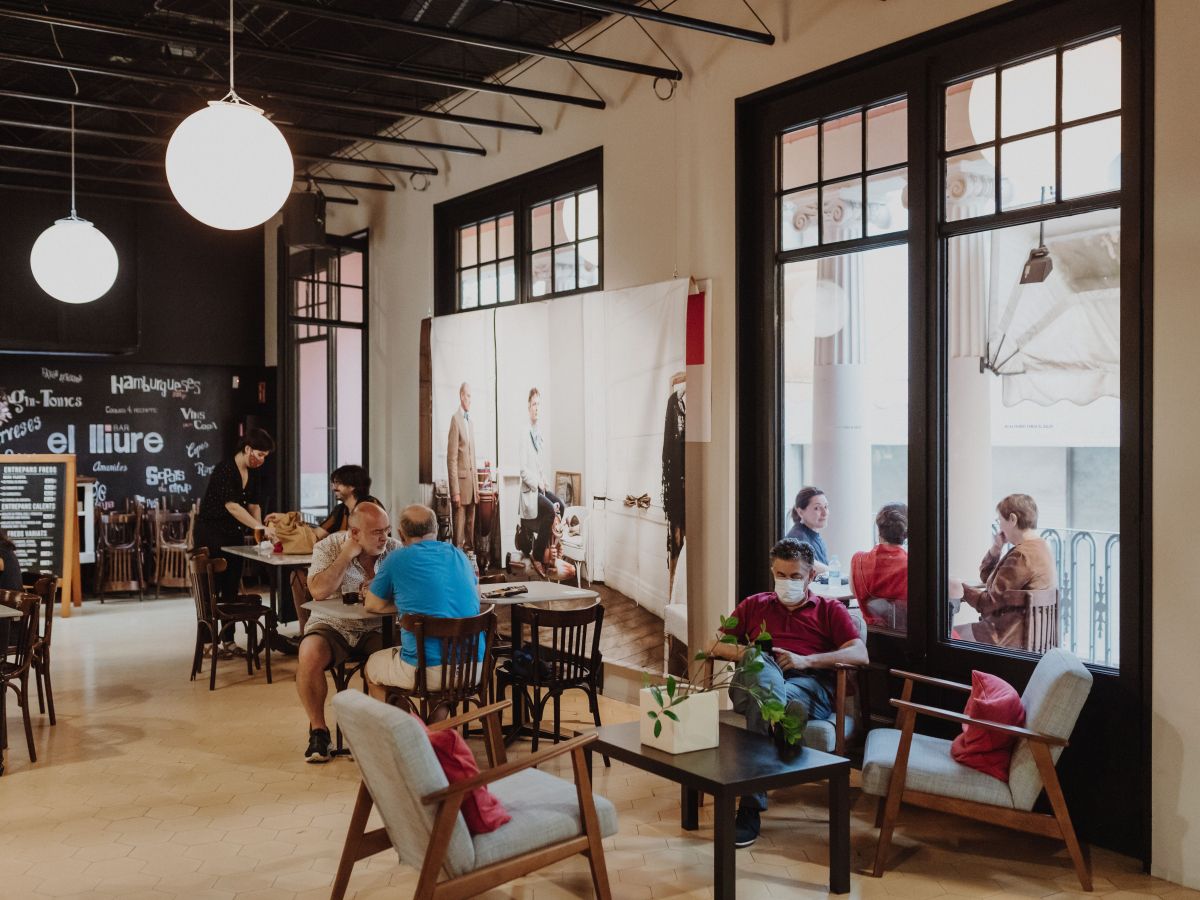
— We have located about twenty of the people who appear in that filming entering the hall. With a fixed camera at the Lliure de Gràcia bar, we ask them what that inaugural applause meant to them. This material is exhibited there and will also be available on the website.
— Looking to the future, how do you envision theater fifty years from now?
— As a programmer, I have to constantly anticipate. During these fifty years, the Lliure has not stopped and remains very much alive. As long as we know how to listen to our environment and respond to collective concerns, theatre will continue to be a space for revolution, questions, and a reflection of society. It can take a text from two thousand years ago, put it in front of you, and challenge you on how you would act today. The themes and creators will be different, but theatre will continue to respond to human urgencies.
Theatre will continue to be a space for revolution, questions, and a reflection of society.
— How will technological development and artificial intelligence affect the stage?
— Theatre has always quickly assimilated any useful technical advance, as has been seen recently with the transition to entirely LED lighting and the use of renewable energies. Artists will be the first to experiment with artificial intelligence, and it will eventually be incorporated into the stage, I trust, from the most human perspective possible. Society will use technology to formulate its own questions.
— Does the sector apply environmental sustainability criteria?
— Yes, we are governed by the Theatre Green Book, a consensual international standard that sets out guidelines for sustainable management: from the energy efficiency of buildings to the reuse and recycling of materials in productions. At the Lliure, we have been working according to these parameters for years.
— Unlike cinema, where artificial intelligence generates concern for its labor impact, in theatre is there fear that it could replace creative processes?
— Theatre is a radically artisanal live art. I don't believe AI can ever replace actors on stage, although it can speed up technical processes. Some profiles are more alert, such as the field of translation, where generative tools offer practical results despite not achieving literary or artistic quality. But the living essence of the stage is not in danger.
Theatre is a radically artisanal live art.
— Catalonia is experiencing record attendance figures in its venues. To what do you attribute this moment?
— Beyond records or absolute figures, I am concerned about the quality of what we offer, and right now both things are linked: we have a high influx and at the same time a solid, diverse and committed own production with contemporary Catalan dramaturgy. The post-pandemic factor influences it —the need to meet, to share experiences and escape loneliness—, but also the constant work of coordination between public and private theaters to build loyalty among young and family audiences. We must celebrate it and continue working so that this cultural growth is maintained.
— How does the young audience respond to recent seasons?
— It depends on the attractiveness of the artistic proposal, but also on eliminating economic barriers. With initiatives like the Generació Lliure card, aimed at young people up to 35 years old with very affordable prices, it has been shown that, if an interesting offer is made and the price barrier is removed, young people respond and fill the halls.
— How is the offer for children and families integrated?
— It is programmed organically and transversally within the general season, from activities linked to exhibitions such as El teatre amagat to shows conceived for different age groups. We must think of all audiences without compartmentalizing.
— Do you keep the childcare service active during performances?
— Yes, we continue to offer it in collaboration with Més que Cures, a neighborhood association made up mostly of migrant women. The service works by prior reservation, especially for afternoon performances such as those on Saturday, which is when families request it most. During night hours we found that there was not so much demand.
— If you had to recommend works that have marked your career to someone starting in the world of theater, which ones would you choose?
— For my generation, shows like Peter Brook's Mahabharata or Pina Bausch's work were decisive; the discovery of those great international creators who passed through Barcelona was transformative. However, each spectator has their own epiphany: the exact moment they discover theater, connect with the stage and can no longer abandon it.
— In your case it was with Peter Brook.
— Yes.
Theater poses questions, moves and challenges.
— How would you define, in summary, the role of performing arts in society?
— To act as a mirror and as a reflection. More than offering closed answers, theatre poses questions, moves and challenges. It places the spectator before universal stories so that they can look at themselves and better understand their own reality.
Add The New Barcelona Post as your preferred Google source for free
Stay informed with the latest news.