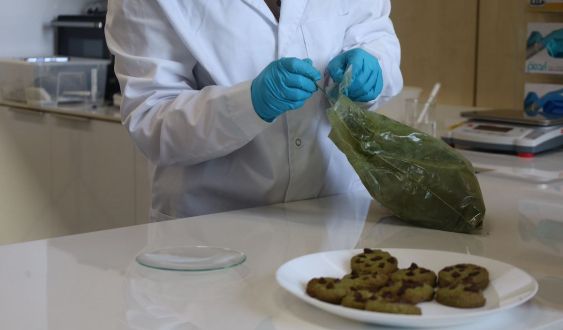
In the kitchen, the freezer overflowing and the pantry full of flours, while the oven timer rings: the cookies are ready. What appears to be a typical kitchen is actually a laboratory that is writing the recipes for the food of the future. The color and ingredients of the cookies are a clue: they are made with microalgae —and chocolate—. They are the same green that highlights several of the flours, which rest alongside others destined to become a common ingredient in the future: flours made from insects.
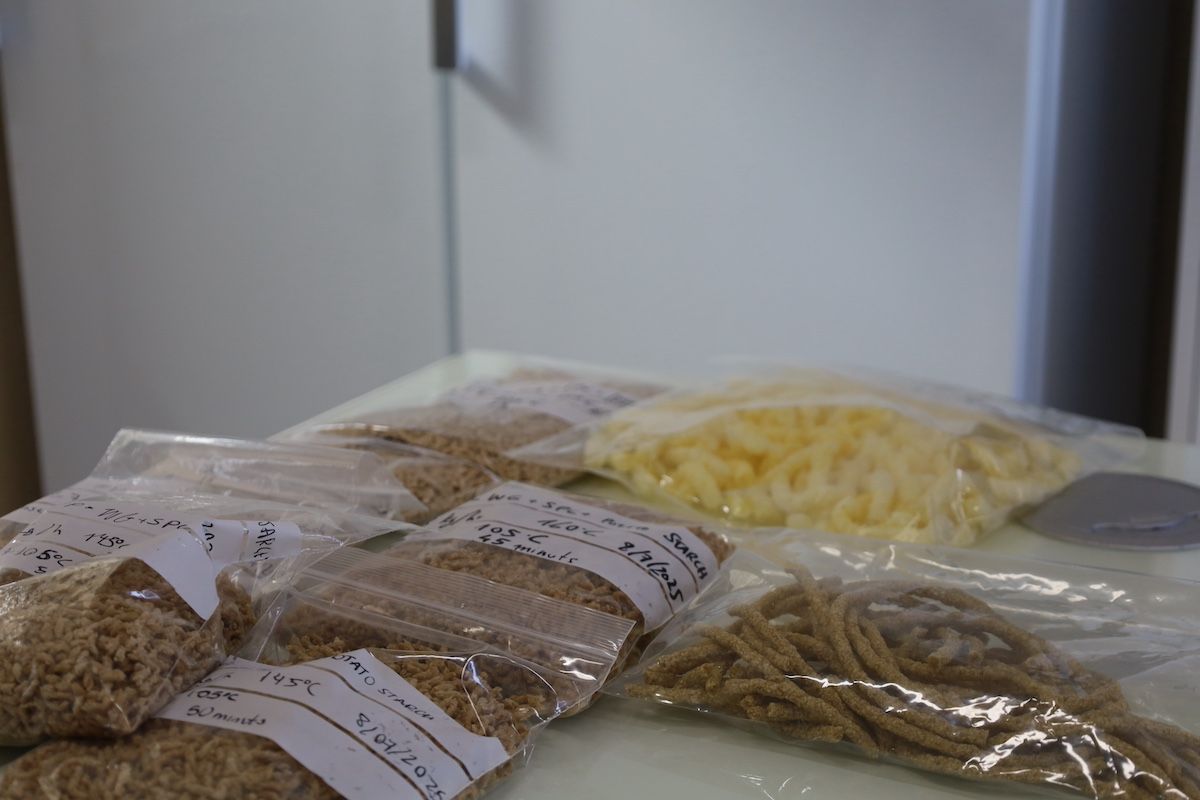
Alongside common appliances such as the freezer, oven, ceramic hob, and microwave, another machine shows that this is not a common kitchen. It is an extruder machine, which transforms food materials into products to introduce into these recipes of the future. What at first glance may seem like a kitchen, is actually a food laboratory, within the Leitat Technological Center, in Vilanova del Camí.
As the center's director, Montse Jorba, explains, they do so based on five pillars: "plant sources, algae, fermentation, and also insects and cultivated meat." With four of these pillars already at full capacity in the center —cultivated meat will arrive soon—, Leitat investigates solutions to challenges faced by companies or administrations: "They come to us because they need to develop a new product or solution," and they use Leitat as their R&D arm.
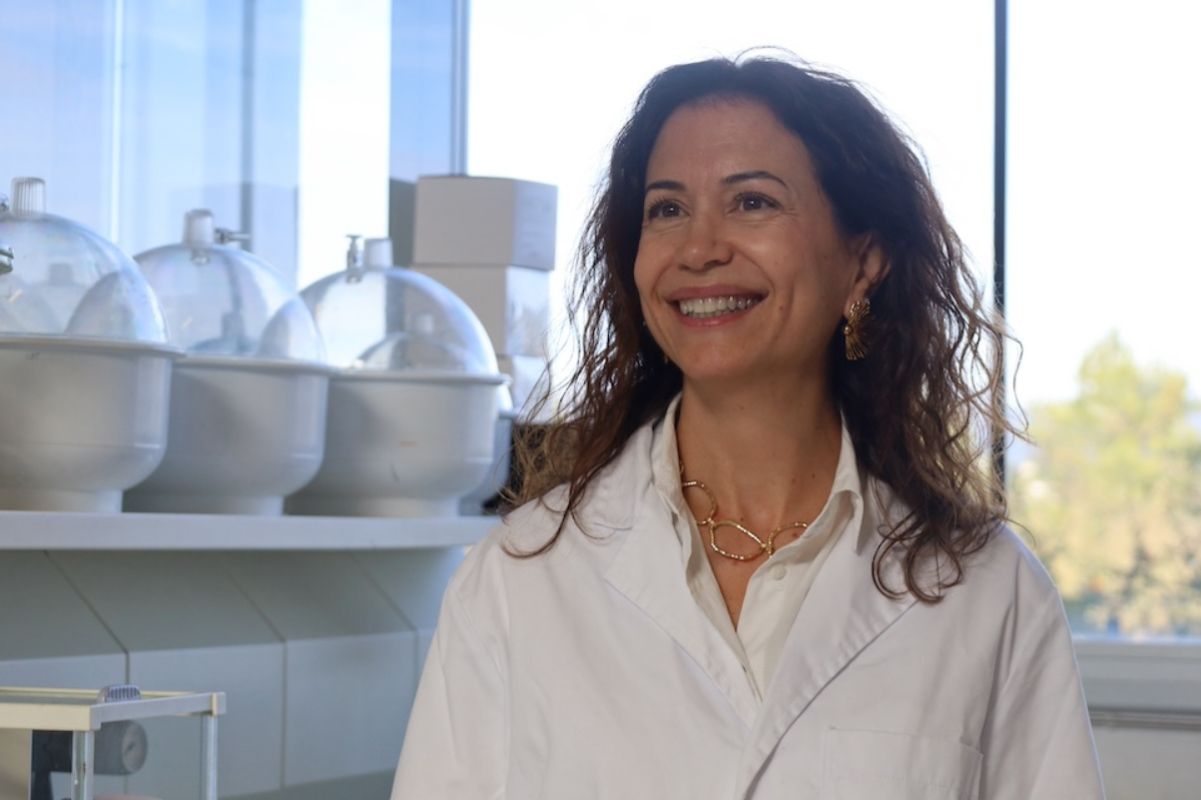
The technological center investigates and develops these solutions with technologies that advance towards more sustainable and innovative foods and, also, personalized, as Jorba explains. "The most suitable foods vary depending on the profile, whether it is senior, child, athlete or even someone with dysphagia." Precisely people with swallowing problems are the focus of one of the projects Leitat is working on, through which it shapes pureed foods to break with the monotony of daily purees, especially in long-stay hospital patients, in order to prevent their malnutrition.
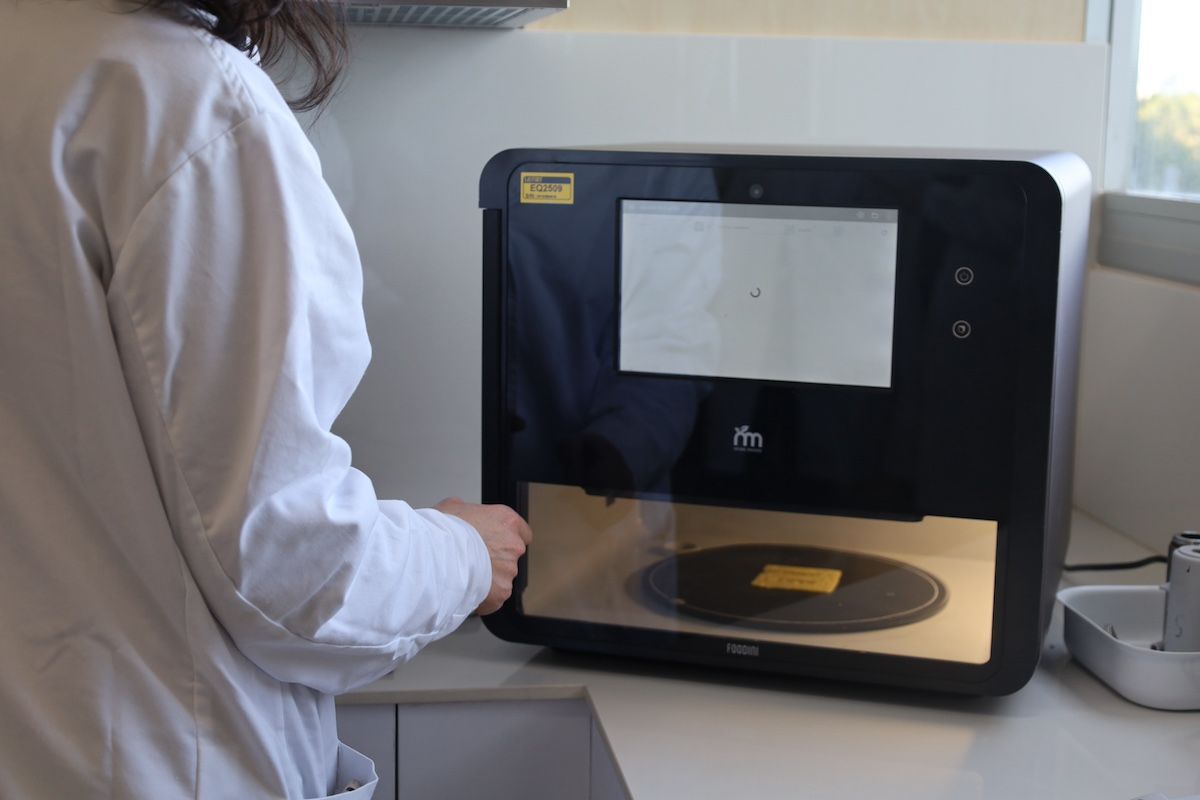
To give shape and texture to these purees, another machine that works on the countertop comes into play: a 3D food printer. "We also make salmon and tuna with 3D printing, taking advantage of small pieces of fish left over from industrial processes," explains principal researcher Irina Chiriac, along with fellow researcher Alicia Subires, both experts in bioresources and agri-food technologies. Thus, with the scraps that were previously discarded, Leitat generates new fish fillets, giving a second life to something that should never be waste. What is technically called "valorization of food by-products," Jorba also calls "upcycling" these products.
"We work for food sustainability," emphasizes the head of the center. Located within the Centre d'Innovació Anoia, the space has a team of 13 people and has been researching for a decade. During these ten years, the center has been boosted by an investment of 500,000 euros and has worked with a hundred companies. This year, it has done so through 25 projects, which add up to an annual turnover of around one million euros in this area of Leitat.
This work is carried out not only in the kitchen-laboratory. Next to it, researchers work in a biorefinery laboratory, where they seek new valuable uses for what until now are considered waste during food industry processes. Like the almond hull, in a project commissioned by a nut cooperative; it undergoes various processes to extract its antioxidant compounds and its pectin, a useful fiber in both the food and cosmetic sectors, and which provides "viscosity," as researcher Igor Chiarelli details in front of a dozen jars with different concentrations.
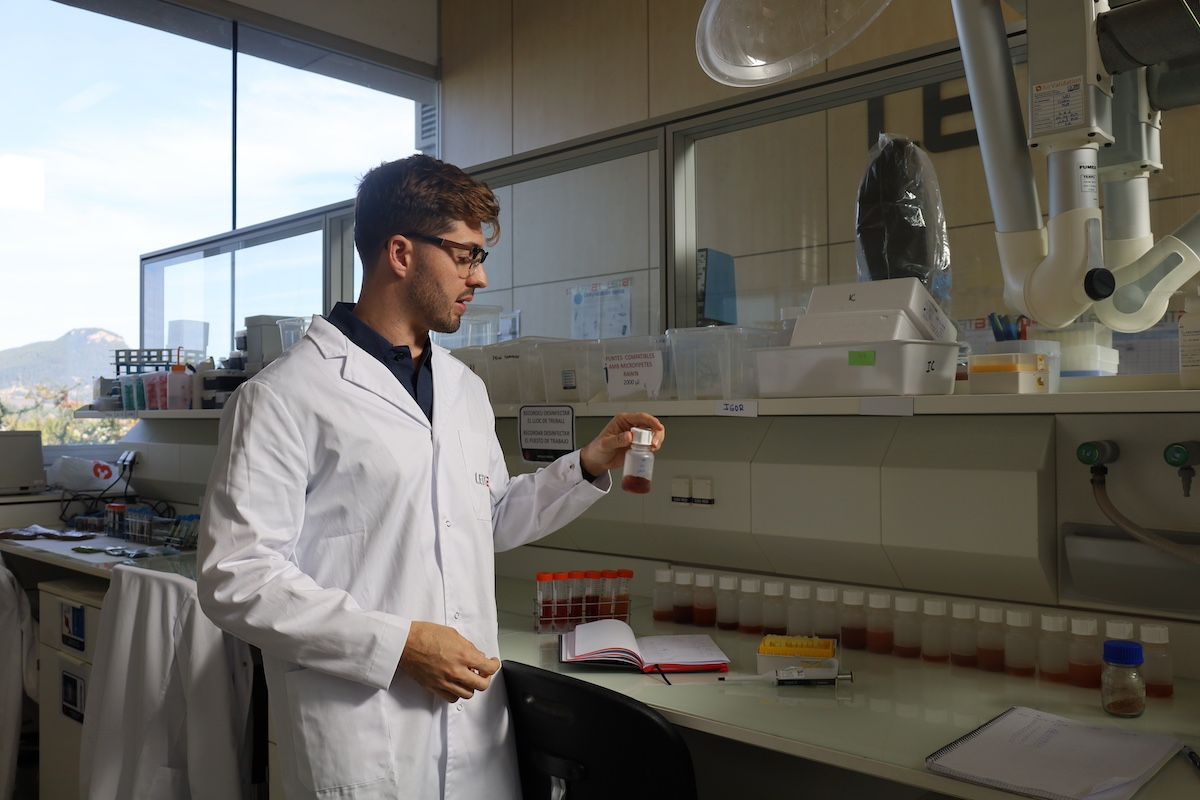
The same is done with a wide variety of leftover products from food processes, such as feathers and slaughterhouse waste: "It's about seeking the maximum added value to what we have," Jorba emphasizes; "it's a way to care for the environment," adds Chiarelli, through initiatives that promote sustainability and circularity.
In these circular and sustainable strategies, another alternative protein source has been gaining weight: insects. In Catalonia, they are already used in certain animal feed, and they are looking for ways to enter the market. With its insectarium, Leitat is taking steps in this direction, based on tests with various species and even with changes in the substrate, which also conditions the flavor of the flour obtained afterwards, as detailed by technician Antònia Flores. They are made from larvae (now with Tenebrio molitor, commonly called mealworm), and always seeking "biorefinery with a zero-waste objective" —so much so that they also develop projects to take advantage of the part of the larva that is not used to obtain the flour—.
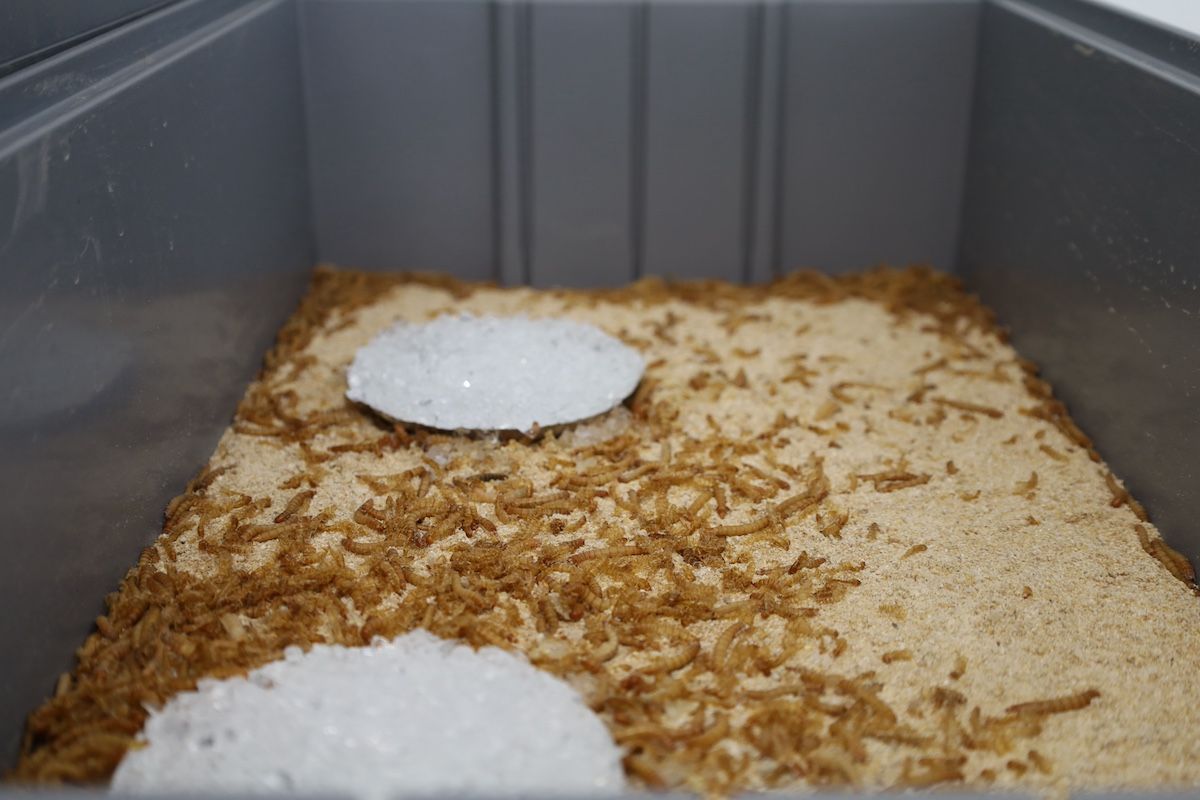
Obtaining this flour is not the only challenge to bring its regular consumption to the market. "Insects must be eaten because it is sustainable and healthy, but it has to be tasty," emphasizes Chiriac. Thus, "organoleptic properties" that may not always be to the consumer's liking must also be studied, something they do through tests and combinations, which take the form of foods such as sausages and hamburgers, with insect concentrations of up to 20% of the product. And they are not the result of an easy process: it took two years of testing to achieve the right flavor and texture for the sausages, within a European project in which several research centers participated. Writing the food of the future requires trial-and-error management, and slow cooking.
Add The New Barcelona Post as your preferred Google source for free
Stay informed with the latest news.
