
Every week I talk to people trying to rent for the first time in Barcelona. And the conversation no longer revolves around the price, but around something much more basic: whether they will find an apartment. That question explains better than any statistic the moment we are living. There is talk of caps, freezes, intervention. But the feeling on the street is different. If the price is controlled, why is it still so difficult to find housing? Perhaps because we are looking at the symptom and not the root of the problem.
The problem does not begin with the figure that appears in the contract. It begins earlier, when you enter a real estate portal and there are hardly any options, when you call and there are already more than 10 visits closed, when you compete for something that is simply scarce. Barcelona is not just experiencing price tension, it is experiencing supply tension… and that completely changes the approach.
The city presents obvious physical limits. It cannot grow towards the sea or towards the mountains, and it is not growing in height either. Meanwhile, demand is still there, because there are people who want to stay, who want to come, who want to start a life project. If more is not built and what already exists is not activated, the result is only less available housing.
In addition, there is a less visible effect. When the framework becomes uncertain or too rigid, part of the supply retracts. There are owners who prefer not to rent. Reforms that are postponed. Operations that stop closing because the balance between risk and profitability no longer compensates. Demand does not disappear, but supply can.
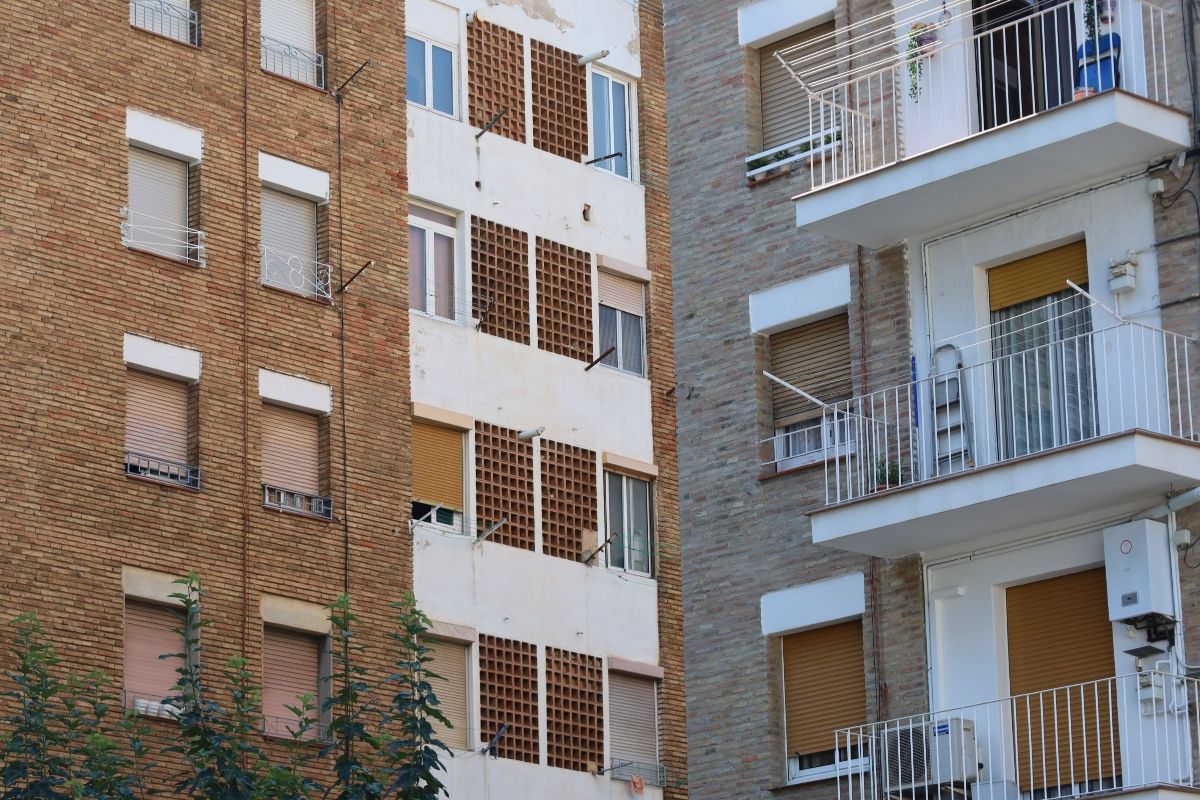
Barcelona also has an aging housing stock. Many buildings are over 40 or 50 years old and need deep reforms to adapt to current demands. But rehabilitation is not immediate: it requires capital, management, and assuming administrative times that are rarely agile. When these homes are not updated, they do not return to the market. And the pressure is concentrated on the few that are available.
Here the debate is often oversimplified. Not every movement in the market is speculation. There is also an activity aimed at recovering closed housing, renovating it, and putting it back into circulation. And in a compact city like Barcelona, that is one of the few real ways to increase supply without expanding.
The challenge is that activating this park requires resources and structure. Many owners cannot afford a comprehensive rehabilitation alone, and many savers do not want to concentrate all their assets in a single property or assume direct management of a construction project. In recent years, formulas like ours have emerged that try to connect both needs: capital seeking profitability and housing that needs to be activated. They do not solve the structural problem by themselves, but they do contribute to generating effective supply, which today is the real bottleneck.
If we do not manage to increase the real supply, Barcelona runs the risk of becoming increasingly less accessible for those starting out and more difficult for the middle class. Freezing prices can convey a sense of control. But if the idle housing stock is not recovered, the pressure will continue to shift. Because price is only the consequence of the problem. And as long as supply remains insufficient, any limit will only change where the tension appears.
Add The New Barcelona Post as your preferred Google source for free
Stay informed with the latest news.