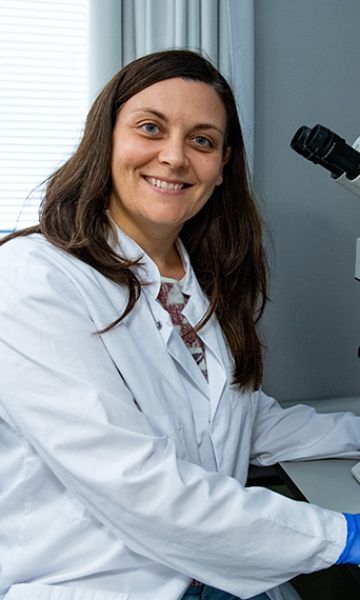
With age, two proteins that help maintain skin balance change function and begin to activate genes related to inflammation. This is the main discovery of a study by IRB Barcelona published in Nature Aging, led by Guiomar Solanas and Salvador Aznar Benitah. The work reveals that BMAL1, known for its role in the circadian clock, and YAP, which allows cells to adapt to physical changes in the environment, concentrate with aging in regions of DNA that regulate inflammatory genes. The mechanism helps explain how aging and persistent skin inflammation are connected.
Born in Barcelona in 1980, Solanas received her PhD in 2008 from the Autonomous University of Barcelona and has developed much of her research career at IRB Barcelona, where she especially studied the relationship between the circadian clock, stem cells, and aging. In 2017, she participated in two works published in Cell that showed how stem cells modify their rhythmic functions with age. She also led the work that in 2023 identified the IL-17 protein as a key factor in skin aging. She is currently a researcher at the Institut de Recerca Sant Joan de Déu, linked to the Pediatric Cancer Center Barcelona.
Add The New Barcelona Post as your preferred Google source for free
Stay informed with the latest news.