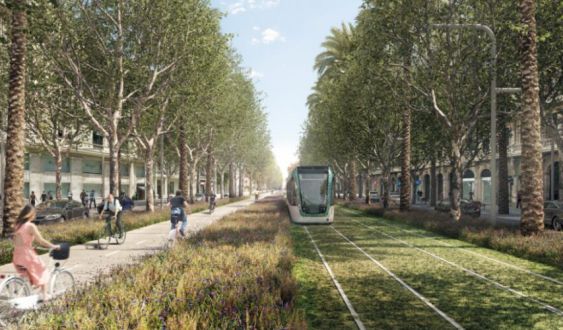
Diagonal is preparing to take a long-awaited step. The Barcelona City Council has given definitive green light to the projects that must complete the tram connection between Verdaguer and Francesc Macià, a key piece to transform metropolitan mobility and reconfigure one of the city's major urban axes. With political endorsement already secured, the project now enters a decisive phase, marked not so much by urban planning as by the capacity for institutional and budgetary agreement.
The connection between Trambaix and Trambesòs is not just an infrastructure project, but one of Barcelona's major commitments to redefine its mobility. The municipal objective is to shift up to 250,000 daily trips currently made by private vehicle to public transport, in line with the Urban Mobility Plan.
The data points in this direction. Since the tram arrived at Verdaguer, demand for Trambesòs has grown by 35%, in a context where public transport in the city is under pressure due to the increase in users. Diagonal is thus projected as a metropolitan axis capable of articulating mobility flows with less dependence on cars.
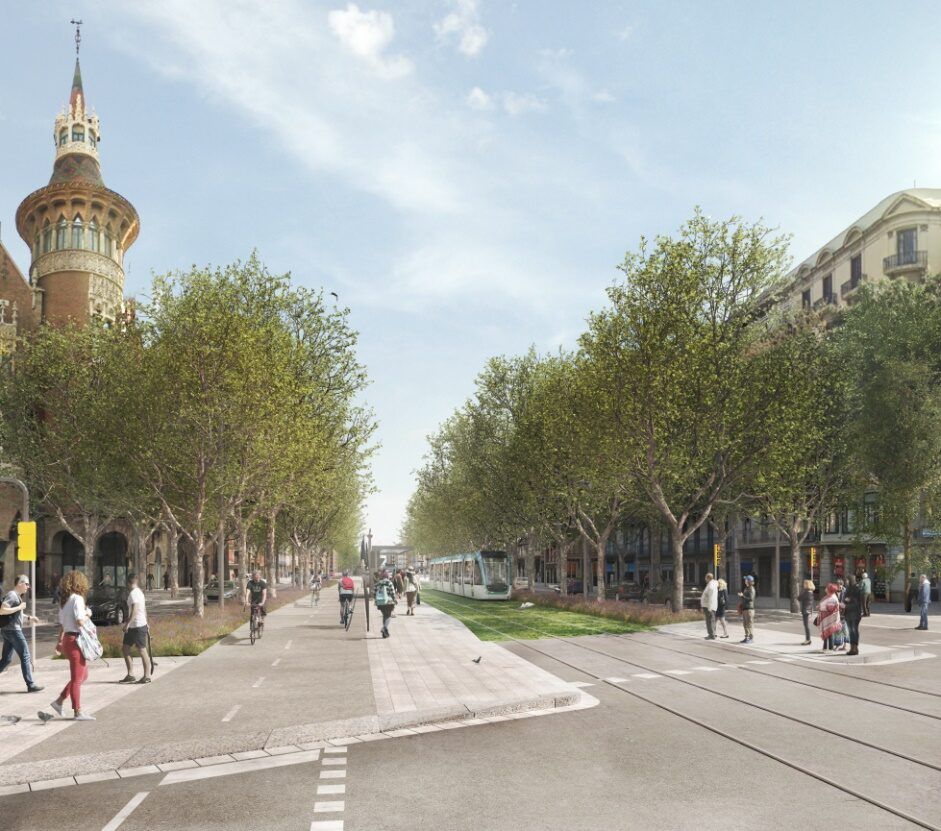
Beyond mobility, the project also consolidates the urban transformation of the avenue. The intervention, which covers 2.8 kilometers, plans to expand pedestrian space by 16,000 square meters, incorporate nearly 19,000 square meters of green space, and reinforce cycling infrastructure with a high-capacity bidirectional bike lane.
The model is based on a Diagonal with wider sidewalks, motorized traffic on the sides, and a central trunk reserved for public transport and active mobility.
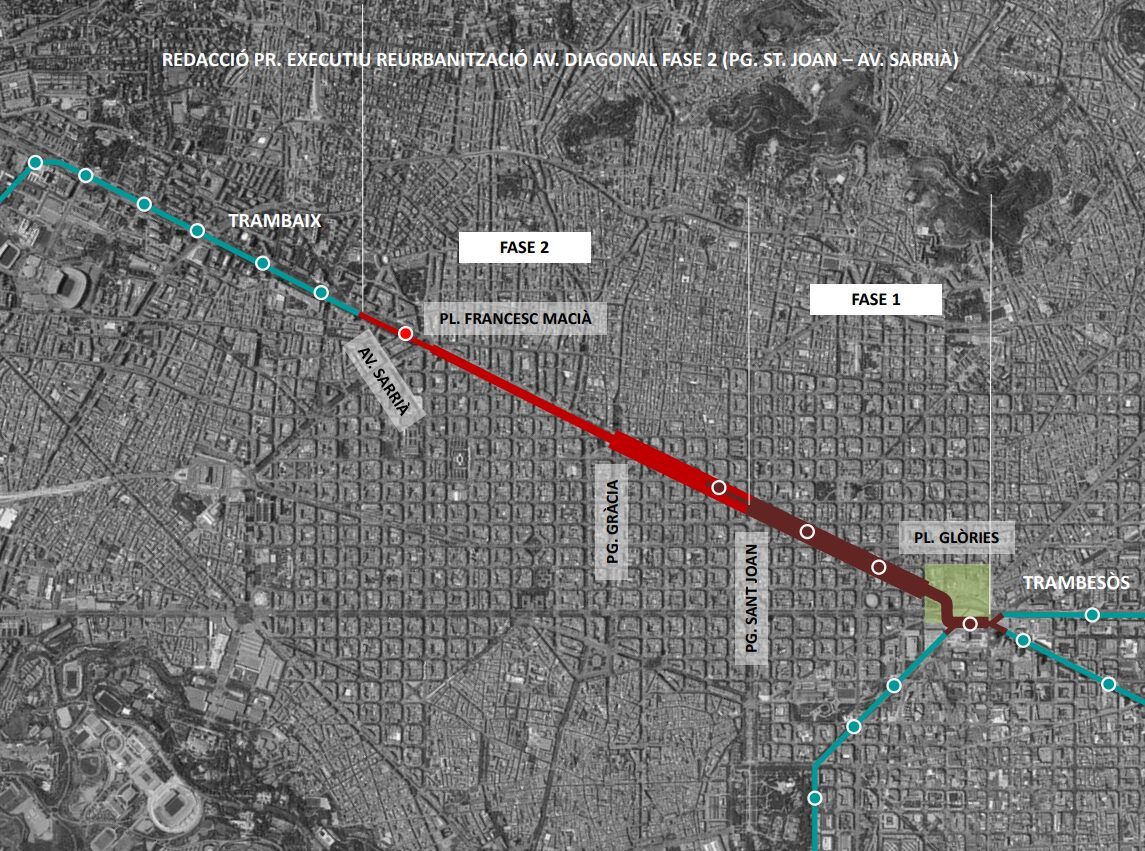
In parallel, the reform incorporates a key but less visible infrastructure: the duplication of the water collector between Girona street and Francesc Macià. This action will improve drainage capacity and reduce the risk of flooding, in a context marked by the climate emergency and the need to adapt the city to extreme weather events.
Budgetary availability, both in the City Council and in the Generalitat, will be decisive to move from paper to construction
The deployment of the project will involve a joint investment of more than 190 million euros. The City Council will assume 62 million for the collector and 53 million for the redevelopment, while the Generalitat will contribute 80 million for the tram infrastructure. The works, which will be tendered in a single package, have an estimated execution period of 40 months.
The next step will be the definitive approval of the project by the Metropolitan Transport Authority (ATM) and the signing of the financing agreement between administrations. It is at this point that the project's timeline is at stake: budgetary availability, both in the City Council and in the Generalitat, will be decisive for moving from paper to construction.
The tram connection along Diagonal thus returns to the center of the debate on the future of Barcelona: not only as a transport infrastructure, but as a structural decision on what city model is to be built in the coming decades.
Add The New Barcelona Post as your preferred Google source for free
Stay informed with the latest news.
