
Some red lines can mislead a driver who has not been before in the parking lot of Plaza de la Revolució, in Gràcia. They do not correspond to any car space and cross with the existing ones, even stepping on the traffic signs that indicate the direction of circulation. Until one comes across the name Refugio 267 written on the ground, one might think it is some kind of mistake, quite an exaggerated one, in the design calculation of the parking lot. It may be that the word refugio does not give the key to many about what happens on that floor, in a country where memory is still one of its main pending subjects. Luckily, there are some informational panels that give more clues about those red lines that trace what was once a place to take shelter from bombs during the Civil War.
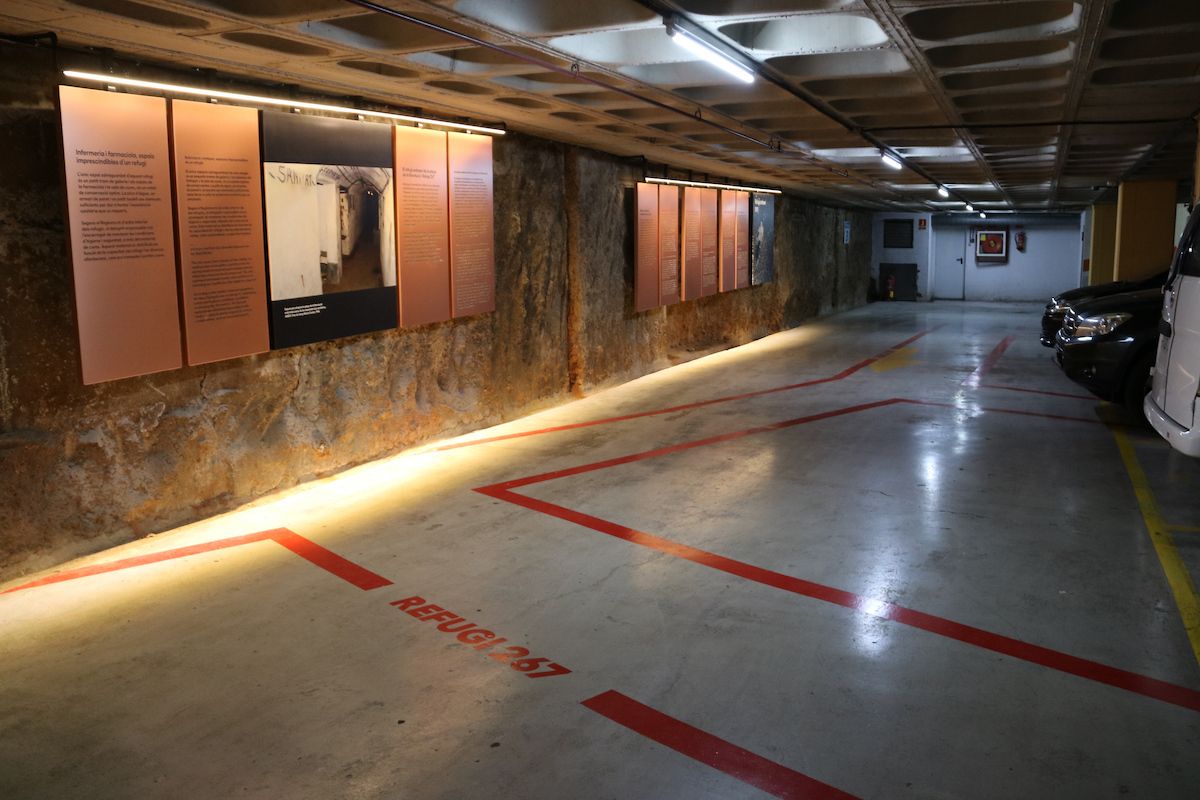
The air-raid shelter of Plaza de la Revolució was found almost 30 years ago. It was 1994 and construction of an underground parking lot had begun. It was then that the corridors and rooms that had sheltered the neighbors of the area emerged, many of whom still remembered its existence. Visits agreed with the construction company, although some were also clandestine, allowed people to walk again through the corridors of that space that had been closed by the dictatorship in 1939.
At that time, the magnitude of the construction could be seen, as Josep Maria Contel recalls, one of the neighbors, as well as a member of the Taller d'Història de Gràcia. The shelter of Plaza de la Revolució had 163 meters of gallery at 12 meters depth and had capacity for up to 400 people. It was designed with three entrances and various spaces in which to wait for the bombs to stop but also in which to treat the wounded. It was considered one of the most advanced of the time, with infirmary and first-aid kit included, as well as electrical installation, running water, and ventilation shafts. There were also toilets for men and women.
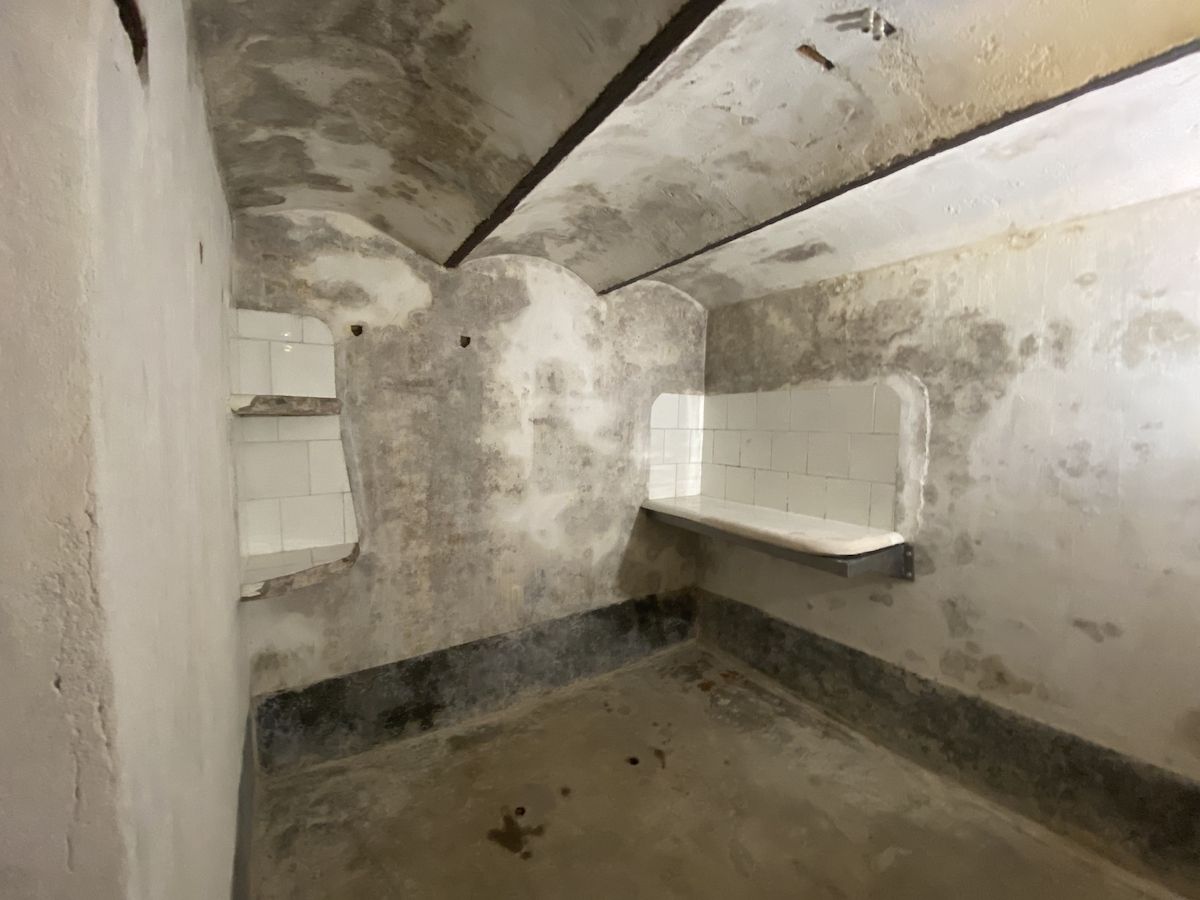
It was considered one of the most advanced shelters of the time, with infirmary and first-aid kit included, as well as electrical installation, running water, and ventilation shaftsThe entity of which Contel is a part was the one that battled to save a part of the shelter from the parking works and managed to preserve a minimal part, less than 5% of what it was, which now coexists with cars and motorcycles parked on the fourth floor. A piece of the seven corridors that existed has been preserved, as well as two rooms, intended for the infirmary and the first-aid kit. The first one still has part of a corner cabinet, a ledge, and a washbasin. On the floor of this room, four holes stand out that were used to fit stretchers. In the adjoining room, the one that served as a pharmacy, a built-in bench, a built-in wardrobe, and the electrical panel are still preserved.
After the restoration of the remains of this air-raid shelter has been delayed, even more so with the pandemic, Gràcia will recover it this August, coinciding with its festivities. Starting Saturday, August 12, the Taller d'Història de Gràcia will organize half-hour visits for small groups, at a price of 3 euros. Once the neighborhood's main festival is over, more visits are expected to be scheduled, but this still needs to be finalized.
The cost of the conservation work has been almost 31,000 euros. The intention was to intervene as little as possible, reversing additions that have been made since it was found in 1994, such as a coating of the walls with lime, details Montserrat Pugès, from the Archaeology Service of the Barcelona City Council. "The space speaks for itself," emphasizes Pugès. Of course, what has not helped is that, during all these years, the space has been practically forgotten and people have been able to do whatever they wanted with it, from using it as a warehouse during construction work to accessing it without problems from the parking lot, criticizes Contel, who also adds that the neighbors who visited it clandestinely when it was discovered in 1994 took what little was left. Everything that disappeared would now serve for historical recreation.
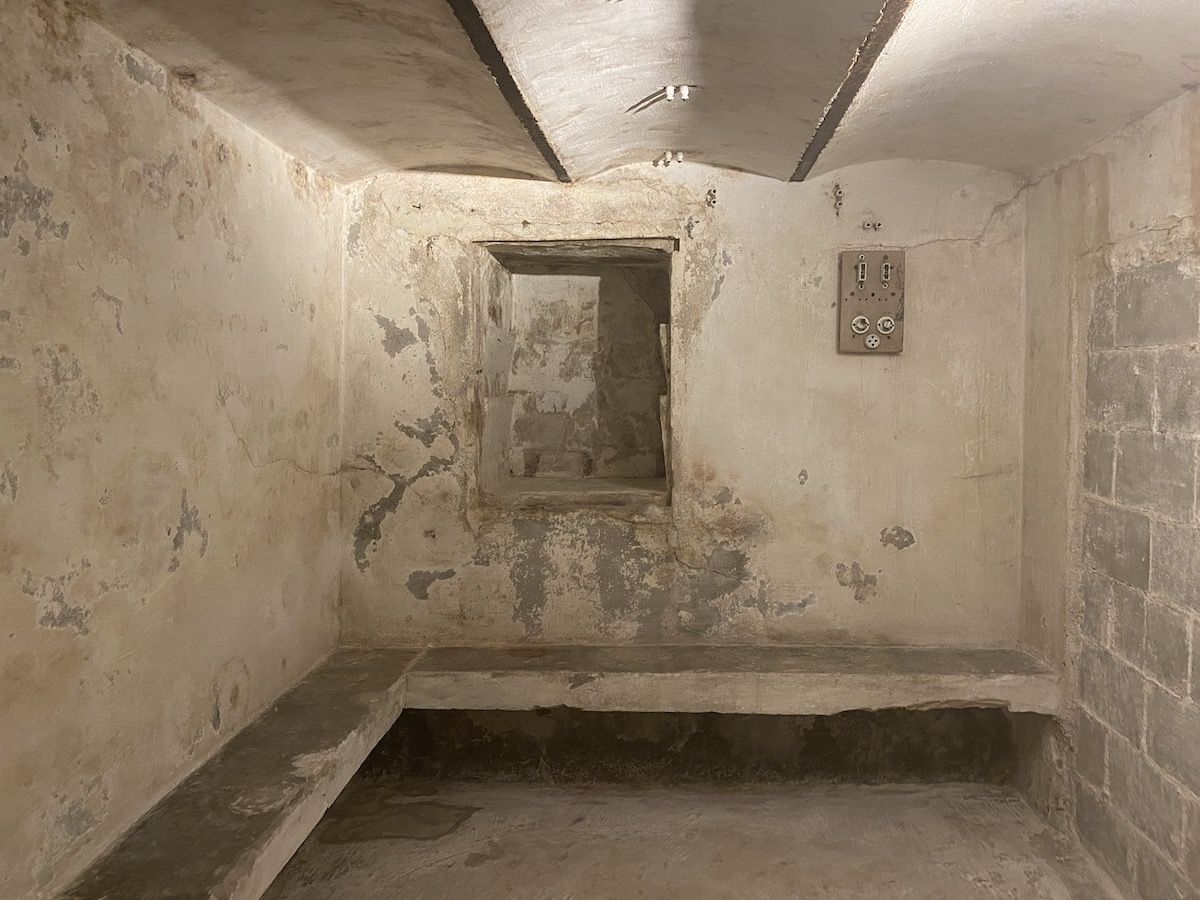
The city council, being aware that new air-raid shelters are increasingly appearing throughout the city, has decided to focus this one on health and hygiene, taking into account the good condition in which the pharmacy and the infirmary have been preserved, despite thefts and abandonment. Like other fields, healthcare advanced by leaps and bounds during the Civil War, having to deal with serious and continuous wounds and infections, with milestones such as Dr. Trueta's wound cleaning method ---with water and soap--- or blood transfusions, a topic widely covered at the Batea (Tarragona) interpretation center dedicated to healthcare during the Battle of the Ebro.
The aim of this thematization of Barcelona's air-raid shelters is to weave an urban map in which the different stops each speak about a specific topic. In this way, visitors will be encouraged to visit more than one to deepen their knowledge about these spaces that Barcelonians began to excavate at the beginning of 1937 to protect themselves from the bombings of Francoist troops. In fact, Barcelona has documented a total of 1,300 shelters built during the Civil War, especially concentrated in Eixample, Ciutat Vella, and Sants-Montjuïc. Recently, the former Modelo prison has hosted an extensive exhibition on this issue. For those wondering if there are more shelters like the one in Plaza de la Revolució fitted into parking lots, Martel, who began to deeply investigate this part of the city's history when he came across the one in Gràcia, points out that there is a similar one on Avenida Josep Tarradellas, although it is not musealized.
Add The New Barcelona Post as your preferred Google source for free
Stay informed with the latest news.
