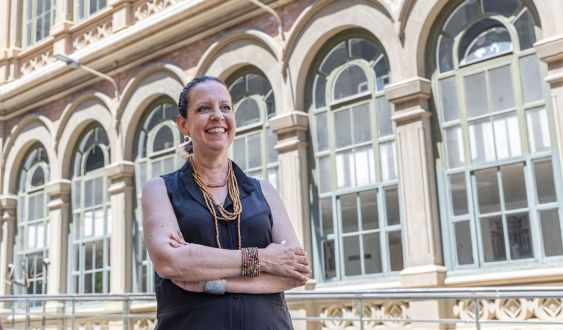
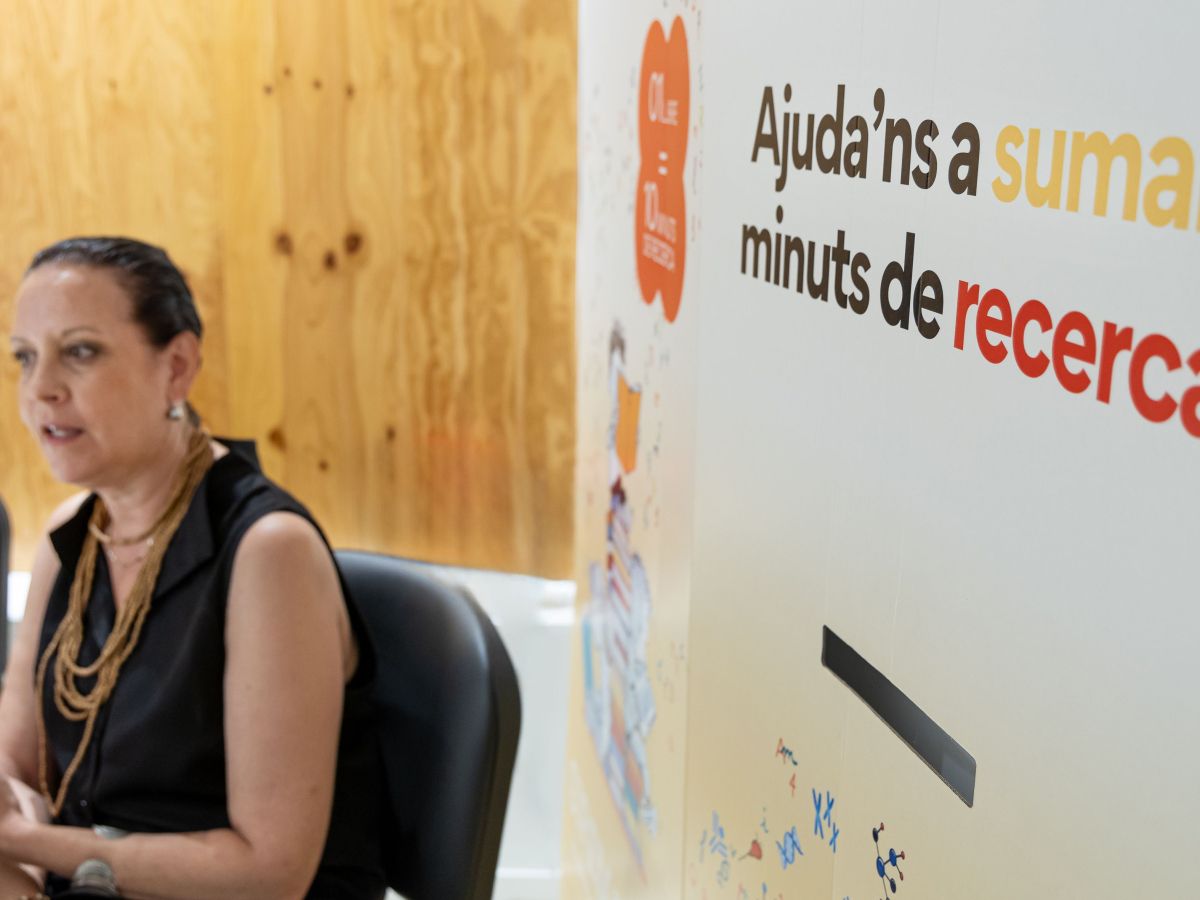
Núria Vilamajó, head of the Clínic's Patronage Area, receives us in her office, opposite the hospital. A pile of papers is spread across the desk: book reviews from participants in the latest Girem Full (Turn the Page) reading marathon — a project recognised with The New Barcelona Post's Culture Award, as part of the Fundació Catalunya Cultura's Impulsa Cultura programme. But they are not just papers: each one has translated into a donation of 20 euros, funding ten minutes of cancer research.
Together, since the project began in 2024, they add up to nearly 15,400 reviews, translating into 2,000 hours of cancer research. Over three editions, the project has become a mechanism involving the Clínic, researchers, bookshops, schools, companies and readers. Yet this whole network began, quite simply, with a patient and a breakfast.
— Girem Full was born from a great hope of bringing together different worlds: the world of books and the world of health and research. I always explain that the project began over breakfast, over coffee, with a patient, a doctor and myself. We wanted to do something together, but we didn't know what, because on the surface these seemed like very distant worlds.
— The patient was Olga Federico, from the bookshop La Impossible.
— She had come through the Clínic as a cancer patient. She said she felt the need and the will to do something to give back to society what it had given her, which, in the end, was her life. Had she received the diagnosis two, three, ten or twenty years earlier, she might not be here today. That made her aware of how important it is to drive research forward and give back to society what it gives us. What I do today, what I contribute, will allow others to have the same experience I did. It's a chance at life.
— And she wanted to help create more opportunities in the future.
— Exactly. The project, though, began in a very different format. We knew that we wanted to bring together research, care and books, and we started out with merchandising in bookshops — bags, bookmarks. etc. A lot of bookshops got involved, but it never quite took off.
"What I do today, what I contribute, will allow others to have the same experience I did. It's a chance at life"
— And then the pandemic arrived.
— Covid brought the project to a halt, and that turned out to be positive. That pause gave us time to think hard and reflect on which model we should follow, and it wasn't the merchandising one. In that interval, we realised what we needed to do was activate the community, knock on donors' doors and involve children. We're talking about research for the future, and the future is today's children. We wanted to go beyond merchandising and help transform society, to ask society to be more caring.
— Through reading.
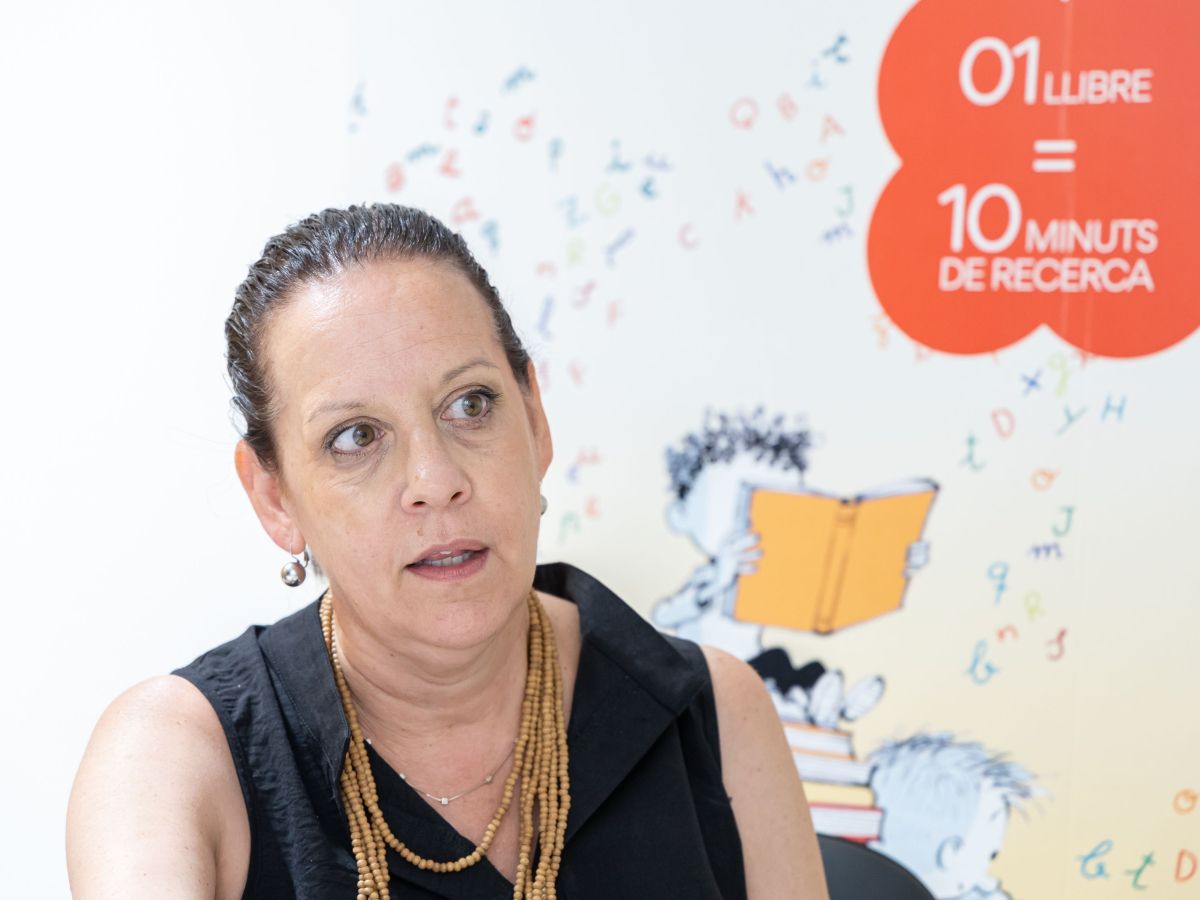
— It works very simply: participants read a book and write a review. For each review, the reading sponsors make a contribution, which translates into research time. This donation from the reading sponsors is 20 euros per review, equivalent to ten minutes of research.
— So, one book means ten more minutes of cancer research.
— So far, more than 40,000 reviews have become more than 6,000 hours of cancer research.
— And how does one take part?
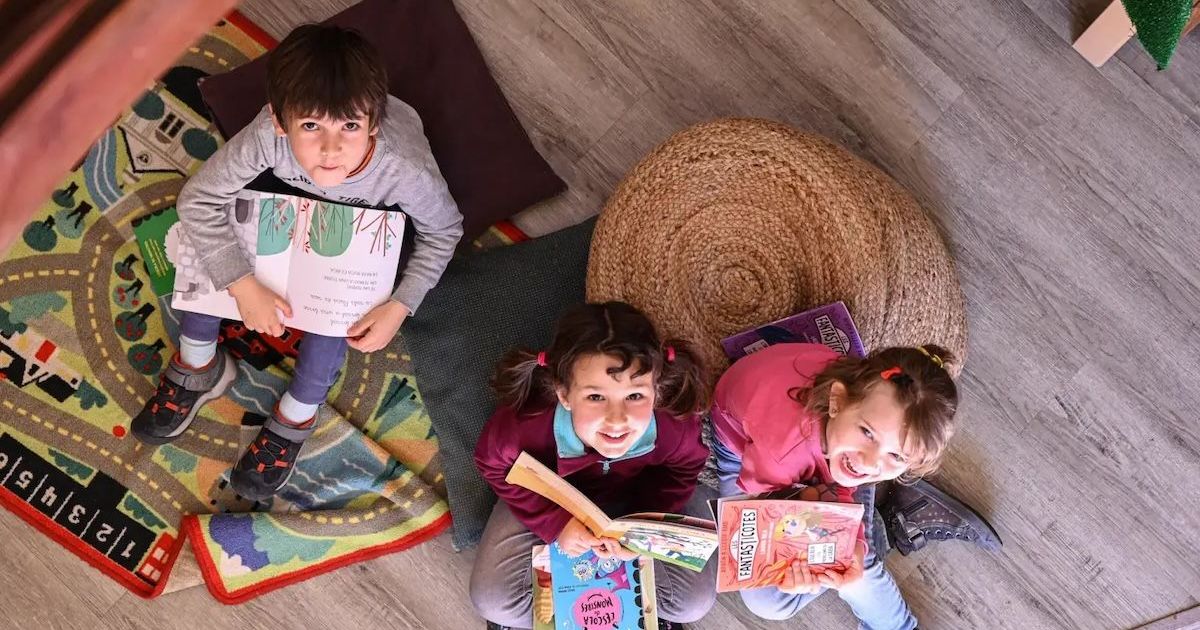
— Fundraising runs all year, but the reading marathon is concentrated into one month: it runs from 21 March, World Poetry Day, until Sant Jordi. During this period, bookshops provide information and collect the book reviews. There's no need to buy the books, or for them to be new — any book will do — and reviews can also be submitted online. It's simply about reading and taking part. We're now also opening it up to companies, and schools have been central to it from the start.
— With children as the vehicle for change.
— Exactly. Girem Full is a project that builds community, but rather than us encouraging people to take part, it's the children who do it. We want them to be the ones who encourage participation when they get home from school. We want them to be the driving force behind a transformative project.
— The children as the driving force, and reading as the vehicle?
— We found in books a very natural way to do this. We encourage reading and help develop reading skills. We're seeing reports warning about low levels of reading proficiency, so let's give people one more reason to read.
— And reading translates into research time.
— Yes, and that also helps children grasp the concept of time, which has become rather blurred by the instant gratification we've grown used to.
"In the first year, we raised €120,000; in the second, €353,000, with more than 19,000 reviews. For the next edition, we’re aiming to raise €600,000"
— And this research time goes to the Clínic.
— Yes, but we don't do it alone. Girem Full is also a collaborative project internally. We reached out to the Fundació Collserola, which represents the educational side of the project, and to the Gremi de Llibreters de Catalunya, the Catalan booksellers' guild. At this point, more than 50 bookshops and 40 schools are involved. With all three pillars in place, the project is complete.
— How do you strike the balance between reviews received and donations?
— We do a lot of work reaching out to donors from the Patronage Area, and they become enthusiastic about the project when they see that they're contributing not only to research, but also to encouraging reading and solidarity. Increasingly, too, we're receiving lots of small contributions — €20, €40 or €60. Often these are people who go to bookshops, write their reviews, and effectively fund their own reading. That's what we want to build on. It's important to have donors who give the project stability and make it sustainable, and also to create this caring community.

— Also through companies?
— This year we trialled it with companies, and we've seen the project has value for them. A company can encourage its employees to read and, for each book read, make a contribution, even involving their families, and frame it as a challenge, because that's what gets people excited.
— And the network keeps growing.
— Yes, with bookshops as a nerve centre. We want to build a large community that mobilises through reading, one that gets across the message that research needs not only money, but also time.
— And it's already more than 6,000 hours, with €240,000 raised. Do you set a target figure for the next edition?
— In the first year, we raised €120,000; in the second, €353,000 with more than 19,000 reviews. For the next edition, we’re aiming to raise €600,000.
— That's practically double this year's figure.
— We'll knock on every door. Donors, schools, companies... We'll mobilise the community, so that everyone can join in. Girem Full is a living project, and we're constantly running pilot trials to see what works and what we might do differently. That's what allows the project to grow gradually, cautiously, weighing up every step.
— An example of a pilot trial?
— Besides the companies, this year we introduced the figure of the young ambassadors — a group of schoolchildren we bring together to explain the project to them, and what research is, what cancer is, what cells or immunotherapy are. It worked very well: they went on to explain it class by class, even to head teachers. This year, we want to extend this experience to all participating schools.
— And continuing to expand this mechanism.
— And building on an element we want to strengthen, which is bringing research closer to classrooms, and creating a dialogue between Clínic professionals and schools. We want research to feel close to participants.
"Reading is an individual act: you pick up your book, and you read. But what we're doing is turning an individual act into a networked gesture. We make my book add up with yours, and with yours, and with theirs. And that's how we create a caring network"
— Both from children and adults.
— Exactly. In fact, most of the online reviews come from adults. Most express gratitude, towards the donors and towards the project, because it allows people to be caring without needing to make a financial donation. [She picks one up: "Thanks to Girem Full I can be caring, and I hadn't been able to before." She picks up another, and another, and most say much the same thing.]
— An illustration of how this network takes shape.
— Reading is an individual act: you pick up your book, and you read. But what we're doing is turning an individual act into a networked gesture. We make my book add up with yours, and with yours, and with theirs. And that's how we create a network — a reading, caring network in which everyone can contribute.
Add The New Barcelona Post as your preferred Google source for free
Stay informed with the latest news.