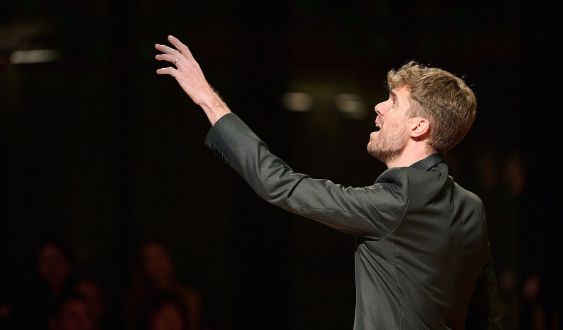
If a musical about Barcelona were to be made, what would be the theme? It wasn't a bad idea, in 2002, to answer Gaudí: an international name, of unanimous recognition, plastic and aesthetic, and therefore capable of transcending the linguistic barriers of art. In fact, the full title of the work is Gaudí: el musical de Barcelona and it is one of Guinovart's main dramatic creations. The work is partly biographical and partly spiritual, combining facts but also a message about life attitude, and it is inevitably a review of the most dynamic, creative, rich, and daring Barcelona in recent history. Gaudí lived, in effect, years of absolute cultural and social renaissance. And he died, in fact, when that renaissance was already beginning to be beaten as punishment. Nothing, as we already know, that is not followed by a renewed Glory.
The score has been recovered, updated, fragments have been cut, and a new overture has been added. It won't have been easy, Albert, because every cut is painful, but the result is balanced and exciting. This version premiered in Manresa, with a very good reception, and will tour throughout the country. This February 25th it was performed at the Palau de la Música, under large letters spelling "Gaudí" (but without an accent) where suggestive images were projected and, below, a screen with the libretto text. Sobriety, orchestra, singers, purely symphonic version. The screen begins by taking us to 1926. The year of the Passion.
"Crostes, llagues, sarna i polls": after an overture in the form of an imaginary video clip about the city (an overture with Gershwinian airs), we are now in "l'hospital dels pobres" and we must anticipate that we will return at the end, as Gaudí will have to be admitted after being run over by a tram. Immediately the screen takes us in flashback to 1869, where we already find a young Gaudí talking to his mother about going to study in Barcelona and about the infinite dreams boiling in the child's head. "He somiat el que ningú mai ha somiat" reminded me of the phrase of the founder of the Palau, Joaquim Cabot, when he told skeptics that he had managed to make "allò que molts no s'havien atrevit ni tan sols a somniar" a reality.
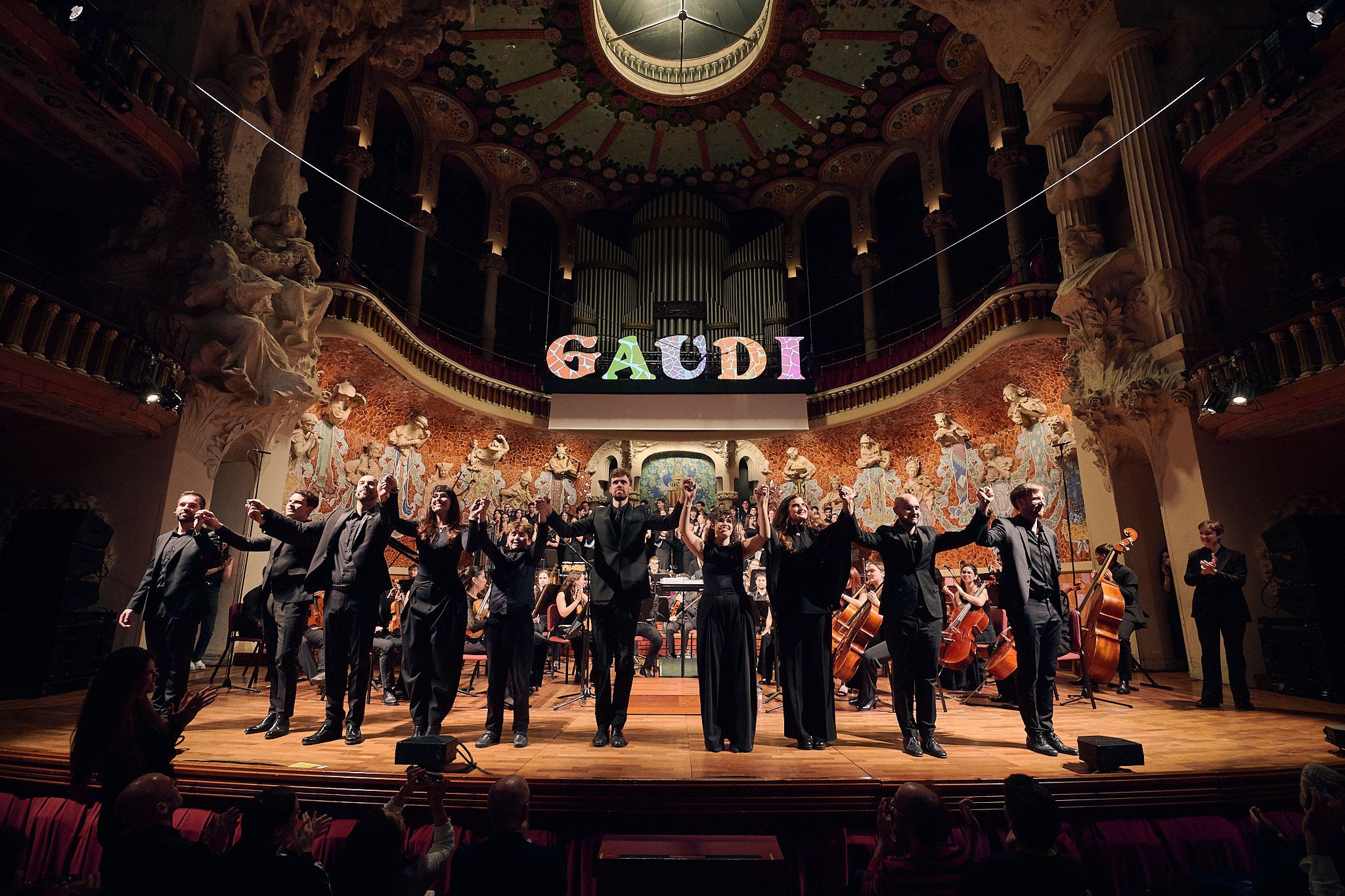
"He decides that the church he will build will be open, like the "casa oberta" he promised to build for his mother""Gaudí has found a dark country" and has made of it "a country of colors", and it is these phrases, these ritornellos or refrains, that remind us so much of Guinovart's overflowing talent demonstrated in "Mar i Cel" as well as his ability to find a spectacular, luminous, Broadway-esque tone. Pieces like the one referring to 1870 play with an original rain of monosyllables related to the city ("grey, green, yellow, blue, sea, people, dust, mud, light, night, smoke, smooth, walls, voices, old, children, dead, cries, eyes, hands, fear, faith"), and from there we move to Gaudí's time in his studies, where, in addition to researching and learning about architectures from all over the world, he is repeatedly failed ("Suspended!") by his teachers for not following the canons. Finally, he manages to obtain his degree (ten years to become an architect "and be part of the sect"), all after a beautiful requiem for the death of his mother ("may the angels accompany you"), a figure who will accompany him throughout his life.
In fact, many female figures appear in this show, and that is far from the biographical image we have of a hermit and solitary Gaudí. I believe that the female role in his life is exaggerated to balance both the genders and the argument of the musical, but the truth is that the appearance of lovers and beloveds (some of whom only love him because they do not wish to "quedar per vestir sants") brings a rather unprecedented depth to the humanity of the master's figure. As the song explicitly says, "cherchez la femme". All this combined with the incomprehension of clients, the absence of project sales, and the sudden appearance of the devotees of Sant Josep asking him to continue the Sagrada Familia project. According to the libretto, Gaudí accepts because he wants money to get married (although he arrives late). Si non è vero...
What is plausible is that these sentimental distractions are banished by Gaudí once he receives countless rejections and realizes that his true love, what he wants to dedicate himself to, is his work. "Mai més", and "gràcies a Déu"! Not only that: he decides that the church he will build will be open, like the "casa oberta" he promised to build for his mother. And so ends the first part, with a piece dedicated to the idea of the Sagrada Familia and which, in the background timpani, shamelessly recalls Ravel's "Bolero".
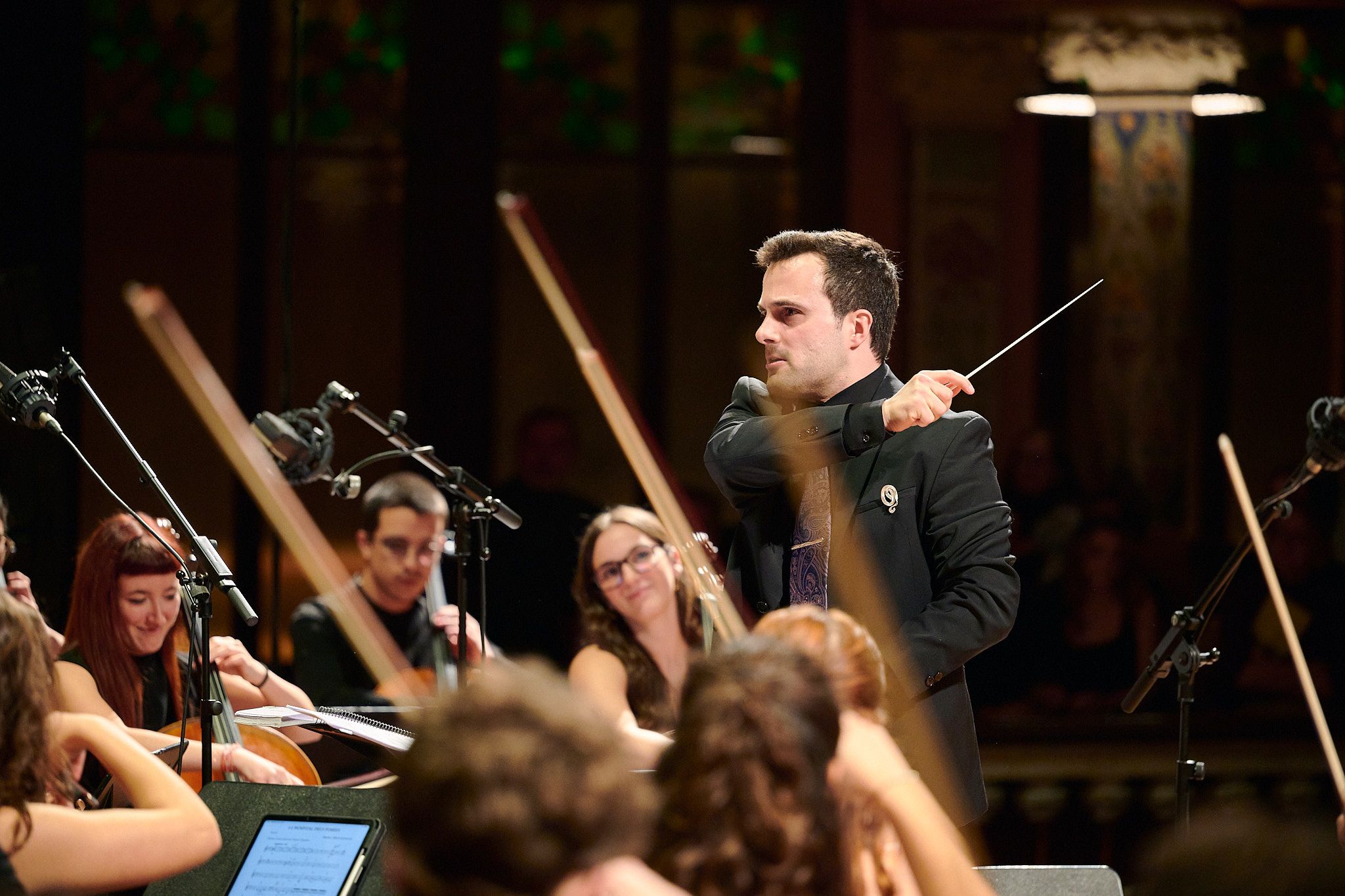
The second part tries to resolve this initial conflict that arises when we face the challenge of explaining Gaudí's story: that there is no conflict. A musical without conflict is a strange, extremely complicated challenge, especially in terms of the libretto (Guinovart's music, I insist, perfectly fulfills its function and the performers, and the choir, are of the highest quality). Therefore, we are left with a very internal conflict, very much a personal monologue, between spiritual and patriotic, and, therefore, with almost insurmountable limitations. In this second part, we see Antoni Gaudí's process of isolation and spiritual radicalization, focusing heavily on the obsession with the Sagrada Familia project and the progressive abandonment of the social world (austerity, poverty, neglected appearance), as well as the tension between the architect, faith, and the bourgeois society that had elevated him.
"A musical without conflict is a strange, extremely complicated challenge"We see, then, the Holy Family transformed into the hidden story about Gaudí: birth, passion (almost crucifixion) and resurrection for greater birth. The culmination, after the tram accident, implies the recognition of a city that had distanced itself from him (Easter cakes, quarries, caricatures and mockery...). The fact is that we end very abruptly (argumentatively too abruptly) and with expansive music ("Gaudí") that leads to a kind of great requiem without darkness and with decided spiritual elevation ("preguem per la seva ànima", "mai no li van donar les gràcies", "el seu llegat és nostre"). Vindication of the dream, of the victory of the dream. But also a martyrdom that ends up almost sinfully mythologizing, that is to say iconographically, the genius. Luckily it is an expiatory temple and even that sin, which we are culminating these days with the audacious completion of the tallest tower in Barcelona, will be forgiven us.
Add The New Barcelona Post as your preferred Google source for free
Stay informed with the latest news.
