
After the biggest crisis in the history of the air transport sector and the lifting of restrictions, there has been a rapid and unexpected recovery in demand that has generated a significant debacle in daily operational management, significantly affecting customer service. In major airlines and important European airports, innumerable sources of conflict have emerged, spreading like small seismic waves throughout the European airport network, generating cancellations, delays, and lost luggage on flights, as well as a clearly improvable passenger service.
The situation is of great concern, with the sources of conflict being both airports and airlines, mainly in the United Kingdom, the Netherlands, and Germany, to which specific conflicts of key groups such as air traffic controllers (strike in the Marseille sector) or firefighters, at Charles de Gaulle Airport in Paris, have been added. Given the important concept of a network that characterizes air transport, it is easy to deduce that these sources of conflict affect the operation of most European airports.
What has happened to reach the current situation? The origin lies in the deep crisis suffered by the sector due to COVID, which paralyzed activity, forcing mainly airlines, but also airports, to establish a survival scenario, minimizing resources, drastically reducing costs, and requesting public aid from the corresponding States.
In Spain, with the situation being very complicated, the airport network seems to have emerged from the crisis in a better position than the rest of European airports, possibly due to the application of ERTEs that limited the departure of many workers to other sectors of activity and a better adaptation to the current scenario. This better behavior has also occurred in Spanish companies, some of them receiving public aid to facilitate their exit from the crisis or even their survival.Once the origin has been defined, we are currently experiencing a significant recovery of connectivity, faster than expected at the European level, with Spain among the top three, only behind Turkey and Greece, which have already recovered 100% of that of 2019.
The impact on the day-to-day of the air sector is diverse, especially serious in the United Kingdom, our main market, but also in the important hubs of Schiphol, in Holland, and Frankfurt, in Germany, with a clear difficulty for its managers to move from a survival scenario to a scenario adapted to the new demand due to lack of foresight, little flexibility, high regulation of the sector, andimportant barriers to recovering human resources in the main airport processessuch as security, immigration, and ground service control (handling) at airports. Airlines find themselves in a similar situation in the management of key groups, such as cabin crew (TCP) and pilots.We are facing a clear difficulty for airport managers to move from a survival scenario to a scenario adapted to the new demand due to lack of foresight, little flexibility, and high regulation.
The sector, as is known, is highly regulated, with many variables and companies involved, which means that hiring new resources requires time, training, and surely greater incentives than the current ones. How to mitigate the serious operational impact on a daily basis and gradually recover normality?
It is only possible by adequately managing the operational capacity of each of the airport processes, especially bottlenecks, and adapting the programming of airlines to the availability of resources, which unfortunately implies a serious deterioration of the image of the company or the airport due to the negative impact on the mandatory service that must be provided to the passenger customer.
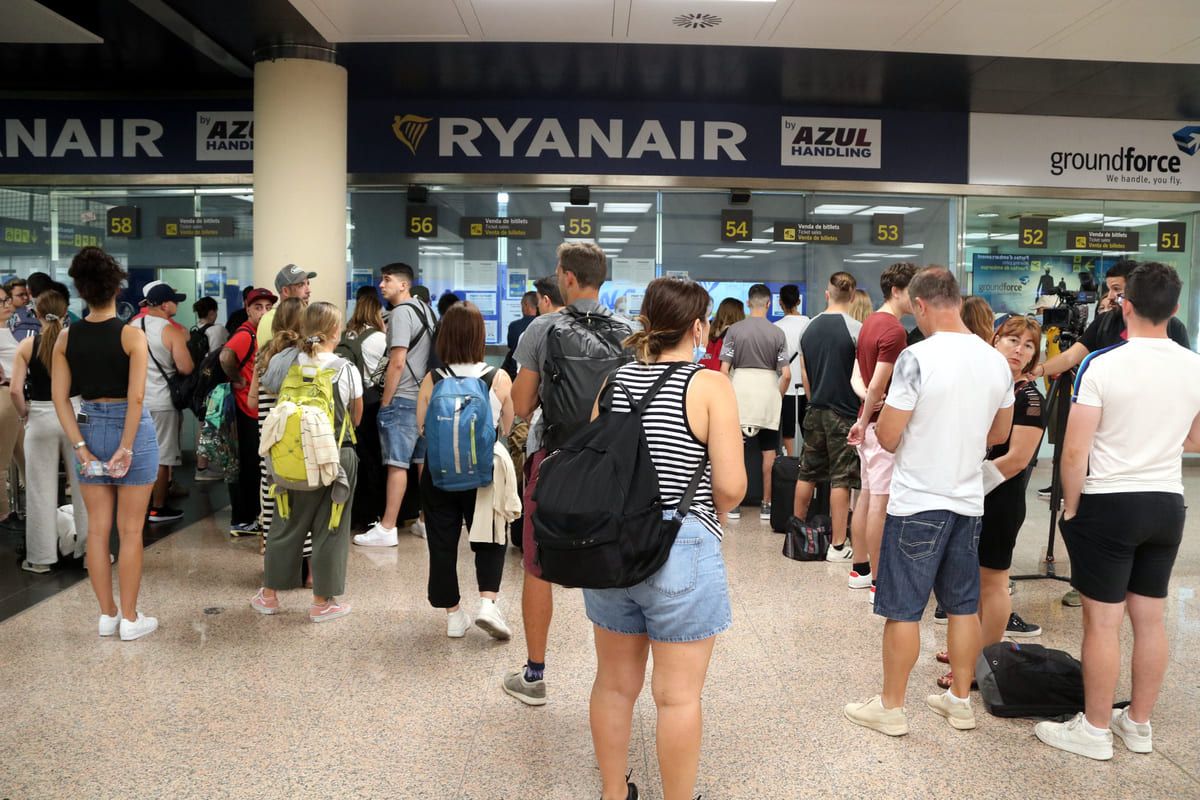
For an operational manager responsible for optimizing airport capacity, limiting it due to lack of staff is absolutely inconceivable
It is important to note that the recovery in demand has activated labor demands, mainly in airlines such as Ryanair and Easyjet, among groups such as cabin crew, in order to recover the significant cuts imposed due to the halt in activity.
It is essential, therefore, to focus on managing three blocks in the best possible way:
- Adjust production and capacity to existing bottlenecks, in coordination with airlines.
- Reduce, to the point of eliminating, existing bottlenecks, which implies greater resources and reinforcement of customer service and information channels.
- Internal management of labor disputes, which, as already announced, will lead to an increase in ticket prices.
Every crisis generates opportunities and we should take advantage of it with a clear commitment from airport managers and airlines to place the passenger at the center of management. Digitalization and the use of new technologies to streamline processes and reduce costs must be accompanied by good service management, allowing preferential treatment for people, both external and internal clients. Only then will the current uncertainty disappear and we will recover the pleasure of flying.
Add The New Barcelona Post as your preferred Google source for free
Stay informed with the latest news.