From biotechnology that acts inside cells to space technology orbiting the planet, passing through architecture that shapes the spaces we inhabit. At all levels, women hold leadership roles that transform their respective sectors and become role models for girls and young women (although they remain a minority).
The role of these role models; the importance of fostering scientific vocations from childhood, and transmitting the impact that can be generated through these professions is key to increasing the number of women leaders in sectors such as those that have gathered at the Barcelona Woman Acceleration Week (BWAW), organized by the Consorci de la Zona Franca de Barcelona (CZFB): from the closest —like biotechnology— to the furthest —the space sector—, passing through architecture.
The diagnosis is clear: many inequalities do not begin in boardrooms or laboratories, but much earlier, in classrooms. From space to the cell, passing through the cities we inhabit, the shared message is that talent knows no gender, but it does need opportunities to develop.
And although talent knows no gender, it is conditioned by context, role models, and education. Sometimes, these determinants weigh in one direction; in others, they can tip the balance to the opposite side, even in less obvious ways. "We have been educated in a different way, and we have developed different capacities. The CEO position is very much like an orchestra conductor, and precisely women are perfect for that, because we have been educated for that," defended Patricia Villagrasa, CEO and co-founder of Reveal Genomics.
"To women who are considering whether they can be CEO: it is the profession for a woman," she claimed. From the round table, at the DFactory, some nuances were added: that orchestra conductor must know how to raise their voice, and know how to think big. "It's not about the difference in leadership by gender, but steps have been taken towards a more humanist leadership, and women are probably bringing that to the table," added the CEO of Gate2Brain, Meritxell Teixió. And even more: "There is no feminine leadership, but there are certain patterns that can lead to more empathy or more active behavior," according to the also CEO of Nema Health, Olga Rué.
Role Models with Tattoos
To highlight these points of view and the possibility of being a leader, one must go back to childhood: "Inequality starts in school," he stressedAvencia Sánchez-Mejías, general director of Integra Therapeutics.Claudia Mateo, i2Cat's Director of Space Innovation, has called for this to be done at an early age: "We must address girls before the age of 12 to awaken scientific vocations; later it's too late."To attract them, daily life is key, and role models too. And if they connect with younger girls, even better: "We need to bring human role models closer, girls who are changing the world by doing technology. With orange hair and tattoos," illustrated the General Director and CEO of Airbus Geotech, Roser Roca.
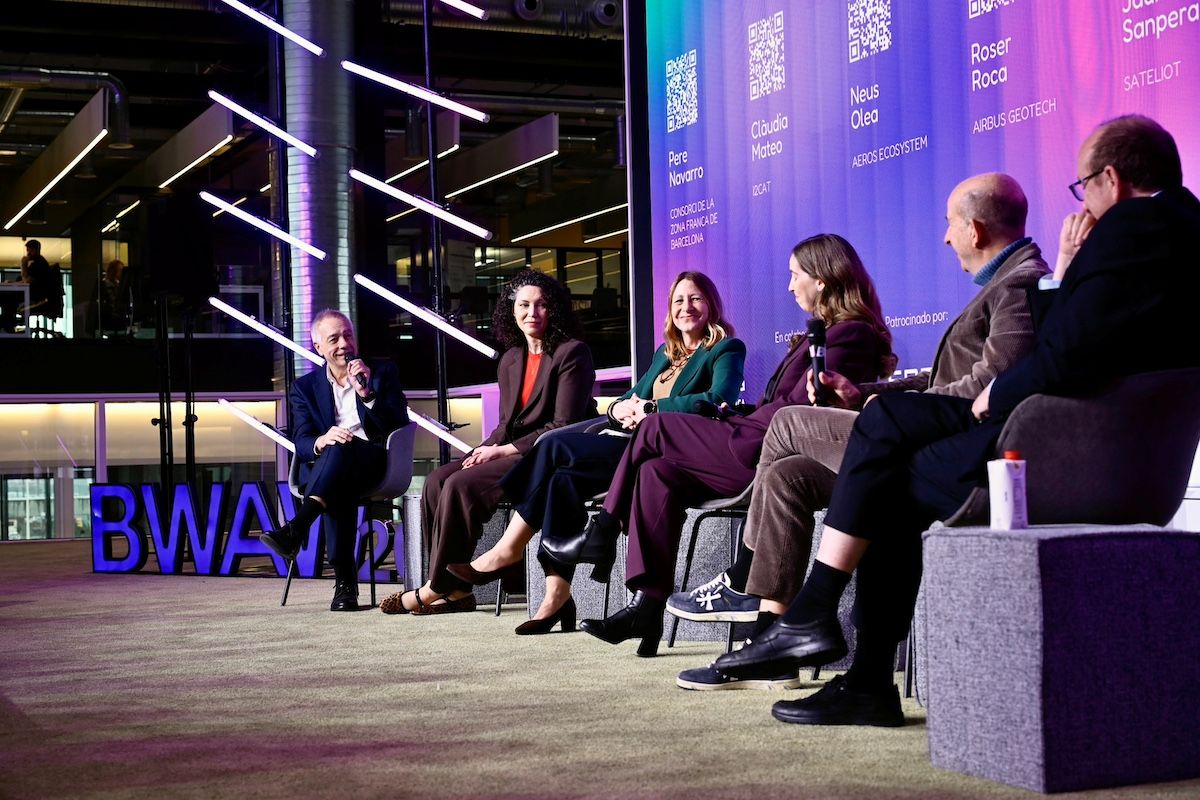
That "changing the world" is fundamental to attracting more professionals and winning them over. "From our sector, we generate real impact," Mateo emphasized. And, as she highlighted, "everyone interacts with dozens of satellites every day." From the CZFB, Pere Navarro went further: "We have all arrived at DFactory thanks to the world of space," with GPS and its satellite connections.
"You can change the world from these sectors," defended Neus Olea from the Aeros ecosystem. Roser Roca, General Director and CEO of Airbus Geotech, added a broader dimension to this impact: "If I were to tell a girl why to dedicate herself to science, I would tell her that in Europe we have fought hard to have values that define us as a continent and as a society, and I believe we need technology to defend them."
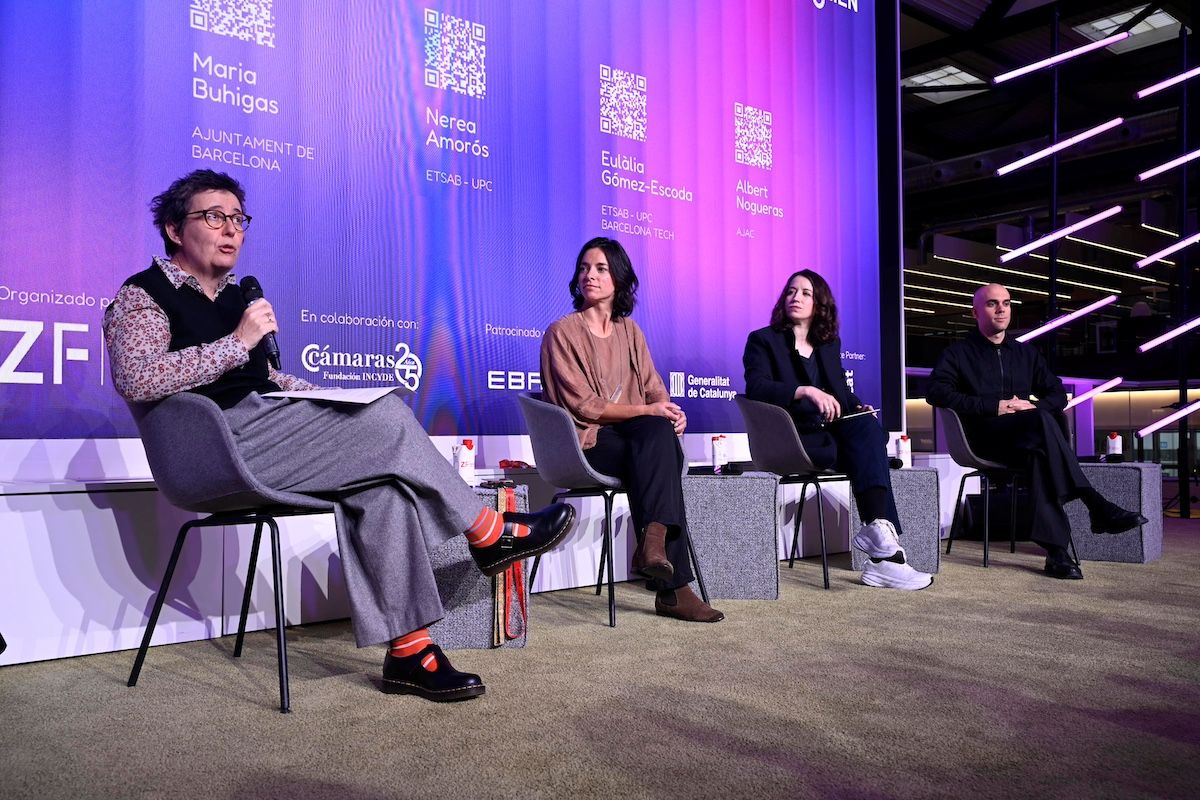
In this context of impact, architecture also comes into play. Not only as a technical discipline, but as a tool for social transformation. "Architecture is an instrument or a language that everyone understands," said Nerea Amorós, a researcher at ETSAB-UPC, who has worked on projects in environments such as refugee camps. From this perspective, she advocated for rethinking the role of design: "Architecture and design have been seen as a luxury, and the question is how we can make them a right."
This vision connects with the ultimate goal of many of these disciplines: to improve people's lives. "The goal is to improve the lives of what surrounds us, whether from a more practical or more academic point of view," added Eulàlia Gómez-Escoda, director of ETSAB-UPC Barcelona Tech, in a panel moderated by Barcelona's chief architect, Maria Buhigas.
From the cell to space, passing through the environments we inhabit, the common thread is the same: using knowledge to generate real impact. As was repeated during the day, the impact is amplified if female talent is involved, also in leadership positions: "There are no limits. The sky is the limit." The truth is that the limit is much higher, with women already conquering even space, and still with much to advance.
Add The New Barcelona Post as your preferred Google source for free
Stay informed with the latest news.