— You like the bastaixos, don't you? Bernat had felt the enthusiasm with which he recounted how those men transported the stones to the church. The children followed them to the city gates, waited for them there, and accompanied them back, along the beach, from Framenors to Santa María. — Yes —Arnau replied, while his father rummaged with his other arm under the straw mattress. — Here —he said, handing him the old water skin that had accompanied them during their escape—. Offer them fresh water, you'll see they won't refuse it and will thank you.
The Cathedral of the Sea, Ildefonso Falcones (2006)
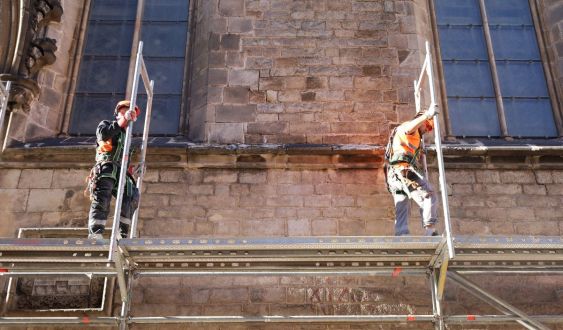
The footprint of the bastaixosis still present in Santa Maria del Mar, in every wall, in every stone. Their figures, hunched by the weight of the stones, preside over the two wings of the main door, and also walk up the stairs leading to the altar: on one side, abastaix; on the other, a man breaking stone, perhaps in Montjuïc. While she rests at the foot of the altar, a woman cleans the same stone they placed more than seven centuries ago. The products are not the usual ones: she is cleaning the old stone with a laser. She says that this system does not damage the material and, instead, eats away at the dirt, leaving a smoky trail and a smell that mixes with that of the candles. Outside the basilica, these ancient stones are preparing for crucial days: three workers are erecting scaffolding to restore the side that overlooks the Fossar de les Moreres. The intervention will cover the wall for months, and will be the first of this magnitude, to preserve those same stones that were transported by weight by thebastaixosand who have seen Barcelona pass for 700 years.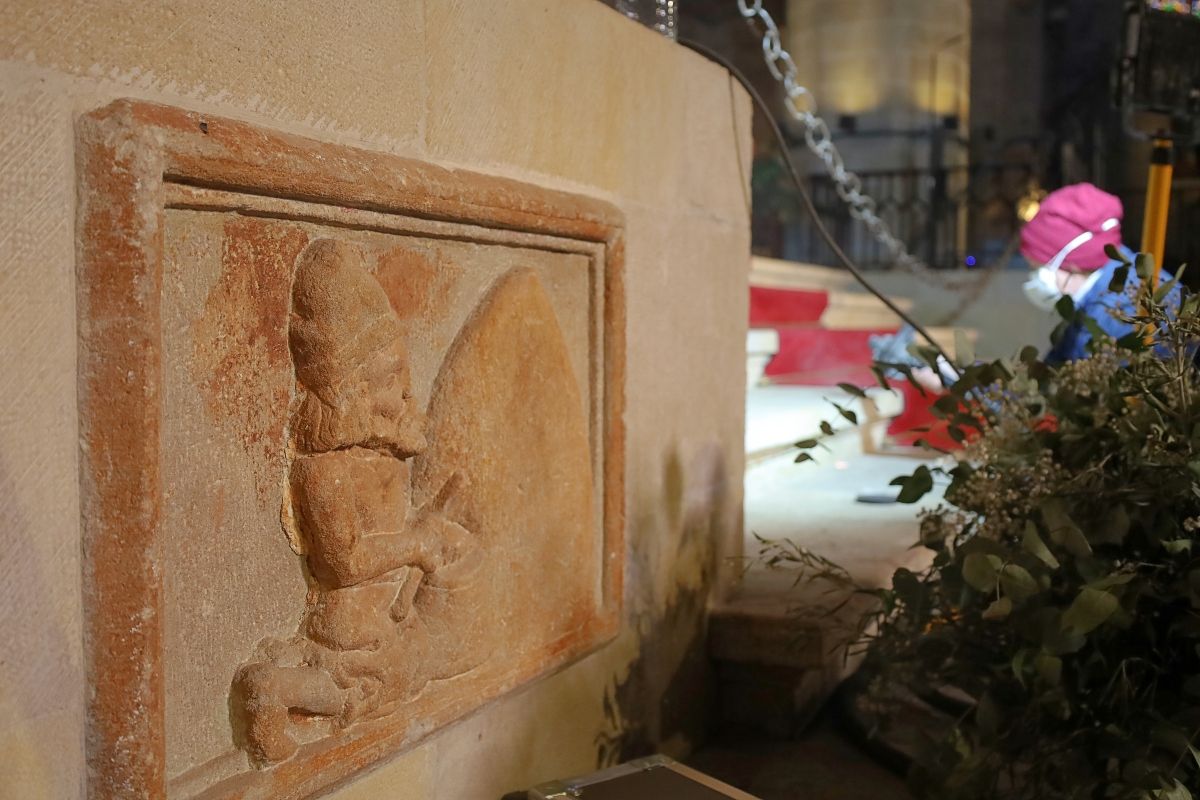
Add The New Barcelona Post as your preferred Google source for free
Stay informed with the latest news.